Starryear年
 Image
Image【S.012】 Clone
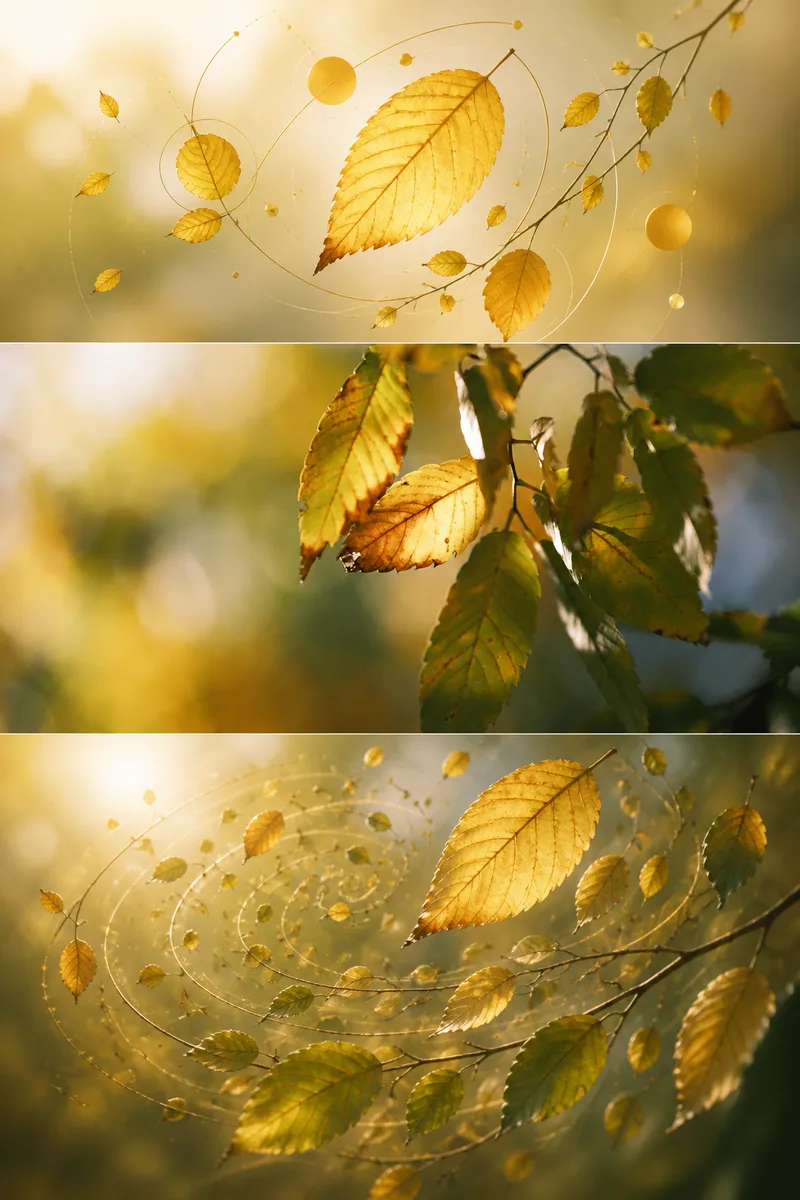
Transform one photo into a borderless vertical triptych. The center preserves an unchanged crop of the original image as clear evidence of the scene, while the upper and lower sections each select a different subject from the photo for cloning and inversion. The result is a surreal image grounded in the original environment. The upper panel can focus on a primary subject such as a person or animal. The lower panel works well with objects that have clear structures, such as boats, buildings, railings, or landmarks. Each generated area keeps one recognizable subject at a visible scale, while allowing smaller inverted figures to blend into the foreground, background, water, rocks, roads, or architectural boundaries. The original scene’s lighting, perspective, occlusion, materials, and depth of field are preserved. Ideal for photographic collages with separately duplicated and inverted people and objects, source-photo-driven surreal triptychs, and visual experiments that retain features such as landmarks, mountains, and skylines. The final output is a single vertical 2:3 image with no text, borders, watermarks, or decorative titles.
 Image
Image【S.004】Monet Stamp
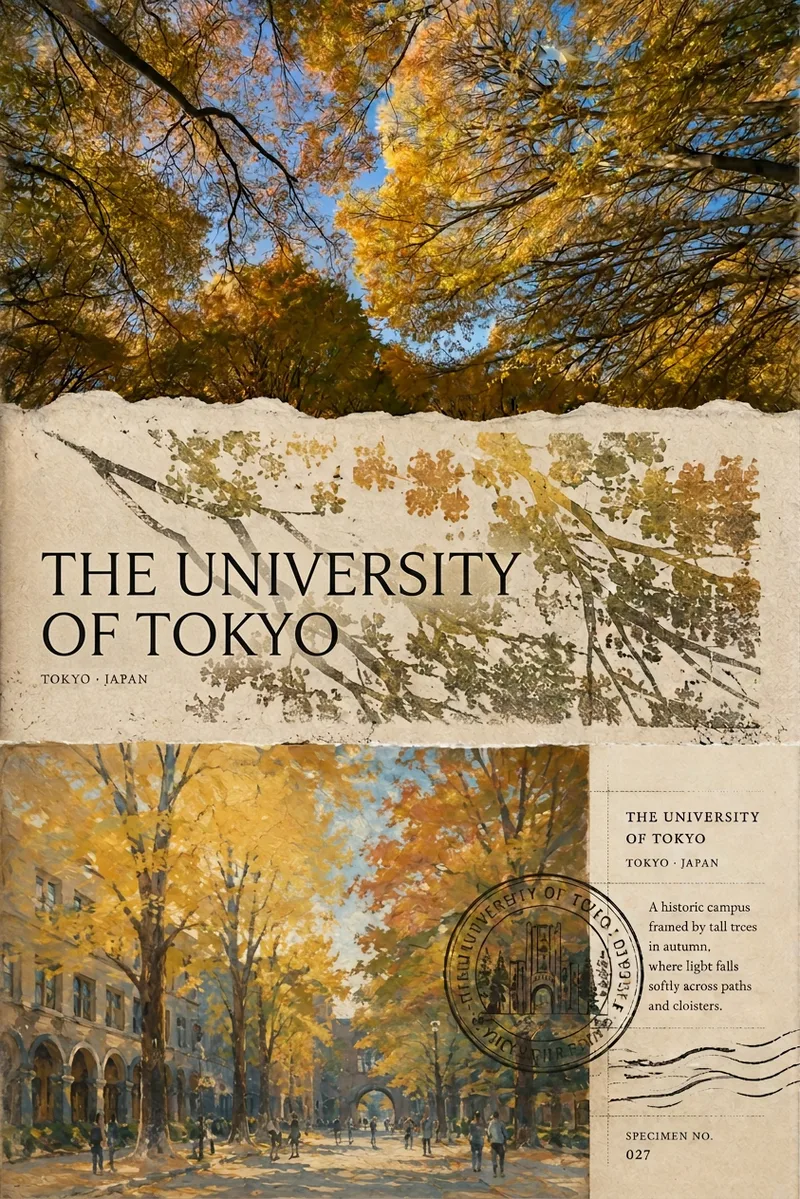
Turn a travel, landscape, architecture, street, or quiet documentary photo into a collectible vertical 2:3 “Star Year · Monet Stamp” travel archive artwork. The image preserves the real scene and color evidence from the photo, transforms its recognizable subjects, structures, and visual cues into a signature symbol, then reimagines them as a new memory scene with a Monet-inspired sense of light and brushwork. Each photo gains a unique sense of place and visual narrative. The finished work combines photographic evidence, a symbolic mark distilled from the source image, and a “Monet memory,” paired with a narrow vintage-paper information panel and a circular postmark generated from the current photo. Place names are based on what the user provides or what the photo can support, avoiding invented geographic details. The mark, color palette, reconstructed composition, and scene recognition also change with the original photo rather than applying a generic badge or fixed retro color scheme. Ideal for travel keepsake posters, destination visual archives, personal photography collections, and artistic photo works with a stamp-like feel. Each output is one complete finished piece that preserves the photo’s authenticity while giving it an independent symbolic quality and painterly memory of light and shadow. It is not intended for creating artwork without an original photo, applying an ordinary Monet filter, or designing generic decorative elements unrelated to the photo’s content.
 Image
Image【S.010】The Absurdist
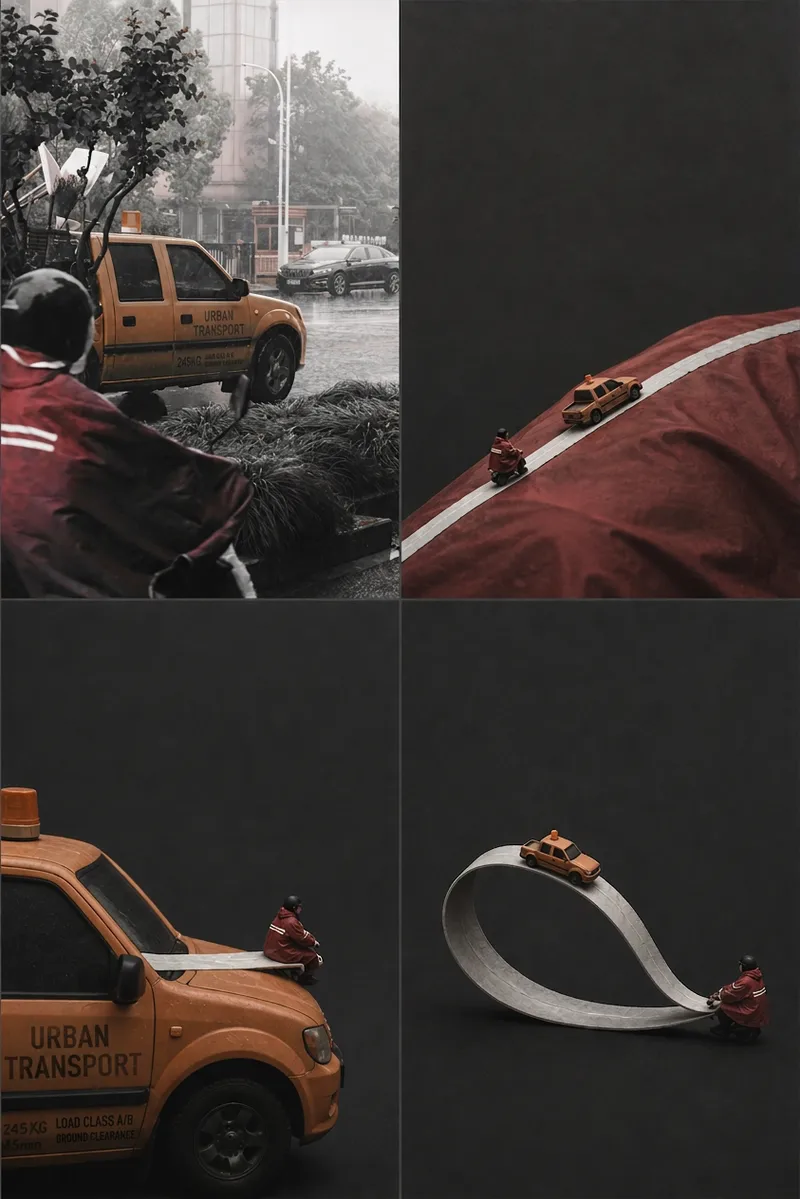
Turn one photo into a vertical absurd triptych with the original image as visual evidence: the top presents an absurd scene built on a mismatch of scale, the middle preserves the original photo with a horizontal crop, and the bottom makes the same absurd relationship return or form a causal loop. The final image consists of three equal-width horizontal 16:9 panels stacked vertically without gaps, creating a precise 16:27 composition with no borders, text, or watermark. The two generated panels develop new relationships only from the people, animals, objects, actions, quantities, colors, and lighting in the photo. They preserve important identifying features and recognizable contours, using ample negative space and a restrained live-action or puppet-theater aesthetic. The middle panel uses only pixels from the original photo, with orientation correction, proportional scaling, and conservative cropping applied only as needed. It is not redrawn, retouched, or filled in, ensuring that it remains a reliable record of the original image. Ideal for creating vertical absurd triptychs with the original photo in the middle, photo-derived art, and surreal posters with visual storytelling. It is not intended for ordinary filters, unrelated fantasy scenes, dense collages, or layouts that redraw the photographic evidence in the middle.
 Image
Image【S.009】Song Dynasty Painting
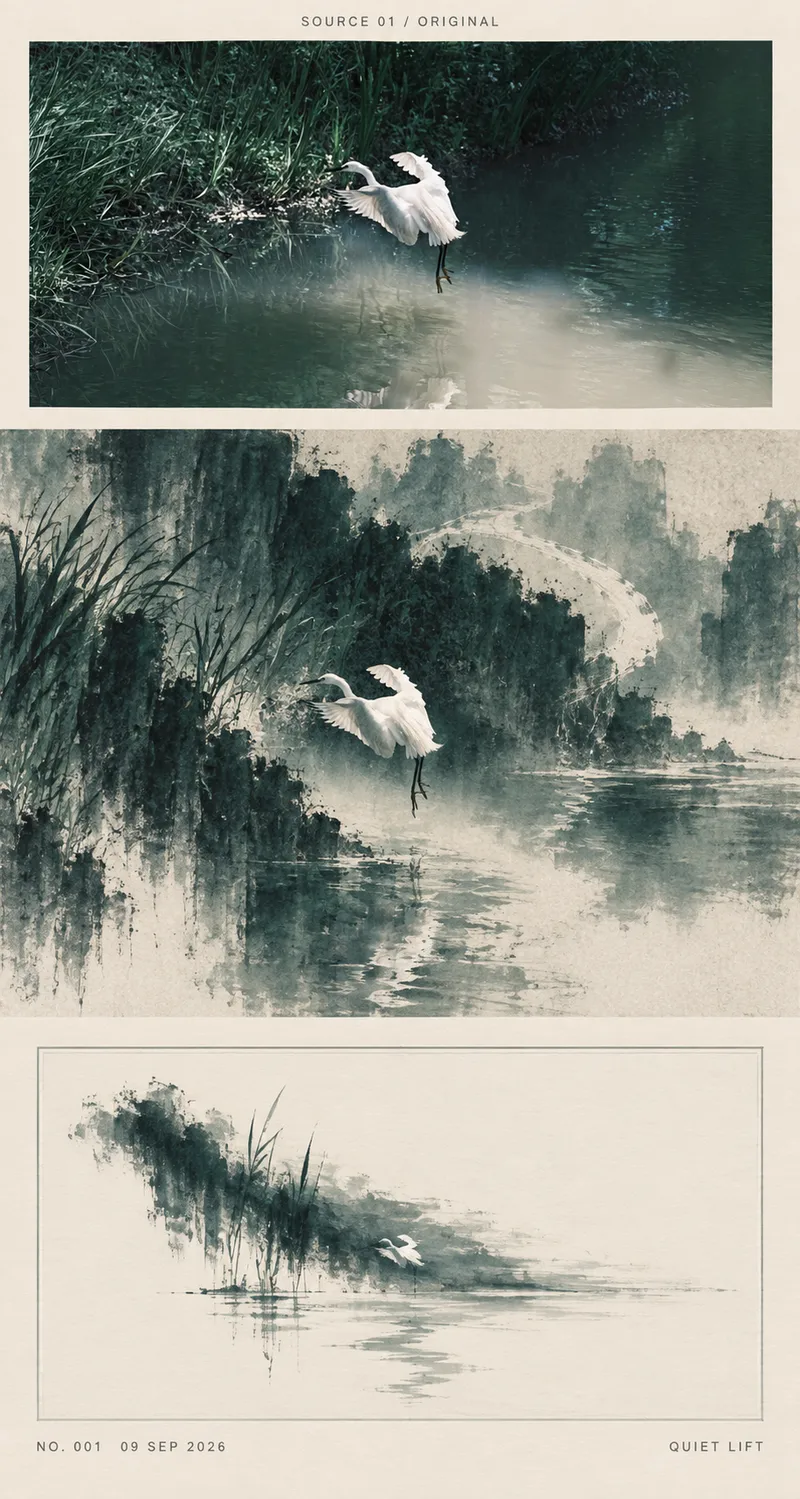
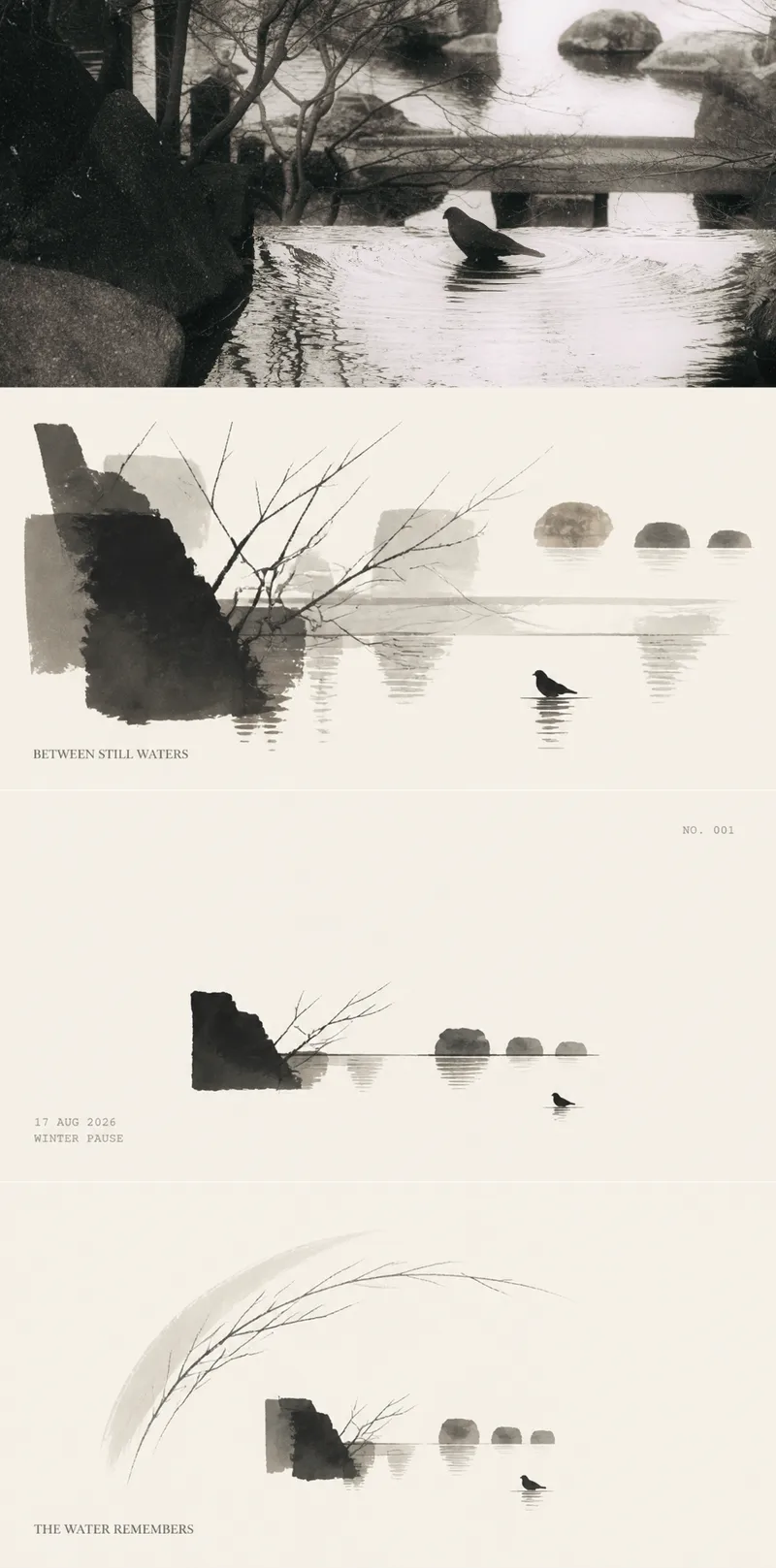
Turn a photo into a vertical editorial art poster, letting the same visual structure move through three increasingly quiet viewing states: “evidence, reconstruction, and afterglow.” The untouched original photo remains at the top as visual evidence of reality. In the middle, space is reorganized through the Northern Song landscape concepts of high distance, deep distance, and level distance, transforming the subject, direction, repeated forms, and negative space into a tactile, freehand surreal scene. At the bottom, the image is distilled further into a restrained structural afterimage, brought to a close with warm paper, a fine frame, and a few pale color echoes. The work preserves the key compositional relationships of the original photo while gradually reducing scale, layering, density, and narrative to create a continuous viewing experience from figurative to freehand to minimalist. It is suited to contemplative triptychs, photo reinterpretation in a Song painting context, exhibition posters combining photography and contemporary art, and vertical publications centered on negative space and visual storytelling. The result is one complete, unified tall poster—not an ordinary filter, photo redraw, or three side-by-side files.
 Image
Image【S.008】Imprint
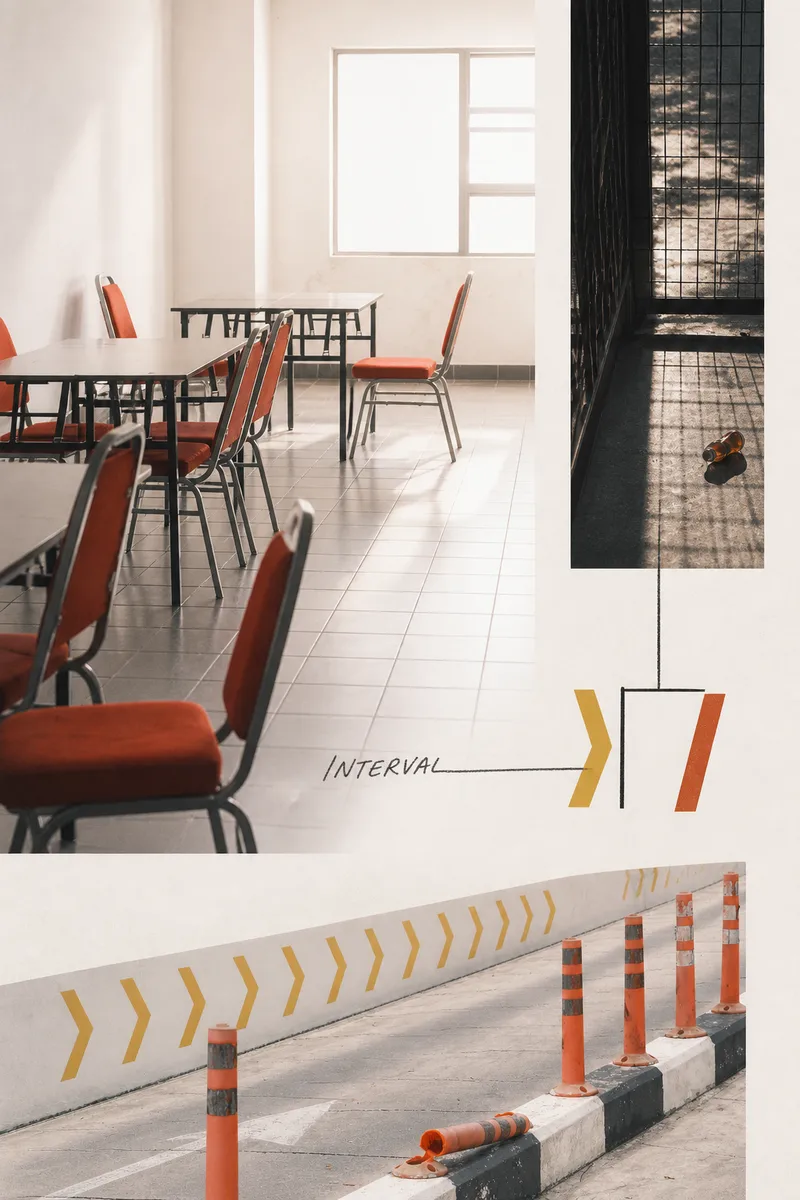
Fuse 2–5 photos into a complete vertical 2:3 image-based brand poster, making the photographic content the main visual and extracting a compact, recognizable visual mark from the photos themselves. Ideal for photographers, image-based projects, art exhibitions, and brands seeking a distinctive visual identity—for turning images into marks, creating photography brand posters, and designing covers for series of works. The work integrates multiple photos through asymmetrical composition, layered cropping, contour relationships, and negative space. It avoids ordinary collages or evenly divided panels, allowing different images to form one coherent visual concept. The poster includes a simple English wordmark and a Brand Symbol related to the forms, colors, and structure of the photos. Together, they serve as restrained identity signatures that connect naturally with the imagery rather than appearing as separately stacked logos or titles. The final output is a clean, presentation-ready poster suitable for display and sharing. It preserves the authentic characteristics of the photos while extracting the primary brand colors and visual cues from the source images. Only the necessary English wordmark is retained—no Chinese, explanatory text, dates, or unnecessary decoration—making it suitable for creators who want to transform multiple images into a distinctive brand visual.
 Image
Image【S.001】Fourfold Reframe
Turn one of your own photos into a vertical four-panel artwork: the top panel preserves the original image as “evidence,” while the three panels below use the same warm-white ivory negative-space language, allowing the scene to gradually contract, simplify, and recede into stillness like a memory: from reality, to fragments of local memory, to sparse structural essence, and finally to a quiet trace. Abstraction appears only as local “visual islands,” rather than filling the frame. Key anchors from the photo, left-right relationships, the direction of light, and the emotional tone remain intact, so the style comes from changes in information density and the way memory is represented—not from applying a filter or redrawing the image. The default output is a strict 1:2 vertical composition with four equal-height panels joined seamlessly, without a title, date, number, signature, or watermark. It is suited to ivory negative-space photo quartets, an original image paired with three abstract works from the same series, and surreal abstraction derived from the source image. You will receive the finished image and the image prompts actually used. If you only want prompts, revision suggestions, or a visual review, you can specify that directly. This is not intended for photographic filters, literal redraws, ordinary collages, or unrelated fantasy.
 Image
Image【S.007】Eye World
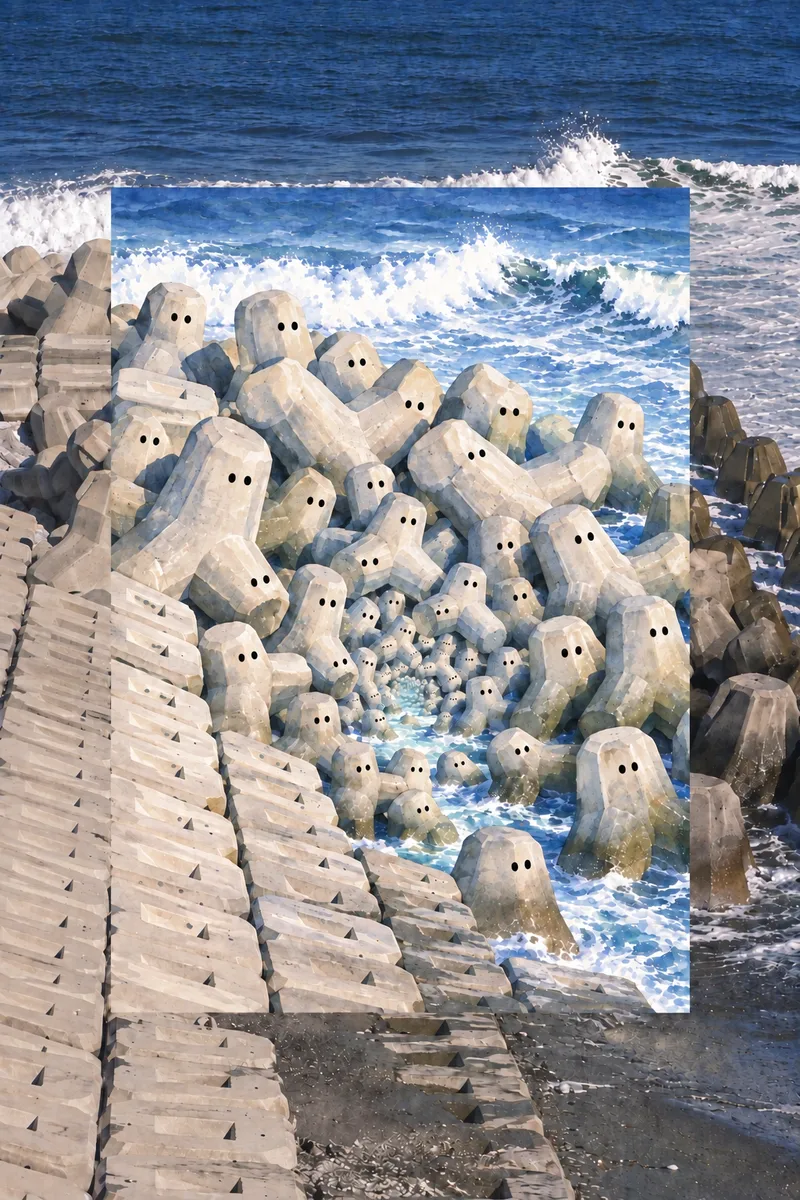
Transform a photo into a unique vertical “eye world” artwork: the original photo fills the entire canvas, preserving the subject, colors, and lighting, while a watercolor scene reimagined from the photo’s content is embedded in the center. The photo and the painted world echo one another, making the inset scene feel like an impossible space opening inside reality rather than a simple overlaid illustration. The central scene translates the objects, materials, and group relationships in the photo into hand-drawn living forms with pairs of small eyes. Recursive nesting, shifts in scale, deep corridors, and self-containing spaces create a cute, clear, quiet, yet slightly eerie atmosphere. Light, luminous watercolor and translucent gouache textures avoid gore, darkness, grime, and unrelated elements, resulting in a flat vertical artwork suited for collecting, display, or visual experimentation.
 Image
Image【S.006】 Four-Panel Ink
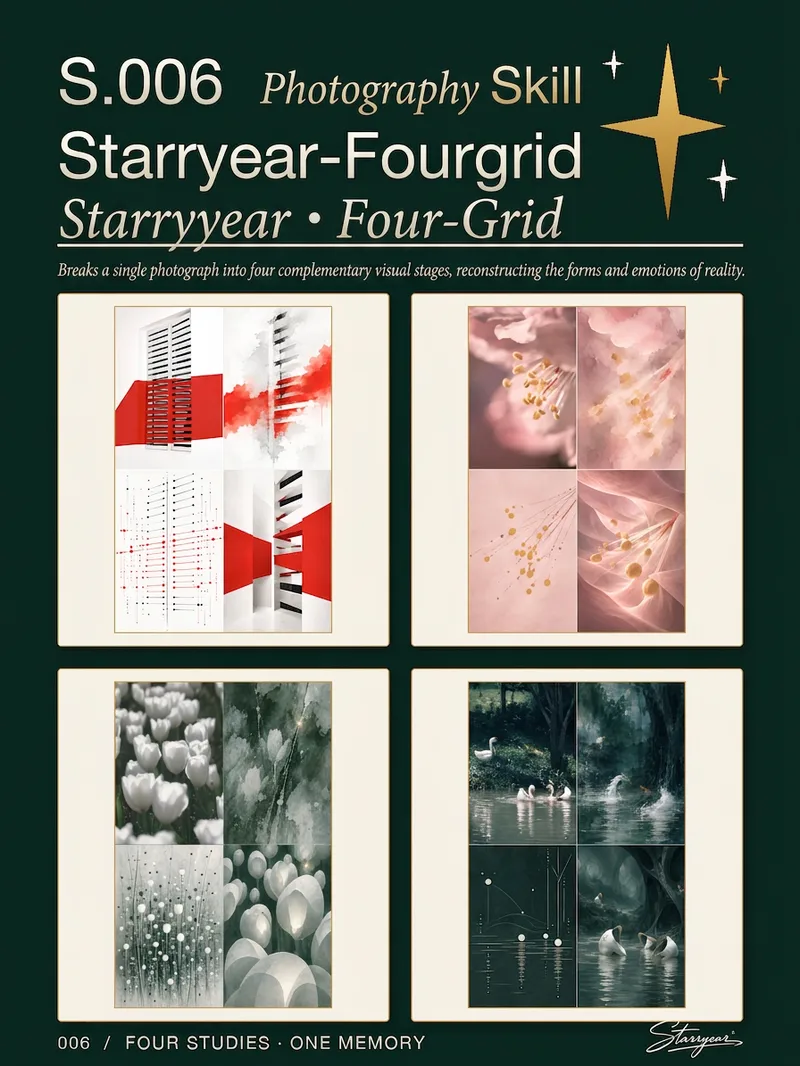
Turn one photo into a vertical 2:3 ink-wash artwork arranged in four panels. Preserve the original image as the upper-left panel, then extend the photo’s own colors, compositional relationships, movement paths, and spatial rhythm into three distinct visual expressions. The result is not an ordinary collage or four filters, but a continuous translation from photographic evidence to poetic memory, dot-and-line rhythm, and finally surreal space. The second panel distills the photo’s atmosphere in a semi-abstract, moist, and elusive form. The third transforms observable directions, intersections, repetitions, and density patterns into restrained dot-and-line structures, moving beyond the outlines of specific objects. The fourth retains the original image’s spatial grammar and layers, replacing real objects with folds, interfaces, passages, or other nonrepresentational forms derived from the photo to create a surreal world whose origins remain recognizable. For each uploaded photo, the artwork re-extracts its colors and visual features rather than applying a fixed theme, palette, or composition. It is suited to creating ink-wash four-panel works, one-photo-to-four transformations, source-image abstraction, and editorial-style visual posters. The result is one cohesive vertical artwork with no text or borders.
 Image
Image【S.002】Threefold Memory
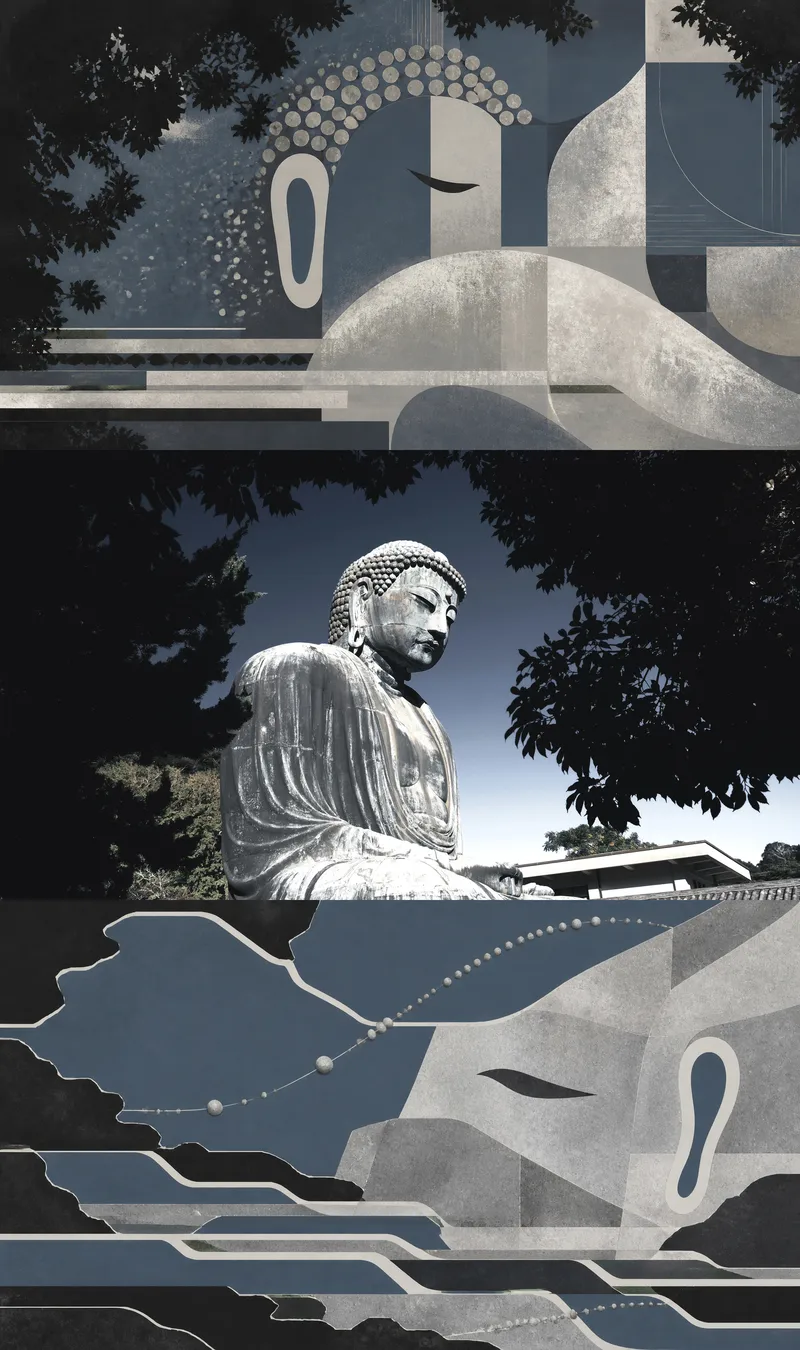
Turn one user-uploaded photo into a triptych with continuous visual logic: the top panel draws the subject or core space inward, distilling it into an abstract form that is stable, focused, and retains its identity; the middle panel preserves the actual original photo as irreplaceable photographic evidence; the bottom panel releases the photo’s colors, contours, materials, and spatial relationships outward, forming a dispersed, transformed, and more surreal new environment. The finished image reveals the difference between convergent and diffusive abstraction while allowing viewers to trace both back to the original photo. This Skill is suited to single photos of people, animals, objects, buildings, interiors, or natural scenes. The abstract results are based on the photo’s own subject relationships, compositional direction, color relationships, and visual rhythm rather than fixed patterns, generic filters, or unrelated decorative styles. It pays particular attention to the number, identity, orientation, and proportions of subjects, as well as important spatial relationships, ensuring that the middle panel remains the untouched original photo. You will receive a completed source-driven triptych, along with a brief summary of the key visual genes used for the two abstract panels above and below, making it easier to understand which clues the convergent and diffusive panels each extracted from the original photo.
 Image
Image【S.003】Odyssey Epic Style
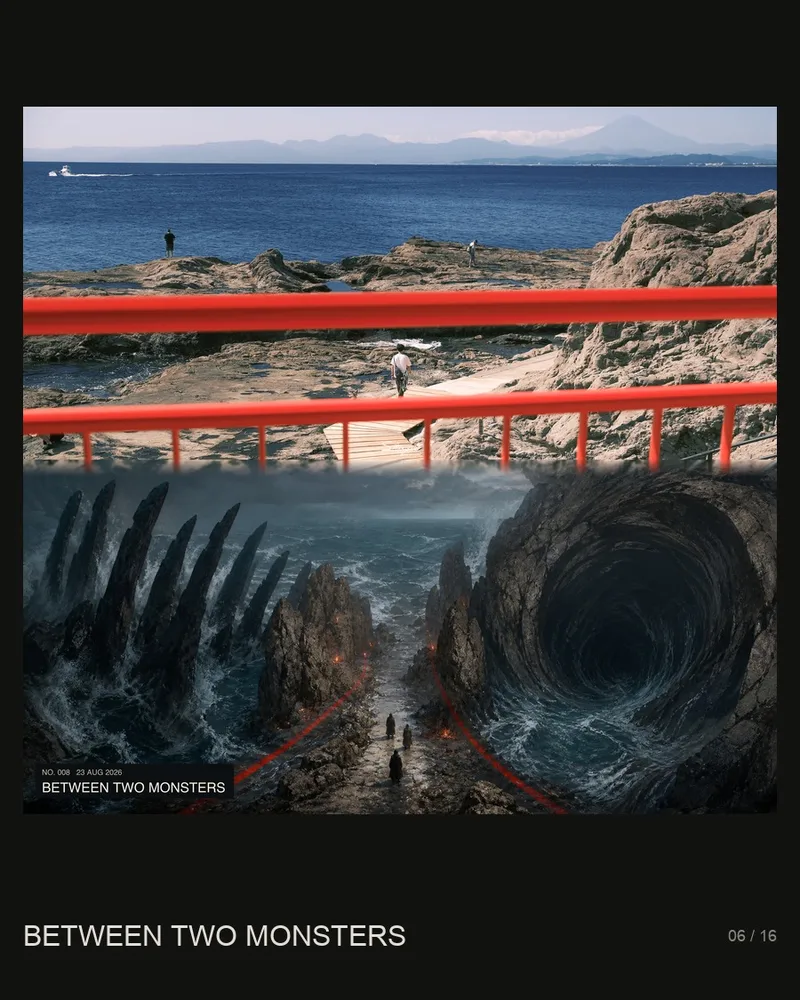
Transform a real photo into an epic, narrative-driven Odyssey diptych: the original photo remains fully intact on top, while the lower panel becomes a contemporary abstract scene that echoes the photo’s visual evidence. It draws clues from people, animals, quantities, poses, spatial structure, direction, light, and color, then selects the Odyssey episode that best fits. The photo becomes evidence of reality; the lower panel becomes a mythic interpretation. The abstract panel does not copy the photo, apply a filter, or depict mythology literally. Instead, it incorporates one or more recognizable episode motifs through scale, paths, enclosures, repetition, pressure, and material weight—for example, the Cyclops’ opening, the Sirens’ lure, Charybdis’ whirlpool, Scylla’s multiple attacks, Penelope’s textile, or Odysseus’ return. The image carries forward the photo’s dominant colors, shadows, and highlights, while choosing a natural-light, firelit, or hazy threshold atmosphere based on the original lighting. The result maintains a clear, restrained, tactile “clean epic” visual style. The final result is a complete, vertically connected art page with a concise archive number, date, and English episode title, accompanied by a short explanation of the selected chapter, the evidence in the photo, the mythic motif, and the color direction. It is suited to mythology-themed photographic archives, visual literary research, contemporary art projects, or personal image works centered on themes of return and journey.