【S.001】Fourfold Reframe
One photo, four vertical abstract panels
【S.001】Fourfold Reframe
One photo, four vertical abstract panels
Showcase
Description
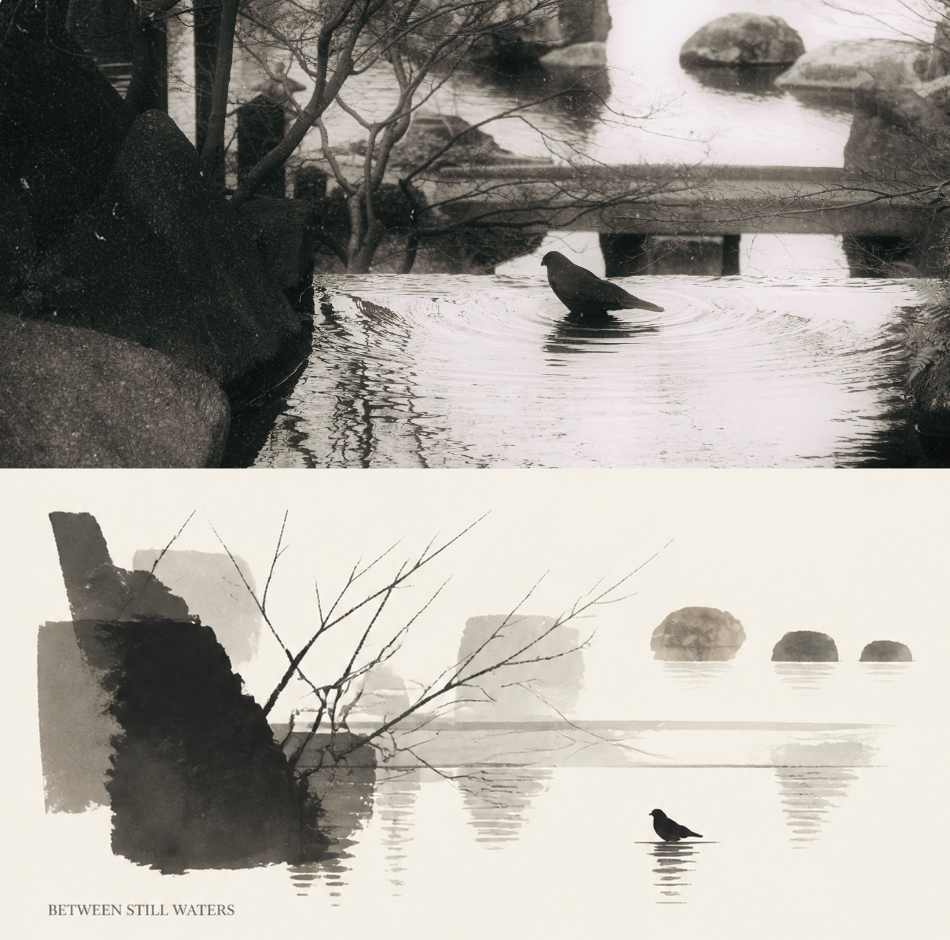
Turn one of your own photos into a vertical four-panel artwork: the top panel preserves the original image as “evidence,” while the three panels below use the same warm-white ivory negative-space language, allowing the scene to gradually contract, simplify, and recede into stillness like a memory: from reality, to fragments of local memory, to sparse structural essence, and finally to a quiet trace. Abstraction appears only as local “visual islands,” rather than filling the frame. Key anchors from the photo, left-right relationships, the direction of light, and the emotional tone remain intact, so the style comes from changes in information density and the way memory is represented—not from applying a filter or redrawing the image. The default output is a strict 1:2 vertical composition with four equal-height panels joined seamlessly, without a title, date, number, signature, or watermark. It is suited to ivory negative-space photo quartets, an original image paired with three abstract works from the same series, and surreal abstraction derived from the source image. You will receive the finished image and the image prompts actually used. If you only want prompts, revision suggestions, or a visual review, you can specify that directly. This is not intended for photographic filters, literal redraws, ordinary collages, or unrelated fantasy.
Recommended by
淡苍
Why we love this skill
Transforms one photo into a cohesive vertical four-panel work: the original plus three distinct abstract readings, unified by source colors, materials, and visual facts while following different formal logics.
Best for
For anyone who wants to turn a personal photo into restrained, contemporary abstract art with a cohesive series feel.
How to use this Skill
Provide your input
Provide one of your own photos and say whether you want the finished image, image prompts, revision suggestions, or a visual review.
Run the Skill
Turn the photo into a vertical four-panel artwork: keep one panel as the original, and present three distinct abstract interpretations with consistent ivory negative space, color, and texture.
Review your result
Receive a text-free, watermark-free four-panel image with the original plus three abstract artworks, along with matching image prompts or a brief explanation.
Related Skills
View all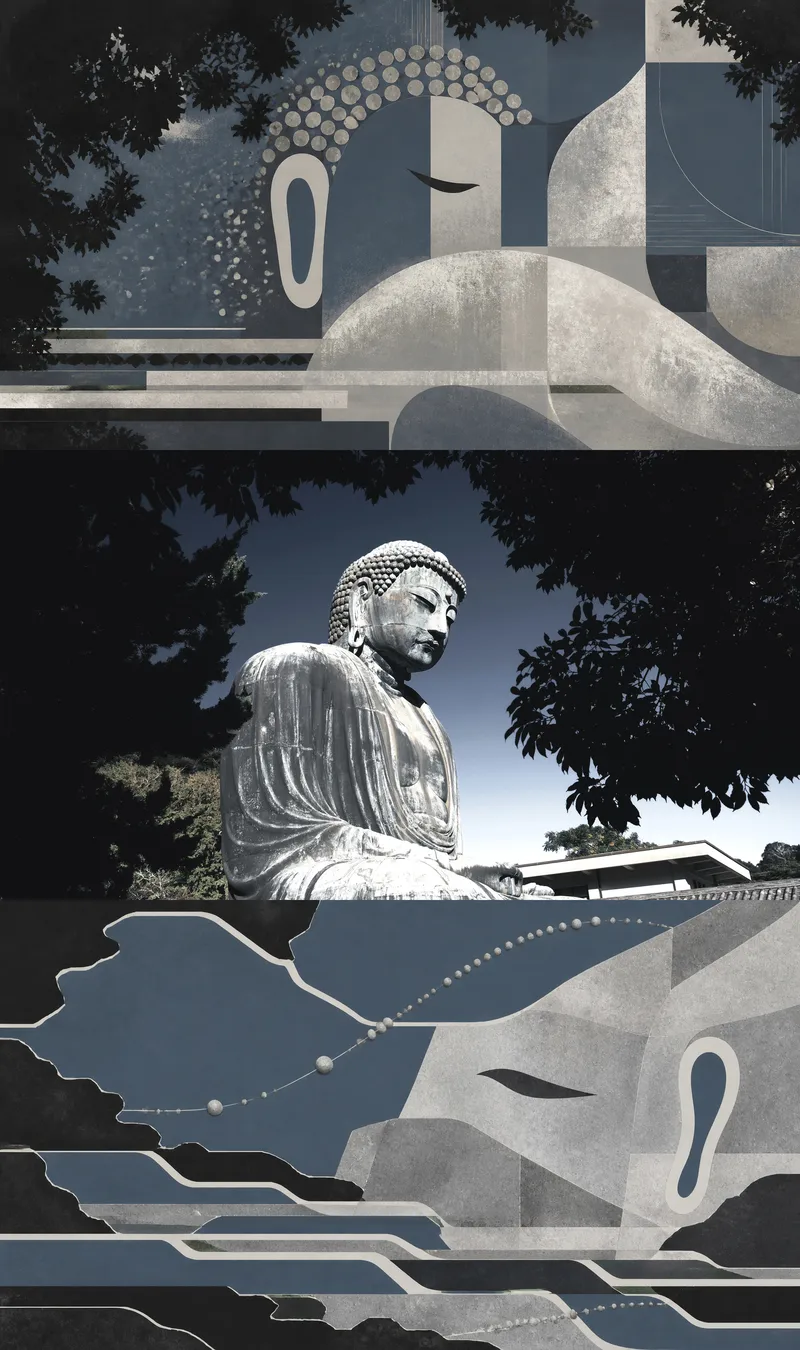 Image
Image【S.002】Threefold Memory
Turn one user-uploaded photo into a triptych with continuous visual logic: the top panel draws the subject or core space inward, distilling it into an abstract form that is stable, focused, and retains its identity; the middle panel preserves the actual original photo as irreplaceable photographic evidence; the bottom panel releases the photo’s colors, contours, materials, and spatial relationships outward, forming a dispersed, transformed, and more surreal new environment. The finished image reveals the difference between convergent and diffusive abstraction while allowing viewers to trace both back to the original photo. This Skill is suited to single photos of people, animals, objects, buildings, interiors, or natural scenes. The abstract results are based on the photo’s own subject relationships, compositional direction, color relationships, and visual rhythm rather than fixed patterns, generic filters, or unrelated decorative styles. It pays particular attention to the number, identity, orientation, and proportions of subjects, as well as important spatial relationships, ensuring that the middle panel remains the untouched original photo. You will receive a completed source-driven triptych, along with a brief summary of the key visual genes used for the two abstract panels above and below, making it easier to understand which clues the convergent and diffusive panels each extracted from the original photo.
 Image
Imagexiaoxiaodong P136 | Poetic
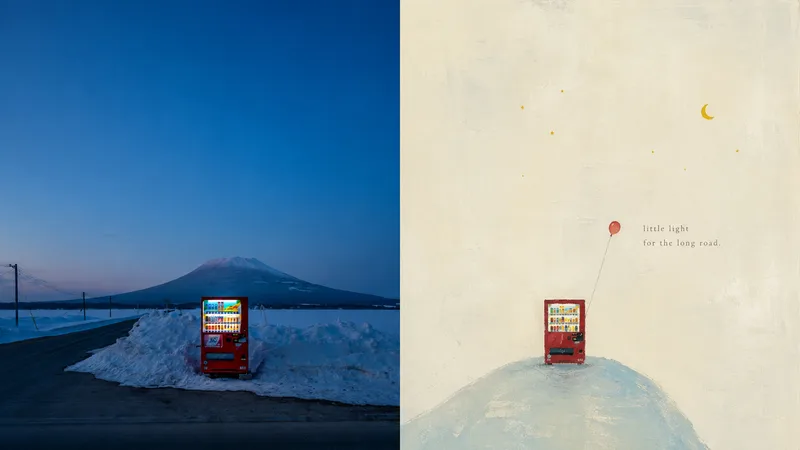
Suitable for organizing personal photography, independent publishing, exhibition studies, and lifestyle visual creation. Even when the original composition is ordinary, the background is cluttered, or the subject is small, you can reestablish a focal point through reduction, rearrangement, cropping, and changes in scale—instead of simply applying a filter to the photo. The lower section extracts only the most recognizable subjects, contours, structures, gestures, and narrative relationships from the photo. It reinterprets the original image’s emotions, relationships, and visual metaphors, then reconstructs them as a poetic narrative illustration in the style of Naïve Art + Poetic Surrealism. Do not redraw every object or reproduce the complete scene. Boldly remove the background and irrelevant details, keeping only a few truly important forms. Scale shifts, object substitutions, floating elements, pulling relationships, dislocation, and improbable combinations are all welcome to re-express the original theme, making the image feel unfamiliar while preserving an immediately recognizable connection to the photo above.
 Image
Imagexiaoxiaodong P106: Soft Pixel
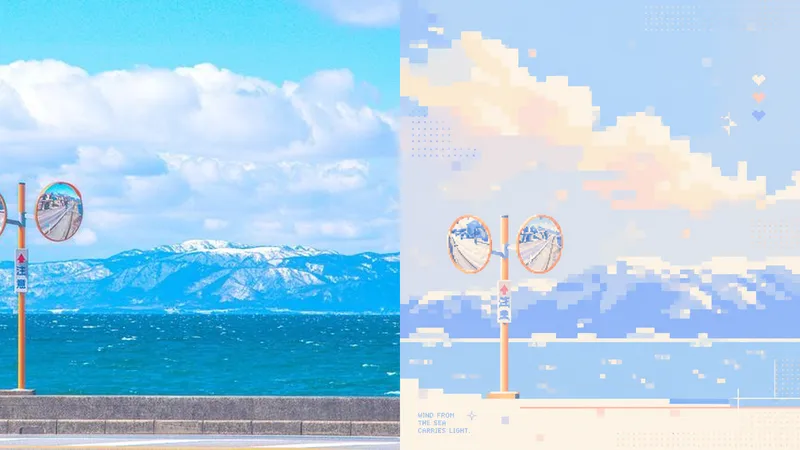
Photos often contain too many details, yet what stays memorable may be just a silhouette, a gesture, a sense of distance, or a patch of color. Panel 106 selects 2–4 visual anchors that define the subject’s identity from the original image, then reconstructs them as a soft, clear pixel memory with geometric order: from a distance, it looks like a refined abstract composition; up close, you can still tell that it is your photo. Works well when Your photo is complex, but you don’t want to lose its identity: Remove secondary objects and trivial structures, keeping only the silhouettes, poses, directions, and color relationships that truly define the image. You want an abstract poster without turning it into unrecognizable decoration: Use a regular grid, hard-edged color blocks, localized dithering, and positive and negative space to let the subject gradually emerge from the abstract order. You like a fresh, soothing look but dislike a cheap candy-like feel: Recompose a soft, bright limited palette from the original image, using colors such as creamy white, peach pink, milky blue, and mint green for a sweet but balanced result. You need flexible delivery in a consistent style: Supports top-and-bottom comparisons, side-by-side comparisons, pure designs, multiple aspect ratios, four-device wallpapers, and batch processing of image folders. What it solves for you It does not simply shrink the photo, apply a filter, or pixelate each object individually. Instead, it reorganizes the visual memory directly from the original image in a single pass. The 2–4 anchors work together to form one single-focus image, rather than being split into cards, grids, or a collage wall. Comparison mode always has exactly two 50:50 areas: top-and-bottom places the original image on top and the design below; side-by-side places the original on the left and the design on the right, with no extra third strip. Get started quickly Use XXD Panel 106 to process this image for me, starting by recommending the most suitable composition and size.
Information
- Version
- v8
- Last updated
- Runtime credits
- Usage-based
- Models
- Auto
- Use cases
- Images & design
- What you get
- ImageBriefPrompt
- Visual styles
- MinimalistEditorialSurrealist