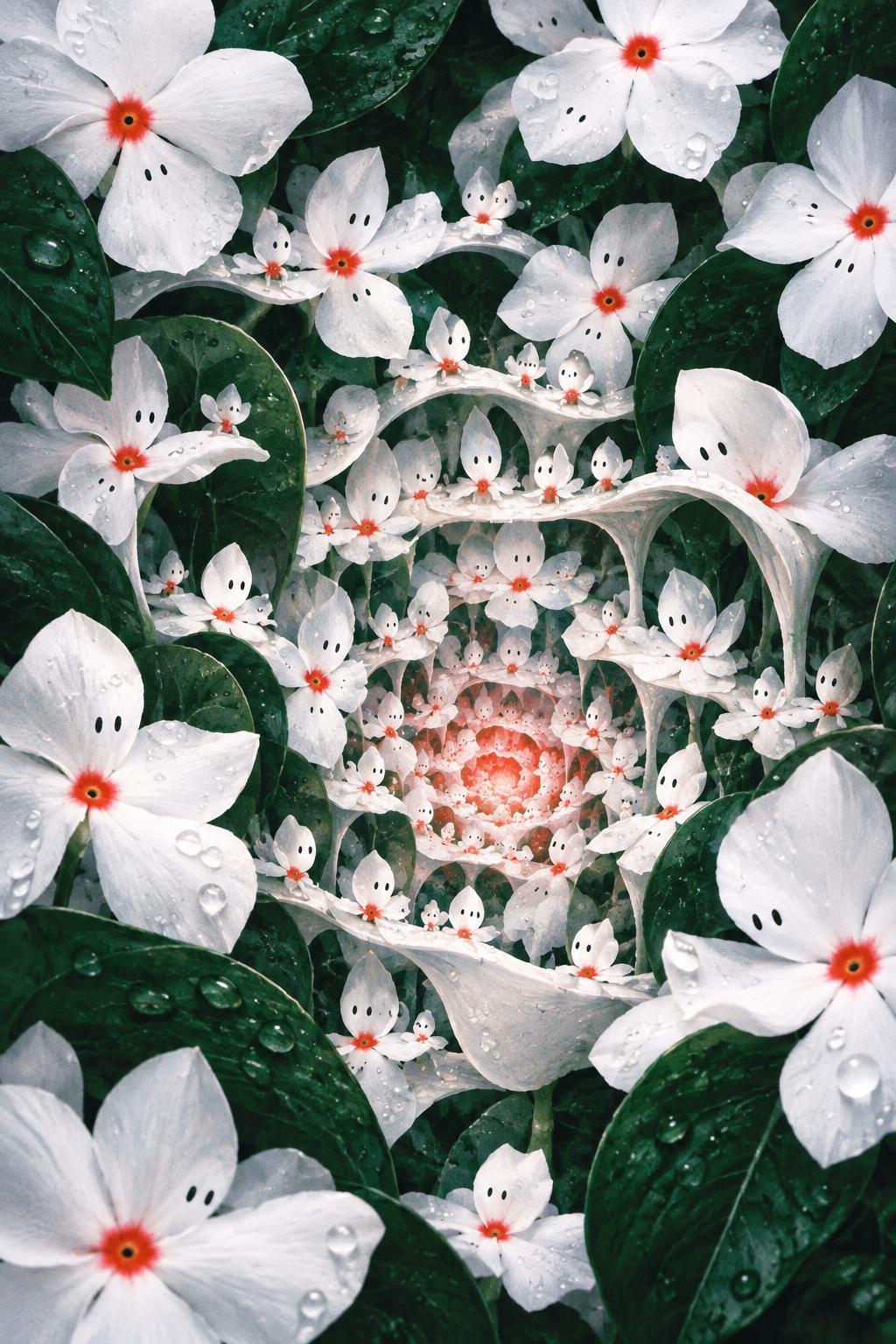
【S.007】Eye World
Turn a photo into a vertical watercolor eye world
【S.007】Eye World
Turn a photo into a vertical watercolor eye world
Showcase
Description
Transform a photo into a unique vertical “eye world” artwork: the original photo fills the entire canvas, preserving the subject, colors, and lighting, while a watercolor scene reimagined from the photo’s content is embedded in the center. The photo and the painted world echo one another, making the inset scene feel like an impossible space opening inside reality rather than a simple overlaid illustration. The central scene translates the objects, materials, and group relationships in the photo into hand-drawn living forms with pairs of small eyes. Recursive nesting, shifts in scale, deep corridors, and self-containing spaces create a cute, clear, quiet, yet slightly eerie atmosphere. Light, luminous watercolor and translucent gouache textures avoid gore, darkness, grime, and unrelated elements, resulting in a flat vertical artwork suited for collecting, display, or visual experimentation.
Recommended by
淡苍
Why we love this skill
Preserves the photo as a full-frame background while growing a watercolor eye world from it, using recursion, collapsed scale, and collective gazes to create subtle unease.
Related Skills
View all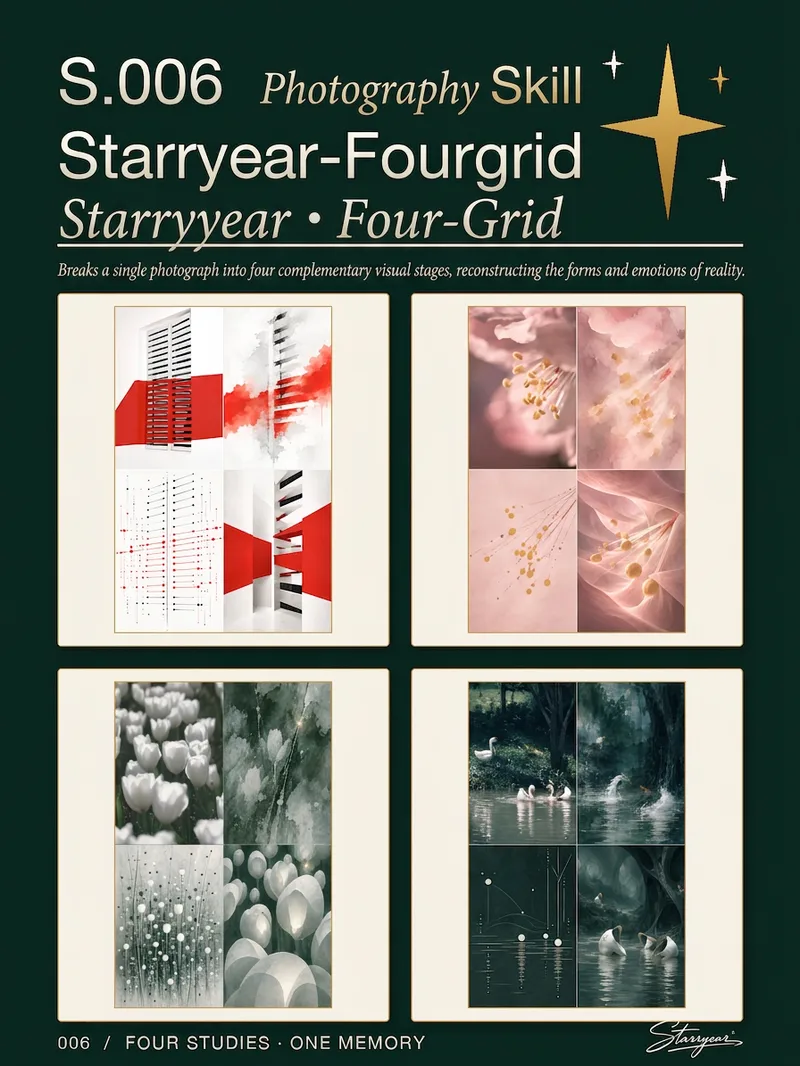 Image
Image【S.006】 Four-Panel Ink
Turn one photo into a vertical 2:3 ink-wash artwork arranged in four panels. Preserve the original image as the upper-left panel, then extend the photo’s own colors, compositional relationships, movement paths, and spatial rhythm into three distinct visual expressions. The result is not an ordinary collage or four filters, but a continuous translation from photographic evidence to poetic memory, dot-and-line rhythm, and finally surreal space. The second panel distills the photo’s atmosphere in a semi-abstract, moist, and elusive form. The third transforms observable directions, intersections, repetitions, and density patterns into restrained dot-and-line structures, moving beyond the outlines of specific objects. The fourth retains the original image’s spatial grammar and layers, replacing real objects with folds, interfaces, passages, or other nonrepresentational forms derived from the photo to create a surreal world whose origins remain recognizable. For each uploaded photo, the artwork re-extracts its colors and visual features rather than applying a fixed theme, palette, or composition. It is suited to creating ink-wash four-panel works, one-photo-to-four transformations, source-image abstraction, and editorial-style visual posters. The result is one cohesive vertical artwork with no text or borders.
 Image
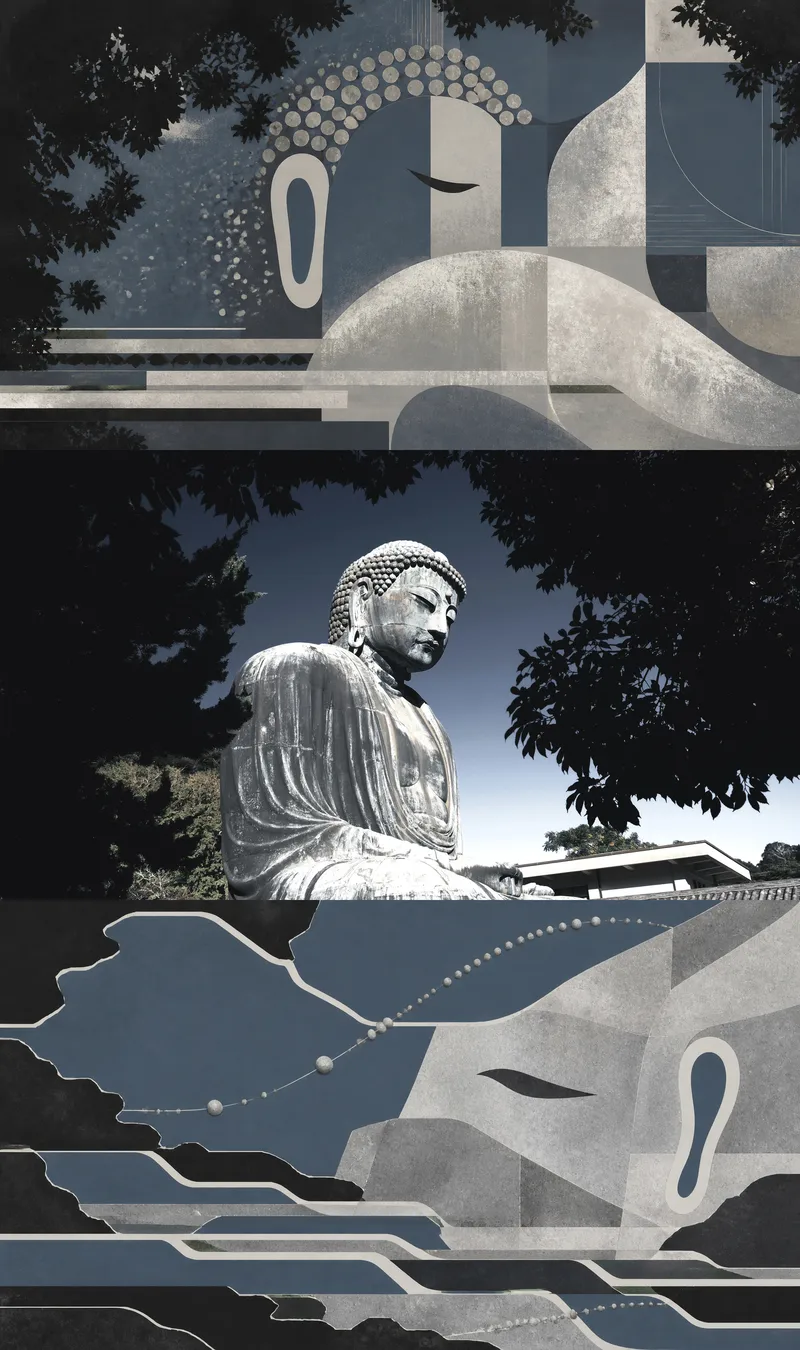
Image【S.002】Threefold Memory
Turn one user-uploaded photo into a triptych with continuous visual logic: the top panel draws the subject or core space inward, distilling it into an abstract form that is stable, focused, and retains its identity; the middle panel preserves the actual original photo as irreplaceable photographic evidence; the bottom panel releases the photo’s colors, contours, materials, and spatial relationships outward, forming a dispersed, transformed, and more surreal new environment. The finished image reveals the difference between convergent and diffusive abstraction while allowing viewers to trace both back to the original photo. This Skill is suited to single photos of people, animals, objects, buildings, interiors, or natural scenes. The abstract results are based on the photo’s own subject relationships, compositional direction, color relationships, and visual rhythm rather than fixed patterns, generic filters, or unrelated decorative styles. It pays particular attention to the number, identity, orientation, and proportions of subjects, as well as important spatial relationships, ensuring that the middle panel remains the untouched original photo. You will receive a completed source-driven triptych, along with a brief summary of the key visual genes used for the two abstract panels above and below, making it easier to understand which clues the convergent and diffusive panels each extracted from the original photo.
 Image
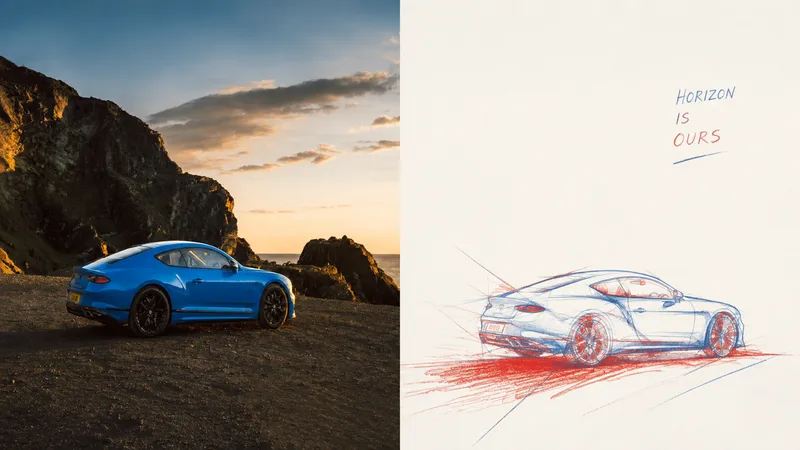
ImagexiaoxiaodongP123 | Red/Blue
Suitable for personal photo organization, independent publishing, exhibition exercises, and lifestyle visual creation. Even when the original image has an ordinary composition, a cluttered background, or a small subject, you can reestablish the focus through subtraction, rearrangement, cropping, and changes in scale, rather than simply applying a filter. In the lower half, extract only the most recognizable subjects, contours, structures, poses, and narrative relationships from the photo. Reconstruct them as a red-and-blue colored-pencil expressive illustration incorporating Angular expressive figure line. Do not fully copy the photo, retain every object, or redraw each item one by one; actively remove most of the background, details, and irrelevant elements. Keep only the core information that best represents the original objects and theme, and use angular expressive linework, contour lines, hatching, overlapping lines, rubbing, and free curves to summarize them anew, so viewers can immediately recognize the correspondence between the illustration and the photo above.
Information
- Version
- v3
- Last updated
- Runtime credits
- Usage-based
- Models
- Auto