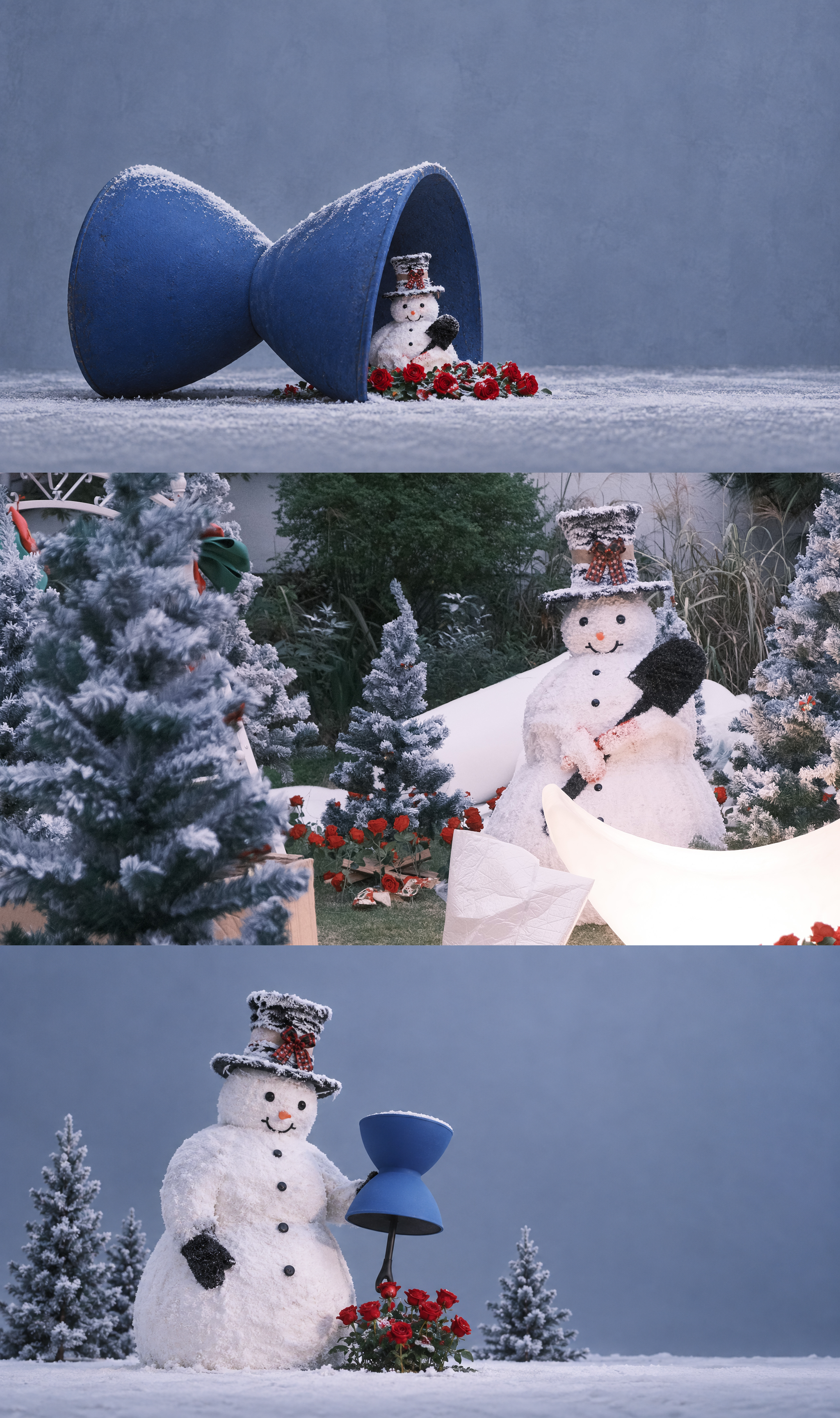
Displaced Film · Starryear
Centered-photo surreal triptych
Displaced Film · Starryear
Centered-photo surreal triptych
Showcase
Description
【Featured】The Starryear premium Skill series Turn one photo into a vertical surreal triptych: the original image remains in the center, while the scenes above and below extend closely related surreal settings from the people, objects, poses, colors, and spatial cues in the photo. The same subjects undergo absurd yet coherent changes in scale, support, or cause and effect. Ideal for creating “original image in the middle” displaced-film compositions, photographic narratives, and visual concept art—not ordinary filters, collages, or fantasy scenes completely detached from the source photo. The center panel preserves the photo’s realistic texture, with only the necessary horizontal adjustments to fit the composition. The upper and lower panels use restrained cinematic scenes or mime-stage aesthetics with generous negative space, emphasizing one clear visual relationship and creating an echo or narrative loop below that responds to the scene above. The final output is a borderless vertical triptych with equal-height upper and lower panels, in an overall 16:27 aspect ratio—well suited to work with a sense of photographic evidence and absurd narrative.
Best for
Visual creators who want to turn a single photo into work with an absurd narrative and a sense of photographic evidence.
How to use this Skill
Provide your input
Provide one photo as the creative source.
Run the Skill
Extend the people, objects, poses, colors, and spatial cues in the photo into surreal cinematic scenes that echo above and below, while keeping the original photo in the center.
Review your result
Receive a borderless vertical triptych with equal-height top and bottom panels, combining photographic texture with a coherent surreal narrative.
Related Skills
View all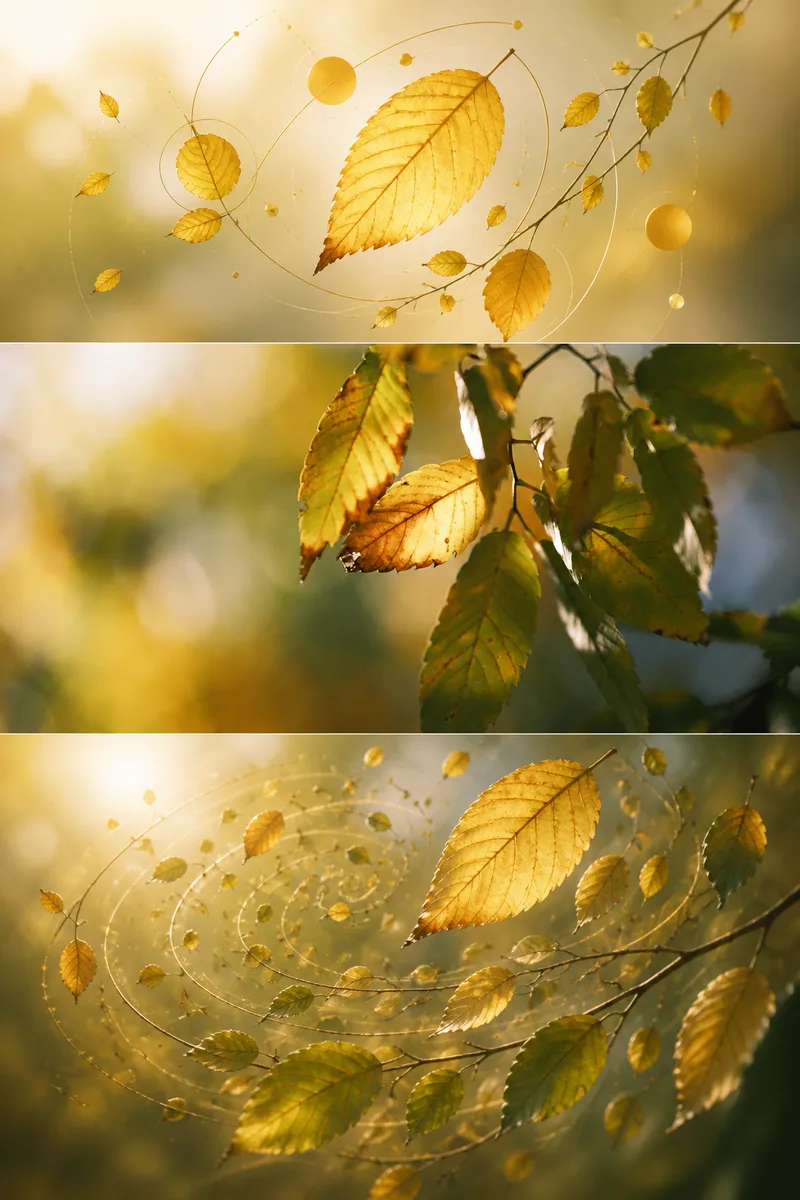 Image
ImageS.012 Year Clone
Turn a single photo into a borderless vertical triptych: the center preserves an unchanged crop of the original image as clear evidence of the scene, while the top and bottom sections each clone and invert a different subject from the photo, creating a surreal yet grounded visual work rooted in the original environment. The top panel can focus on a primary subject such as a person or animal, while the bottom panel works well with clearly structured objects such as boats, buildings, railings, landmarks, or other defined forms. Each generated panel retains one recognizable subject at a clear scale, while blending smaller inverted figures into the foreground, background, water, rocks, roads, or architectural edges. The original scene’s lighting, perspective, occlusion, textures, and depth of field are preserved throughout. Ideal for photographic collages with people and objects separately duplicated and inverted, source-photo-driven surreal triptychs, and visual experiments that retain features such as landmarks, mountains, and skylines. The final output is a single vertical 2:3 image without text, borders, watermarks, or decorative titles.
 Image
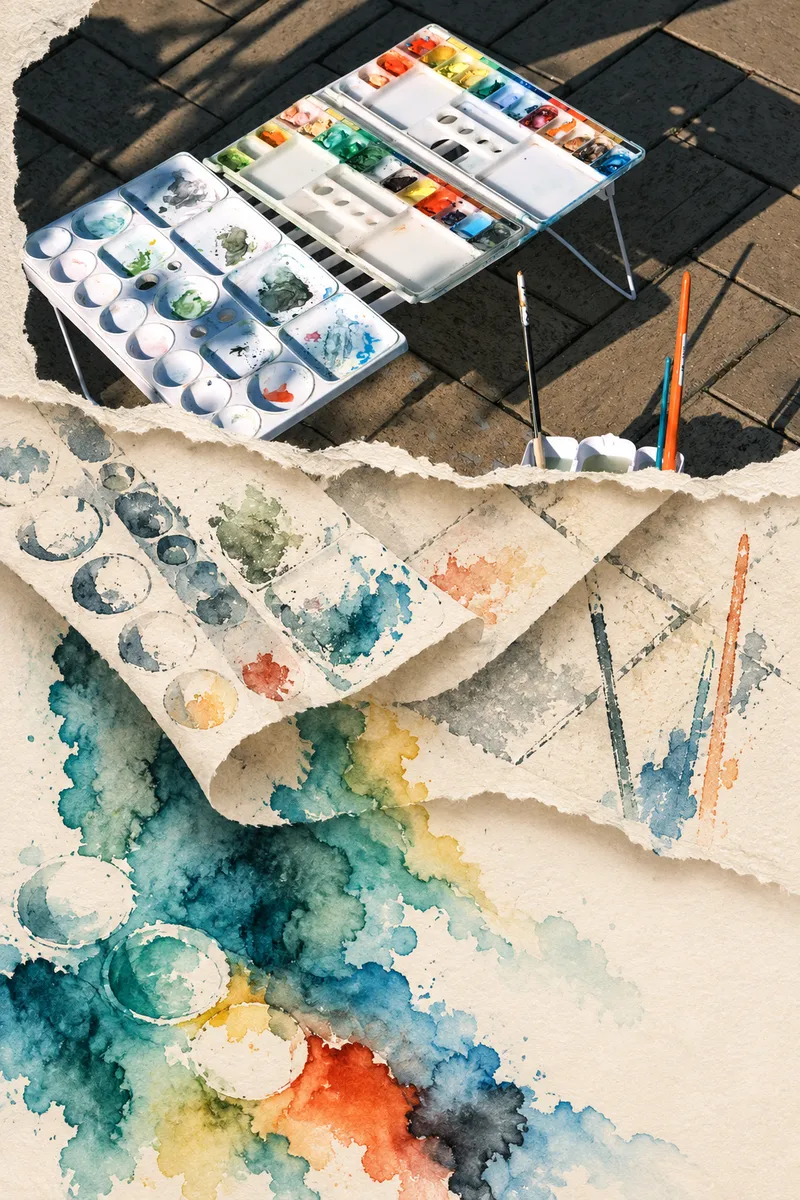
Image【S.005】Oil & Ink Wash
Turn a single photo into a vertical artwork with tactile depth and narrative layers: the top preserves the source photo as clear visual evidence, the middle presents a dimensional photo memory through warm ivory handmade paper that is lifted, curled, and layered, and the bottom releases it into a wet, transparent, diffused afterimage of colored ink. Ideal for creating “original image above, ink flowing downward” Xingnian ink wash, torn-paper photo ink wash, and dimensional page-turning ink wash works—especially from photos of people, animals, architecture, or landscapes where the original identity, number, direction, and spatial relationships must be preserved. The finished piece emphasizes one cohesive vertical composition rather than a simple filter or evenly divided collage. The photo area remains sharp and recognizable, while the paper layers carry the scene’s rhythm, contours, reflections, or negative space, using natural paper thickness, deckled fibers, overlapping layers, and soft shadows to create a convincing page-turning effect. The lower ink section uses a small number of related color families to show water-driven bleeding, layered color, backflow, pooling, and seepage, making the image undergo a clear spatial transformation across different materials. The overall look centers on matte warm ivory paper and open space, avoiding a second complete person, unrelated fantasy elements, decorative paper strips, antiquated Chinese painting styles, or excessively saturated visual noise, and produces a polished vertical artwork.
 Image
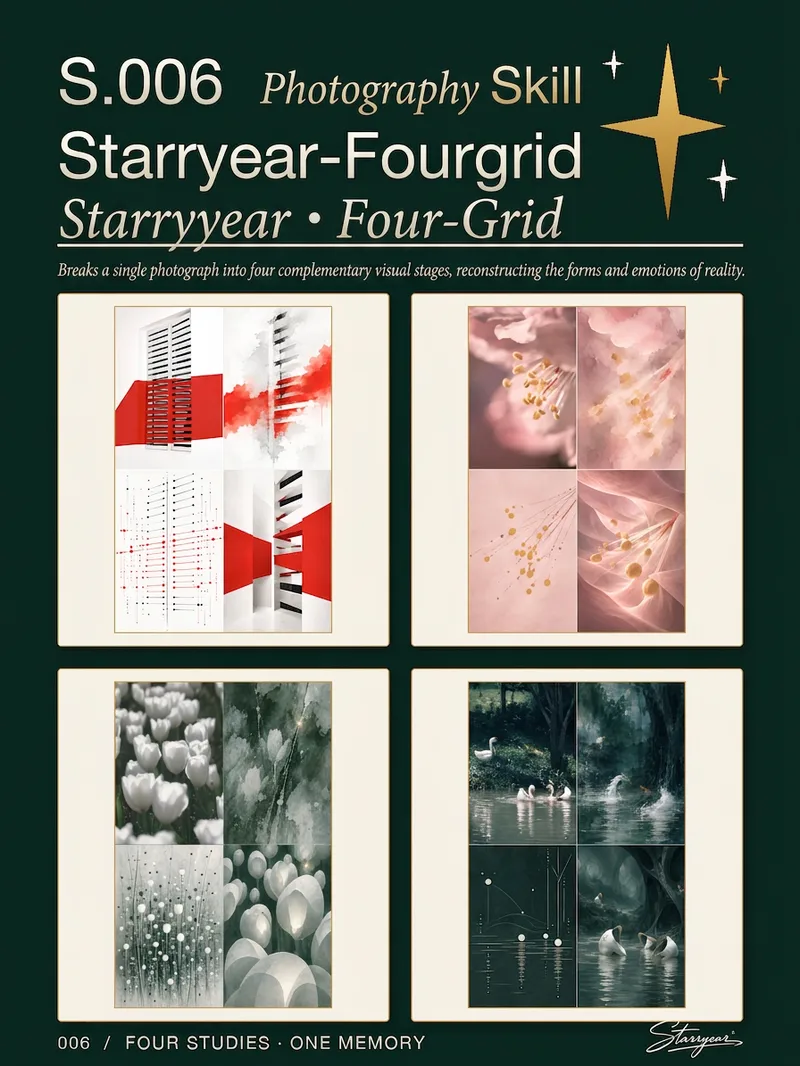
Image【S.006】 Four-Panel Ink
Turn one photo into a vertical 2:3 ink-wash artwork arranged in four panels. Preserve the original image as the upper-left panel, then extend the photo’s own colors, compositional relationships, movement paths, and spatial rhythm into three distinct visual expressions. The result is not an ordinary collage or four filters, but a continuous translation from photographic evidence to poetic memory, dot-and-line rhythm, and finally surreal space. The second panel distills the photo’s atmosphere in a semi-abstract, moist, and elusive form. The third transforms observable directions, intersections, repetitions, and density patterns into restrained dot-and-line structures, moving beyond the outlines of specific objects. The fourth retains the original image’s spatial grammar and layers, replacing real objects with folds, interfaces, passages, or other nonrepresentational forms derived from the photo to create a surreal world whose origins remain recognizable. For each uploaded photo, the artwork re-extracts its colors and visual features rather than applying a fixed theme, palette, or composition. It is suited to creating ink-wash four-panel works, one-photo-to-four transformations, source-image abstraction, and editorial-style visual posters. The result is one cohesive vertical artwork with no text or borders.
Information
- Version
- v5
- Last updated
- Runtime credits
- Usage-based
- Models
- Auto
- Use cases
- Images & design
- What you get
- Image
- Visual styles
- CinematicSurrealist