
1 Post->3-7 Unexpected Topics
From viral assumptions to ready topics
1 Post->3-7 Unexpected Topics
From viral assumptions to ready topics
Showcase
Description
😤 Do you feel this too— You scroll through viral articles for an hour, save seven or eight, and feel like you've "learned." But when you sit down to come up with topics—your mind goes blank. Hundreds of articles in your bookmarks, and not one of them turns into your own content. You're not lacking material; you're lacking a method to "extract your own topics from others' viral posts." 🔍 Where's the problem— Inside every 100,000+ viral article, there are a few viewpoints that "most people nod along with, but actually don't hold up." Most people scroll past them. A few people pick these views out, think in reverse—and a new topic is born. The gap is in this one "deconstruction" action. 🛠️ How it helps you— 📥 Drop in a viral article link 🔬 Automatically scans the full text, picks out common consensus that "sounds right, but the conditions for truth are quietly stripped away" ❓ Dives into three key questions for each: ① Under what circumstances is it false? ② What does it oversimplify? ③ Which context did it sneak in from? 🔄 Reverses into 3–7 counterintuitive topic ideas 📊 Each comes with a complete output: ✅ Logical path — why this topic holds up ✅ Emotional hook audience — who it's for, what hits them ✅ Risk boundary — where you might go wrong ✅ 5‑dimensional viral score — how hard this topic can hit It doesn't give you a bunch of directions to think about; it gives you topics you can start writing on right away. ✍️ 🚀 Give it a try— Search for "1 Post->3-7 Unexpected Topics" in YouMind. Open it and drop a link to a viral article you've seen recently, and it will walk you through deconstructing it into topics. 🗂️ Supports deep dives on single articles + batch filtering 📎 Opinion pieces, experience sharing, tutorials, lists—works with any article type
Why we love this skill
It accurately identifies counterintuitive consensus cracks in viral articles and transforms them into 3-7 ready-to-create topic plans, helping you easily craft highly shareable content.
Related Skills
View all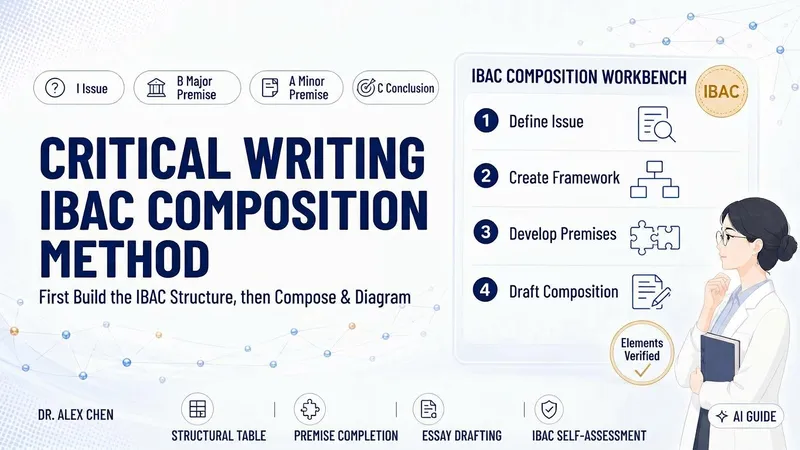 Write
WriteCritical Writing · IBAC
Many articles lack depth not because of the writing, but because the author has not fully clarified what question they are answering or why their conclusion follows. This skill uses Tian Hongyun’s critical writing structure, IBAC— I: Issue, B: major premise (hidden assumptions and beliefs), A: minor premise (facts and evidence), and C: Conclusion—to first narrow a topic into an arguable question, then create an IBAC argument map and pause for your confirmation. Once confirmed, it turns the framework into a complete argumentative essay, along with a hand-drawn marker-style structure diagram and an IBAC self-checklist that identifies, point by point, where premises remain weak and where evidence is missing. It does not embellish or fabricate: wherever evidence is insufficient, it writes “evidence needed” rather than glossing over the gap with rhetoric. Suitable for academic writing, science communication, workplace writing, and independent media, with flexible use across contexts.
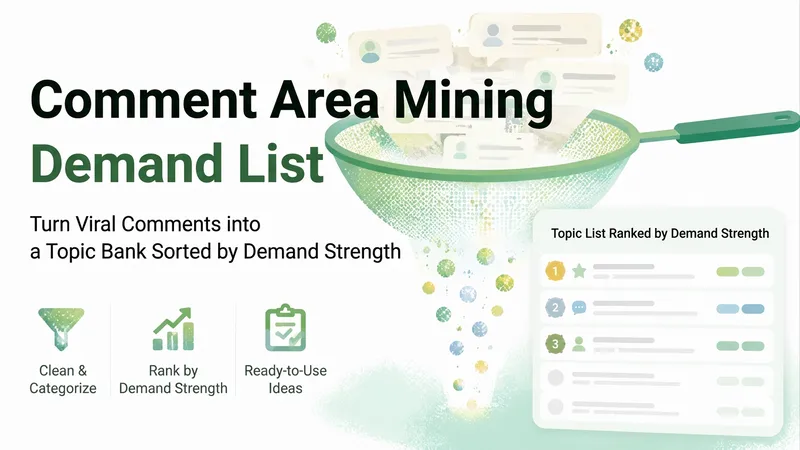
Comment Demand Miner
You come across a viral post, scroll through its comments for ages, and still have no idea what to make next. 【Comment Demand Miner】sorts scattered comments into six categories (help-seeking, opposing, personal-experience, follow-up-question, complaint, and unrelated), first cleaning them up and telling you how many were removed and why. It then ranks a list of content ideas by demand strength. Each idea includes the idea itself, why there is demand for it (which comment type points to it and roughly how many comments do so), three opening lines plus a structure outline, and potential pitfalls. It also provides a reverse list of topics that commenters ask about frequently but that you should not make content about, including medical diagnoses, investment promises, and legal judgments. Finally, it tells you which types of content are most likely to contain genuine demand in their comments: how-to content tends to produce more help-seeking comments, opinion content more opposing comments, and story-based content more personal-experience comments. Hard rules: no downloading, scraping, or bypassing login walls. If comments cannot be read, it will say so honestly and show you how to copy them. It will not republish commenters' exact words as content, extract any personal information about commenters, or include privacy-related information. It will not organize flame wars or cyberbullying, and it will not predict which idea will go viral.
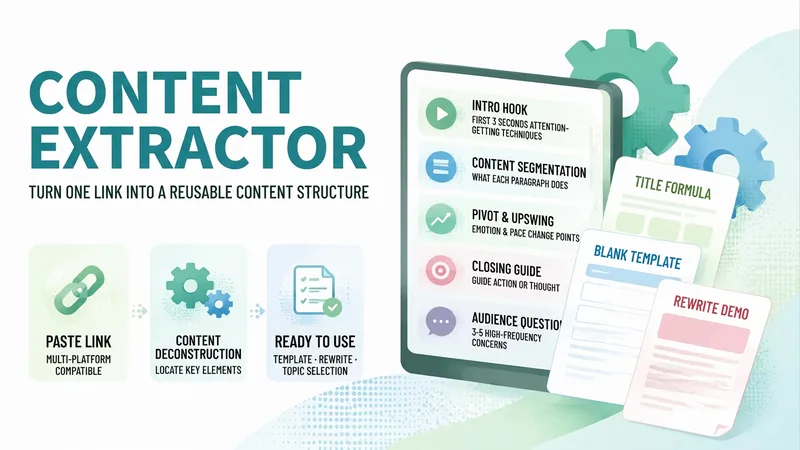
Short-Form Content Extractor
You come across a particularly well-made piece of content and want to learn its structure, but don’t know where to start. **Content Extraction Sheet** breaks down a link from Douyin, Xiaohongshu, WeChat Official Accounts, Bilibili, Weibo, or Zhihu into a practical structure you can use right away: what technique the first three-second hook uses, how many sections the content has and what each one does, where the transitions and emotional build-ups appear, and what the ending calls viewers to do. It then gives you three highly practical resources: an abstracted headline formula, with three examples adapted to your field; a blank structure template with fill-in fields; and a rewritten example based on a topic you choose. It also finds 3–5 questions viewers genuinely care about in public comments, which can become topics for your next piece of content. The honest boundary comes first: when the link content is accessible, it will clearly say “based on the original.” When it isn’t, it will say so plainly and give you a three-step method for obtaining the material—never inventing content from a link alone. Strict rules: no downloading videos, removing watermarks, bypassing login or paywalls, reposting original content, rewriting to disguise plagiarism, or extracting other people’s personal information.
Information
- Version
- v9
- Last updated
- Runtime credits
- Usage-based
- Models
- Auto