User Interview Question Builder
User Interview Question Builder
Showcase
Description
Design high-quality user interview questions, guides, and follow-ups for product research, customer discovery, UX research, and feature validation—and turn interview evidence into product decisions.
Related Skills
View all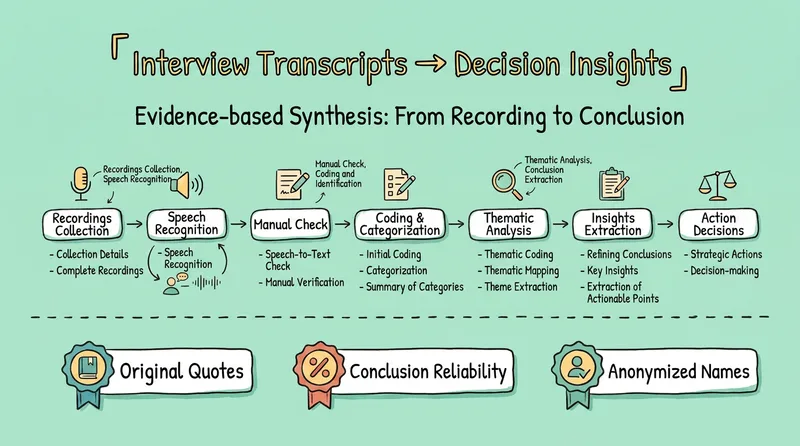 Research
Interview-to-Insights V3
Turn interview, user research, or focus-group transcripts into an evidence-based research synthesis where every conclusion is traceable to a supporting quote. From one transcript to twenty, get coded themes, a tension map, an opportunity backlog, and direct answers to your decision questions—no more hours of recordings with zero findings. For businesses and product teams: save days of analyst time spent organizing and coding. Every claim is anchored to participants’ exact words and timestamps, making it auditable and traceable while reducing the risk of AI-fabricated insights. Opportunities are presented as “when [situation], [who] wants [outcome] because [reason]”, ready to connect with product roadmaps and market decisions. For researchers and academics: follow rigorous qualitative research practice rather than simple summarization—quote-first open coding, Behaviour/Belief/Wish evidence categories, falsifiable themes, and deliberate searches for disconfirming evidence. The method is rigorous enough for a research paper. Sample discipline is strict: percentages are not reported with fewer than 12 participants, n=1 is identified as a hypothesis rather than a finding, and conclusion strength is based on participant counts. Ideal for product managers, UX and market researchers, journalists, consultants, founders, and anyone with hours of recordings but no research findings yet. English: Turn interview, user research, or focus-group transcripts into an evidence-led research synthesis where every conclusion is traceable to a verbatim quote. Feed it one transcript or twenty, and get coded themes, a tension map, an opportunity backlog, and a direct answer to your decision question—no more hours of recordings with zero findings. For businesses & product teams: skip days of manual coding; every claim is anchored to participant quotes with timestamps, auditable and traceable, eliminating the risk of AI-fabricated insights; opportunities are framed as "when [situation], [who] wants [outcome] because [reason]", ready to feed product roadmaps and market decisions. For researchers & academics: real qualitative practice, not summarisation—quote-first open coding, Behaviour/Belief/Wish evidence tagging, falsifiable themes, deliberate disconfirming-evidence hunting, rigorous enough for a methods section; strict sample discipline: no percentages under 12 participants, n=1 flagged as hypothesis rather than finding, theme strength counted in participants. For product managers, UX & market researchers, journalists, consultants, founders doing customer discovery—and anyone sitting on hours of recordings with no findings.
 Research
Customer Signals
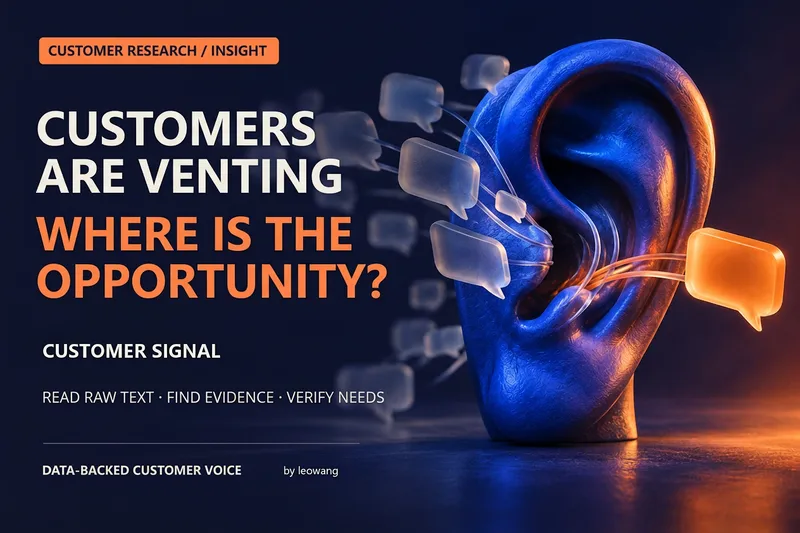
There’s plenty of feedback—but what’s actually worth solving? Customer Signals organizes customer interviews, surveys, reviews, support tickets, and churn feedback. It extracts exact quotes, pain points, trigger events, and alternative approaches. It merges duplicate materials, preserves counterexamples, and separates research findings from opportunities that still need validation. It supports research synthesis, a VOC quote library, JTBD, provisional user personas, competitor review comparisons, and research gap plans. It can also design public community research, customer interviews, and PMF surveys. Online collection depends on the host’s available tools; without internet access, it provides search and sampling plans. For product managers, indie developers, operators, and small teams. Complaints do not equal willingness to pay, so the research marks evidence boundaries and identifies the next steps for validation. Published by: leowang. Adapted from customer-research v2.0.4 under the MIT License, with the required copyright notice retained.
 Write
WriteInterview Outline Master V2
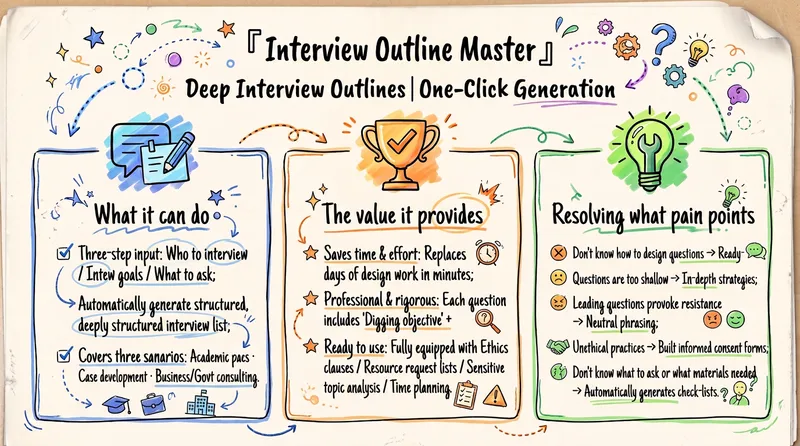
Three primary scenario pathways: 🎓 Scenario A | Academic research (theses and journal articles, including research-question mapping and safeguards against leading questions) 📚 Scenario B | Case development (professional master's and teaching cases, including key-event timelines and triangulation) 💼 Scenario C | Commissioned research and consulting (business and government consulting, following a current state–problems–causes–needs–recommendations framework) Four interviewee-type pathways: automatically adapt wording, ethical requirements, and sensitive-topic anticipation for government officials, business executives, frontline employees or customers, and academic experts. Pre-interview materials checklist: send it with the invitation to request materials for refining the guide; when no materials are available, automatically supplement with public-source research. Ready-to-use structure: each probing point explains “what you are uncovering,” with five follow-up strategies (clarification, deeper probing, comparison, hypothesis, and paradox), informed-consent ethics provisions, and time planning.
Information
- Version
- v3
- Last updated
- Runtime credits
- Usage-based
- Models
- Auto