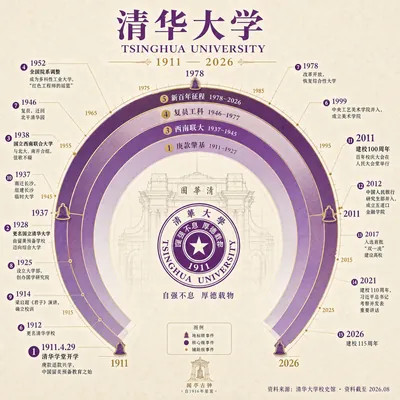
Timeline Infographic
A visual yearbook of major events
Timeline Infographic
A visual yearbook of major events
Showcase
Description
Organize years, major events, and authentic visual archives into a circular yearbook with a distinctive central focus.
Recommended by
nene@YouMind
Why we love this skill
Turns scattered major events into a verifiable, traceable circular visual almanac by combining accurate timelines, official visual references, precise callouts, and editorial information hierarchy.
Related Skills
View all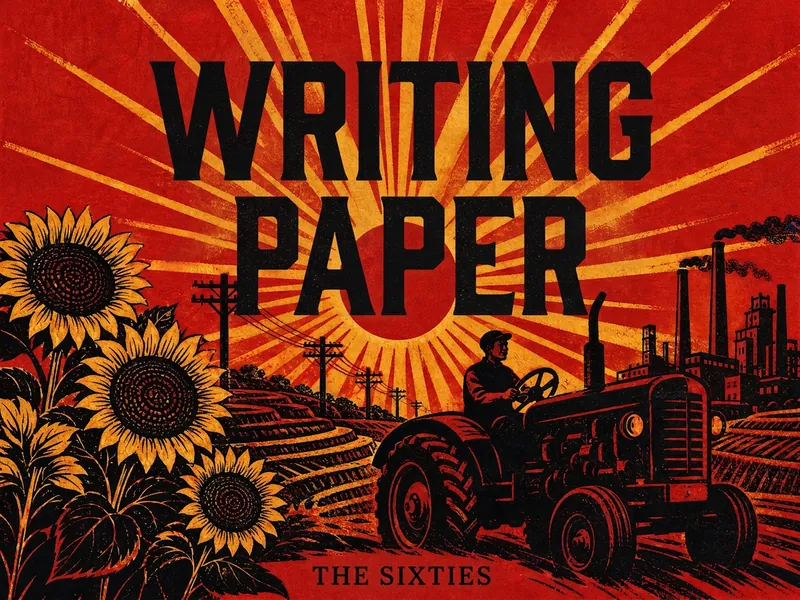 Image
ImageModern Chinese Era Visuals
Transform titles, themes, or graphics into visual designs inspired by modern Chinese eras, suitable for book covers, posters, cards, illustrations, typography, and social media graphics. Simply provide the text, target era, design format, and aspect ratio to receive a visual concept tailored to your theme. If no ratio is specified, a portrait cover composition can be used. Supports a range of styles from the 1920s–30s Republic of China period and the 1940s through the 2000s, including Eastern Constructivism, War of Resistance woodcut, revolutionary realism, understated literary design, humanistic minimalism, and digital visual styles. Each era-based style presents a distinct design language through its color palette, composition, typography, graphics, and print texture—for example, geometric display lettering, woodcut marks, limited-color flat fills, asymmetrical layouts, paper grain, and balanced negative space. Whether you need a literary book cover, an era-themed poster, or a simple Chinese title design, you can evoke the aesthetics of the corresponding period while keeping the text clear and the composition clean. Supports common aspect ratios including 1:1, 2:3, 3:2, 4:3, 16:9, and 9:16, making it suitable for publishing visuals, exhibition promotion, content graphics, and personal creative work.
 Image
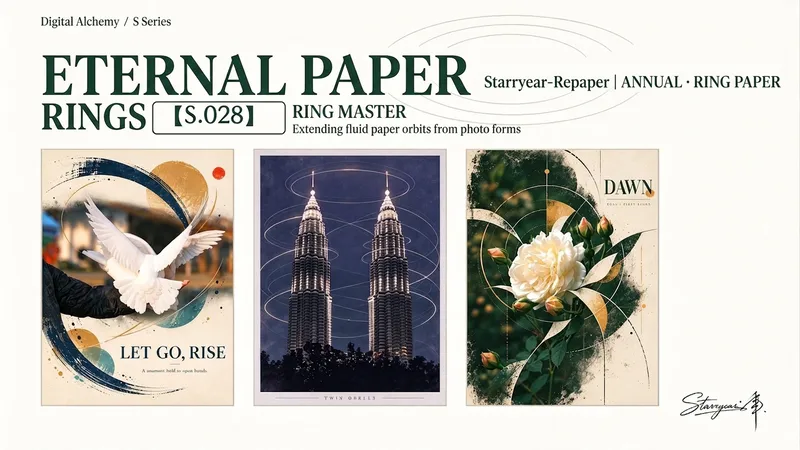
Image【S.028】 Starryear Ring Paper
Turn a photograph into a distinctive 3:4 vertical ring-paper poster. The work preserves the original subject, compositional relationships, natural light, and recognizable setting, while ring structures grow from the subject’s contours, direction, curves, and colors. These structures relate to the image, allowing photography and graphics to coexist naturally in the same visual space rather than simply adding decorative elements. The poster uses restrained paper and print textures, which may incorporate fibers, dry-brush marks, woodcut grain, and subtle color-registration variations, while preserving key details and clear contours. The rings adapt to each photograph’s content and extend into the photo’s edges and negative space, creating a cohesive visual rhythm. It works well for photographs of flowers, plants, architecture, textures, people, and subjects with a strong sense of direction or repeating structures. The final output is a complete finished piece, with text used only as a concise, secondary title or annotation.
 Image
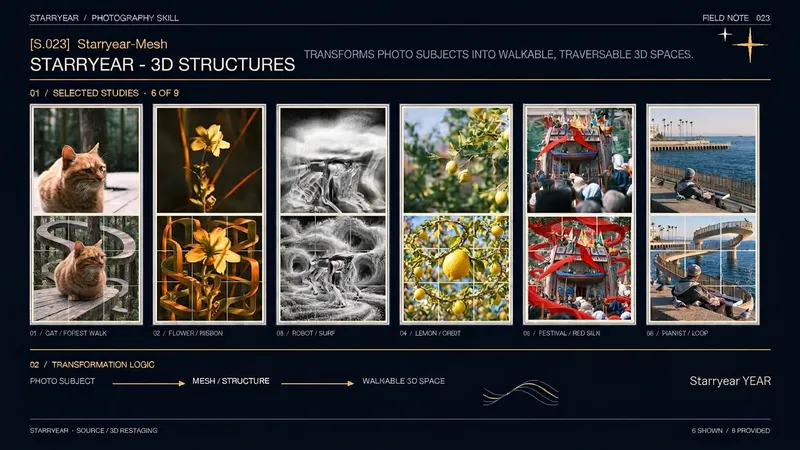
Image【S.023】Starryear 3D Photo
Turn a real-life photo into a vertical “memory nine-grid” artwork that combines documentary grounding with a surreal sense of space. The upper section preserves the original photo as a centered square evidence frame, while the lower section expands into a complete three-dimensional nine-grid world. The people, objects, actions, color relationships, and environmental cues from the photo are rearranged across the nine panels to create a coherent spatial paradox with a photographic feel—not an ordinary filter or a simple crop-and-paste collage. The main subject is enlarged in the lower grid as the primary visual focus, clearly preserving the person’s face, pose, or key objects while crossing adjacent panels and dividing lines. Occlusion between foreground and background, perspective, depth, and natural shadows create a convincing sense of three-dimensional layering. Each panel retains a source-photo-driven surreal transformation while sharing the same spatial logic, allowing close-up details, broad views, and negative space to form one cohesive scene. The final output is a vertical PNG with no text or watermark. The upper and lower sections are harmonized through consistent white balance, color temperature, brightness, contrast, and saturation, allowing the original photo and reconstructed scene below to blend naturally at the transition. Suitable for surreal photography, photo memory art, visual storytelling with people, and creative imagery with a collectible feel.
Information
- Version
- v21
- Last updated
- Runtime credits
- Usage-based
- Models
- Auto
