Colossal Scene Illustration
Colossal Scene Illustration
Showcase
Description
Say one sentence, and you'll get a whole world. Palaces float above seas of clouds, alien megastructures rise at the edge of wastelands, and a print-textured stele pierces the starry sky—architecture so huge it can't fit in a frame, people so tiny you have to search for them. Xianxia, sci-fi, dark fantasy, retro covers—it can handle any genre; just set the mood. Great for novel covers, wallpapers, and concept illustrations.
Why we love this skill
Purpose-built for surreal megastructure art, it leverages extreme scale contrast and negative space to construct imposing monumental architectural scenes, perfectly capturing the ethereal charm of Chinese xianxia and epic cinematic texture.
Related Skills
View all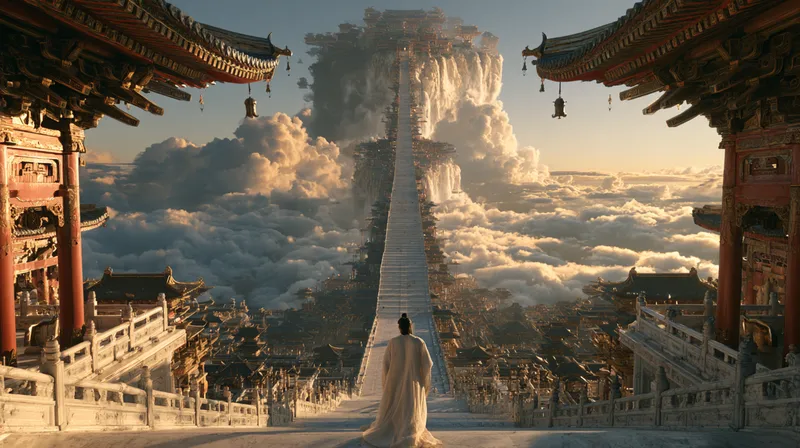 Image
ImageColossal Celestial Palace
Turn a Chinese scene concept into a Chinese colossal celestial-palace prompt ready for AI image generation. Preserve the number of people, their actions, key objects, location, era constraints, and mood so the image stays true to the original intent while gaining a grand Eastern sense of scale. Whether the scene features tea, music, meetings, banquets, or reading in a palace—or a celestial landscape of cloud seas, colossal pillars, moon gates, and supersized architecture—you get clear relationships between activities, coherent architectural logic, and layered depth between mountains, water, and empty space. The Skill defaults to a Chinese celestial-palace aesthetic inspired by white-jade-and-gold palaces and solitary cities above a sea of clouds. It combines traditional palace order, cinematic widescreen composition, low-angle golden light, and colors such as ivory white, cinnabar, antique gold, and blue-green. It adjusts character scale, viewpoint, lighting, and negative space to fit each scene. It will not let colossal scenery obscure the narrative actions you specify, and it avoids modern cities, neon sci-fi, cluttered text, and common problems with building or character generation. Each run provides a visual design brief, prompts tailored separately for ImageGen and Midjourney 8.2, and a few possible directions for adjustment. It is suited to concept development, storyboard planning, Chinese-style scene creation, celestial-palace architecture visualization, and optimizing Chinese image-generation prompts.
 Image
ImageDeep Blue Solitude Landscapes
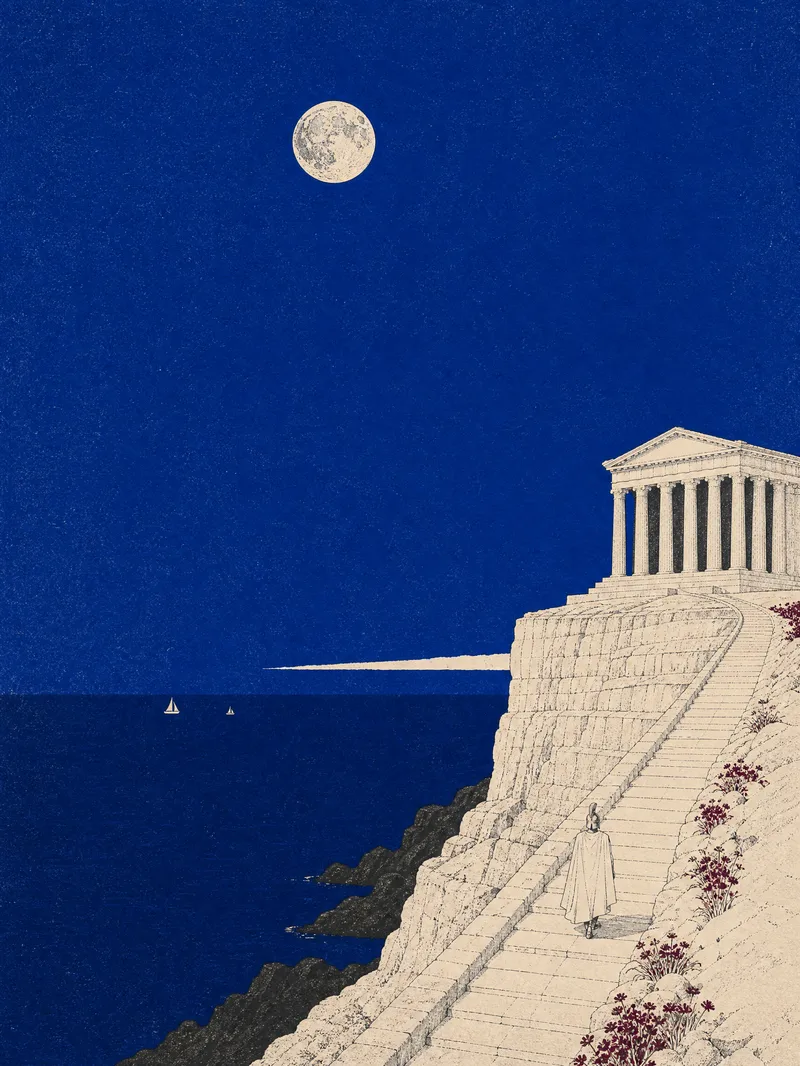
Turn a theme into a deep-blue landscape illustration suited to wallpapers, cover art, and atmospheric posters. Let deep blue set the visual tone, while grand landscapes—mountains, coastlines, snowy plains, and classical ruins—carry the emotion. A tiny figure who does not face the viewer provides a sense of scale, conveying calm solitude and a feeling of timelessness. The work emphasizes a simple yet distinctive visual language, including strong diagonal compositions, generous negative space, solid-color skies, a limited palette, and a grainy matte texture reminiscent of lithographs, woodcuts, or felt. Avoid photo-realism, glossy CG rendering, heavy warm colors, and busy, crowded scenes. The style is suited to sublime images such as a tranquil night sea, a moonlit mountain valley, a lakeside beneath snowy peaks, or a seaside temple. You can provide a location, mood, or scene concept directly to receive a cohesive illustration, along with the complete prompt used for the generation so you can copy, adjust, and continue creating.
 Image
ImageDesert Megastructure Aesthetic
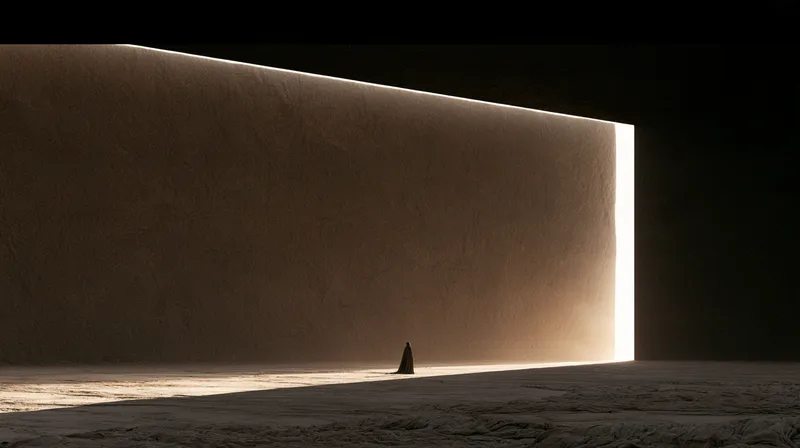
Turn people, objects, cities, interiors, or other suitable subjects into ready-to-use minimalist still-image prompts in a desert megastructure style. The skill preserves the user’s specified subject, number of people, actions, contact relationships, and scene function, while using low-saturation sand and mineral gray, monolithic wedge-shaped geometric megastructures, hard sunlight, vast pure-dark surfaces, and extreme contrasts of scale to create a silent, restrained, architectural image. It does not rely on a film title as a substitute for specific descriptions of lighting, materials, and composition. You’ll get a clear compositional intent, native Chinese ImageGen prompts, and English Midjourney prompts. You can also reduce the output to a single-platform version as needed. This is suitable for single stills, consistently styled image sets, and correcting common deviations such as oversaturated colors, overly dense machinery, unbalanced scale, or visual noise. The visual language can also be applied to city and interior subjects without forcing in a desert. When you request actual image generation, the skill can additionally check character visibility, contact relationships, style anchors, and consistency across images.
Information
- Version
- v8
- Last updated
- Runtime credits
- Usage-based
- Models
- Auto
