具備來源連結的研究綜合
利用 GPT-6 Astra 將筆記、報告和觀察結果轉化為連貫的研究簡報。Astra 會圍繞您的問題連結相關證據,保留相互衝突的論點,並協助您追蹤每個來源如何促成最終結論。

提出一個難題、背後的資料以及重要的限制條件。GPT-6 Astra 協助你連接證據、權衡替代方案,並將結果轉化為可持續完善的清晰簡報。
探索具有多重依賴關係的問題,並要求支持建議的假設、替代方案和檢查項目。
當圖表、截圖或照片包含與問題相關的細節時,結合文字上下文與圖像。
選擇適合任務的推理強度,隨著簡報的發展,通過專注的後續問題繼續完善。
利用 GPT-6 Astra 將筆記、報告和觀察結果轉化為連貫的研究簡報。Astra 會圍繞您的問題連結相關證據,保留相互衝突的論點,並協助您追蹤每個來源如何促成最終結論。
使用 GPT-6 Astra 將選項與項目的預算、時間表和依賴關係進行比較。分析各種方向背後的權衡與假設,然後找出什麼因素會讓不同的選擇變得更具實用性。

上傳圖片或截圖,並向 GPT-6 Astra 詢問您希望了解的特定部分。Astra 能描述可見細節、與參考資料進行比較,或發展出重點明確的解釋,以協助設計評審或撰寫簡報。

貼上相關筆記或添加視覺參考。說明結果的受眾、需支持的決策以及答案必須遵守的限制。
選擇「在 YouMind 中試用」並在提示時登錄。在已選擇 Astra 的對話中繼續,然後要求結構清晰的簡報、比較或解釋。
對照來源驗證重要論點。詢問遺漏的假設、質疑薄弱環節,或在保留所需部分的同時修改某一節。
比較模型的輸入、上下文、輸出、推理方式和任務側重點,以選擇合適的起點。
橫向捲動查看所有模型
瀏覽 GPT-6 Astra 提示詞,為你的下一個網頁尋找創作起點。
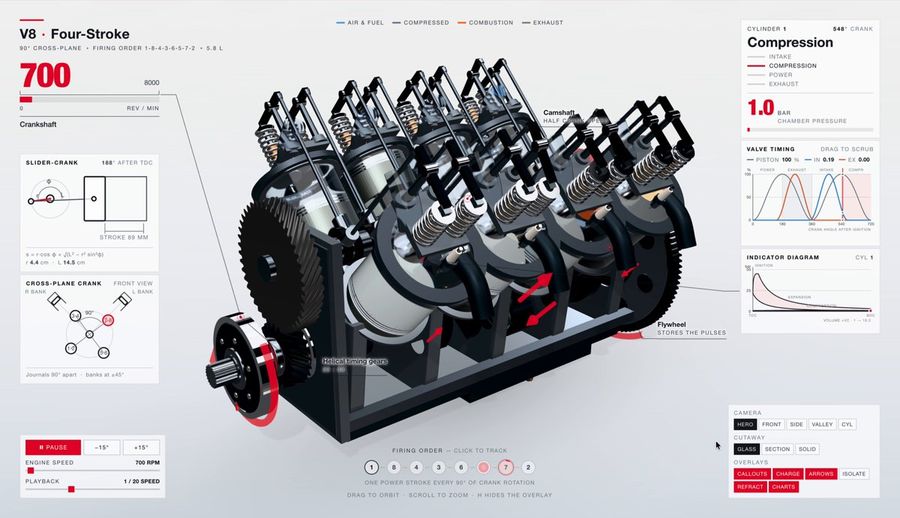
create a highly detailed, interactive visualization of a V8 engine
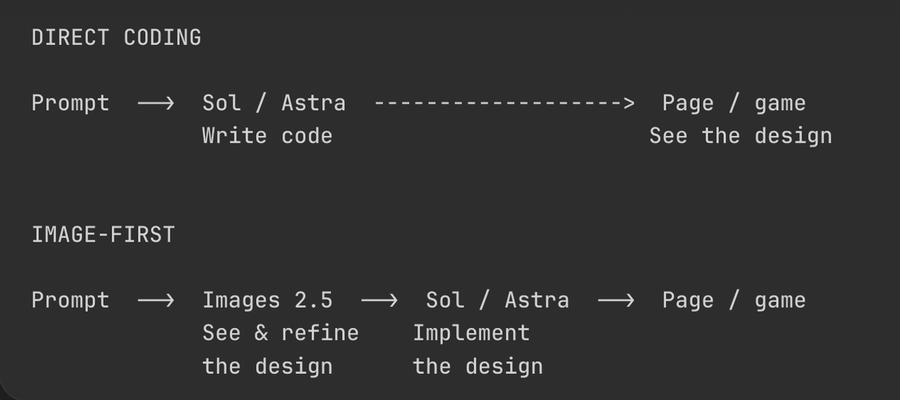
Use imagegen to reimagine this page, then implement it.
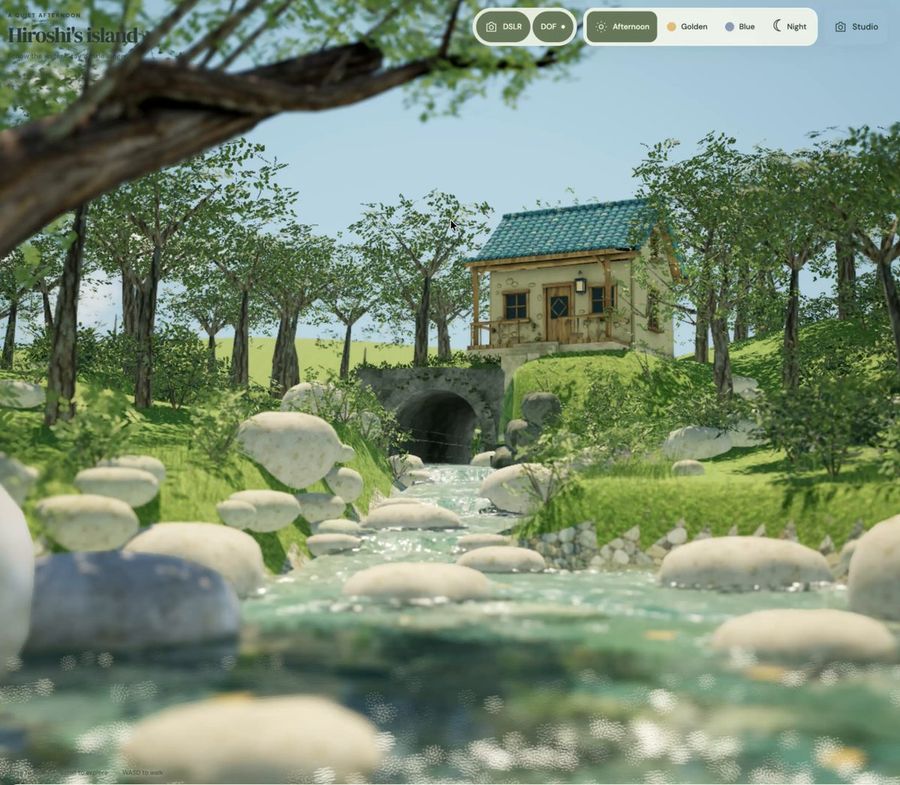
Create a cozy creek 3D experience running in the browser using Three.js. The assets should be modeled in Blender. Ensure it is interactive and visually appealing as a web-based 3D scene.
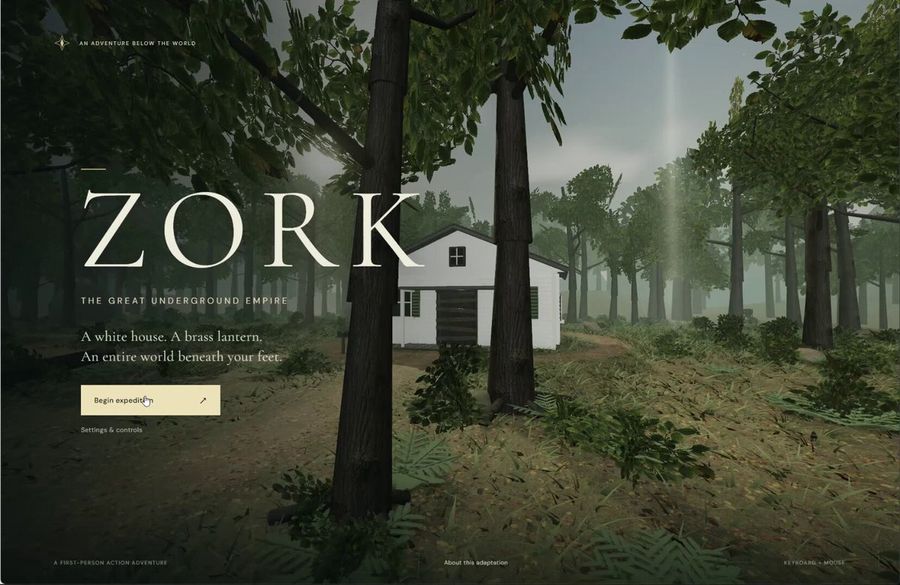
Turn Zork (the classic 1977 text adventure) into a full 3D action-adventure game. Keep the original plot & puzzles, add fight scenes, and build all of the characters & environments directly in Threejs.
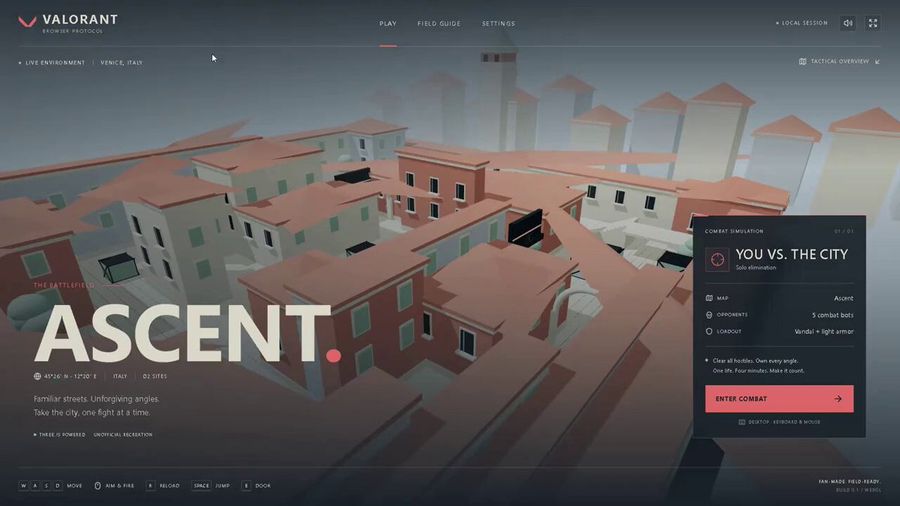
make me VALORANT in three.js, make no mistakes. as a map use valorants "ascent" map
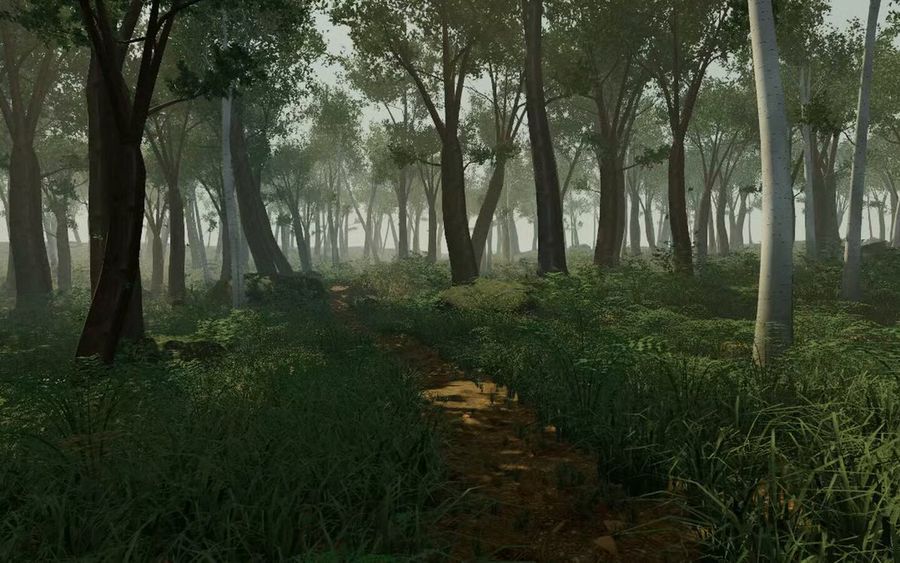
First search for the "/unlazy" skill, read it fully, and use it throughout the entire task.
Treat this as a major visual build lasting at least {argument name="minimum duration" default="5 hours"}. Prefer {argument name="optimal duration" default="8–24 hours"} of meaningful implementation and iteration if the environment allows it. Do not stop after producing one decent-looking scene.
Create an extremely detailed real-time {argument name="subject" default="3D forest"} in the browser. Nothing else. No landing page, cards, story, marketing UI, dashboard, or unnecessary text. The forest itself is the entire experience.
Push density and visual quality extremely hard.
Build massive amounts of detailed grass, varied trees, branches, leaves, bushes, ferns, moss, flowers, weeds, roots, fallen wood, stones, soil, leaf litter, small plants, terrain variation, and tiny environmental details.
The forest should feel almost excessively dense. Empty ground should be rare.
Focus obsessively on:
realistic tree silhouettes,
dense grass,
natural asset variation,
rich colors,
lighting,
contact shadows,
wind,
foliage motion,
atmospheric depth,
fog,
sun shafts,
particles,
terrain,
materials,
scale,
composition,
and detail at both close and far distances.
Avoid obvious repeating assets, billboard-looking foliage, tiled terrain, floating plants, plastic materials, identical trees, sparse procedural placement, excessive bloom, or a generic Three.js demo appearance.
Include smooth free-camera exploration.
Repeatedly capture and inspect the scene from many positions. Identify weak vegetation, empty areas, bad colors, repetition, poor materials, unrealistic lighting, ugly tree shapes, performance bottlenecks, and anything that breaks immersion. Fix these issues and continue increasing quality throughout the run.
The goal is not feature count. The goal is to make one browser forest look completely ridiculous in terms of detail and atmosphere.
Build the full experience, publish it PUBLICLY on ChatGPT Sites, verify the deployment, and return the public URL.
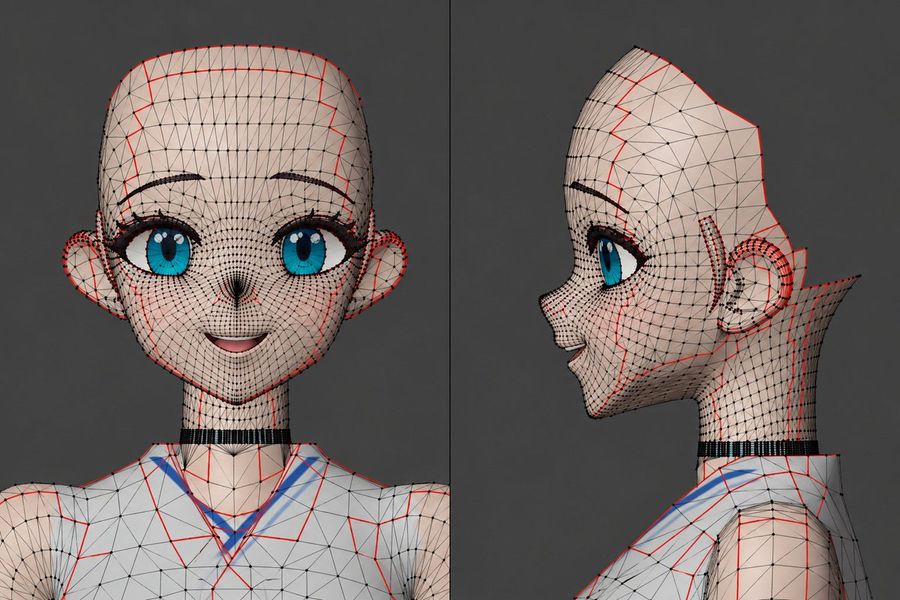
Pass the .blend file to Astra and ask it to photograph the neutral face from front and side views (with/without vertex/edge display). Use these images with GPT-Image2.5 to generate smiling front/side references. Then instruct Astra to adjust mouth corners, cheeks, eyelids etc. to create shape keys based on the reference images, ensuring original topology is preserved and checking tooth/tongue positions.
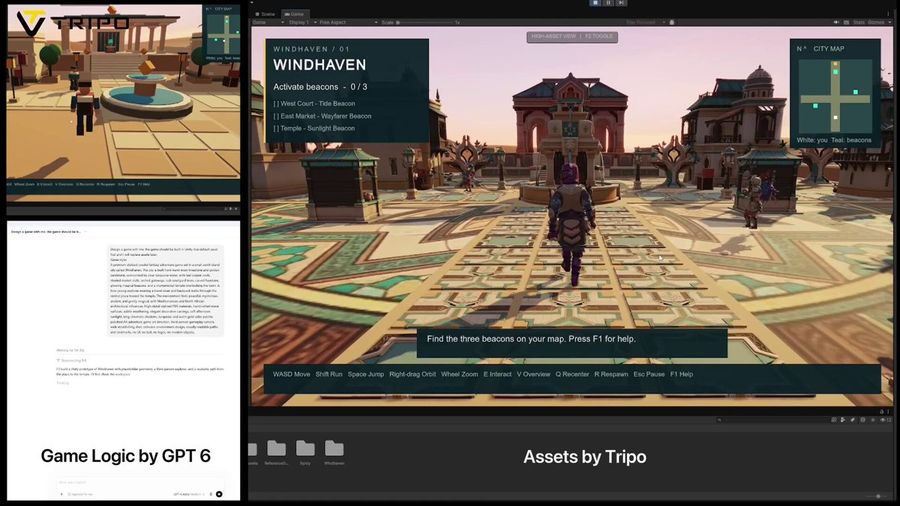
A sunlit fantasy island city. Turquoise waters. Ancient temples. Stone streets. Magical landmarks. And a world that actually feels explorable.
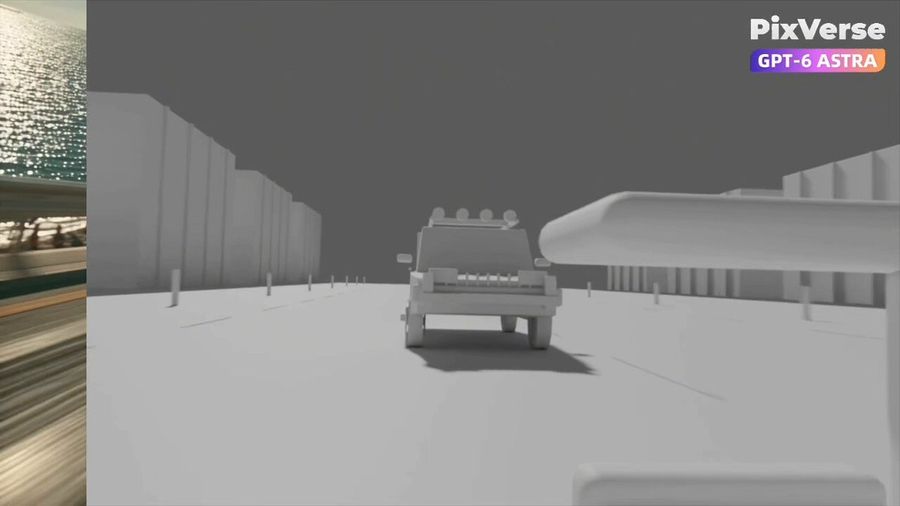
Create an original {argument name="style" default="GTA-inspired cartoon car chase"} using this workflow: Design: Define one main driver, one getaway car, one pursuing car, and one {argument name="environment" default="urban environment"}. Keep their designs consistent. Plan three 4-second shots: rear tracking pursuit, side tracking through a sharp turn, and a wide exit shot. Build in Blender: Create clean gray models and functional character and vehicle rigs. No textures or UV unwrapping are required. Animate and test: Animate the driver, steering, wheel rotation, vehicles, and cameras. Maintain coherent travel direction and vehicle order. Fix clipping, floating wheels, sliding tires, broken poses, and hands losing contact with the steering wheel. Render in Blender: Render frames 1–288 at 1280×720, 24 fps. Assemble actual Blender-rendered frames into a complete 12-second gray-model master. Export each shot separately and render matching gray stills as shape and composition references. Finish with PixVerse Plugin: Use Seedance 2.5 at 720p, processing each shot separately. Use the Blender clips as motion references and the gray stills as shape references. Define a consistent cartoon color palette in the generation prompt. Preserve camera movement, action timing, character and vehicle designs, and vehicle count. Review and deliver: Inspect both complete videos for visual defects and continuity. Repair Blender issues and regenerate only failed Seedance shots, with at most two retries per shot. Deliver the editable .blend, the native 720p Blender gray-model video, the separately labeled 720p Seedance version, and a brief assessment of remaining limitations.
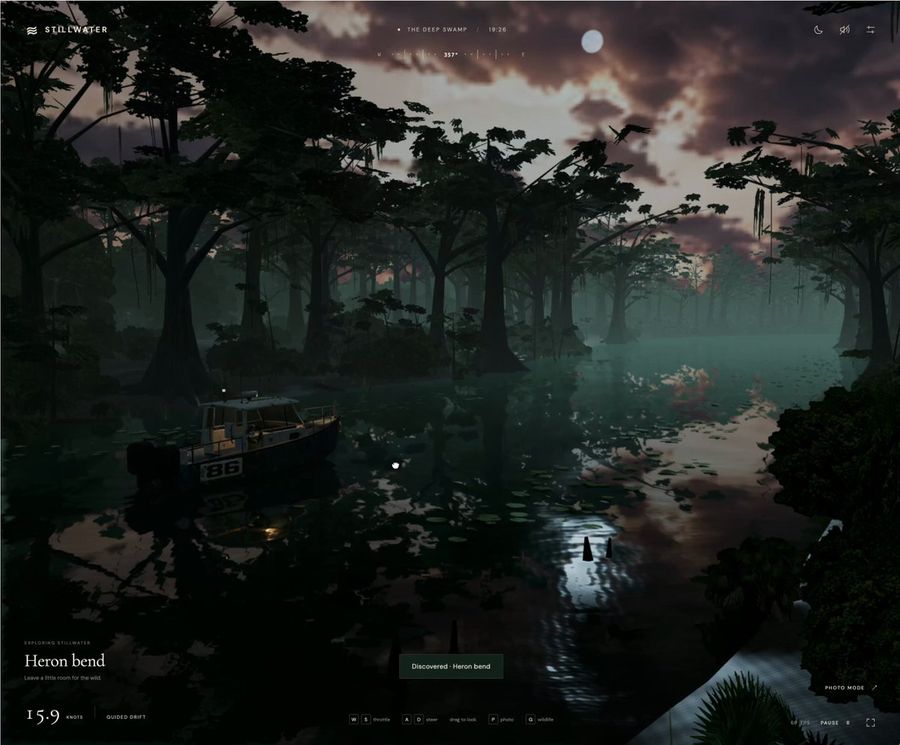
Build a moonlit swamp scene in Three.js. Implement realistic water reflections and atmospheric lighting for a gorgeous, immersive environment.
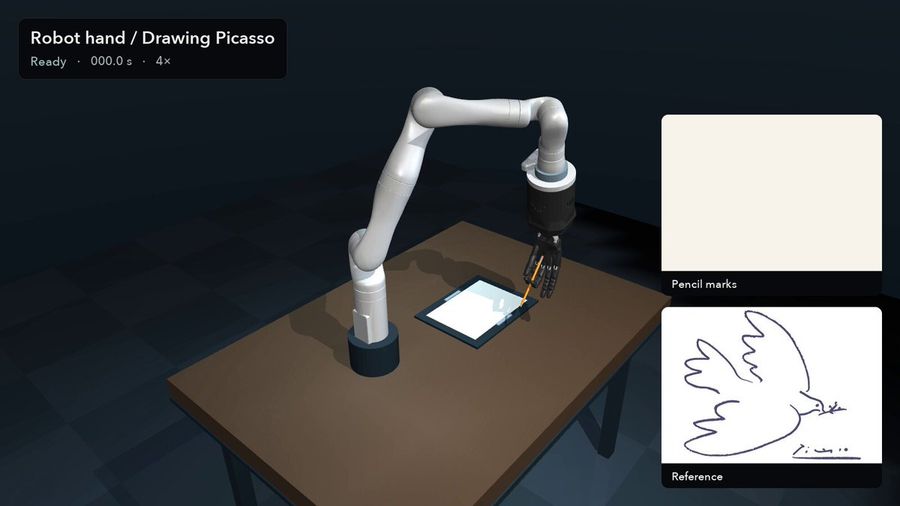
Build a MuJoCo setup and write a controller to draw Picasso's dove using a robot arm and a five-fingered hand.
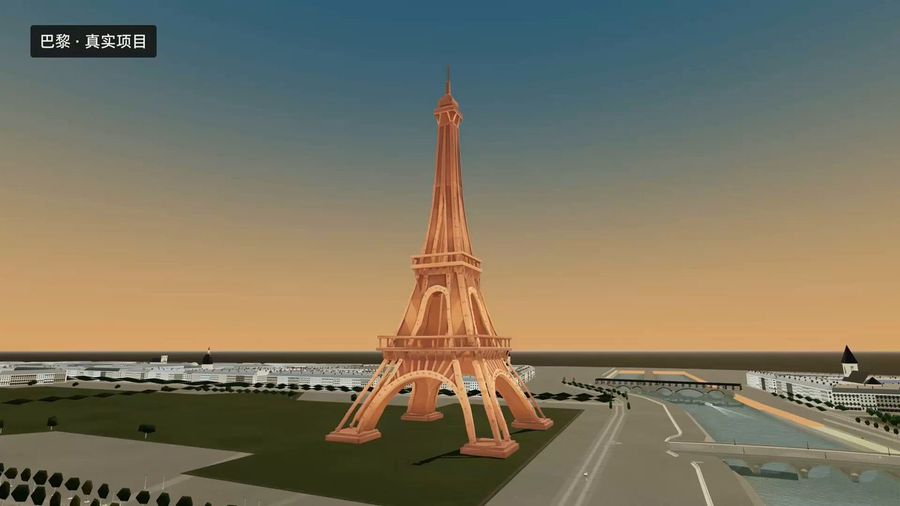
Use Codex and the 3D base model Tripo to build a drivable Paris web game. Generate detailed 3D assets for cars, trees, the Eiffel Tower, and pedestrians. Use code to generate distant structures like blocks, bridges, and the Seine river. This hybrid approach balances detail and frame rate for a browser-based game.