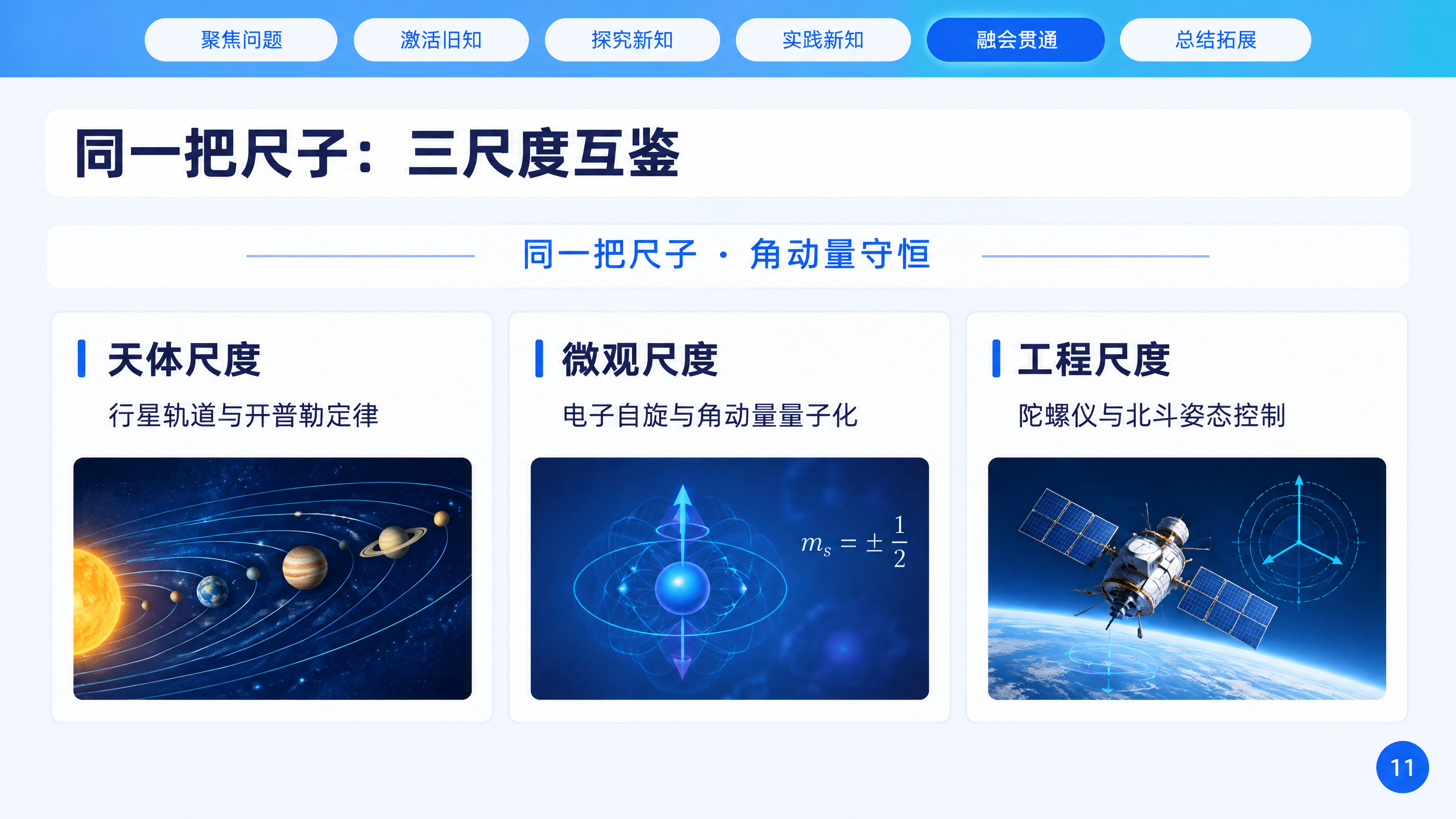
Top Teaching Competition PPT
Build competition-ready PPTs and supporting copy
Top Teaching Competition PPT
Build competition-ready PPTs and supporting copy
Showcase
Description
Turn teaching designs, lecture notes, and course keywords into a complete, image-rich PPT and supporting copy ready for competition use. The workflow automatically switches between two tracks: application track = light background + five-dimensional real-world panoramic visuals; teaching-demo track = blue gradient + six-stage navigation bar. Follow an end-to-end pipeline from “information extraction card” → “two-track selection” → “narrative outline” → “acceptance gate” → “page visuals” → “Slides assembly” → “supporting copy,” with clean light backgrounds, restrained text, fully realistic scenes, and traceable data.
Related Skills
View all
全套课件生成(教案/活动/板书/练习+每章40 页参赛级 PPT)
输入课题与基本信息(教材范围、授课对象、学时、课型),按固定骨架与统一的学术讲义风格,一次生成「备课五件套」:逐字稿教案、课堂活动与互动提问设计、板书设计、随堂练习四份文档,以及约 40 页参赛级 PPT。文档结构固定、内容随课题自适应;PPT 沿用同一套视觉契约(跨课一致),按「先生成图片、再 slidesCompose 合成」两步法产出,并自动回写课程记忆。适用于各学科、各学段。
 Research
旗舰版·三步成课·教师专属备课助手v4.0
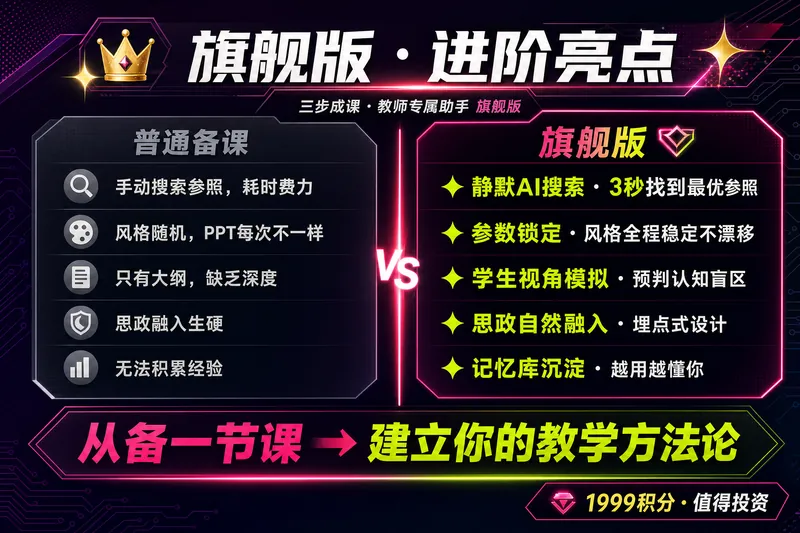
🔥【开学季限时特惠】8月27日-9月5日限时 1599 积分(原价 1999)!新学期,从一套竞赛级备课开始。 【一次生成 · 备课五件套】 🖥 PPT(参赛精修版 / 日常轻量版)· 📝 逐字稿教案(含完整引导语,照着讲就行)· 🎯 活动设计 · 板书 · 随堂练习题 【为什么是「竞赛水准」?】 本技能内置全国优质课、示范课的教学设计模式库,涵盖情境导入、任务驱动、问题链、翻转课堂等主流竞赛打法,并融合布鲁姆目标分类、ADDIE 模型、UbD 逆向设计等专业框架。每堂课都经过方法论校验,而非简单的内容堆砌。 【旗舰版核心升级】——从设计逻辑上就是优质课 ✨ 混合问卷采集:选项点击 + 自由填写,30秒完成信息采集 ✨ 参数锁定机制:课程信息 + PPT风格在第一步即锁定,后续生成零偏移 ✨ 真实交互确认:大纲确认 + 五大件选择均采用可点击选项,实现个性化定制 ✨ 双模式PPT:参赛展示型/ 日常教学型智能切换 ✨ 课后反思闭环:问卷采集 → AI生成反思 → Board Memory沉淀专属教学档案 ✨ 成本可控:生成前声明成本预期,精修全图版/轻量骨架版二选一,不超发不升档 【三步流程】 ① 信息采集 → 两轮交互问卷 + 参数锁定 ② 大纲确认 → AI 先给教学框架,你确认后再生成 ③ 可视化交付 → 一次性输出五件套, PPT + 逐字稿/竞赛标准教案 + 活动设计 + 板书 + 练习题一站式生成,可自由搭配 【定价说明】 1999= 一杯咖啡的价格,换每天的备课自由。 · 单次使用生成完整五件套 · 备课从约 4 小时压缩到约 1 小时 · 竞赛教案可直接生成 · 日常课件可直接授课 · 45 位教师使用迭代,累计节省备课时间超 200 小时 💡 适用场景:幼儿园到大学全学段,语数外理化生史地政艺体全学科,日常教学 / 参赛答辩 / 公开课均适用。 ⚠️ AI 生成内容请结合教材版本、学校要求与实际学情审核修改,最终以教师专业判断为准。 📩 使用反馈/建议:593975647@qq.com,反馈的会有小惊喜🎁哦~

Course Design Assistant v7.0
💡 What can this assistant do for you? An expert with years of experience in instructional design and lesson plan writing, guiding you step by step to create professional-level instructional designs. (Offline training valued at least ¥3000 per session.) 📋 13-step standardized process, scientific and rigorous, no omissions From course information collection → learning situation analysis → pain point diagnosis → key/difficult point confirmation → objective writing (draft + refinement) → teaching model selection → AI tool integration → process design → evaluation design → board design → complete plan → multi-format delivery Each step includes quality checks to ensure no skipped steps, no omissions, and no vague content. 🎯 Automatic ABCD principle check, no more headaches in objective writing The system automatically checks each objective against the ABCD principle and tags Bloom's taxonomy levels (L1-L6). 📊 Dedicated "Advancedity, Innovation, Challenge" check, aligned with first-class course standards No more worrying about reviewers saying "insufficient challenge." The system quantifies the check for you. 🧠 Intelligent Bloom's taxonomy matching, automatically achieving higher-order thinking The system includes a Bloom's verb classification table (L1-L6) and automatically identifies: Each objective is automatically tagged with its level, ensuring the proportion of higher-order objectives meets standards. 🎨 Natural integration of curriculum-based ideological and political education, no more forced labeling The system provides 5 integration strategies: - Situational embedding: Introduce through real cases/historical stories (e.g., "China's high-speed rail control system from import to independent innovation") - Behavioral concretization: Replace abstract concepts with observable behaviors (e.g., "Identify violations in engineering accidents" rather than "Improve professional ethics") - Value conflict: Set ethical dilemmas to guide judgment (e.g., "Economic benefits vs. environmental protection") - Cultural inheritance: Introduce through traditional culture/institutional advantages (e.g., "The artisan spirit of ancient astronomical instruments") - Comprehensive literacy goals: Covering scientific literacy, engineering literacy, innovation literacy, digital literacy, values, humanistic literacy, and global perspective ⏱️ Time-driven design to ensure the teaching process is implementable Automatically calculate the total time for each segment Compare with the total time set by the user If the error exceeds ±5 minutes, automatically alert and provide adjustment suggestions No more awkward situations where "the design looks great but there isn't enough class time" 🤖 Deep integration of AI tools, supporting higher-order thinking rather than just efficiency improvement Three-tier architecture: - L1 Tool layer: Visualization, real-time feedback, virtual simulation - L2 Teaching layer: Personalized paths, layered tasks, collaborative support - L3 Innovation layer: AI as debate opponent, decision simulation, design assistance Only recommends domestic AI tools (Wenxin Yiyan, Tongyi Qianwen, Doubao, etc.), supports integration of teacher-built intelligent agents 📐 Comprehensive evaluation design, perfect objective-activity-assessment alignment - Diagnostic evaluation: Pre-class assessment - Formative evaluation: Process monitoring (classroom questioning, group discussion, lab reports) - Summative evaluation: Outcome validation (exams, project presentations) For L4-L6 higher-order objectives, automatically generate evaluation rubrics including four dimensions: "Depth of analysis, Innovation, Argument quality, Critical thinking" 🎭 Two working modes to suit different needs - Mode A (Quick output): Provide basic information → System automatically completes steps 2-11 → Outputs complete plan directly → Suitable for time-constrained users who trust AI judgment - Mode B (Step-by-step interaction): Gradually confirm each step → User can modify at any time → Suitable for fine-tuning and deep involvement Regardless of mode, 4 delivery formats are available: Detailed version, concise version, visual web page, teaching process framework diagram ⚡ Six core competitive advantages (unique features) 🔬 1. Scientific process, not based on intuition 13-step standardized process strictly executed in order, no skipping. Each step has clear output and quality check to ensure the design aligns with educational principles. 📊 2. Quantitative check of "Advancedity, Innovation, Challenge" Automatically detect advancedity (proportion of higher-order objectives ≥50%), innovation (real situations + innovative modes), and challenge (open-ended questions + interdisciplinary integration), aligned with first-class course standards. 🎯 3. Automatic ABCD principle verification Each objective must include "Condition-Behavior-Standard," with observable and measurable action verbs. The system automatically checks and tags Bloom's levels. 🧠 4. Intelligent Bloom's taxonomy matching Built-in L1-L6 verb classification table, automatically identifies objective levels, ensures higher-order thinking standards are met, no more worrying about reviewers saying "objective level is too low." ⏱️ 5. Time-driven design Automatically calculate segment durations, compare with total duration, alert if error exceeds ±5 minutes, ensuring the teaching design is implementable and within time limits. 📐 6. Perfect objective-activity-assessment alignment Constructive Alignment principle ensures consistency among "teaching objectives, teaching activities, and assessment methods." Each objective has corresponding activities and evaluations. 🎯 Applicable scenarios (covering all higher education) ✅ Teaching competitions: Teaching innovation competitions, young teacher teaching competitions, classroom teaching contests ✅ Course construction: First-class course applications, curriculum-based ideological and political demonstration courses, blended course design ✅ Daily teaching: New lesson preparation, teaching reform, teaching model innovation ✅ Teaching evaluation: Peer review, supervisory observation, teaching quality assessment ✅ Teacher development: New teacher training, teaching ability enhancement, teaching research 🚀 User experience Quick mode (Mode A): Provide course name, chapter, major, class hours → Select Mode A → System automatically completes 13-step process → Get complete teaching design in 30 minutes → Choose delivery format (detailed/concise/visual web page/framework diagram) Detailed mode (Mode B): Provide basic information → Select Mode B → Gradually confirm learning situation analysis, pain point diagnosis, key/difficult points, teaching objectives, teaching model, AI tools, teaching process, evaluation design, board design → Modify at each step → Complete high-quality teaching design in 1-2 hours Review mode: Upload existing teaching design → System evaluates step by step against all elements → Summarize three strengths and three weaknesses → Provide specific and actionable optimization suggestions → Generate a standardized and well-formatted evaluation report document
Information
- Version
- v4
- Last updated
- Runtime credits
- Usage-based
- Models
- Auto