
Terrestrial Life Infographic
Create anatomy infographics for classes and exhibits
Terrestrial Life Infographic
Create anatomy infographics for classes and exhibits
Showcase
Description
Transform any species, plant, fungus, aquatic organism, or structurally distinctive artifact into a 2:3 vertical infographic tailored for classrooms, exhibitions, and natural history communication. Whether you provide just a name, a brief description, a photo, or a thematic direction, you will receive a clear subject profile, reliable classification or background details, and ready-to-use content materials. The final layout centers on a realistic 3D primary visual, accompanied by 5 to 8 key anatomical callouts, a quick summary, surprising facts, a size or everyday-object scale comparison, knowledge ratings, a four-panel detail close-up, and a trivia footer. Living subjects also feature habitat, diet, and conservation status, while artifacts include origin and era, usage scenarios, and preservation status. Designed with restrained academic colors like paper white, beige, and ochre, it captures the visual aesthetic of modern natural history museum exhibits and scientific journal plates, perfect for building a cohesive science series.
Recommended by
Dancang
Why we love this skill
Transforms organisms and artifacts into publication-ready natural history infographic content, while planning layouts, annotations, color palettes, and generation prompts. Its uniqueness lies in factual accuracy and modular delivery, serving classroom teaching, exhibitions, and series creation.
Best for
Ideal for educators, exhibition planners, and science communicators creating species or artifact infographics.
How to use this Skill
Provide your input
Provide the name of a species, plant, fungus, aquatic organism, or structured artifact, along with optional short descriptions, photos, or thematic directions.
Run the Skill
Organizes the subject into a clear 2:3 vertical natural history infographic, complete with anatomical callouts, fact modules, scale comparisons, and exhibition-style layouts.
Review your result
Receive an academic-style infographic suitable for classrooms, exhibitions, and science communication, featuring realistic visual elements, knowledge modules, and detail close-ups.
Related Skills
View allFree · Museum of Everything
Turn a city, plant, animal, ingredient, mineral, object, building, or cultural concept into a museum-style knowledge infographic with both educational value and a collectible feel. The 3:4 portrait layout uses a high-quality hero visual to anchor the composition, paired with elegant Chinese titles, English or Latin scientific names, classification labels, and concise definitions so the subject’s traits and character are immediately clear. The information is organized flexibly according to the subject, covering modules such as a core profile, structural cross-section, geographic and historical context, experiences and applications, comparisons with similar subjects, identification and care, or cultural extensions. Key figures, icons, maps, timelines, and concise charts are interwoven to avoid crowded tables and rigid nine-grid layouts, balancing rich information with easy reading. When presenting key names and user-provided data, the design prioritizes textual accuracy and avoids inventing precise conclusions. The overall visual style combines natural specimen photography, refined museum wayfinding panels, and the character of a high-end magazine yearbook. It uses low-saturation natural colors such as off-white, gray-green, and warm gray, along with restrained accent colors, serif headings, and generous whitespace. It is suitable for knowledge cards, educational posters, exhibition guides, and social media content. It also supports creating a series of collectible images with consistent layouts, colors, and numbering across multiple subjects.
 Image
Viral Info Atlas Maker
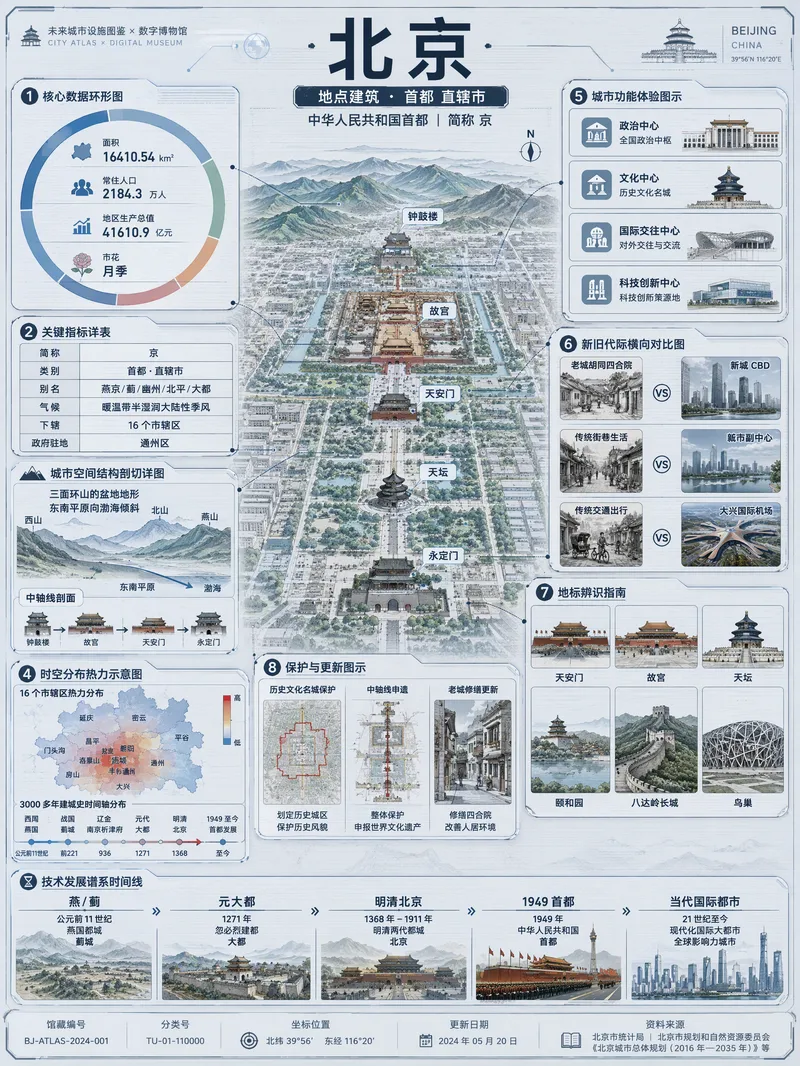
Quickly turn any subject name into a technology-inspired natural history atlas poster that combines rich information with strong visual appeal. Whether it’s a living thing, mineral or material, man-made object, place or building, cultural concept, or historical figure, the Skill organizes content for display and sharing based on your audience, focus, and language requirements. The Skill first uses real-time web research to verify definitions, key data, structure and composition, distribution, applications, evolution, identifying features, and more. It then arranges the content into a 3:4 vertical infographic. The poster centers on a specimen-style subject, surrounded by nine adaptive information modules covering core metrics, structural analysis, spatial and temporal distribution, context and use cases, comparisons, identification points, conservation or maintenance tips, and a development timeline. Module themes and information priorities are adjusted to fit the type of subject. The finished piece uses light gray-blue technical cardstock, precise linework, low-saturation cyan and blue washes, and a semi-transparent scanned texture. The result combines the visual style of a future-city infrastructure atlas with a digital museum display panel, while retaining the subject label at the top and a collection records area at the bottom. For obscure subjects or when information is limited, speculative content is distinguished with visual prompts. It is suitable for science education, exhibition introductions, knowledge sharing, and social media publishing.
Children's Science Posters
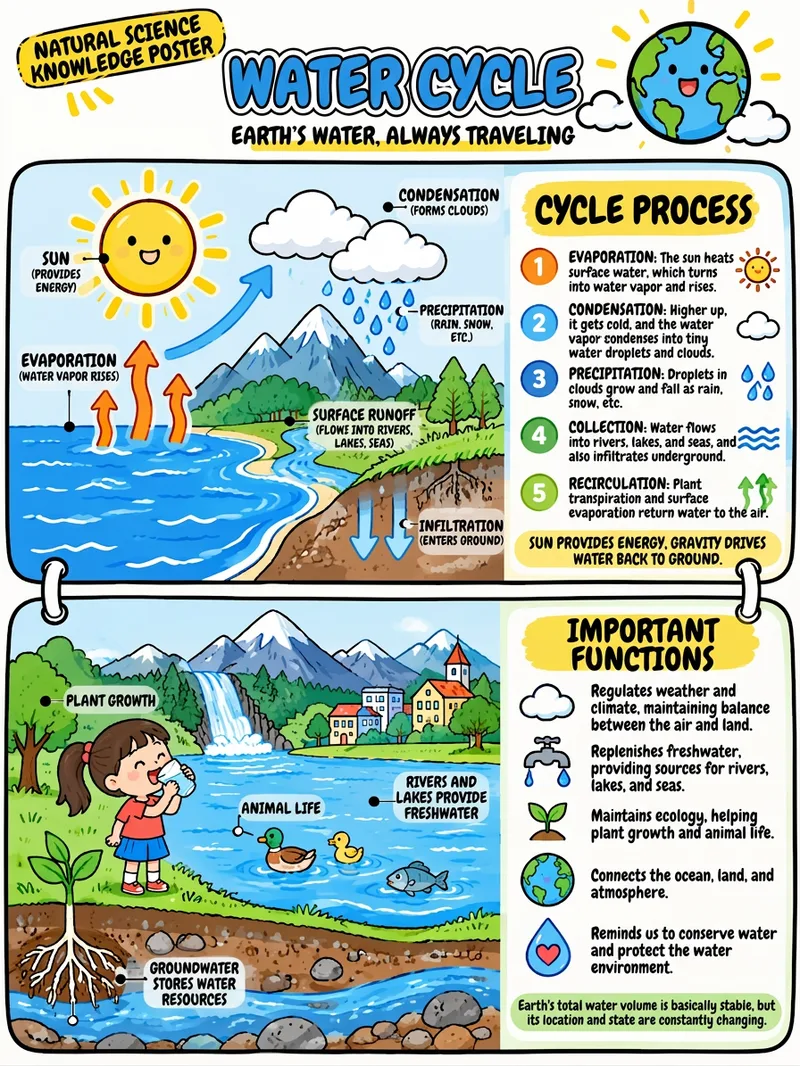
Turn natural science topics like the water cycle, rainbows, bees, the human body, and astronomy into educational posters and supporting copy designed for children. Just provide a topic, along with any details on target age, classroom or home use, and key knowledge points you want to emphasize. The skill translates the content into clear, observable scientific explanations suited for illustrations, defaulting to upper elementary school children. The final output includes a header title, upper and lower knowledge sections, simple and clear bullet points, memorable conclusions, and scene labels, paired with a complete scene illustration fitting the topic. Content differentiates between process explanations and structural understandings to avoid abstract definitions, ensuring every knowledge point maps to a specific object in the visual. Ultimately, you get a 3:4 vertical children's natural science educational poster suitable for classroom teaching, home learning, display boards, and science content illustration. The visuals use hand-drawn line art, digital flat painting, and clean text layout with ample whitespace and vibrant theme colors, while checking for text accuracy, scientific common sense, and visual readability to prevent typos, garbled text, or meaningless decorative lettering.
Information
- Version
- v2
- Last updated
- Runtime credits
- Usage-based
- Models
- Auto
- Use cases
- Images & designPresentations & reportingLearning & education
- What you get
- Image
- Visual styles
- Editorial3DPhotorealistic