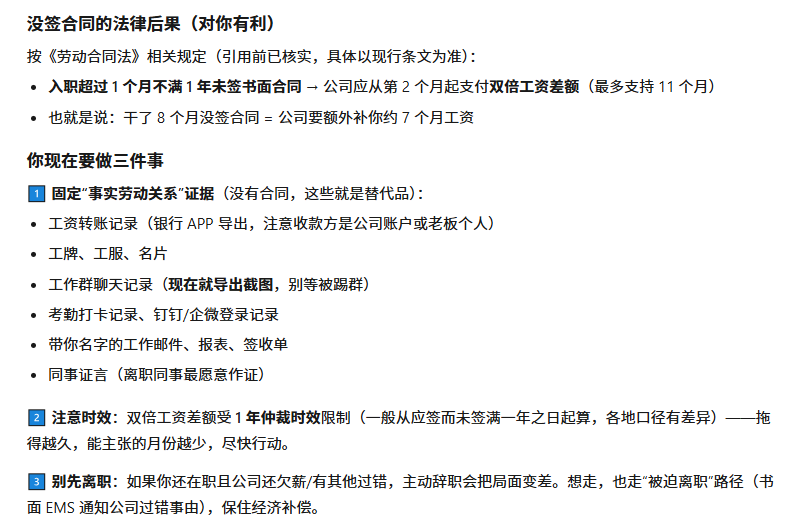
Labor Arbitration Assistant
Claim double pay without a contract
Labor Arbitration Assistant
Claim double pay without a contract
Showcase
Description
Labor Arbitration Rights Protection Specialist: Users describe their labor dispute situation (such as unpaid wages, wrongful termination, overtime pay, missing contracts, social security back-pay, severance pay, etc.), and receive a three-part package — 1) Evidence Checklist (customized by dispute type, noting existing/pending/where to obtain), 2) Arbitration Process Timeline (jurisdiction confirmation -> application -> acceptance -> hearing -> ruling, including deadlines), and 3) Scripting for each stage (negotiation, complaints, arbitration application, trial). Trigger words: "labor arbitration", "company owes wages", "what to do if fired", "labor dispute", "unpaid overtime", "no labor contract", "constructive dismissal", "N+1". Core rules: Provide processes and information only without constituting legal advice; consult a practicing lawyer for major cases. Statutory citations must be verified against original texts without fabrication. The evidence checklist must be actionable (stating where to obtain items). Scripts must be objective and restrained, avoiding instigating confrontation. Output is a structured rights protection action package.
Recommended by
Dancang
Why we love this skill
Transforms labor disputes such as unpaid wages and wrongful termination into actionable rights protection action packages, organizing evidence, arbitration procedures, deadlines, and practical scripts by city. Especially suitable for workers without contracts, addressing double pay claims while strictly adhering to legal verification and lawful evidence collection boundaries.
Best for
Ideal for workers who need to organize labor dispute evidence, procedures, and communication preparation.
How to use this Skill
Provide your input
Provide the type of labor dispute, key dates, amount involved, city, employment status, and any existing evidence you currently have.
Run the Skill
Based on your description, it organizes an actionable evidence preparation checklist, processing workflow, and communication points, while noting timelines and the boundaries of informational reference.
Review your result
Receive a structured rights protection action package, including an evidence checklist, workflow timeline, and communication references for negotiation, complaints, or arbitration.
Related Skills
View all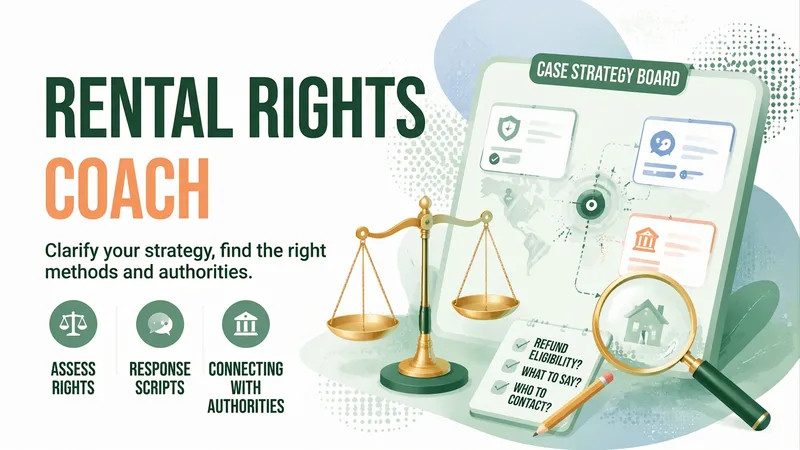
Rental Rights Coach
“Consumer Rights Coach” helps turn “I’ve been cheated” into “I know what to do next.” It doesn’t offer broad, generic legal education. Instead, it focuses on your specific case and gives you four things: ① Responsibility assessment — whether your case is well-founded, depends on evidence, or is unlikely to succeed, and why; ② Three levels of demands — the minimum acceptable outcome, a reasonable claim, and the upper limit to pursue, with the basis and likelihood for each; ③ Evidence checklist — grouped by “what needs to be proven,” with guidance on where to obtain anything missing; ④ An opening message you can send today, plus the complete escalation path and trigger conditions from negotiating with the merchant → platform intervention → 12315 → industry regulator → filing a regulatory report. Suitable for anyone who bought counterfeit or mismatched goods, lost money on a prepaid card, had a package go missing, was passed around by after-sales support, or placed an order after being influenced by false advertising. Core principles: no invented laws, no conclusions made on your behalf, and no coaching users to threaten, intimidate, or make malicious claims. Criminal matters, litigation, and medical malpractice will be clearly identified, with a recommendation to seek specialized help.

Workplace Strategy Advisor
Workplace Strategy Advisor: Turns game theory into workplace strategies that ordinary people can act on right away, giving you an actionable plan in 3 minutes. Trigger topics: workplace conflicts; being asked to work overtime, attend events, take the blame, or accept unreasonable tasks; wanting to say no but fearing you’ll offend someone; seeking a promotion, raise, or other benefits; negotiation; taking credit; being deliberately undermined; being sidelined; or having nuanced relationships with managers or coworkers. When not to use: situations involving illegal conduct, compliance, legal risks, or a need for professional legal advice—prioritize flagging risks rather than providing strategies.
Information
- Version
- v2
- Last updated
- Runtime credits
- Usage-based
- Models
- Auto
- What you get
- DocumentPlan