
Test Mistake Diagnosis
Sort mistakes by cause and target review
Test Mistake Diagnosis
Sort mistakes by cause and target review
Showcase
Description
After a test, parents may only say, “Why were you careless again?” and have their child redo the entire paper—only for the same mistakes to happen again. 【Test Mistake Diagnosis】 sorts each mistake into six categories: concepts not understood, methods not mastered, calculation errors, misreading the question, insufficient time, and presentation issues. It then calculates how many points were lost in each category and provides a list of what to address first, how to address it, and how many problems to practice. Strict scope: it only categorizes mistake causes and recommends practice. It does not do homework, predict test questions, or promise score improvements.
Recommended by
Dancang
Why we love this skill
Breaks down “carelessness” into six causes, calculates points lost, and prioritizes up to three steps for targeted review. It turns a marked-up test into an actionable study plan without doing homework or predicting questions.
Best for
Parents and learners who want to identify weak areas from test mistakes and plan what to review next.
How to use this Skill
Provide your input
Provide the grade, subject, test score, and each missed question with the student's answer and the correct answer. You may also include the test length and the student's comments.
Run the Skill
Upload or paste the graded test, then analyze each question to identify whether the issue involves concepts, methods, calculation, reading the question, time, or presentation.
Review your result
Get mistake categories, point-loss totals by category, a question-by-question diagnosis, a gap-filling order of up to three steps, practice suggestions, and talking points for parents.
Related Skills
View all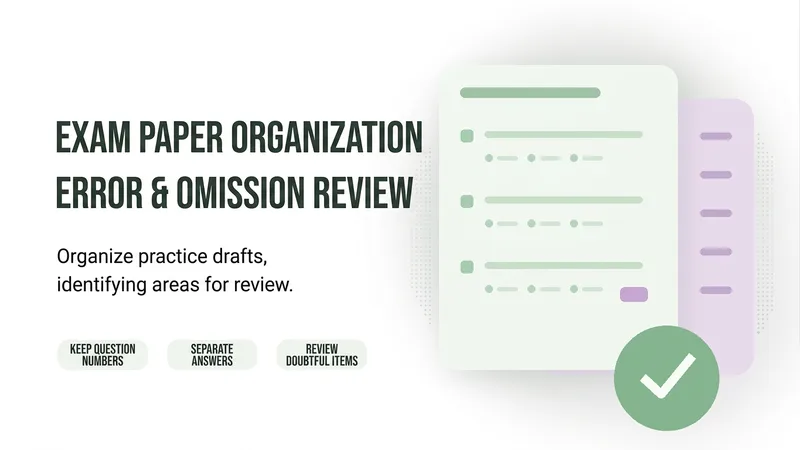
Test Paper Cleanup & Review
After a test paper is recognized, are question numbers skipped, options missing, or answers mismatched? This Skill helps turn readable test paper images, scanned pages, or existing OCR text into an easy-to-edit practice sheet, while listing items that need to be checked separately. You’ll get: ① Editable practice sheet: preserves sections, original question numbers, options, and answer blanks. ② Source answer table: matches answers from the provided materials by section and question number, with unmatched answers listed separately. ③ Error and omission review list: flags suspected missing questions, missing options, unclear symbols, and matching conflicts. ④ Processing scope notes: clearly states which pages were read and which have not yet been processed. When the original page is visible, the content is checked against the source. When only OCR text is available, the Skill checks structural issues only and does not guess or fill in missing content. For questions about identifying incorrect characters, incorrect options are preserved without changing the intended meaning. Suitable for teachers, parents, and people organizing study materials. For the first run, processing 1–3 pages is recommended. The output is provided as copyable Markdown text. Reading quality depends on the original image quality and the host’s capabilities. Zero errors are not guaranteed. The Skill does not solve questions, grade answers, or automatically generate Word attachments. The examples use self-created materials and contain no real student information.
Exam Answer Sheet Analysis
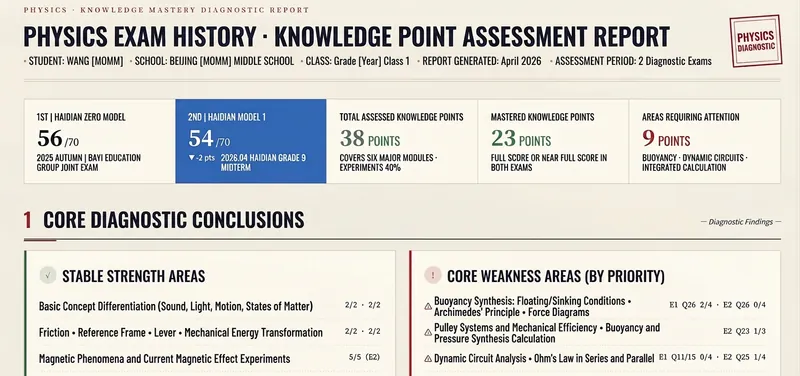
Only 3 steps: 1) Upload a photo of the blank exam paper 2) Upload a photo of the graded answer sheet 3) Click run. After a few minutes, AI automatically generates a diagnostic report — not just sporadic red lights indicating which questions were wrong, but a complete, structured battle plan for exam preparation that can be printed and pinned to your desk. In the past two days, I uploaded my son's zero mock and first mock exam answer sheets, downloaded the Knowledge Point Diagnostic Maps for math and physics. Below, I'll show you the actual chapter contents from this report — For specific usage, see: https://mp.weixin.qq.com/s/YRsgfthbWT6kKwjIbJnYfw

Motivation: Unmotivated Child?
Your child won't do homework, is addicted to their phone, says "I can't learn it," seems self-motivated but stops whenever you stop pushing… The problem isn't laziness—it's that their motivation system is stuck. Describe the situation in one sentence and get: ⚡ A 30-second overview — which gear is missing (autonomy/mastery/purpose/high-compliance) + one action to take today 📋 A complete solution — not just conversation, but also environmental adjustments, habit design, and non-verbal strategies Includes: scripts you can use today, how to change the physical environment, how to leave gaps in the schedule, a 7-day action checklist (printable to put on the fridge) 🔮 Learn from one instance to others — this time it's homework, next time it's piano practice or chores, you'll know what to do --- Suitable for ages 3–18, with different approaches for different ages | Address what's missing, not just academics—also applies to life habits and interest cultivation --- 💡 Recommended pairing: - To know "what to say": use 「一事一策·育儿情境对话定制」 - To solve "motivation problems": use 「内驱力引擎」 - Use both together for double the effect
Information
- Version
- v2
- Last updated
- Runtime credits
- Usage-based
- Models
- Auto
- Use cases
- Research & analysisLearning & education
- What you get
- ReportPlanData
