
Research & Implementation
Beginner-friendly research and hands-on guidance
Description
For a specified topic, this Skill produces a focused research report that combines expert judgment with practical execution. It helps beginners understand the problem, compare options, and complete their first hands-on project. The report first defines the research scope, intended audience, and time-sensitivity boundaries. It then reviews mainstream options by cost, barriers to entry, maturity, suitable use cases, and risks, providing a clear, evidence-based recommendation instead of a vague comparison that simply says “each has its pros and cons.” The report also explains the recommended option’s basic principles, capability boundaries, and common pitfalls. For information that may change easily—such as pricing, policies, and versions—it identifies the supporting evidence, validity period, and verification method. When information is insufficient, it clearly points out the gaps rather than making things up. All technical terms are explained in plain language, and key facts are accompanied by verifiable sources or reproducible steps whenever possible. You’ll also receive a beginner-focused, from-scratch implementation guide covering the tools, accounts, budget, and time needed in advance, along with specific actions, decision criteria, and common troubleshooting steps for each stage. After your first hands-on experience, the guide provides 30-day and 90-day progression plans and highlights the steps people are most likely to abandon. It’s suitable for individuals and teams conducting focused research, selecting among options, or putting a plan into practice.
Related Skills
View all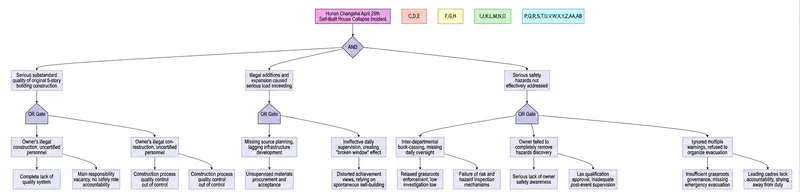 Write
WriteAccident Root Cause & Actions
Do you find yourself repeatedly asking these questions in safety management? An accident analysis report runs dozens of pages, yet its conclusions still stop at “employee violated procedures” or “weak safety awareness,” leaving the real cause undiscovered? You issue a long list of corrective actions, but they amount to vague statements like “strengthen training” and “improve systems”—with no clear path to implementation, while similar accidents continue to happen? The accident investigation report contains extensive details, but you do not know how to organize them into a clear chain of causation that lets management see the root problem at a glance? When facing a regulatory or group review, you need a rigorous, layered analysis, but the tools available are either too superficial or too theoretical to reflect real-world conditions? You want to use external accident cases for internal safety awareness, but worry that exposing company names could create unnecessary public-opinion risks? Effective safety management is not about assigning “blame” after an incident; it is about identifying causes in advance. Only by uncovering the problems embedded deep within the organization can corrective actions truly take hold. This Skill is an intelligent assistant that provides in-depth analysis and improvement recommendations like an experienced safety expert. What is it? A professional tool that analyzes the root causes of an accident and generates actionable recommendations based on the original accident investigation report. It avoids generalities and stays faithful to the source material you provide, accurately extracting key information, reconstructing what happened, and tracing the causes layer by layer like a detective until it reaches the underlying systemic defects. How does it work? Reach the root cause in three steps Provide the accident investigation report — Upload or paste the complete investigation report, internal notice, or detailed description of the accident; Automatic in-depth analysis — The tool intelligently extracts key information from the report, including the timeline, actions of involved personnel, equipment status, and descriptions of management systems. It objectively reconstructs the accident in detail and ensures that every analysis remains faithful to the source material without subjective assumptions; Get layered diagnoses and improvement prescriptions — You will receive a clearly structured analysis report that can be put into practice directly. Why can its framework “peel back the layers”? Unlike traditional accident analysis, this tool clearly divides causes into three levels, making problems easier to see, address, and fix: Level 1: Direct causes — Identifies the specific actions or conditions that led to the accident, such as “an employee failed to close a valve according to procedure” or “a safety interlock on a piece of equipment failed.” These are the immediate triggers of the accident and the easiest facts to observe. Level 2: Contributing causes — Reveals systemic problems in company management, such as gaps in procedures, insufficient training, inadequate supervision, or incomplete maintenance. For example: “The operating procedure for this position did not specify the emergency shutdown process” or “The equipment had not received a periodic inspection in the past year.” These are the conditions that allowed the direct causes to arise. Level 3: Root causes — Further uncovers deep defects in the company’s safety management system or safety culture, such as “Long-term underinvestment in safety left aging equipment without timely replacement,” “Management prioritized production over safety, with assessment metrics disconnected from safety performance,” or “Safety responsibilities weakened at each level, leaving frontline employees afraid to report hazards.” These are the areas that truly require fundamental corrective action. All analysis remains strictly focused on the company’s internal situation, and company names are anonymized to ensure safe, objective discussion suitable for internal analysis and external communication. Why are the improvement recommendations actionable? For every identified cause, the tool generates specific, executable measures that can be implemented—not empty phrases like “strengthen management.” For example: Identified cause Corresponding improvement recommendation (example) Direct cause: The valve was not closed as required Revise the operating procedure for the position to add a step requiring two-person confirmation and signatures after the valve is closed; install a position sensor on the valve and connect it to the central control system for alarm notifications Contributing cause: No equipment inspection was conducted in the past year Create an annual inspection plan for this type of equipment, specifying the inspection cycle and responsible person; include inspection results in the equipment records, with automatic reminders for overdue inspections Root cause: Insufficient safety investment and aging equipment Create a dedicated budget for safety equipment upgrades in the annual budget; include equipment safety status in the workshop director’s monthly performance evaluation, with a weighting of no less than 15% Every recommendation specifies “who will do what, how, and by when,” avoiding vague language and helping companies effectively prevent similar accidents while continuously improving workplace safety. Broad, practical use cases Accident reviews and internal analysis meetings — Provide objective, in-depth analysis materials and guide discussions from “assigning blame” toward “improvement”; Corrective action planning — Generate a corrective-action task list directly from the analysis conclusions, with clear ownership and specific measures; Submitting accident analysis reports to regulators or group headquarters — Provide a rigorous, clearly structured professional report; Developing safety training materials — Turn your company’s or industry peers’ accident cases into real and persuasive teaching materials; Safety management system reviews and upgrades — Extract systemic issues from individual accidents and drive broader improvements to the management system. More than an analysis report Ultimately, you will receive a complete, ready-to-use deliverables package, including: Accident reconstruction summary: An objective timeline based on the source material; Three-level cause analysis table: A clear side-by-side view of direct, contributing, and root causes; Targeted improvement action list: Every measure corresponds to a specific cause and defines the implementation direction and acceptance criteria; Analysis explanation document: An explanation of the analytical logic and reasoning process, making it easier to explain and advance the findings with your team. All content anonymizes company names to ensure safety and practical use. So, the next time you face an accident report and are no longer satisfied with shallow, incident-by-incident conclusions, do not rely on intuition or generic templates. Give it a real report, and it will return a deep, actionable plan for systematic improvement. Uncover the root cause to truly prevent further loss—and give every “why” an answer.
Strategy Research Workshop
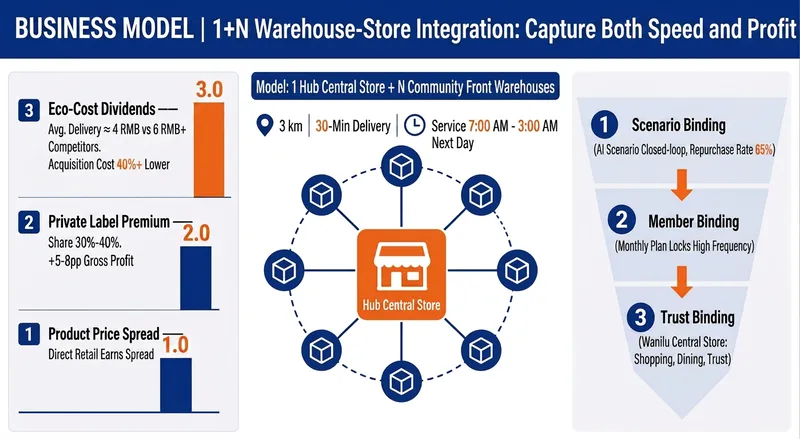
Turn a company, industry, or competitor into a research report and PPT deliverable for management presentations and strategic decision-making. The research covers strategic positioning, business models, operational detail, key data, the competitive landscape, supply chains, core strengths, and future capability priorities—alongside industry trends, market size, risks and controversies, and practical competition—to help you understand how the business wins, whether it can scale, and where it should go next. The Skill organizes publicly available research into an evidence trail with dates, data definitions, sources, and credibility notes. It extracts strategy-focused assertions and actionable talking points for presentations. The final deliverable is a complete company case study report with data sources and disclaimers, along with a consulting-style PPT outline and presentation built around a single argument, making complex information easy to explain in about 15 minutes. From the outline to the visual presentation, you can confirm the narrative angle, audience depth, page count, and design style before completing the report and presentation. It is suitable for corporate strategy, investment research, consulting projects, industry analysis, and competitive benchmarking. After completion, you can also explore a specific dimension further, conduct cross-comparisons, adjust the framework or style, or research a new subject.

Competitive Intel Analyst
Start with a broad view to build a persuasive competitor database, then focus the output on the company’s core business and decision-making needs. This elevates competitor research from “case hunting” to a decision basis that can be verified, compared, and acted on. This is not a prompt that merely lists a few competitors and stitches together webpage screenshots, nor one that crams every database detail into a PPT. “Competitive Intel Analyst” is suitable for consumer goods, technology products, software services, healthcare, education, retail, manufacturing, and other industries. It first defines the research scope and builds a multidimensional search framework covering markets, companies, products/services, user value, technology paths, business models, pricing and channels, intellectual property, partners, and evidence sources. It then creates a continuously updateable, deduplicated, traceable competitor database. Finally, based on the company’s core business, intended use cases, and leadership’s decision questions, it selects a small number of highly relevant benchmarks and produces a conclusion-first leadership briefing PPT, opportunity gaps, and an action roadmap. Suitable for: Panoramic scans of new markets or product categories Product planning, technology planning, and annual strategy research Tracking key competitors, patents, suppliers, or partner ecosystems Adding to, cleaning, and updating evidence in existing competitor databases or PPTs Investment, business development, and management decision briefings Condensing large volumes of material into conclusions that leaders can understand and teams can act on Typical deliverables include a complete competitor database, a shortlist of core competitors, a leadership briefing PPT, technology/patent/ecosystem maps (as needed), an opportunity and risk list, 90/180/365-day action roadmaps, and a source index.
Research & Implementation
Beginner-friendly research and hands-on guidance
Description
For a specified topic, this Skill produces a focused research report that combines expert judgment with practical execution. It helps beginners understand the problem, compare options, and complete their first hands-on project. The report first defines the research scope, intended audience, and time-sensitivity boundaries. It then reviews mainstream options by cost, barriers to entry, maturity, suitable use cases, and risks, providing a clear, evidence-based recommendation instead of a vague comparison that simply says “each has its pros and cons.” The report also explains the recommended option’s basic principles, capability boundaries, and common pitfalls. For information that may change easily—such as pricing, policies, and versions—it identifies the supporting evidence, validity period, and verification method. When information is insufficient, it clearly points out the gaps rather than making things up. All technical terms are explained in plain language, and key facts are accompanied by verifiable sources or reproducible steps whenever possible. You’ll also receive a beginner-focused, from-scratch implementation guide covering the tools, accounts, budget, and time needed in advance, along with specific actions, decision criteria, and common troubleshooting steps for each stage. After your first hands-on experience, the guide provides 30-day and 90-day progression plans and highlights the steps people are most likely to abandon. It’s suitable for individuals and teams conducting focused research, selecting among options, or putting a plan into practice.
Related Skills
View allWriteAccident Root Cause & Actions
Do you find yourself repeatedly asking these questions in safety management? An accident analysis report runs dozens of pages, yet its conclusions still stop at “employee violated procedures” or “weak safety awareness,” leaving the real cause undiscovered? You issue a long list of corrective actions, but they amount to vague statements like “strengthen training” and “improve systems”—with no clear path to implementation, while similar accidents continue to happen? The accident investigation report contains extensive details, but you do not know how to organize them into a clear chain of causation that lets management see the root problem at a glance? When facing a regulatory or group review, you need a rigorous, layered analysis, but the tools available are either too superficial or too theoretical to reflect real-world conditions? You want to use external accident cases for internal safety awareness, but worry that exposing company names could create unnecessary public-opinion risks? Effective safety management is not about assigning “blame” after an incident; it is about identifying causes in advance. Only by uncovering the problems embedded deep within the organization can corrective actions truly take hold. This Skill is an intelligent assistant that provides in-depth analysis and improvement recommendations like an experienced safety expert. What is it? A professional tool that analyzes the root causes of an accident and generates actionable recommendations based on the original accident investigation report. It avoids generalities and stays faithful to the source material you provide, accurately extracting key information, reconstructing what happened, and tracing the causes layer by layer like a detective until it reaches the underlying systemic defects. How does it work? Reach the root cause in three steps Provide the accident investigation report — Upload or paste the complete investigation report, internal notice, or detailed description of the accident; Automatic in-depth analysis — The tool intelligently extracts key information from the report, including the timeline, actions of involved personnel, equipment status, and descriptions of management systems. It objectively reconstructs the accident in detail and ensures that every analysis remains faithful to the source material without subjective assumptions; Get layered diagnoses and improvement prescriptions — You will receive a clearly structured analysis report that can be put into practice directly. Why can its framework “peel back the layers”? Unlike traditional accident analysis, this tool clearly divides causes into three levels, making problems easier to see, address, and fix: Level 1: Direct causes — Identifies the specific actions or conditions that led to the accident, such as “an employee failed to close a valve according to procedure” or “a safety interlock on a piece of equipment failed.” These are the immediate triggers of the accident and the easiest facts to observe. Level 2: Contributing causes — Reveals systemic problems in company management, such as gaps in procedures, insufficient training, inadequate supervision, or incomplete maintenance. For example: “The operating procedure for this position did not specify the emergency shutdown process” or “The equipment had not received a periodic inspection in the past year.” These are the conditions that allowed the direct causes to arise. Level 3: Root causes — Further uncovers deep defects in the company’s safety management system or safety culture, such as “Long-term underinvestment in safety left aging equipment without timely replacement,” “Management prioritized production over safety, with assessment metrics disconnected from safety performance,” or “Safety responsibilities weakened at each level, leaving frontline employees afraid to report hazards.” These are the areas that truly require fundamental corrective action. All analysis remains strictly focused on the company’s internal situation, and company names are anonymized to ensure safe, objective discussion suitable for internal analysis and external communication. Why are the improvement recommendations actionable? For every identified cause, the tool generates specific, executable measures that can be implemented—not empty phrases like “strengthen management.” For example: Identified cause Corresponding improvement recommendation (example) Direct cause: The valve was not closed as required Revise the operating procedure for the position to add a step requiring two-person confirmation and signatures after the valve is closed; install a position sensor on the valve and connect it to the central control system for alarm notifications Contributing cause: No equipment inspection was conducted in the past year Create an annual inspection plan for this type of equipment, specifying the inspection cycle and responsible person; include inspection results in the equipment records, with automatic reminders for overdue inspections Root cause: Insufficient safety investment and aging equipment Create a dedicated budget for safety equipment upgrades in the annual budget; include equipment safety status in the workshop director’s monthly performance evaluation, with a weighting of no less than 15% Every recommendation specifies “who will do what, how, and by when,” avoiding vague language and helping companies effectively prevent similar accidents while continuously improving workplace safety. Broad, practical use cases Accident reviews and internal analysis meetings — Provide objective, in-depth analysis materials and guide discussions from “assigning blame” toward “improvement”; Corrective action planning — Generate a corrective-action task list directly from the analysis conclusions, with clear ownership and specific measures; Submitting accident analysis reports to regulators or group headquarters — Provide a rigorous, clearly structured professional report; Developing safety training materials — Turn your company’s or industry peers’ accident cases into real and persuasive teaching materials; Safety management system reviews and upgrades — Extract systemic issues from individual accidents and drive broader improvements to the management system. More than an analysis report Ultimately, you will receive a complete, ready-to-use deliverables package, including: Accident reconstruction summary: An objective timeline based on the source material; Three-level cause analysis table: A clear side-by-side view of direct, contributing, and root causes; Targeted improvement action list: Every measure corresponds to a specific cause and defines the implementation direction and acceptance criteria; Analysis explanation document: An explanation of the analytical logic and reasoning process, making it easier to explain and advance the findings with your team. All content anonymizes company names to ensure safety and practical use. So, the next time you face an accident report and are no longer satisfied with shallow, incident-by-incident conclusions, do not rely on intuition or generic templates. Give it a real report, and it will return a deep, actionable plan for systematic improvement. Uncover the root cause to truly prevent further loss—and give every “why” an answer.
Strategy Research Workshop
Turn a company, industry, or competitor into a research report and PPT deliverable for management presentations and strategic decision-making. The research covers strategic positioning, business models, operational detail, key data, the competitive landscape, supply chains, core strengths, and future capability priorities—alongside industry trends, market size, risks and controversies, and practical competition—to help you understand how the business wins, whether it can scale, and where it should go next. The Skill organizes publicly available research into an evidence trail with dates, data definitions, sources, and credibility notes. It extracts strategy-focused assertions and actionable talking points for presentations. The final deliverable is a complete company case study report with data sources and disclaimers, along with a consulting-style PPT outline and presentation built around a single argument, making complex information easy to explain in about 15 minutes. From the outline to the visual presentation, you can confirm the narrative angle, audience depth, page count, and design style before completing the report and presentation. It is suitable for corporate strategy, investment research, consulting projects, industry analysis, and competitive benchmarking. After completion, you can also explore a specific dimension further, conduct cross-comparisons, adjust the framework or style, or research a new subject.
Competitive Intel Analyst
Start with a broad view to build a persuasive competitor database, then focus the output on the company’s core business and decision-making needs. This elevates competitor research from “case hunting” to a decision basis that can be verified, compared, and acted on. This is not a prompt that merely lists a few competitors and stitches together webpage screenshots, nor one that crams every database detail into a PPT. “Competitive Intel Analyst” is suitable for consumer goods, technology products, software services, healthcare, education, retail, manufacturing, and other industries. It first defines the research scope and builds a multidimensional search framework covering markets, companies, products/services, user value, technology paths, business models, pricing and channels, intellectual property, partners, and evidence sources. It then creates a continuously updateable, deduplicated, traceable competitor database. Finally, based on the company’s core business, intended use cases, and leadership’s decision questions, it selects a small number of highly relevant benchmarks and produces a conclusion-first leadership briefing PPT, opportunity gaps, and an action roadmap. Suitable for: Panoramic scans of new markets or product categories Product planning, technology planning, and annual strategy research Tracking key competitors, patents, suppliers, or partner ecosystems Adding to, cleaning, and updating evidence in existing competitor databases or PPTs Investment, business development, and management decision briefings Condensing large volumes of material into conclusions that leaders can understand and teams can act on Typical deliverables include a complete competitor database, a shortlist of core competitors, a leadership briefing PPT, technology/patent/ecosystem maps (as needed), an opportunity and risk list, 90/180/365-day action roadmaps, and a source index.
Find your next favorite skill
Explore more curated AI skills for research, creation, and everyday work.