Artifact Element Extractor
Extract artifact elements for creative design
Description
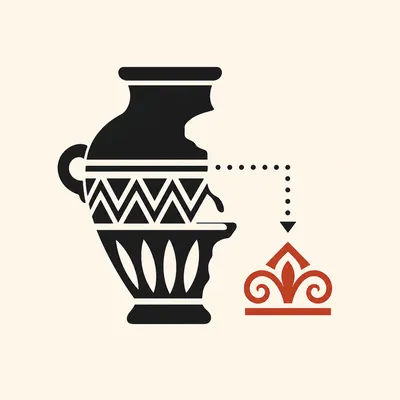
First faithfully extract, then creatively translate. The Artifact Element Extractor is designed for cultural heritage enthusiasts, designers, educators, and content creators. It deconstructs a photo of an artifact (which you have the rights to use) into reusable components: outer contours, primary patterns, border decorations, repeating units, holes and negative shapes, and compositional framework. It can also extract color relationships from the photo, with appropriate limitations noted. By default, it uses a two-step creative workflow: Step 1 assesses photo evidence, lists extractable elements, generates an element decomposition board, and suggests three suitable application directions. After you choose one direction—such as packaging, posters, icons, bookmarks, stickers, or continuous patterns—Step 2 generates an application preview and design description, minimizing unnecessary output. Each output clearly distinguishes between 'direct extraction from the original,' 'simplification for usability,' 'modern creative translation,' and 'insufficient evidence / remain uncertain,' avoiding the mislabeling of modern designs as original patterns. For single oblique, low-resolution, reflective, obstructed, or damaged photos, only visible content is processed; the system does not infer backs, cross-sections, or complete vessel shapes. Inscriptions and symbols are always treated as graphics—no automatic translation, font application, or stroke completion. If you specifically request archaeological drawings, artifact line drawings, orthographic projections, cross-sections, measurements, or draft report figures, the skill switches to professional drawing mode, outputting evidence classification, drawing plans, review checklists, and a risk note. This skill does not provide authenticity identification, dating, valuation, or commercial licensing assessment. Please upload only your own or licensed photos; before commercial use, independently verify image copyright, museum requirements, and related licenses.
Related Skills
View all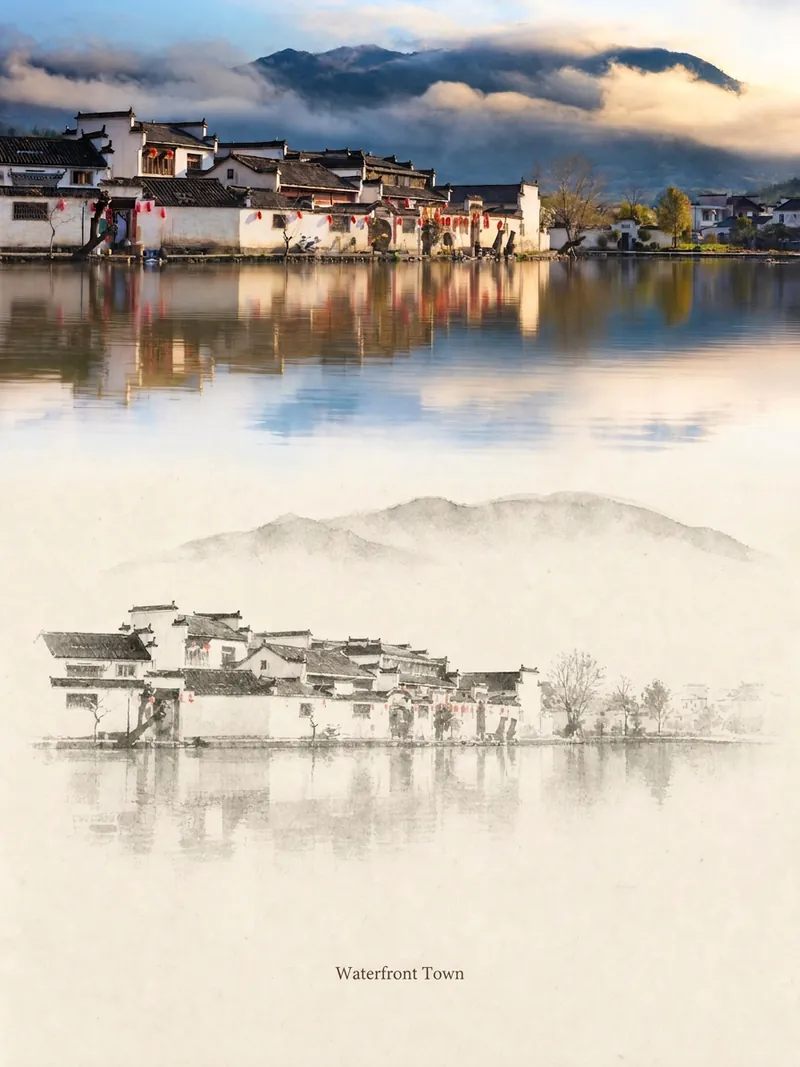 Image
ImageRelic Art
Transform a real photo into a vertical "relic art" poster that blends documentary value with artistic expression: the upper part keeps the original photograph untouched, while the lower part uses warm paper or restrained light and shadow to compress a memory-derived graphic from the image. It's not a typical illustration or decorative poster; instead, it uses sparse ink blocks, softened edges, white-space cuts, and sparse lines to distill architectural, urban, water, road, human-scale, horizon, and light-shadow relationships, so the subject remains recognizable even in thumbnails. The overall feel is quiet, restrained, and like a modern print. Colors are taken from the source photo, primarily deep blue, ink black, gray-green, stone, or low-saturation warm tones, with a small warm accent added when fitting. The title is kept very small, poetic, and similar to an exhibition label, never overwhelming. This is suitable for minimalist art posters, photographic relic series, architectural and urban image posters, abstract editorial photography, gallery-style photo covers, and visual series for mobile platforms like Douyin. The final output preserves the authentic content of the original photo while adding a consistent "memory imprint" below, giving each photo its own mood and an expandable visual identity.
Heritage Design Inspiration v5
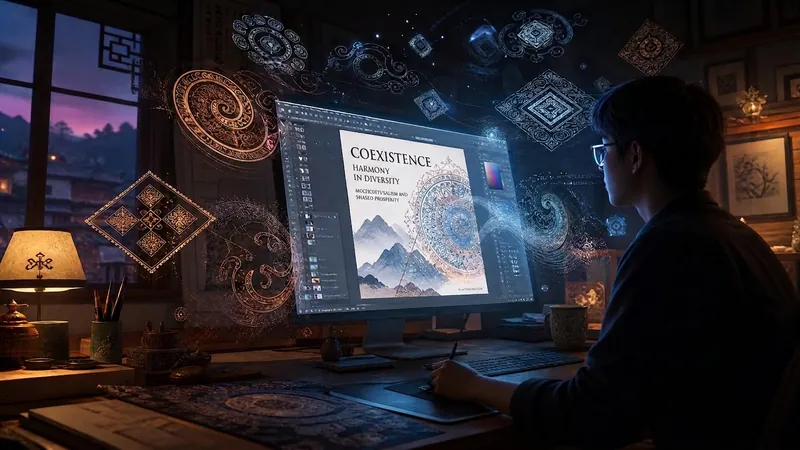
When inspiration runs dry, let millennia of ethnic crafts draw your next stroke. 🎭 Intelligently detects your vague intuitions — a word, a mood, or even 'just browsing' — and matches them to authentic Chinese ethnic intangible heritage directions (Tibetan, Mongolian, Miao, Yi, Zhuang, Dong, Tujia, Dai, Qiang, Uyghur, etc.) 🔍 Deeply mines ethnic visual DNA — searches the web for real ICH materials, extracts pattern features, color systems, and craft textures, with cultural provenance to prevent design from becoming superficial symbol stacking. 🎨 Four-dimensionally translates traditional aesthetics — minimalist abstraction / deconstructive recombination / material translation / modernized color schemes, turning centuries-old crafts into today's design language. 🖼️ Parallel output of multi-form visual solutions — pattern designs / illustration posters / color mood boards / cultural creative concepts, at least 3 visual forms each time, so inspiration is never one-dimensional. 📦 Complete inspiration board delivered as a package — each visual solution includes cultural annotations (where it came from, how it was transformed, where it can be used), shareable with your team or archived for reuse. 🛡️ Dual-engine quality control — the execution engine handles creative generation, while the quality control engine silently verifies cultural accuracy and design quality, eliminating cultural fabrication. How to use? Just say 'Give me inspiration' after opening, or enter a keyword (e.g., 'dragon', 'serenity', 'Miao'), then follow the 5-step flow—you can go back and change direction at any step. Several designers have already turned China's ethnic intangible heritage into their own rich source of inspiration.
 Image
ImagePhoto to Journal Stickers
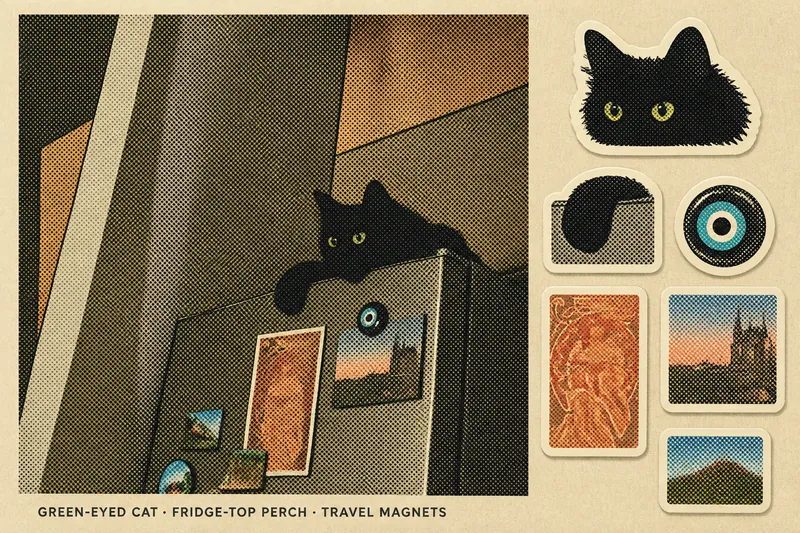
Upload a travel or everyday photo and turn it into a collectible journal sticker set. The Skill preserves the subject, composition, pose, and signature colors of the original photo, then extracts six representative elements to create as die-cut stickers on the right. It uses a colorful, coarse halftone style with a vintage print texture by default. You can also switch to a classic pixel style or a matte gouache paper-cut collage style. Suitable for travel memories, city scenes, portraits, pets, food, and everyday life photos.
Artifact Element Extractor
Extract artifact elements for creative design
Description
First faithfully extract, then creatively translate. The Artifact Element Extractor is designed for cultural heritage enthusiasts, designers, educators, and content creators. It deconstructs a photo of an artifact (which you have the rights to use) into reusable components: outer contours, primary patterns, border decorations, repeating units, holes and negative shapes, and compositional framework. It can also extract color relationships from the photo, with appropriate limitations noted. By default, it uses a two-step creative workflow: Step 1 assesses photo evidence, lists extractable elements, generates an element decomposition board, and suggests three suitable application directions. After you choose one direction—such as packaging, posters, icons, bookmarks, stickers, or continuous patterns—Step 2 generates an application preview and design description, minimizing unnecessary output. Each output clearly distinguishes between 'direct extraction from the original,' 'simplification for usability,' 'modern creative translation,' and 'insufficient evidence / remain uncertain,' avoiding the mislabeling of modern designs as original patterns. For single oblique, low-resolution, reflective, obstructed, or damaged photos, only visible content is processed; the system does not infer backs, cross-sections, or complete vessel shapes. Inscriptions and symbols are always treated as graphics—no automatic translation, font application, or stroke completion. If you specifically request archaeological drawings, artifact line drawings, orthographic projections, cross-sections, measurements, or draft report figures, the skill switches to professional drawing mode, outputting evidence classification, drawing plans, review checklists, and a risk note. This skill does not provide authenticity identification, dating, valuation, or commercial licensing assessment. Please upload only your own or licensed photos; before commercial use, independently verify image copyright, museum requirements, and related licenses.
Related Skills
View allImageRelic Art
Transform a real photo into a vertical "relic art" poster that blends documentary value with artistic expression: the upper part keeps the original photograph untouched, while the lower part uses warm paper or restrained light and shadow to compress a memory-derived graphic from the image. It's not a typical illustration or decorative poster; instead, it uses sparse ink blocks, softened edges, white-space cuts, and sparse lines to distill architectural, urban, water, road, human-scale, horizon, and light-shadow relationships, so the subject remains recognizable even in thumbnails. The overall feel is quiet, restrained, and like a modern print. Colors are taken from the source photo, primarily deep blue, ink black, gray-green, stone, or low-saturation warm tones, with a small warm accent added when fitting. The title is kept very small, poetic, and similar to an exhibition label, never overwhelming. This is suitable for minimalist art posters, photographic relic series, architectural and urban image posters, abstract editorial photography, gallery-style photo covers, and visual series for mobile platforms like Douyin. The final output preserves the authentic content of the original photo while adding a consistent "memory imprint" below, giving each photo its own mood and an expandable visual identity.
Heritage Design Inspiration v5
When inspiration runs dry, let millennia of ethnic crafts draw your next stroke. 🎭 Intelligently detects your vague intuitions — a word, a mood, or even 'just browsing' — and matches them to authentic Chinese ethnic intangible heritage directions (Tibetan, Mongolian, Miao, Yi, Zhuang, Dong, Tujia, Dai, Qiang, Uyghur, etc.) 🔍 Deeply mines ethnic visual DNA — searches the web for real ICH materials, extracts pattern features, color systems, and craft textures, with cultural provenance to prevent design from becoming superficial symbol stacking. 🎨 Four-dimensionally translates traditional aesthetics — minimalist abstraction / deconstructive recombination / material translation / modernized color schemes, turning centuries-old crafts into today's design language. 🖼️ Parallel output of multi-form visual solutions — pattern designs / illustration posters / color mood boards / cultural creative concepts, at least 3 visual forms each time, so inspiration is never one-dimensional. 📦 Complete inspiration board delivered as a package — each visual solution includes cultural annotations (where it came from, how it was transformed, where it can be used), shareable with your team or archived for reuse. 🛡️ Dual-engine quality control — the execution engine handles creative generation, while the quality control engine silently verifies cultural accuracy and design quality, eliminating cultural fabrication. How to use? Just say 'Give me inspiration' after opening, or enter a keyword (e.g., 'dragon', 'serenity', 'Miao'), then follow the 5-step flow—you can go back and change direction at any step. Several designers have already turned China's ethnic intangible heritage into their own rich source of inspiration.
ImagePhoto to Journal Stickers
Upload a travel or everyday photo and turn it into a collectible journal sticker set. The Skill preserves the subject, composition, pose, and signature colors of the original photo, then extracts six representative elements to create as die-cut stickers on the right. It uses a colorful, coarse halftone style with a vintage print texture by default. You can also switch to a classic pixel style or a matte gouache paper-cut collage style. Suitable for travel memories, city scenes, portraits, pets, food, and everyday life photos.
Find your next favorite skill
Explore more curated AI skills for research, creation, and everyday work.