In the past two years, the most sought-after people in the AI circle have been those training models and those building AI products.
By 2026, another position has suddenly surged: FDE.
Its full name is Forward Deployed Engineer. To be honest, even after hearing the name, many still don't know what it actually entails.
First, look at a few numbers:
- LinkedIn reports show that FDE-related positions grew 42 times from 2023 to 2025;
- OpenAI established the Deployment Company in May 2026 with an initial investment of over $4 billion, bringing in about 150 deployment engineers and experts through acquisitions;
- AWS subsequently invested $1 billion to send thousands of engineers into customer teams.
Big tech's sudden scramble for these people indicates a shift in the wind. A 0.1-point difference on a model leaderboard might not be felt by customers, but an AI system that can integrate into legacy systems, run in workflows, and ultimately save real money is something customers are willing to pay for continuously.
The AI industry has moved from "comparing models" to "comparing implementation."
If you are looking at an AI transition or searching for your next career direction, this article will clarify three things: what an FDE is, what they do daily, and how people without a coding background can transition step-by-step.
1. What Exactly is an FDE?
I prefer to explain it this way:
An FDE is someone who enters a customer's real business and takes AI from a Demo all the way to a production environment.
Suppose a customer says: "We want to build an AI customer service." A standard requirement list might start with writing features, but an FDE must dig deeper:
- How many tickets does customer service handle daily now;
- Which questions can AI answer;
- Which replies must be confirmed by a human;
- Where is the customer data stored;
- How to retract an AI error;
- After launch, do we track response speed, resolution rate, or labor costs.
Only after these questions are clear does coding begin. The work doesn't end when the system is written; they also need to connect data, configure permissions, perform evaluations, push to production, monitor usage, and bring the pitfalls encountered on-site back to the product team.
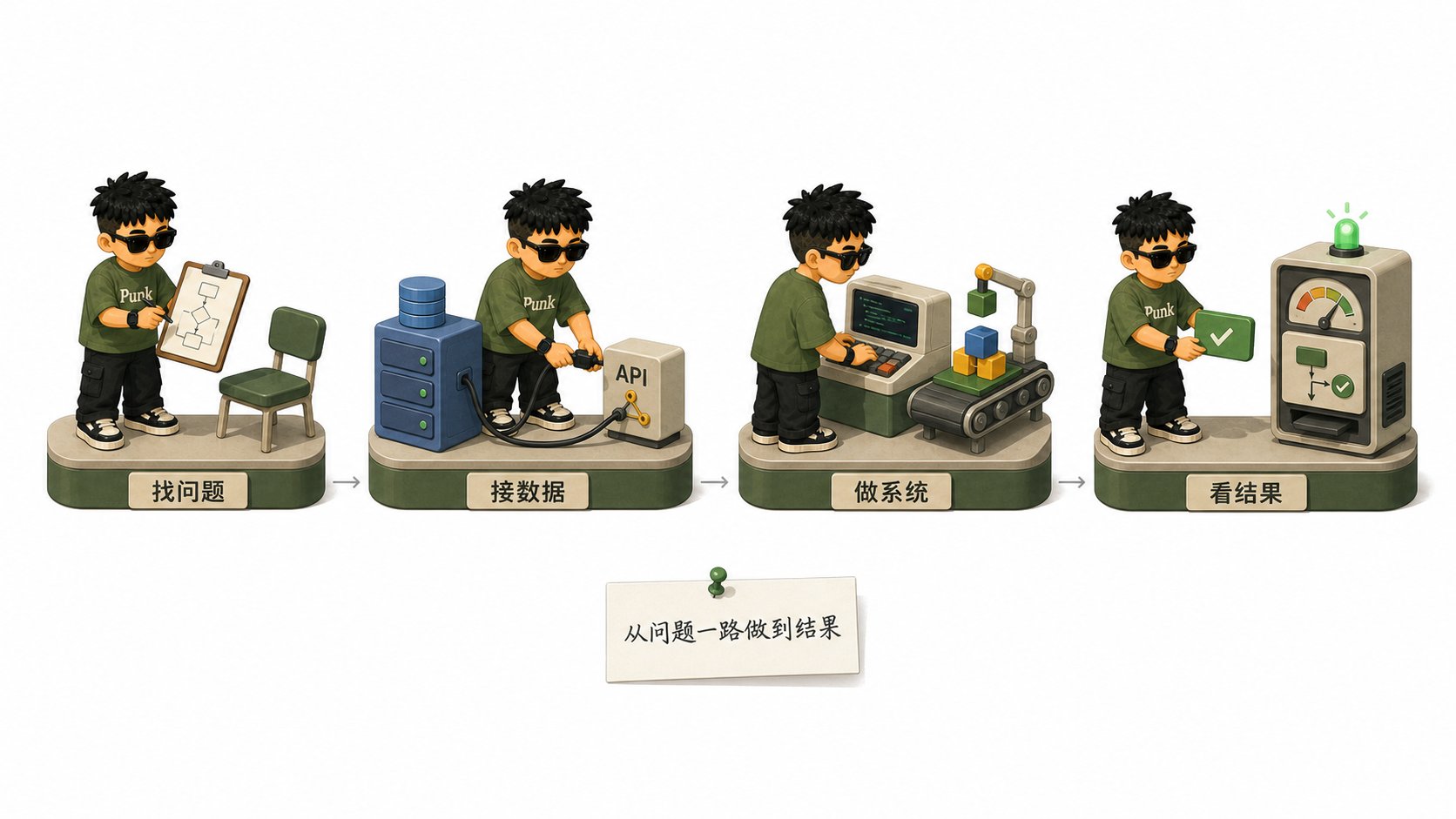
The entire workflow can be compressed into six steps:
1Find Problem2→ Deconstruct Process3→ Create Solution4→ Build System5→ Push to Production6→ Monitor Results
Requirements are just the starting point; results are the delivery.
Therefore, an FDE often has to handle three things simultaneously:
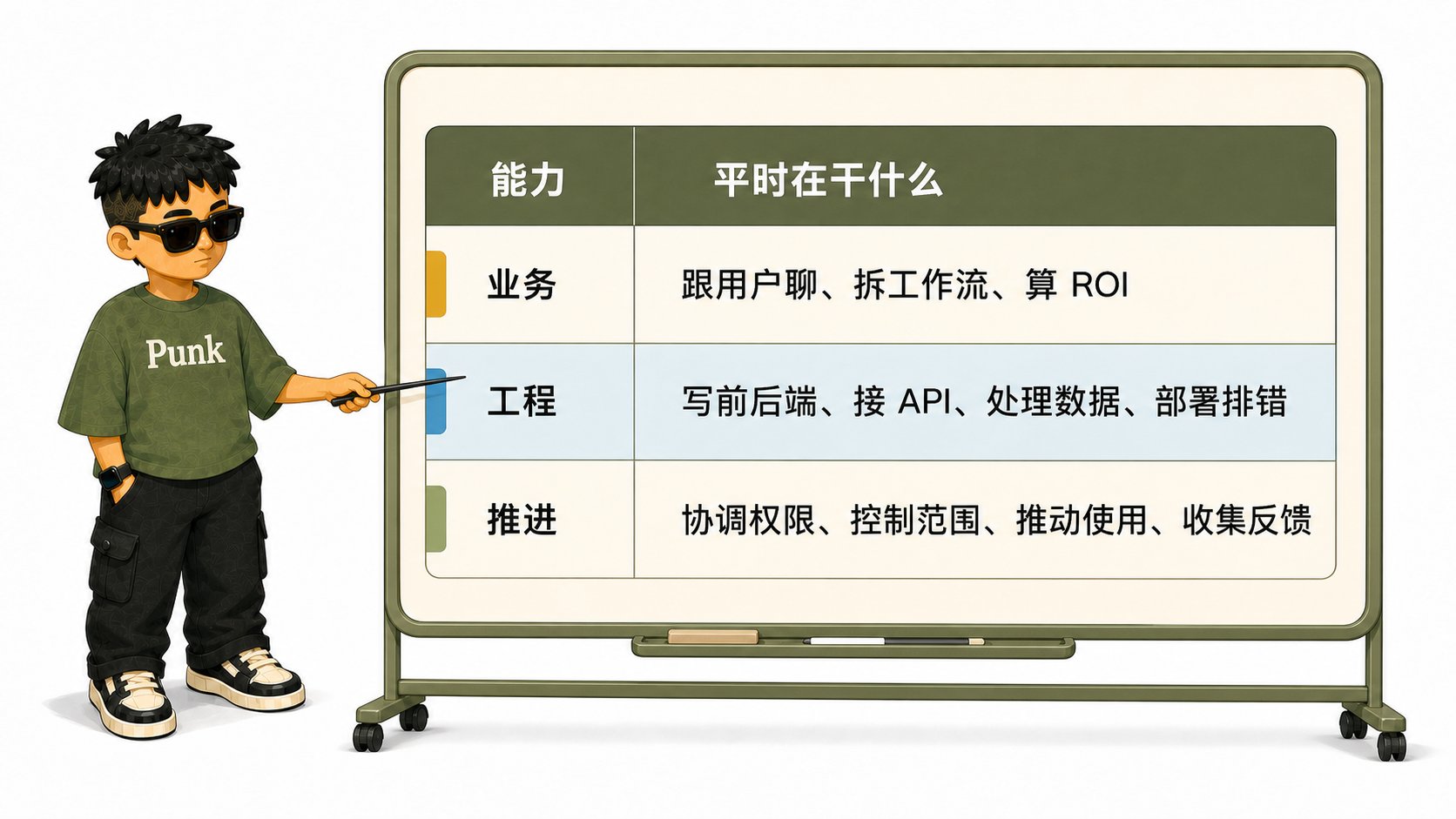
There are many people who can write code, but far fewer are willing to go to a customer site and organize a mess into something launchable. This is why FDEs are hard to recruit and increasingly expensive.

2. What Does an FDE Do All Day?
Suppose a retail chain finds an AI vendor and says they want a "Smart Replenishment Agent." This sounds clear, but as soon as an FDE arrives, questions pop up everywhere:
- Which stores are most prone to stockouts;
- Does replenishment look at sales, weather, holidays, or promotion plans;
- Does the Agent only give suggestions or directly generate purchase orders;
- Do amounts exceeding a certain threshold require manual approval;
- Is a daily inventory update sufficient;
- If a recommendation is wrong, who handles the backlog and loss.
In the first week, they might not write a single line of code. They first talk to store managers to see how replenishment is done now, confirm rules with the supply chain, check interfaces with IT, and discuss permissions with the security department. Once the process is clear, they enter the engineering phase:
- Connect inventory, sales, and order systems;
- Clean historical data;
- Write model calls and Agent workflows;
- Build a page that employees are willing to open;
- Add login, permissions, logs, and monitoring;
- Prepare test data;
- Set up manual review and failure fallbacks.
They must continue monitoring after launch. Whether the stores are actually using it, the adoption rate of suggestions, whether stockout rates have dropped, and why employees might be secretly returning to Excel—all of this is their job.
If the usage rate is too low and they leave saying "the user doesn't know how to use it," the project will likely fail. Whichever part—page, process, or model output—makes people uncomfortable, they go back and fix it.
An FDE delivers a business process that is already running. Making a pretty Demo is only halfway up the mountain.
3. What is the Difference Between FDEs, Programmers, Product Managers, and Pre-sales?
These roles often work together, and boundaries overlap. The simplest way to distinguish them is to see what each is responsible for.
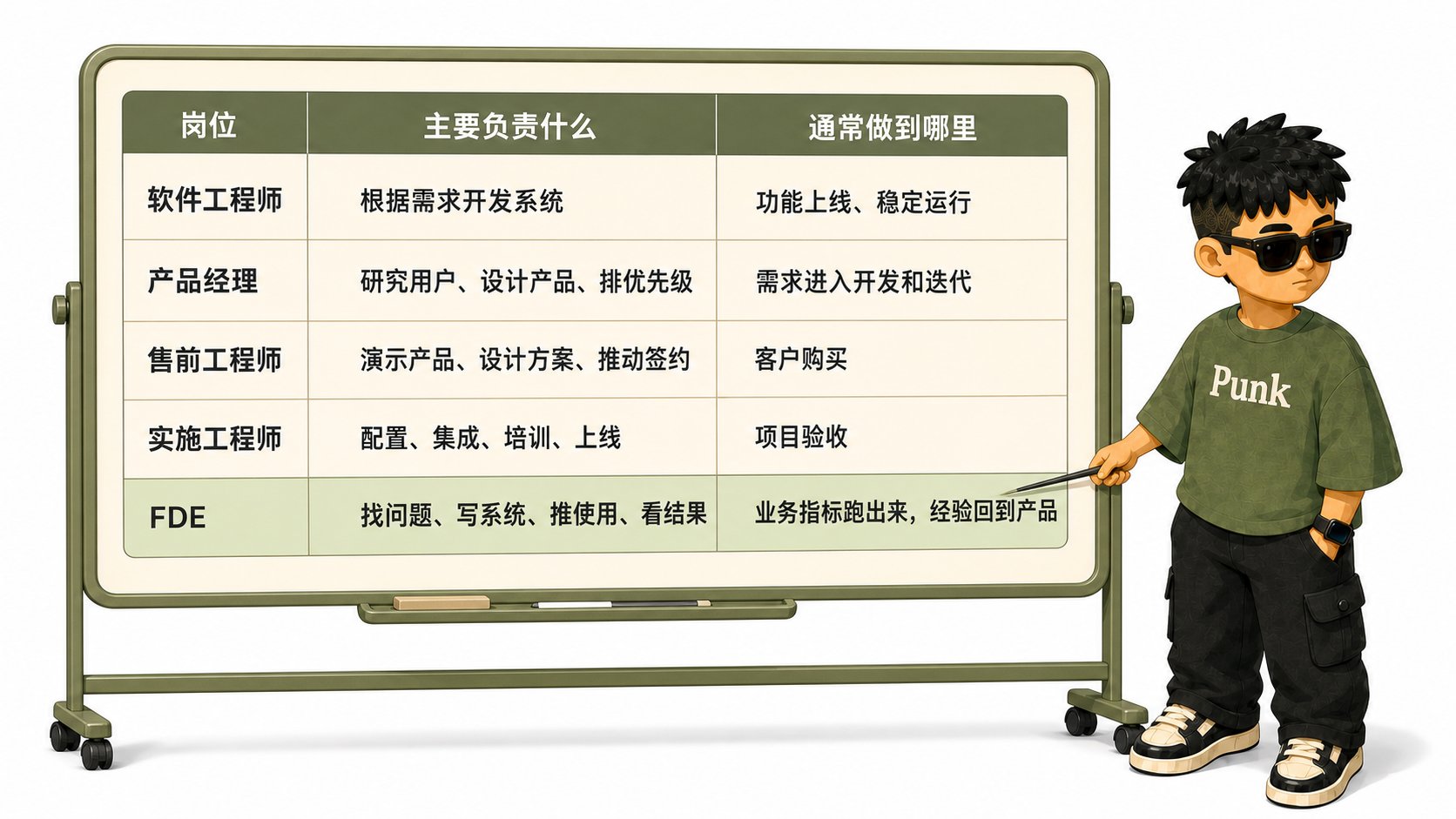
An FDE's boundaries are wider. Having a business meeting with a customer in the morning, checking the database in the afternoon, and modifying interfaces in the evening can all happen on the same day.
But make no mistake: The E in FDE still stands for Engineer.
OpenAI's current FDE recruitment explicitly requires candidates to be able to write and review production-level front-end and back-end code. Palantir's entry-level positions also require proficiency in at least one programming language. So, while you can transition without a computer science background, bypassing code entirely is not an option.
If you prefer business and customers and don't want to write production code long-term, you can look at Deployment Strategist, AI Product Manager, Industry Solution Consultant, Customer Success, or AI Consulting. These roles are also in the AI implementation chain but with lighter engineering responsibilities.
4. Why is FDE Popular Now?
The reason is simple: as AI gets stronger, implementation problems become more prominent.
A Demo Can Be Done in a Day, but Production is Not So Forgiving
Connecting a model API, stuffing in some documents, and making a chat page can impress a boss in a day. But once you prepare to launch, dirty data, messy permissions, lack of interfaces in old systems, drifting model outputs, security audits, and employee habits all emerge at once.
Model upgrades don't solve on-site chaos. Companies need someone to dive into the business and handle these issues one by one.
Agents Have Started to Actually "Act"
If a chatbot answers a question wrong, the user can choose not to adopt it. Once an Agent can send emails, modify orders, and submit approvals, errors enter the business directly.
Identity, permissions, evaluation, logs, manual review, and exception recovery are all indispensable. Since every company's system is different, this work is hard to complete with a generic manual.
AI Companies Need Customers to Use Their Products
Signing a contract is just getting through the door. Only after the model enters core processes will call volume, renewals, and department expansions occur.
FDEs are closest to customer results and closest to the AI company's revenue. This is the commercial reason OpenAI and AWS are willing to invest heavily.
AI Programming Magnifies the Output of Generalists
Previously, building a set of enterprise applications required waiting for product, front-end, back-end, data, and O&M teams. Now, a generalist with strong engineering skills can use AI programming to complete prototypes, integration, testing, and modifications faster.
A few people entering a customer team can build the first version in weeks and iterate quickly based on real feedback; the math finally works out.
The previous stage was about whose model was stronger; this stage is about who can fit the model into the business. FDEs stand in that gap.
5. Where are the Opportunities for Ordinary People?
You might think: "Isn't this still for senior programmers?"
Senior engineers do have an advantage, but FDE capabilities come from several directions. Ordinary people don't need to reset to zero; look at what you already have and fill in the missing half.
Software Engineers: The Closest
You already know how to write production code and why systems crash. Next, focus on user interviews, business processes, requirement scope, ROI, and adoption rates.
The most direct way to practice is to actively participate in customer meetings, pre-sales support, or internal AI implementation projects. Don't wait for others to break down requirements into Jira tasks.
Data Analysts: Very Suitable for Transition
Data analysts usually know SQL, understand metrics, and are used to communicating with business departments. The gap often lies in engineering:
- How to turn a Notebook into a service;
- How to connect APIs;
- How to handle login and permissions;
- How to deploy and monitor;
- How to recover after an error.
Turning an analysis that only you can run into a tool that colleagues can open every day is a big step toward becoming an FDE.
Product, Consulting, Industry Operations: Industry Experience is Valuable
If you've worked in manufacturing, you know scheduling and yield; in finance, you know auditing and compliance; in retail, you know inventory and store execution. This experience is hard to gain from a few classes.
You need to supplement programming, databases, APIs, and deployment, and then personally build a running system. Transition roles could include:
- Deployment Strategist;
- AI Product Manager;
- AI Solution Consultant;
- Solutions Engineer;
- Technical Implementation.
Enter the AI implementation site first, then gradually increase engineering responsibilities.
Pre-sales, Implementation, Solution Architects: You Might Already Be Halfway There
You are familiar with customers and know how troublesome permissions, procurement, and legacy systems are in enterprises. Next, cross the coding hurdle—move from making Demos and configuring products to development, testing, deployment, and maintenance.
This route is usually shorter than a complete career change.
Complete Beginners: Practice One Hard Skill First
Without technical experience or industry accumulation, rushing into FDE will be very difficult. You can start with data analysis, AI operations, technical support, implementation consulting, junior development, or industry solution assistant roles.
FDE is rarely the first stop in a career; it's more like where several paths of experience eventually converge.
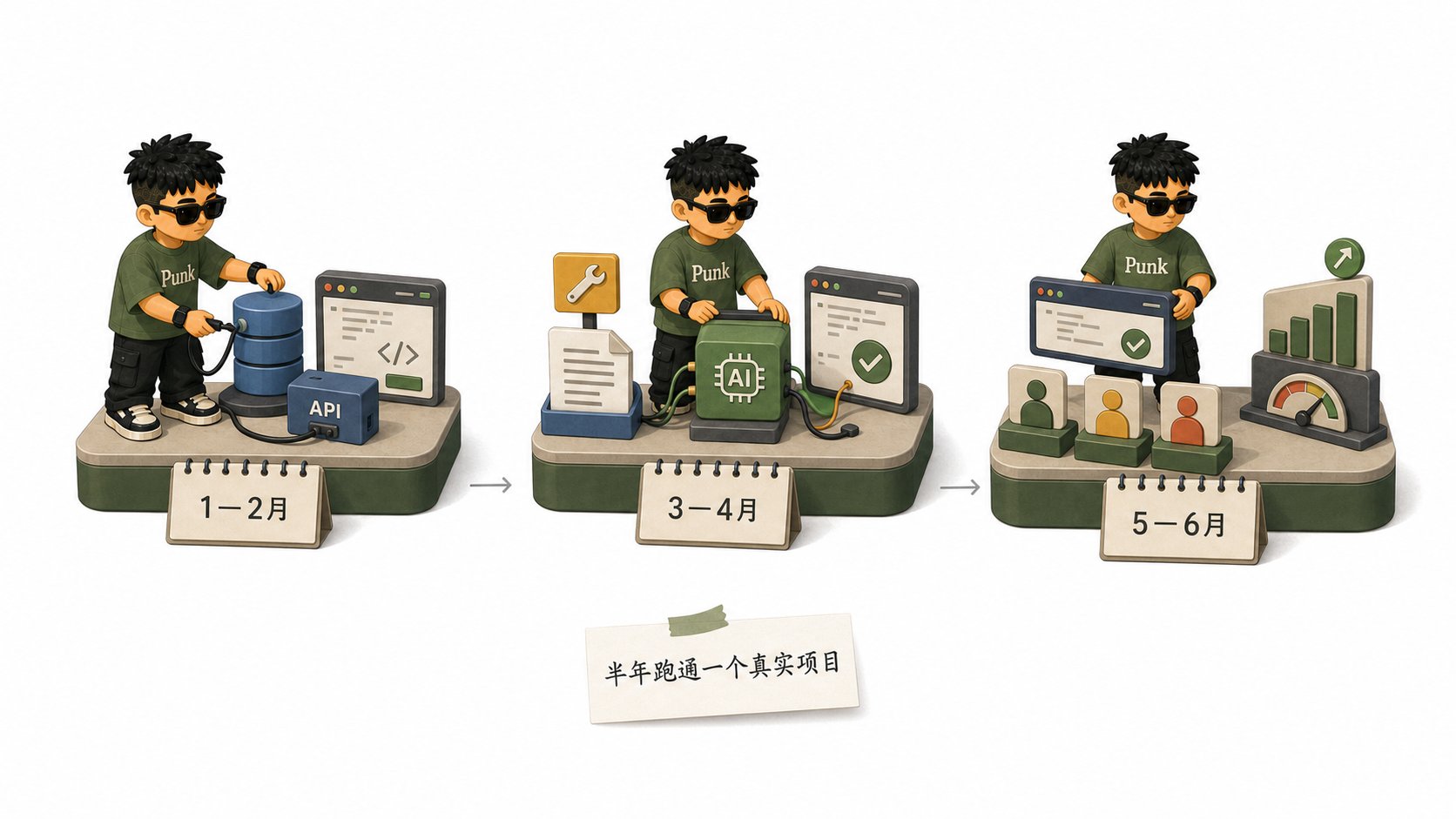
6. A Six-Month Roadmap for Ordinary People
After reading a job description, the easiest thing to do is bookmark courses. Six months later, the bookmarks are full, but the resume is still empty.
In six months, you can build an FDE portfolio. Whether you get the job depends on your existing experience, engineering level, and the target company's requirements.
Months 1-2: Build the Engineering Foundation
Learn the most commonly used things first:
- Python or TypeScript;
- SQL and databases;
- HTTP, JSON, and APIs;
- Git;
- Error handling and testing;
- Docker and basic deployment.
The acceptance criterion for this stage is only one: Independently build a small application with a database and API that others can open and use after deployment.
Get input, processing, saving, error reporting, and deployment running. Whether the framework is new doesn't matter for now.
Months 3-4: Build a Complete AI Application
Continue adding model APIs, RAG, Tool Calling, structured output, logs, Evals, failure retries, and manual review to the first version of your application.
Stop making "upload a PDF and chat." Choose a specific task:
- Help sales organize leads and provide follow-up suggestions;
- Help customer service search knowledge and draft replies;
- Help finance check reimbursement materials;
- Help operations organize data and alert for anomalies;
- Help manufacturing teams query equipment failures and maintenance records.
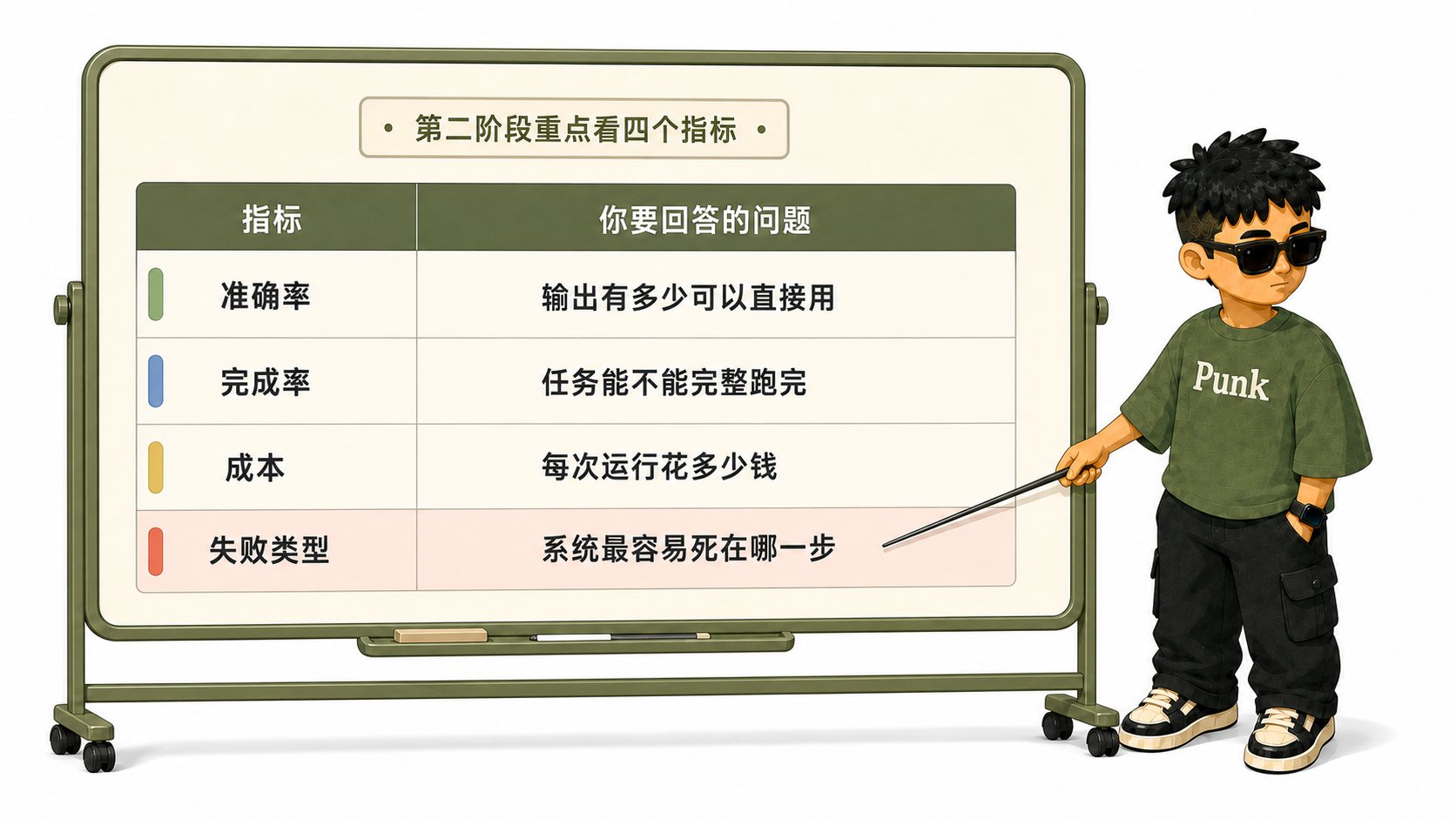
The second stage focuses on four metrics:
Months 5-6: Find Real Users
Find three to five people willing to trial it and have them use it for two consecutive weeks. Record how long the original and new processes take, how many times it was used, which suggestions were adopted, which errors required manual handling, and why users gave up midway.
Real users will uncover all hidden problems: dirty data, insufficient permissions, poor UI, constantly changing processes, and high model costs. Solving these problems makes your project look like an FDE project.
Finally, organize it into a case study:
1Business Background2→ Original Process3→ Why This Problem Was Chosen4→ System Architecture5→ Data and Permissions6→ Evaluation Method7→ Usage Results8→ Failures and Adjustments9→ Reusable Parts
Stack fewer framework names on your resume and clarify three things: Who used it, for how long, and how the metrics changed.
7. Don't Just Search for "FDE" When Looking for a Job
The name for this position is not yet fully unified. Besides Forward Deployed Engineer, you can also search for:
- Forward Deployed AI Engineer;
- Applied AI Engineer;
- AI Deployment Engineer;
- Solutions Engineer;
- AI Solutions Architect;
- Deployment Strategist;
- AI Application Delivery Engineer;
- AI Solution Engineer;
- Agent Engineer.
After seeing a position, check four things:
- Will you directly contact customers and frontline users?
- Do you need to write production code yourself?
- Are you responsible for everything from finding the problem to launching?
- Do you need to track adoption rates and business results after launch?
If all four are covered, the job content will be closer to an FDE.
How to Prepare for the Interview
FDE interviews often give a very vague problem, such as: "A hospital wants to use AI to shorten patient waiting times. What would you do?"
Don't rush to choose a model. You should clarify which stage patients are waiting in, who is doing the queuing and triaging, how long the current average wait is, where the data is stored, which decisions must be made by medical staff, and what metrics define project success.
Once the problem is clear, talk about systems, permissions, and launch scope. What the interviewer wants to see is whether you can turn a vague problem into a clear one; memorizing ten model names won't help you pass this stage.
8. Beware of "On-site Delivery with a New Name"
As FDE becomes popular, more positions with the same name but different duties will appear. Some positions will let you write key code, drive adoption, and bring on-site experience back to the product; others will have you firefighting on-site every day, with code that never enters the main repository and evaluations based only on man-days and acceptance.
Both are called FDE, but their professional value differs greatly. During the interview, you can directly ask:
- Which repository will the code written by the FDE enter?
- Does the team belong to product, engineering, or the project delivery department?
- Does the project look at adoption rates and business metrics, or just on-time acceptance?
- How do on-site problems enter the product roadmap?
- Who is responsible for long-term operation after the project ends?
- What reusable components have been accumulated from the past three projects?
- What percentage of time is spent on travel, on-site work, and on-call?
The judgment criteria are simple:
- Real FDE: Writes production code, is responsible for results, and experience returns to the product;
- Reskinned On-site Support: Billed by man-days, revolves around acceptance, and restarts every project from scratch.
If a company asks you to be responsible for results but doesn't give you data permissions, technical decision-making power, or product support, the job will likely be very exhausting. The job title is new, but the way of working might not have changed at all.

Finally
The explosion of FDE indicates that AI has moved to the next stage. Models will continue to get stronger, but a larger gap has appeared between models and real business.
Customers need someone to walk onto the site and connect messy data, legacy systems, business rules, and real users. This job has a high threshold; you need to write code, understand business, face customers, and bear the results after launch.
Opportunities for ordinary people are hidden in the half-set of skills they already possess. If you can write code, supplement business and customer skills; if you know the industry, supplement engineering and deployment; if you've done data, pre-sales, or implementation, push your current skills further; if you are a complete beginner, practice one verifiable hard skill first.
If you do only one thing now:
Find a real problem, build a tool that can go live, and have three people use it for two consecutive weeks.
Once you finish that, your work will already start to look like an FDE's. You can get the job title later.
Reference Links
- LinkedIn: Building a Future of Work That Works
- OpenAI: OpenAI launches the OpenAI Deployment Company
- AWS: Introducing Forward Deployed Engineering for Partners
- OpenAI: Forward Deployed Engineer Job Description
- Palantir: Forward Deployed Software Engineer, New Grad
**
About the Author
AI Prompts | Earned 8 figures in 3 months | Learn in Public |
|---|