xiaoxiaodong P111 | Textile
By xiaoxiaodong
xiaoxiaodong P111 | Textile
By xiaoxiaodong
Showcase
Description
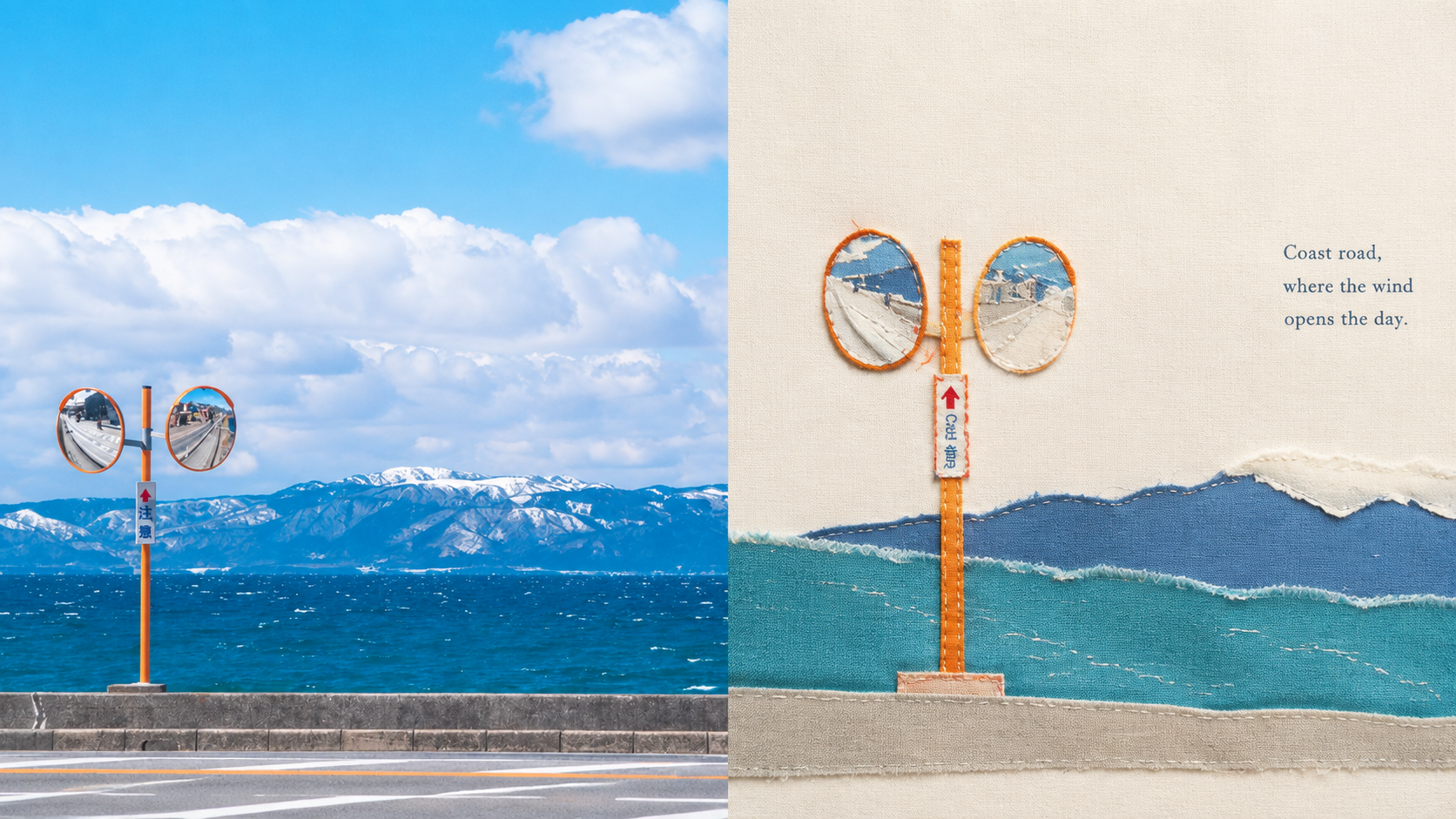
Some photos are most moving not because of how much information they contain, but because of the relationship between people and their surroundings, the tactile quality of clothing, or a quiet pause. Panel 111 preserves the realistic part of a photo, then stitches the other half into a small-scale visual stamp with frayed edges, fabric texture, and visible stitches. It works well for commemorative posters, lifestyle photography, portraits and relationships, pets and nature scenes, independent publishing, and exhibition images. It addresses the lack of tactility in ordinary photo filters, the clutter of overly dense collage materials, the tendency for handmade styles to look cheap, and the way subjects and relationships can get lost beneath decoration.
Recommended by
淡苍
Why we love this skill
Turns user photos into self-contained textile collage art while preserving the contrast between the original image and its fabric reconstruction. Supports multiple layouts, batch processing, synchronized wallpapers, precise composition, text control, and per-image review.
Related Skills
View all Image
Imagexiaoxiaodong P137 Collage
Ideal for organizing personal photography, independent publishing, exhibition studies, and lifestyle-focused visual projects. Even when the original composition is ordinary, the background is cluttered, or the subject is too small, you can reestablish a focal point through reduction, recombination, cropping, and changes in scale—not by simply applying a filter. The lower section extracts only the most recognizable subjects, contours, structures, gestures, and narrative relationships from the photo, reconstructing them as retro etched-print linework combined with modern textured color-block collage. Do not preserve the complete scene or redraw every object individually. As a rule, remove the background, setting, decoration, and secondary objects entirely; retain only a very small number of supporting forms when they are genuinely necessary to the narrative, so the original subject remains instantly recognizable with minimal information.
 Image
Imagexiaoxiaodong P150 | Paper-Cut
Suitable for organizing personal photography, independent publishing, exhibition exercises, and lifestyle visual creation. Even when the original composition is ordinary, the background is cluttered, or the subject is too small, you can reestablish the focus through reduction, rearrangement, cropping, and changes in scale—instead of simply applying a filter to the photo. The lower section extracts only the most recognizable subjects, contours, structures, poses, and narrative relationships from the photo, reconstructing them as a retro-modernist paper-cut collage illustration / Mid-century Modern Cut-paper Collage Illustration. Do not reproduce the photo in full, redraw every object individually, or retain the complete background. Actively remove most irrelevant information, leaving only the structural flow and visual memory points that best represent the original subject. Use silhouettes, large areas of colored paper, organic and geometric color blocks, minimal layering, and positive and negative space to create a concise interpretation, so the relationship to the photo above is immediately recognizable.
 Image
Imagexiaoxiaodong P126 | Collage
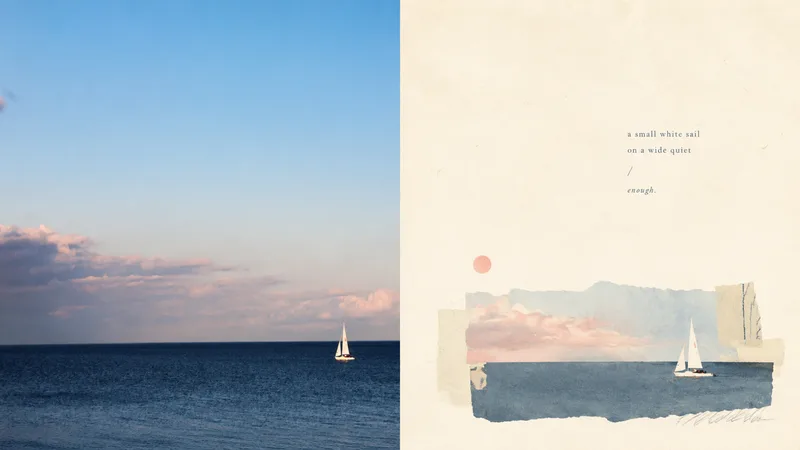
Suitable for organizing personal photography, independent publishing, exhibition studies, and lifestyle-oriented visual projects. Even when the original composition is ordinary, the background is cluttered, or the subject is small, you can reestablish the visual focus through reduction, rearrangement, cropping, and changes in scale—instead of simply applying a filter to the photo. The lower section extracts only the most recognizable subjects, outlines, structures, gestures, and narrative relationships from the photo, reconstructing them as Minimalist Poetic Collage Illustration. Do not copy the photo in full, redraw every object literally, or retain all subjects and background elements. Remove irrelevant details and keep only the structures, lines of movement, and visual memory cues that best represent the original. Re-express them through simplification, cropping, scaling, rearrangement, and negative space, so the relationship to the photo above is immediately recognizable.
Information
- Version
- v3
- Last updated
- Runtime credits
- Usage-based
- Models
- Auto