YouMind
Sign in
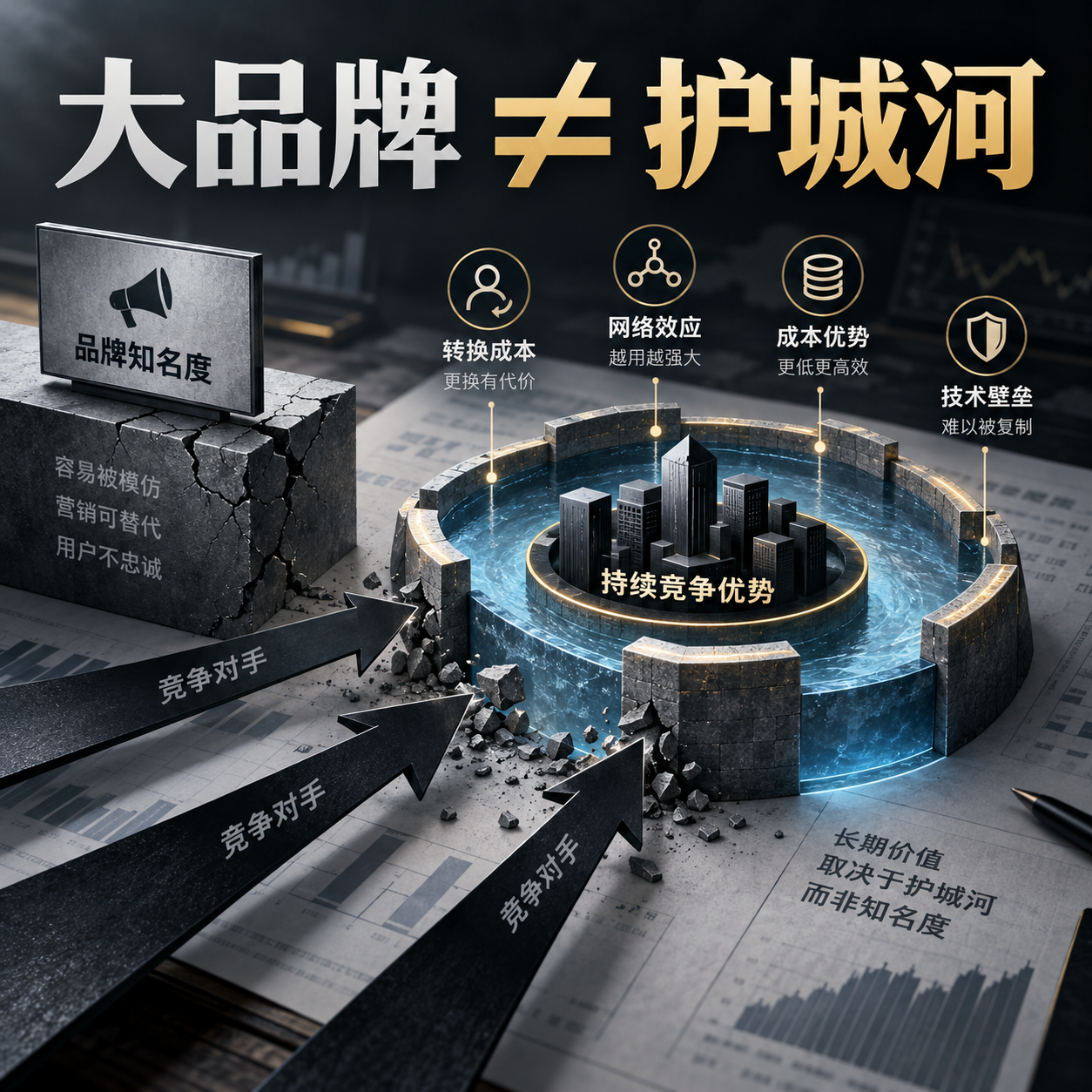
Big Brand ≠ Moat

Big Brand ≠ Moat

Screen value traps before buying the dip

Made by
LLim Jinny
Installed by
0
FromYouMind

Showcase

宇树科技的护城河评估:领先是真的,壁垒是半真的

评估对象:宇树科技(688836.SH,Unitree Robotics),成立 2016 年,杭州,四足起家后切入人形机器人。2026 年 8 月 19 日登陆科创板,发行价 150.80 元,发行市盈率 219.23 倍(行业均值 38.56 倍),首日开盘暴涨 629% 至 1100 元、市值一度冲上 4449 亿元,随后数个交易日回吐逾 2000 亿。[[citation:{"links":["https://k.sina.com.cn/article_7879776328_1d5abd848068025q3o.html","https://m.163.com/dy/article_cambrian/L3M38PPF0519C6T9.html"]}]]

一、一句话结论

宇树的竞争优势大部分是真的,但它属于“跑得快”的领跑优势,而不是“结构性”护城河。它稳稳守得住的,是“用远低于同行的成本把机器人造出来、并大规模交付”这件事;它守不住的,是“定价权”。

按经典护城河归类,它属于成本优势型护城河(叠加一层薄薄的工艺 know-how 壁垒)——而这恰恰是五类护城河中最容易被资本与规模侵蚀的一类。市场上最常被挂在嘴边的“品牌”“全栈自研”“数据飞轮”,或者只是资产而非壁垒,或者只是叙事而非事实。

关于耐久性:未来 3–5 年仍是它的领跑窗口,但这条护城河正在“收窄”而不是“加宽”。决定成败的真正变量,不在它擅长的身体,而在它落后的“大脑”。

二、先厘清:哪些“优势”常被误当成护城河

给宇树贴的护城河标签通常有五个:品牌(春晚、爆款视频、“人形第一股”)、全栈自研、运动控制(“小脑”)、出货量全球第一、以及“规模→数据→模型”的飞轮。这五条里,只有一条半是真壁垒。先看它的“家底”有多硬:

营收从 2023 年的 1.59 亿元飙到 2025 年的 16.99 亿元,两年复合增速 226.78%;扣非净利润从亏损 1802 万元转为盈利 5.91 亿元,毛利率从 44.22% 抬升至 60.13%。[[citation:{"links":["https://xueqiu.com/1649736156/404036149","https://m.163.com/dy/article_cambrian/L3M38PPF0519C6T9.html"]}]] 这是全球人形机器人赛道里极少数真正盈利的公司,硬件成色确实扎实。

但增长的另一面已经出现:2026 年一季度营收 4.23 亿元(同比 +68.49%),扣非净利润却只有 4025 万元(同比 -52.55%);公司预计上半年营收 10.52–11.28 亿元(+35.6%~45.4%),扣非净利润 2.36–2.83 亿元,同比 下滑 6.4%~22.0%,原因是研发费用与销售费用大幅前置。[[citation:{"links":["https://m.163.com/dy/article_cambrian/L3M38PPF0519C6T9.html"]}]] 增速换挡、增收不增利,是判断“领先能否变成壁垒”的第一个警报。

三、逐项压力测试:真壁垒,还是伪壁垒

1. “全栈自研 / 垂直整合”——真的,但它是成本优势,不是排他壁垒。 宇树自研电机、减速器、控制器、传感器、关节模组、激光雷达,核心零部件自研率超 90%、国产化率 85% 以上。[[citation:{"links":["https://news.sina.cn/bignews/insight/2026-05-26/detail-inhzfmyh2858082.d.html"]}]] 这让它把人均/单机成本压到行业最低:人形机器人均价从 2023 年近 60 万元降到 2025 年约 16.64 万元,2026 年一季度下探到 10 万元级。[[citation:{"links":["https://k.sina.com.cn/article_7879776326_1d5abd84606801cqfa.html"]}]] 但要注意方向性:垂直整合降低的是“自己的成本”,而不是“别人的门槛”。 上游的谐波减速器(如绿的谐波)既供宇树、也供特斯拉等对手,组件对全行业可得。[[citation:{"links":["https://www.sohu.com/a/1050188699_122471293/"]}]] 换句话说,宇树的自研是把供应商利润内化,属于工艺与执行优势,别人带着钱和时间可以复制,不构成“进不来”的壁垒。

2. “品牌”——是资产,不是护城河(这正是“大品牌 ≠ 护城河”的核心)。 检验品牌是不是护城河,只看一条:它有没有定价权。宇树的打法是用最低价抢市场——旗舰 G1 起售 8.5 万元、入门 R1 Air 压到 2.99 万元,是价格战的发起者而非受益者。[[citation:{"links":["https://www.toutiao.com/article/7672642945816592896/"]}]] SemiAnalysis 拆解显示 G1 中位物料成本仅约 8976 美元,对应毛利率约 67%——它靠成本领先赚钱,不是靠品牌溢价赚钱。[[citation:{"links":["https://www.toutiao.com/article/7672642945816592896/"]}]] 恰恰相反,2026 年春晚有四家机器人公司同时登场,宇树的“唯一性”被稀释。[[citation:{"links":["https://www.sina.cn/news/article/comos_niqixxs3425182.html"]}]] 品牌能带来招聘、政府资源与获客流量,但不能转化为价格权,所以它是资产、不是护城河。

3. “小脑”运动控制——真功夫,但价值权重在下降。 创始人王兴兴十年专注运动控制,四足动态平衡达 5.2 米/秒、人形 H1 关节扭矩密度 230Nm/kg,工程能力公认全球第一梯队。[[citation:{"links":["https://k.sina.com.cn/article_7879776326_1d5abd84606801cqfa.html"]}]] 但这是一项能力领先,不是结构壁垒:运动控制在快速商品化,且行业价值正从“身体/小脑”迁移到“大脑/通用智能”——而这正是宇树的短板。创始人本人坦言其自研具身大模型“未达 GPT-1 水平”。[[citation:{"links":["https://news.sina.cn/bignews/insight/2026-05-26/detail-inhzfmyh2858082.d.html"]}]] 领先成立于一个可能越来越不值钱的环节。

4. “出货量第一 / 规模”——先发优势,不是有效规模。 2025 年宇树人形机器人出货约 5500 台、全球第一,份额约 32.4%;四足累计销量超 3.3 万台、历史市占率约 60%。[[citation:{"links":["https://allweatherfinance.com/ubs-provides-a-detailed-analysis-of-unitree-robotics-a-pioneer-in-humanoid-robot-assembly-leading-in-cerebellum-and-body-technologies/"]}]] 但 2026 年上半年格局已变:智元(AgiBot)以约 44% 反超登顶,宇树以约 31% 退居第二,两家合计约占全球 75%。[[citation:{"links":["https://k.sina.com.cn/article_7879922977_1d5ae152106801ip66.html"]}]] 市场处于高速扩张期、玩家众多,不存在“产能出清后只剩一两家”的有效规模壁垒——份额领先随时可被反超,这更像先发而非壁垒。

5. “数据飞轮”——最接近真护城河,但目前证据最薄。 出货量→海量物理交互数据→训练更好的模型,理论上是唯一能构成网络效应的一条。但宇树超过七成人形收入来自高校与科研院所的课题经费采购,行业应用收入仅占 9.01%,其中还有 50%–70% 是“企业导览”。[[citation:{"links":["https://www.toutiao.com/article/7672642945816592896/"]}]] 科研场景的数据既不等于工业 on-policy 数据,复购也弱。更矛盾的是,宇树走开源路线(UnifoLM 系列开源),开源会主动放弃粘性。所以这条飞轮目前只是期权,不是既成护城河。

四、属于哪一类护城河

护城河类型是否存在判断依据
无形资产(品牌/专利/牌照)弱(≈无定价权)知名度高,但靠低价取胜而非溢价;专利非核心壁垒
转换成本基本无客户采购硬件平台,ROS/SDK 开放,迁移成本低

宇树科技的护城河评估:领先是真的,壁垒是半真的

Description

Identify the types, authenticity, and sustainability of a company’s moat, and build a moat assessment framework. Sample inputs: 6. 【XX公司】Profits have not declined, yet the stock is down 30%. What unreported risks might be hiding behind the financial statements? 7. 【XX公司】It has plenty of cash on the books, so why has the stock fallen so sharply? Is that cash available to save the business, or is it restricted? 8. 【XX公司】It is relying on new share issuance to stay afloat. After such a steep decline, is it still worth considering? Could common shareholders be diluted? 9. The five companies I hold have all fallen significantly recently. Help me identify which ones have not actually suffered fundamental deterioration and are worth deeper research. 10. Help me backtest which companies in 【XX板块】 truly recovered after last year’s major sell-off. Don’t just focus on the survivors.

Best for

For investors and researchers who want to systematically screen falling companies for value traps and assess whether fundamentals may have diverged from price.

How to use this Skill

  1. Provide your input

    Provide a company list or market/sector scope, the decline window, the information cutoff date, and available financial, valuation, and operating data.

  2. Run the Skill

    It separates price, valuation, and fundamental changes; checks financing, cash flow, competitive, and governance risks; and reverse-checks claims that a stock may have been unfairly sold off.

  3. Review your result

    Receive a tiered research screening report, key counterevidence, information gaps, and a follow-up verification plan. It does not provide trading timing, position sizing, or recommendations.

Related Skills

View all

Duan Yongping Stock Selection

An A-share research assistant grounded in value investing. It analyzes business models, competitive moats, financial quality, and valuation to help investors identify outstanding companies with long-term compounding potential.

张
520

Information

Version
v5
Last updated
Runtime credits
Usage-based
Models
Auto
Use cases
Research & analysisBusiness & strategyInvestment & finance
What you get
ReportPlan

Ready to create something bolder?

Big Brand ≠ Moat