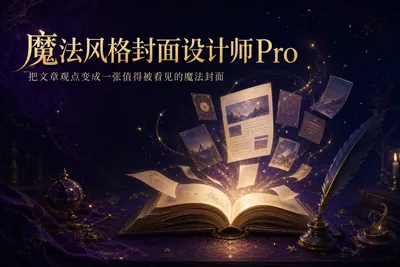
Magic Cover Designer Pro
Magical covers for Twitter long-form posts
Magic Cover Designer Pro
Magical covers for Twitter long-form posts
Showcase
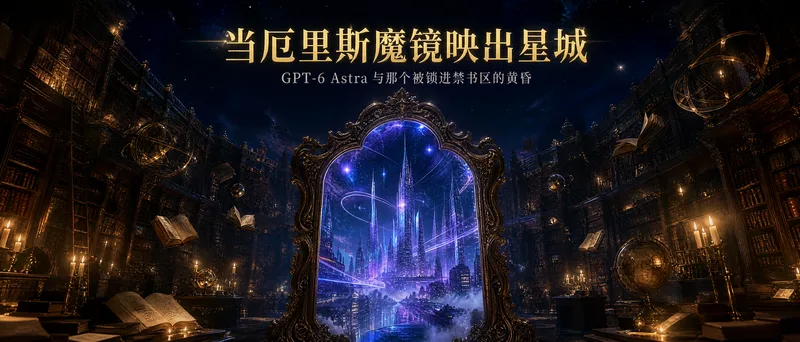
魔法封面设计
Vol.006 推特长文封面 21:9|当厄里斯魔镜映出星城
魔法封面设计
Vol.006 推特长文封面 21:9|当厄里斯魔镜映出星城
Description
Turn an article title into a magical cover that makes its ideas stand out. “Magic Cover Designer Pro” is not a random image generator. It is a visual content packaging workflow: “content understanding → title confirmation → visualizing ideas → platform adaptation → cover generation.” It helps preserve the real title and subtitle while transforming an article’s core ideas, emotions, and narrative relationships into vivid, engaging magical visuals with a distinct identity. It supports Twitter long-form posts or Threads, WeChat Official Account articles, Xiaohongshu Notes, product introductions, knowledge sharing, growth retrospectives, and personal brand content. The Skill first identifies the article’s original title, original subtitle, and core idea. The original title is used as the default main cover title, while the original subtitle is prioritized as the cover subtitle. The core idea does not directly replace the cover text; instead, it guides the choice of subject, symbols, composition, lighting, and visual metaphors. It matches visual strategies to different content types: practical breakdowns use magical blueprints or step-by-step scrolls; growth retrospectives use journeys and illuminated paths; contrarian ideas use light-and-shadow conflicts or broken seals; product introductions use magical workshops and core devices; knowledge sharing uses academy archives and spellbooks; and case studies use before-and-after changes and narrative scenes. When a title is too long, it provides both the original-title version and a concise version for you to confirm, without rewriting it on its own. When there is no subtitle, it first offers candidate copy instead of placing an unconfirmed idea directly into the image. Its default visual language combines retro fantasy with magical journaling: deep purple, midnight blue, black-brown, antique bronze, and warm gold, along with parchment, quill pens, spellbooks, sealing wax, stardust, and other tactile elements. It can also draw shared colors, materials, lighting, and narrative qualities from reference images, but it does not copy the specific composition, people, logos, or distinctive elements of any single image. For each platform, it adapts the aspect ratio, text density, subject size, whitespace, and thumbnail legibility to real reading contexts. It is suitable for knowledge creators, personal brands, product authors, and content creators who want to build a consistent visual identity. It does not fabricate numbers, results, identities, or brand endorsements, and it does not promise viral performance. It simply helps the visuals support real content more accurately and vividly.
Recommended by
淡苍
Why we love this skill
Transforms titles, core ideas, and platform context into narrative-driven magical visuals—not template-based fantasy. It prioritizes accurate title and subtitle preservation, previews, thumbnail readability, and platform-ready composition.
Related Skills
View all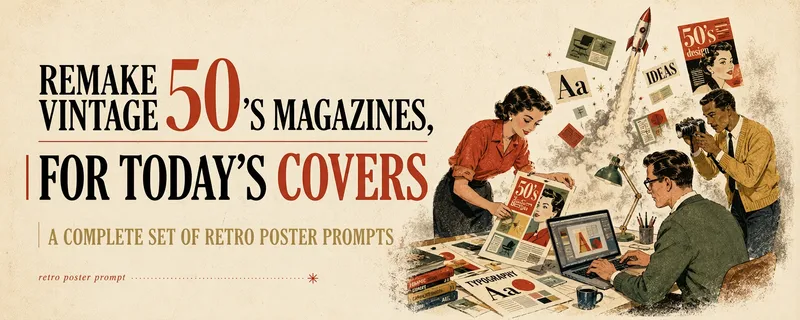 Image
ImageMulti-Platform Cover Design
Turn articles, notes, topics, or long-form text into stylized covers ready for publishing and sharing, balancing title readability, content recognition, and memorable visual metaphors. Supports Xiaohongshu, WeChat Official Accounts, X, and custom aspect ratios. It works for single covers and can also create separate compositions for clearly specified multi-size requirements, avoiding simple cropping or stretching. The skill extracts the title, topic, visual subject, audience, emotion, and contextual background from your content. It then combines these insights with visual styles suited to covers or posters to generate a complete cover prompt ready for AI image generation. Title hierarchy, typography, color, materials, negative space, and the relationship between text and imagery are handled consistently around the selected style, making the result feel more like a designed editorial cover than a generic illustration or templated poster. If you have not provided a publishing platform or visual style, it first asks about the required dimensions and recommends three suitable styles based on your content. Once the details are clear, it continues with generation. You can choose to generate the cover directly or receive only a polished prompt, making it suitable for content creators, editors, and teams that need to adapt covers in batches for social platforms.
 Image
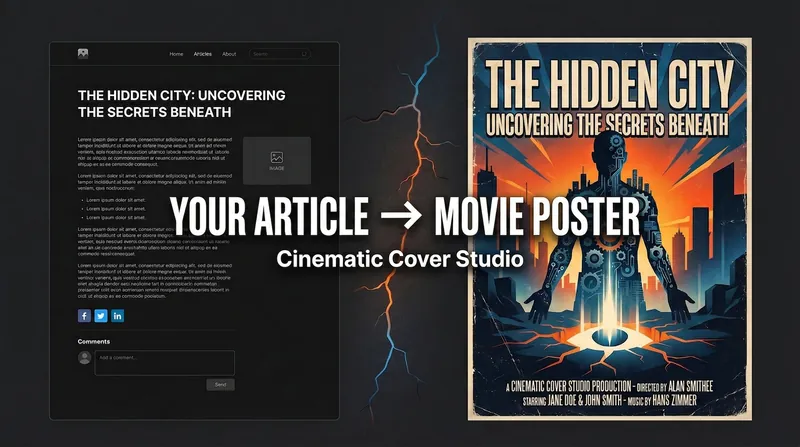
ImageCinematic Cover Studio v1.4
Create movie-poster-level visual covers for your articles, topics, or content. This tool transforms your core ideas into captivating visual art, whether you need eye-catching images for blogs, WeChat public accounts, Xiaohongshu, or video platforms. Simply provide an article link or topic, and choose your preferred platform aspect ratio and design style, such as "Minimalist Symbol," "Illustration Narrative," or "Eastern Aesthetics." The system automatically captures the deeper meaning of your content, using sophisticated composition, color matching, and conceptual refinement to generate three different cover styles: literal, metaphorical, and minimalist—each uniquely crafted. Through intelligent analysis of content type and emotional tone, the tool matches the best design philosophy, composition, and color scheme, ensuring the final result meets professional aesthetic standards while accurately conveying your content's essence. You can adjust lighting, composition, or overall style as needed until you achieve the perfect work. Whether you seek the visual impact of a commercial blockbuster or prefer the artistic expression of surreal metaphors, Cinematic Cover Studio v1.3 helps you stand out from the crowd, drawing more attention with cinematic quality.
Atmospheric Covers
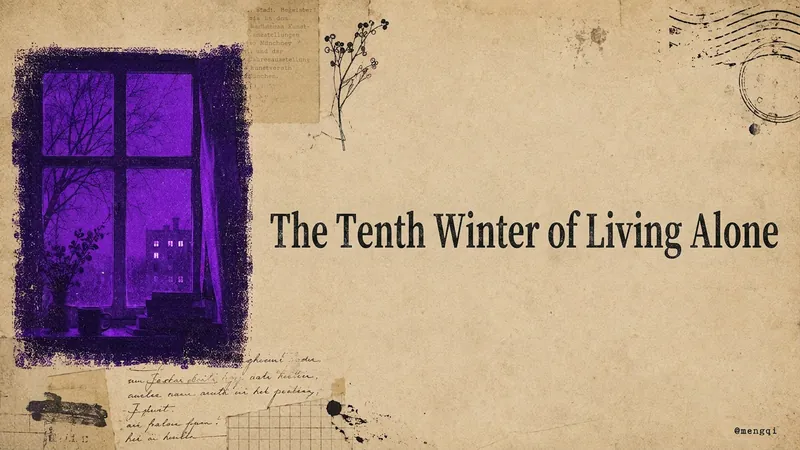
This is an everyday productivity tool for content creators who publish to Xiaohongshu, WeChat Official Accounts, WeChat Channels, Twitter, and YouTube. How many covers do you have to make by hand for every post you publish? Xiaohongshu needs a vertical cover with extra-bold serif type that stays readable in feed thumbnails. WeChat Official Account needs a horizontal header image. WeChat Channels needs a vertical 6:7 cover with text placed toward the top to avoid the UI overlay. Twitter needs a quote card. YouTube needs a restrained essay cover. Five platforms, five aspect ratios, five sets of text-density rules—if you adjust them manually every time, covers alone can eat up half an afternoon. Worse, the result is either too plain and template-like, or too cluttered like a sticker collage, and the styles never match each other, so your account's visual identity always feels scattered. This Skill takes that high-frequency task off your plate. Drop in a sentence, a mood, a title, or a whole article. It first extracts the keywords, translates them into a central visual concept, and expands that into 3–5 atmospheric elements. Then it produces covers for all five platforms at once—vertical or horizontal, whitespace ratio, and text rules are all adjusted automatically to each platform's style. All five images share the same imagery, the same mood color, and the same paper-textured cover family, so your account's visual identity naturally becomes a cohesive system. What makes it most valuable is that the visuals are rich without being messy, with the weight of printed matter rather than a pile of digital stickers. It has a built-in mood-to-color engine: quiet moods go cobalt blue, afternoons go ochre orange, a solitary winter goes violet. You don't need to understand color theory to get the right feel. One sentence in, five platform covers out, with a unified brand feel—no more tweaking each one individually. All you need to do: Input: a sentence, a mood, a topic, or a piece of content. ↓ Get all five platform-tailored atmospheric covers for Xiaohongshu, WeChat Official Account, WeChat Channels, Twitter, and YouTube in one go. ↓ Sit back and watch the followers roll in!
Information
- Version
- v12
- Last updated
- Runtime credits
- Usage-based
- Models
- Auto