
Dongba Pattern Generator
Dongba motifs, museum colors, 3 layout styles
Dongba Pattern Generator
Dongba motifs, museum colors, 3 layout styles
Showcase
Description
Turn a theme into a visually authentic Dongba (Naxi) style pattern. Built in is a library of classic Dongba script and painting motifs—sacred birds/crows, snow mountains, human-faced suns, spirals, pines and cypresses, deer and horses, figures with outstretched arms, waves, ritual vessels, and more. It uses a museum-documented palette of original colors: pine-soot black, Dongba paper beige, indigo, ochre, pine green, and vermilion. Choose from four composition styles: all-over mural, horizontal scroll, vertical scripture scroll, and badge. The skill automatically completes the full workflow—“theme analysis → symbol selection → composition and color → prompt compilation → image generation → quality check”—while preserving the core character of Dongba art: part writing, part painting; plain yet powerful; and bright with original colors. Use cases: social media illustrations and poster covers, cultural-creative patterns for packaging, scarves, and merchandise, wallpapers and seamless backgrounds, and brand visual identity (VI). Trigger phrases: Dongba pattern, Dongba style, Dongba motif, Naxi pattern, Dongba script pattern, ethnic-style pattern, part writing and part painting. Note: This skill produces visual motifs in a “Dongba style” and does not provide accurate interpretations of individual Dongba script characters. For researched interpretations, conduct a separate manual review.
Recommended by
淡苍
Why we love this skill
Transforms topics into research-grounded Dongba pattern blueprints with script references, museum-informed colors, four formats, quality checks, and one-variable iteration.
Best for
Creators and design teams seeking ethnic-cultural visual elements, pattern designs, or brand motif inspiration.
How to use this Skill
Provide your input
Provide a theme, optionally with its use, aspect ratio, or layout preference—for example, a poster, package, wallpaper, or brand visual.
Run the Skill
The system turns your theme into a pattern design with distinctive Naxi Dongba-style features, then generates the visual.
Review your result
Receive a Dongba-style pattern for illustrations, covers, cultural-creative designs, wallpapers, or visual design. Any Dongba script meanings require separate human verification.
Related Skills
View all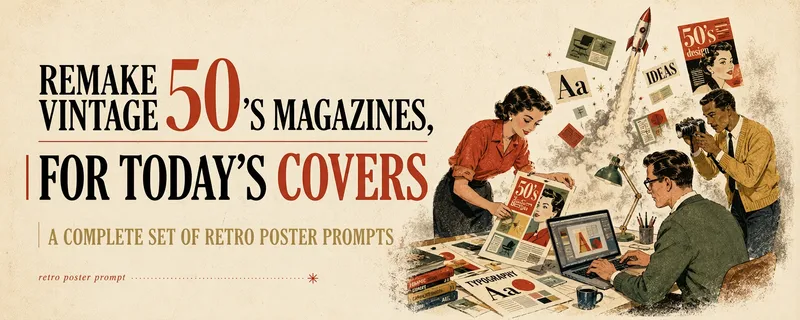 Image
ImageMulti-Platform Cover Design
Turn articles, notes, topics, or long-form text into stylized covers ready for publishing and sharing, balancing title readability, content recognition, and memorable visual metaphors. Supports Xiaohongshu, WeChat Official Accounts, X, and custom aspect ratios. It works for single covers and can also create separate compositions for clearly specified multi-size requirements, avoiding simple cropping or stretching. The skill extracts the title, topic, visual subject, audience, emotion, and contextual background from your content. It then combines these insights with visual styles suited to covers or posters to generate a complete cover prompt ready for AI image generation. Title hierarchy, typography, color, materials, negative space, and the relationship between text and imagery are handled consistently around the selected style, making the result feel more like a designed editorial cover than a generic illustration or templated poster. If you have not provided a publishing platform or visual style, it first asks about the required dimensions and recommends three suitable styles based on your content. Once the details are clear, it continues with generation. You can choose to generate the cover directly or receive only a polished prompt, making it suitable for content creators, editors, and teams that need to adapt covers in batches for social platforms.
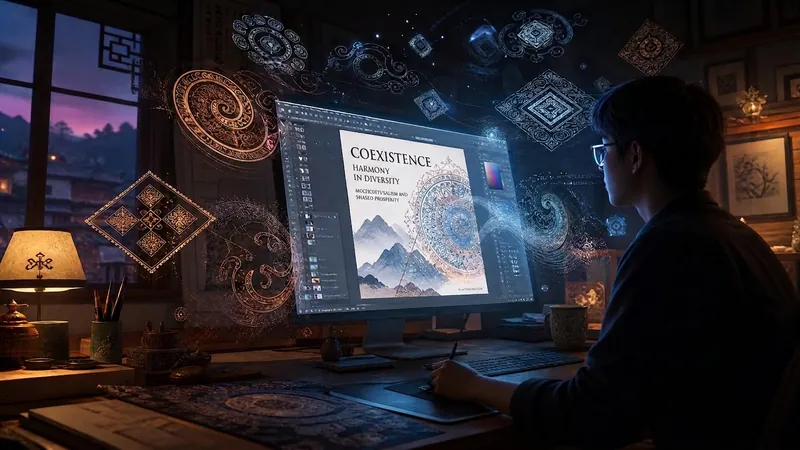
Heritage Design Inspiration v5
When inspiration runs dry, let millennia of ethnic crafts draw your next stroke. 🎭 Intelligently detects your vague intuitions — a word, a mood, or even 'just browsing' — and matches them to authentic Chinese ethnic intangible heritage directions (Tibetan, Mongolian, Miao, Yi, Zhuang, Dong, Tujia, Dai, Qiang, Uyghur, etc.) 🔍 Deeply mines ethnic visual DNA — searches the web for real ICH materials, extracts pattern features, color systems, and craft textures, with cultural provenance to prevent design from becoming superficial symbol stacking. 🎨 Four-dimensionally translates traditional aesthetics — minimalist abstraction / deconstructive recombination / material translation / modernized color schemes, turning centuries-old crafts into today's design language. 🖼️ Parallel output of multi-form visual solutions — pattern designs / illustration posters / color mood boards / cultural creative concepts, at least 3 visual forms each time, so inspiration is never one-dimensional. 📦 Complete inspiration board delivered as a package — each visual solution includes cultural annotations (where it came from, how it was transformed, where it can be used), shareable with your team or archived for reuse. 🛡️ Dual-engine quality control — the execution engine handles creative generation, while the quality control engine silently verifies cultural accuracy and design quality, eliminating cultural fabrication. How to use? Just say 'Give me inspiration' after opening, or enter a keyword (e.g., 'dragon', 'serenity', 'Miao'), then follow the 5-step flow—you can go back and change direction at any step. Several designers have already turned China's ethnic intangible heritage into their own rich source of inspiration.
 Image
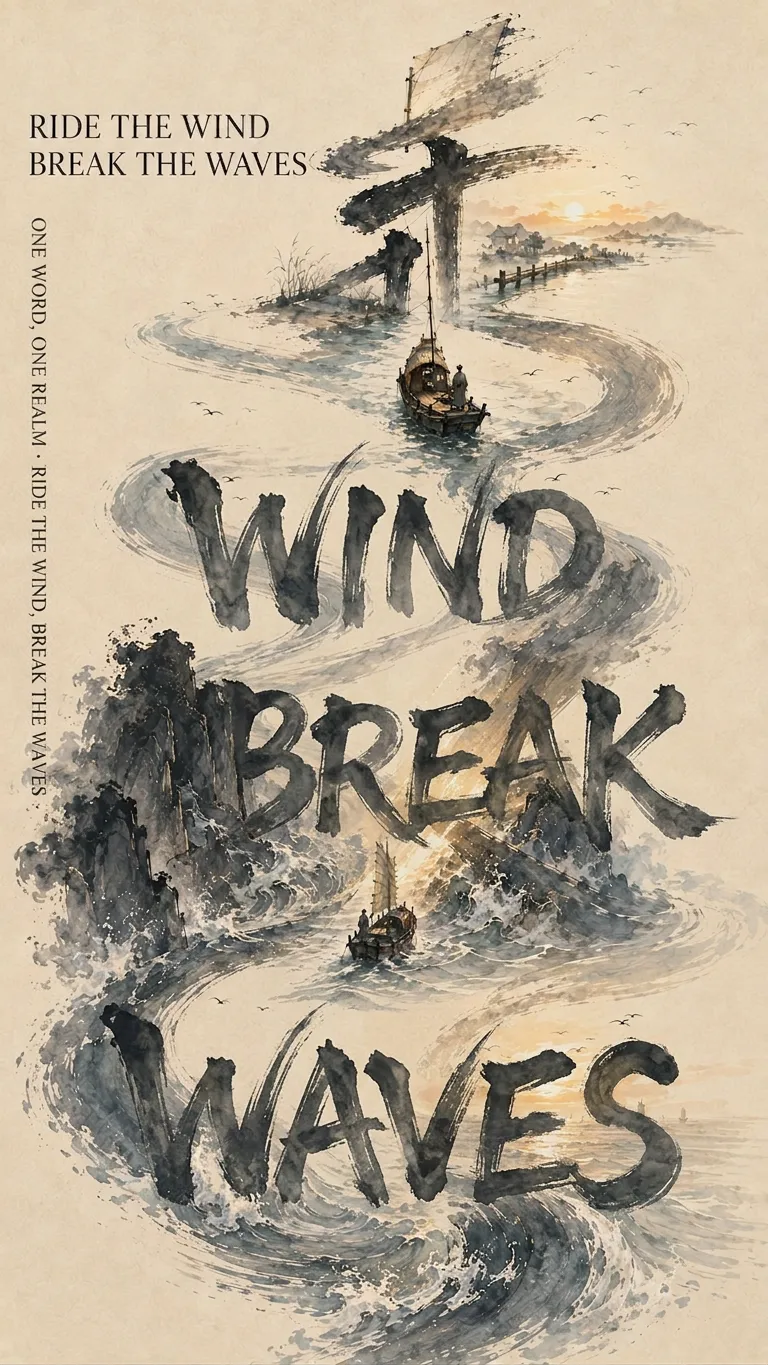
ImageOne Character, One World
This Skill does not simply apply an ink-wash filter to Chinese characters. It first understands the core meaning of the text in its full context, then determines how the imagery, calligraphy, and layout should work together. Give it a Chinese character, name, place name, idiom, line of poetry, or public-domain classical Chinese poem or prose passage. It first interprets the meaning, then transforms the character’s strokes into mountains, rivers, bridges, figures, architecture, or narrative paths, making the calligraphy itself the framework of the composition. Different meanings automatically call for different brush movements, colors, and compositions, rather than being forced into a fixed template. It supports single-character posters, multi-character series, combined-character compositions, and storyboard sequences based on classical poetry and prose. Names, place names, and idioms can be turned into sequential series with one character per poster, or idioms, poetic lines, and parallel phrases can be combined into a single poster. Classical poetry and prose can be divided into 6–12 consecutive posters according to the original order and emotional arc, with nine posters by default for WeChat Moments, while naturally incorporating the corresponding original text into the imagery. The Skill actively avoids common failures: illegible characters, calligraphy that looks like a computer font, misinterpretations caused by checking characters one by one, forcing the entire image into a character-shaped mask, changing only the text while leaving the narrative unchanged across a series, placing the main text in an awkward standalone white box, and presenting garbled small text as a finished design. It is suited to Chinese posters, urban cultural visuals, name-based gifts, idiom and poetry projects, nine-image WeChat Moments posts, Xiaohongshu graphics, and collectible Eastern editorial design. The final result is influenced by YouMind’s current image model. When long text must be accurate character by character, the Skill prioritizes editable text layers for typesetting; when that is not possible, it clearly labels the result as a conceptual base and provides accurate typesetting specifications.
Information
- Version
- v2
- Last updated
- Runtime credits
- Usage-based
- Models
- Auto
- Use cases
- Images & designMarketing & growthE-commerce & sales
- What you get
- Image
- Visual styles
- Hand-drawnFlatPrintmaking