Xiaoxiaodong x String Map P087
Created by Xiaoxiaodong
Description
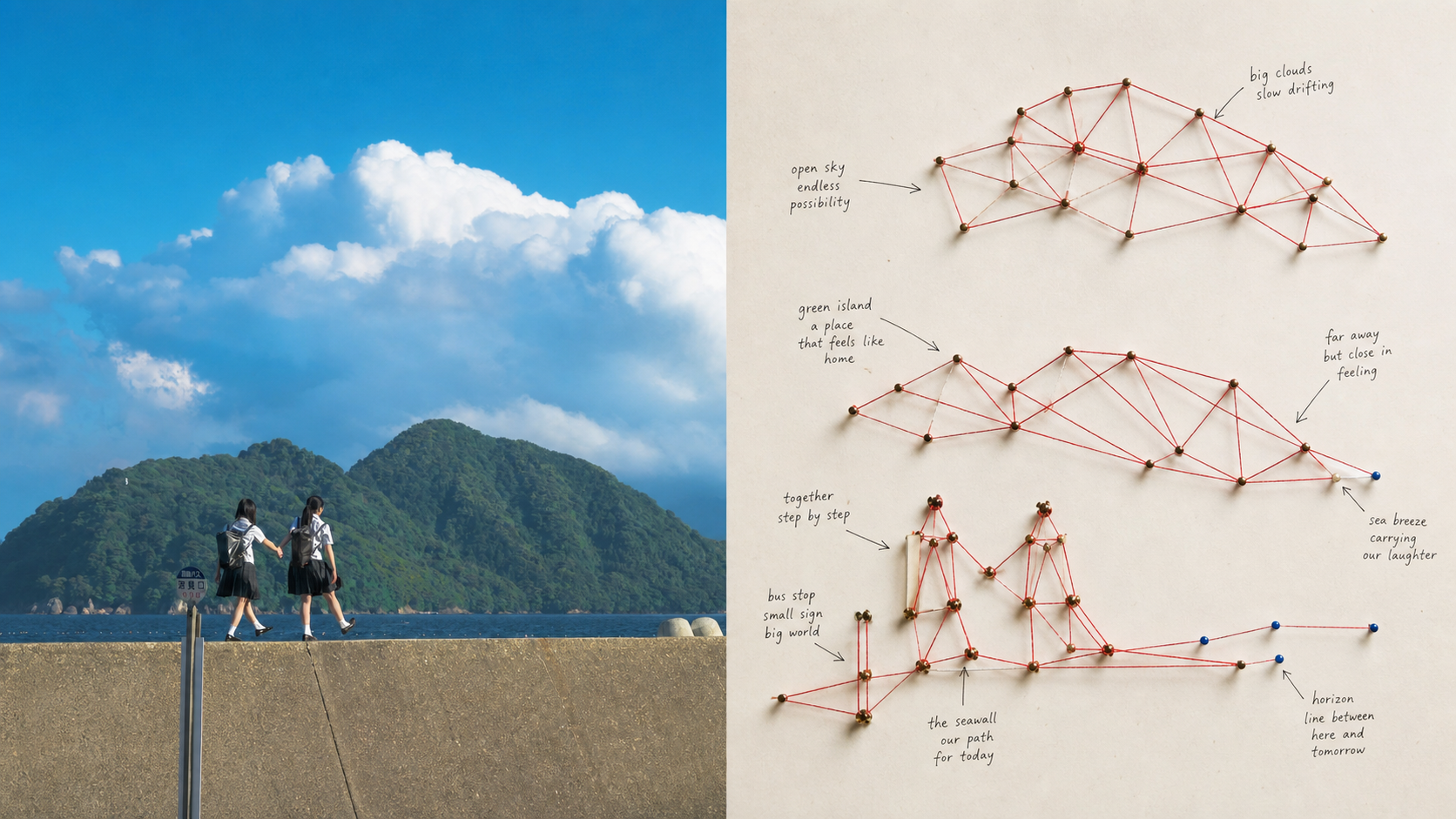
Turning a photo directly into a conventional flowchart loses the real spatial relationships between its subjects; random red strings and a wall of nodes can also become a cheap detective board or digital network UI. Panel 087 extracts subjects, outlines, structures, poses, and narrative relationships from a photo, breaks them into a small number of meaningful pushpin nodes, and reconnects them with real string to create a tactile system map. Relationships are denser at the center and gradually loosen toward the edges; vermilion or coral-red string forms emergent geometry on natural white cardstock, while preserving pin shadows, overlapping intersections, handwritten labels, and authentic handmade imperfections. Ideal for these situations Want to understand relationships between subjects: Turn movement directions, spatial positions, structural transitions, and environmental clues into nodes and connections. Need a realistic installation feel: Use pushpins, cotton string, paper labels, pin shadows, variations in tension, and slight occlusion instead of a computer-drawn network diagram. Want a complex yet orderly composition: Use a central node or relationship as the hub, keeping the center dense and the edges sparse while preserving ample negative space. Need flexible delivery: Supports vertical, horizontal, design-only, multiple aspect ratios, and four-edge wallpapers, as well as batch processing for image folders.
Related Skills
View all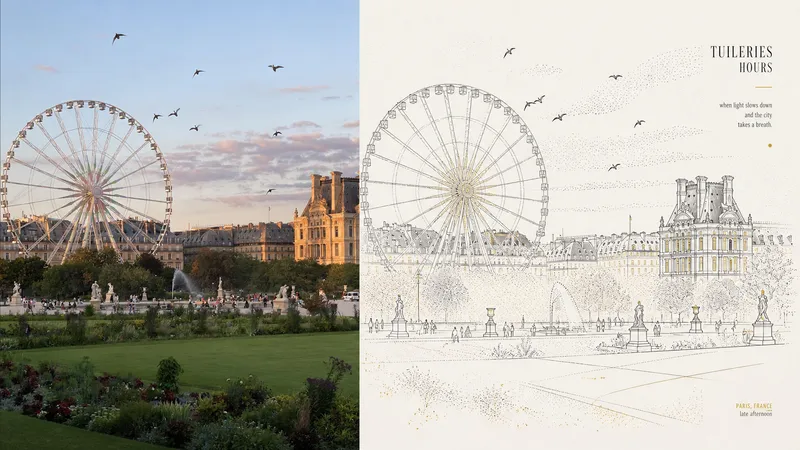 Image
ImageXiaoxiaodong x Line/Dot x P084
Panel 084 uses fine black or dark lines to distill the main subject, buildings, roads, and spatial relationships. Vertical, horizontal, angular, and curved lines, along with perspective guide lines, establish the geometric framework. Stippling/dotted texture then uses variations in density to shape the sky, ground, distant views, tree shadows, lighting, and the atmospheric layers around the subject. Complex backgrounds are deliberately reduced, leaving a clear focal point, generous negative space, and a few accent colors with identifiable sources. Best suited for these situations When cities, buildings, and spatial relationships need to remain clear: Use geometric fine lines, perspective guide lines, and key contours to distill roads, buildings, and scene structure. When you want to express air, light, and depth without filling the image with texture: Create quiet layers through gradual changes in stippling/dotted texture density. When you prefer a restrained color palette: Use blue-gray, off-white, and warm white as the main colors, with only a few spot colors from the original image illuminating the focal points. When you need flexible delivery: Supports top-and-bottom, left-and-right, pure-design, multi-ratio, and four-edge wallpapers, and can also process image directories in batches.
 Image
ImageXiaodong x Screenprint x P086
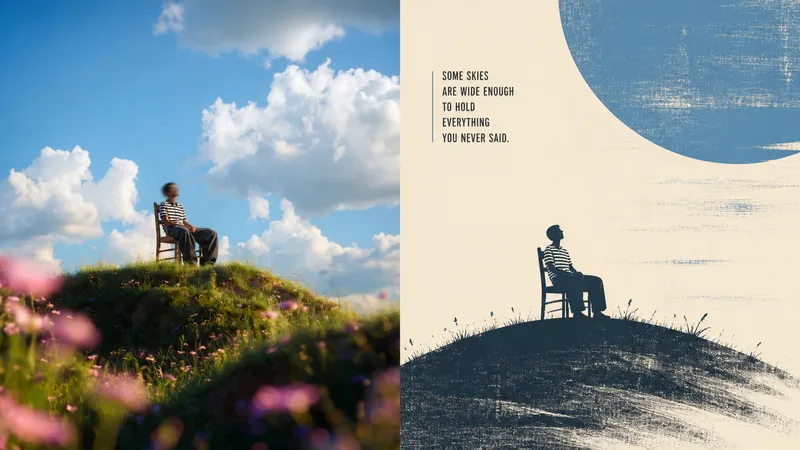
Panel 086 keeps only the 3–5 visual details that make an image work. It reshapes the subject with silhouettes, geometric forms, and simple color blocks, then uses 2–4 spot colors drawn from the photo, dry-brush, brayer texture, dragged ink, broken ink, and uneven coverage to create a medieval modernist screen print. The composition always seeks one clear focal point, one dominant direction, and one meaningful area of negative space. Best for Wanting more visual order from a photo: Keep only 3–5 key visual details, using silhouettes, geometric forms, and color blocks to establish a clear focal point. Wanting an authentic printmaking feel: Let dry-brush, rolled ink, dragged ink, broken ink, and uneven coverage become part of the visual language. Wanting vivid but restrained color: Compress the most energetic relationships in the original image into 2–4 spot colors, allowing the paper and negative space to actively shape the composition. Needing flexible deliverables: Supports portrait, landscape, design-only, multiple aspect ratios, and four-edge wallpapers, and can also process image directories in batches.
Xiaoxiaodong × 2-Color × P097
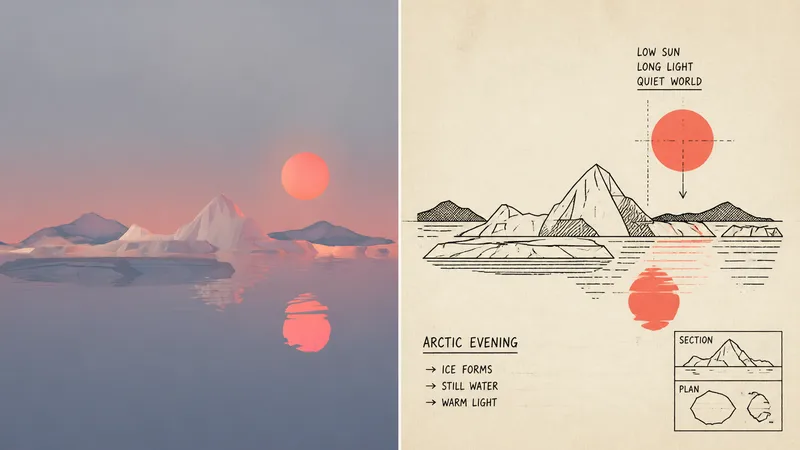
Panel 097 uses economical linework, flattened diagrammatic perspective, and a few geometric shapes to preserve the subject’s identity. Deep black defines contours and information hierarchy, while a second spot color is extracted from the photo to create restrained two-color spot printing. Hand-drawn commercial lettering, callout lines, and lightly awkward functional humor make “explaining this thing” the image itself. Works well for these situations Need an instantly recognizable diagram: Use outlines, boxes, holes, panels, and directional relationships to clarify the subject and story. Like the strength of vintage printing: Pair deep black with a second color drawn from the original image, on warm off-white paper with subtle misregistration grain. Want humor without pretension: Vintage commercial hand lettering and a few supporting symbols serve the narrative without creating decorative noise. Need flexible delivery: Supports top/bottom, left/right, design-only, multiple aspect ratios, and wallpapers for all four edges. It can also process image directories in batches.
Xiaoxiaodong x String Map P087
Created by Xiaoxiaodong
Description
Turning a photo directly into a conventional flowchart loses the real spatial relationships between its subjects; random red strings and a wall of nodes can also become a cheap detective board or digital network UI. Panel 087 extracts subjects, outlines, structures, poses, and narrative relationships from a photo, breaks them into a small number of meaningful pushpin nodes, and reconnects them with real string to create a tactile system map. Relationships are denser at the center and gradually loosen toward the edges; vermilion or coral-red string forms emergent geometry on natural white cardstock, while preserving pin shadows, overlapping intersections, handwritten labels, and authentic handmade imperfections. Ideal for these situations Want to understand relationships between subjects: Turn movement directions, spatial positions, structural transitions, and environmental clues into nodes and connections. Need a realistic installation feel: Use pushpins, cotton string, paper labels, pin shadows, variations in tension, and slight occlusion instead of a computer-drawn network diagram. Want a complex yet orderly composition: Use a central node or relationship as the hub, keeping the center dense and the edges sparse while preserving ample negative space. Need flexible delivery: Supports vertical, horizontal, design-only, multiple aspect ratios, and four-edge wallpapers, as well as batch processing for image folders.
Related Skills
View allImageXiaoxiaodong x Line/Dot x P084
Panel 084 uses fine black or dark lines to distill the main subject, buildings, roads, and spatial relationships. Vertical, horizontal, angular, and curved lines, along with perspective guide lines, establish the geometric framework. Stippling/dotted texture then uses variations in density to shape the sky, ground, distant views, tree shadows, lighting, and the atmospheric layers around the subject. Complex backgrounds are deliberately reduced, leaving a clear focal point, generous negative space, and a few accent colors with identifiable sources. Best suited for these situations When cities, buildings, and spatial relationships need to remain clear: Use geometric fine lines, perspective guide lines, and key contours to distill roads, buildings, and scene structure. When you want to express air, light, and depth without filling the image with texture: Create quiet layers through gradual changes in stippling/dotted texture density. When you prefer a restrained color palette: Use blue-gray, off-white, and warm white as the main colors, with only a few spot colors from the original image illuminating the focal points. When you need flexible delivery: Supports top-and-bottom, left-and-right, pure-design, multi-ratio, and four-edge wallpapers, and can also process image directories in batches.
ImageXiaodong x Screenprint x P086
Panel 086 keeps only the 3–5 visual details that make an image work. It reshapes the subject with silhouettes, geometric forms, and simple color blocks, then uses 2–4 spot colors drawn from the photo, dry-brush, brayer texture, dragged ink, broken ink, and uneven coverage to create a medieval modernist screen print. The composition always seeks one clear focal point, one dominant direction, and one meaningful area of negative space. Best for Wanting more visual order from a photo: Keep only 3–5 key visual details, using silhouettes, geometric forms, and color blocks to establish a clear focal point. Wanting an authentic printmaking feel: Let dry-brush, rolled ink, dragged ink, broken ink, and uneven coverage become part of the visual language. Wanting vivid but restrained color: Compress the most energetic relationships in the original image into 2–4 spot colors, allowing the paper and negative space to actively shape the composition. Needing flexible deliverables: Supports portrait, landscape, design-only, multiple aspect ratios, and four-edge wallpapers, and can also process image directories in batches.
Xiaoxiaodong × 2-Color × P097
Panel 097 uses economical linework, flattened diagrammatic perspective, and a few geometric shapes to preserve the subject’s identity. Deep black defines contours and information hierarchy, while a second spot color is extracted from the photo to create restrained two-color spot printing. Hand-drawn commercial lettering, callout lines, and lightly awkward functional humor make “explaining this thing” the image itself. Works well for these situations Need an instantly recognizable diagram: Use outlines, boxes, holes, panels, and directional relationships to clarify the subject and story. Like the strength of vintage printing: Pair deep black with a second color drawn from the original image, on warm off-white paper with subtle misregistration grain. Want humor without pretension: Vintage commercial hand lettering and a few supporting symbols serve the narrative without creating decorative noise. Need flexible delivery: Supports top/bottom, left/right, design-only, multiple aspect ratios, and wallpapers for all four edges. It can also process image directories in batches.
Find your next favorite skill
Explore more curated AI skills for research, creation, and everyday work.