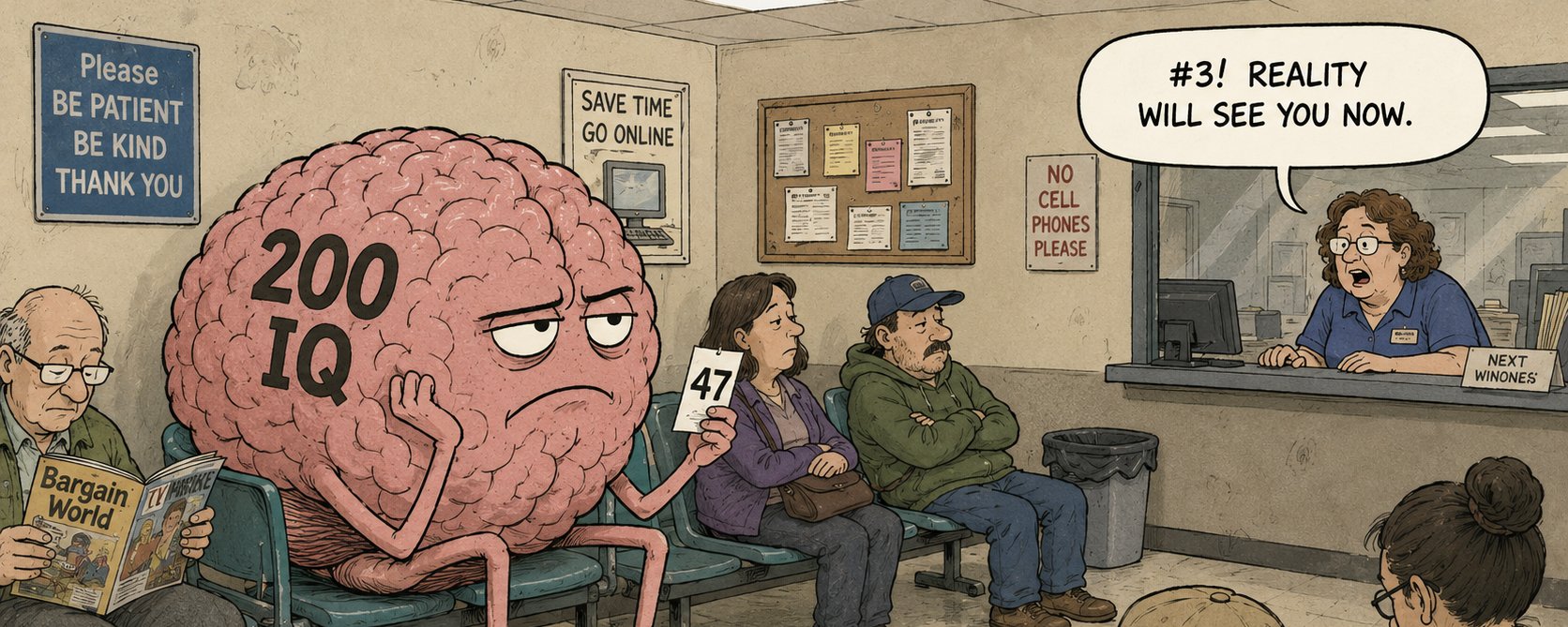
Look at their satisfied faces.
It’s the exact scene of a free shuttle bus heading home from a "Generative AI Utilization Seminar," where everyone received a "Top 100 Ready-to-Use Prompts" list and a sticker with an AI company's logo.
The hype-mongers who were saying "Claude is the only choice" yesterday are posting "Claude is finished" today.
And then, without even checking what actually changed, everyone starts clamoring at once: "The era has changed."
"Engineers who haven't mastered this Skill are falling behind."
When told that, they install it without even reading the README.
They stare at GitHub star counts, paste screenshots into internal Slack channels, and report that "apparently this is the de facto standard overseas."
They have never compared it themselves.
They have never run a benchmark.
They have never deployed it in a real-world task.
Yet, just by staring at their timeline for thirty minutes, they feel like they understand the cutting edge of AI.
Remember this well.
This is the face of what happens when this country's seniority system and social media authoritarianism merge.
When humans are domesticated by titles and evaluation systems for many years, they become creatures that circulate the conclusions of influencers instead of verifying things with their own hands.
You are not victims left behind by AI.
You stopped running on your own.
Technology is changing too fast?
There's too much information?
New models are coming out one after another?
So what?
An engineer is someone who handles changing technology.
We don't call people who can only work in a world where change has stopped "engineers."
You don't read the model's release notes.
You don't read the official documentation.
You don't even make it write code and compare the differences yourself.
Instead, you read the sensationalist headlines of hype-mongers.
You watch influencer videos.
You treat view counts and like counts as proof of technical correctness.
And when a subordinate brings in results they verified themselves, you ask:
"How many followers does that person have?"
"How many stars does it have on GitHub?"
"Are famous companies using it too?"
Kind-hearted legacy components, maintained long-term by large corporate grading systems, adding nothing but latency while waiting for approval on a junior's proposal.
That is what you are.
I heard this development department once had rows of floppy disks and terminals.
Disk capacity was limited, communication was slow, and if a failure occurred, the phone rang even at midnight.
It wasn't an era where answers appeared just by searching.
You read manuals, followed logs, analyzed memory dumps, and identified causes with your own heads.
They say you were very, very strong engineers.
You moved from mainframes to open systems.
You moved from client-server to the Web.
You moved from feature phones to smartphones.
You moved from on-premise to the cloud.
Each time, you threw away yesterday's common sense, learned new technologies, and made things work that wouldn't move.
But since when, I wonder...
You started handing specifications to vendors instead of building them yourselves.
You started coordinating meetings instead of designing.
You started reading estimates instead of reading code.
Whose approval you got became more important than technical judgment.
Even if you leave the front lines, your rank goes up.
Even if you don't move your hands, your subordinates increase.
Even if you don't update your skills, your years of service are accurately added every year.
What a grateful system.
After that, you had a grand building called the "DX Promotion Office" built for you.
You introduced an internal chatbot that no one uses.
You created Generative AI Guidelines that no one reads to the end.
AI usage application forms.
Risk assessment sheets.
Prompt review boards.
Output review committees.
Truly wonderful.
And now, you're going to discard the already stale name "Generative AI" and call yourselves the "Agentic Transformation Center," aren't you?
How AI-native, agentic, and frontier of you!
Ten-year-old dependencies remain in the production repository.
Tests are broken.
It takes two weeks to merge a single PR.
Releases happen once a month.
Even if a junior creates an improvement plan using AI, it sits ignored for a month because a meeting couldn't be scheduled.
But it's okay.
You made all employees take prompt training.
You created an AI Ethics Declaration.
You even got a vendor to publish a case study article about you being an "AI-advanced company."
I'm sure development speed will increase with this.
Technical debt will surely disappear.
Without anyone actually mastering the models, I'm sure you can transform into an AI company.
Because you have governance!!!
Why is that?
Even though you know you're starting to be treated not as a technical judge but as a mere rubber stamp, why are you trying to be satisfied with it?
Because you have responsibility, you don't have to touch the models?
Because you have responsibility, you adopt influencer opinions without verifying them yourself?
Because you have responsibility, you make those who challenge things take all the risks, while you only repeat approvals and rejections?
Is that why you want to be consoled?
Do you want to be respected just because you've been at the company a long time?
Because you did big jobs in the past, do you want your words to be treated as heavy even if you don't know current technology?
Working for a long time is indeed worthy of respect.
However, that respect is not a veto power against today's technology.
Growing older and continuing to update your abilities are two completely different things.
Getting old isn't bad.
Using age as a reason not to learn is what's ugly.
If you've worked longer than the juniors, you should have failed more than them.
If so, use those failures to evaluate AI output more strictly than anyone else.
Give the wisdom of how to make things hard to break to the juniors who can implement fast.
Use your experience to see through the operational risks lurking behind generated code.
Design what should be left to AI and what should be held by humans.
That would be real experience.
However, what you call experience is nothing but logic for not starting anything:
"It was like this in the old days."
"It's impossible in our company."
"Have you thought about operations?"
"Is security okay?"
"Who takes responsibility if something happens?"
"AI has problems," you say?
Don't substitute a fact everyone knows for a reason why you don't have to learn!
Even a hype-monger can just discover problems.
An engineer's job is to break problems down into conditions, define acceptable risks, verify them, and bring them into a usable form.
People who say it's dangerous and build nothing aren't protecting safety.
They are only protecting themselves for having done nothing!
Moreover, you've even abandoned judging AI yourselves.
You read X's impressions before the official release notes.
You wait eagerly for your favorite YouTuber's review video.
If Superpowers becomes popular, you put it all in.
If Ponytail grows, you add it.
If Caveman is talked about, you add it.
If Matt Pocock's Skills get attention, you don't know who he is but you put them in for now.
If /grill-me is praised, even for a job that just changes one button, you start an interrogation until the branches of the decision tree are exhausted.
You don't think about what you want to solve.
You don't even check if it's a capability your model actually lacks.
So you put everything in.
A few months later, the Skills directory is full.
You don't even know which Skill contradicts which Skill.
Still, you don't delete them. You can't.
Because if you delete it and the results get worse, it means your judgment was wrong.
Addition can be blamed on others.
Deletion must be decided by yourself.
So instead of judging, you became Skill collectors.
And you call that "AI utilization"...
And finally, you introduced the latest model.
It's GPT-5.6. It's Fable 5.
Think. But don't think too much.
Be autonomous. But don't make judgments on your own.
If you don't understand, ask. But don't bother humans.
Don't write unnecessary code. But support every future requirement.
Answer concisely. But explain all grounds for judgment.
Finish quickly. But don't skip a single step.
You cram all these mutually contradictory commands into the same context.
You turn everything into rules, make it check every time, and have it reviewed multiple times.
To change one line of a configuration file, the AI thinks for 30 minutes.
It burns a massive amount of tokens.
It writes tests you didn't ask for.
It refactors surrounding code.
It creates specifications.
It reviews the specifications it created itself.
It fixes the plan based on the review results.
It reviews the deliverables.
It receives review comments and goes back to the initial brainstorming.
And finally, you say:
"It's the latest model, but hasn't it gotten kind of stupid?"
**
**
**
**
**
You were supposed to have solved problems where answers didn't appear even if you searched.
In an era without Generative AI, Stack Overflow, or convenient cloud services, you moved systems with your own heads and hands.
You've overcome moments when yesterday's common sense no longer applied many times.
If it's you, you can face the next change called AI head-on.
You can trust your own verification instead of a hype-monger's conclusion.
You can lead juniors with technology instead of titles.
You can break the old systems you built with your own hands and pass them to the next generation.
Your stubbornness as an engineer, your curiosity, and your pride must surely still remain somewhere.
I was a fool to expect that...
Listen.
I would like you to never again involve the front lines in an "AI Utilization Study Group" just to protect your positions.
As legacy personnel who are perfectly compatible only in your old assumptions, lick each other's wounds,
And while replying "Thank you for the useful information!" to hype-mongers' posts,
Please welcome your retirement peacefully and healthily.
Well then, everyone.
Good-byeee!!!