This one is a bit of an addendum / side-quest to the recent series. It didn't fit cleanly into the main post so I'm publishing it standalone. It is referenced briefly in Why Software Factories Fail part 2: Turning the lights back on.
Seeking Leverage
Even before AI, only 25-50% of the time to ship a feature was writing the code itself. The rest was aligning/planning, code-review/rework, and testing/verifying the solution.
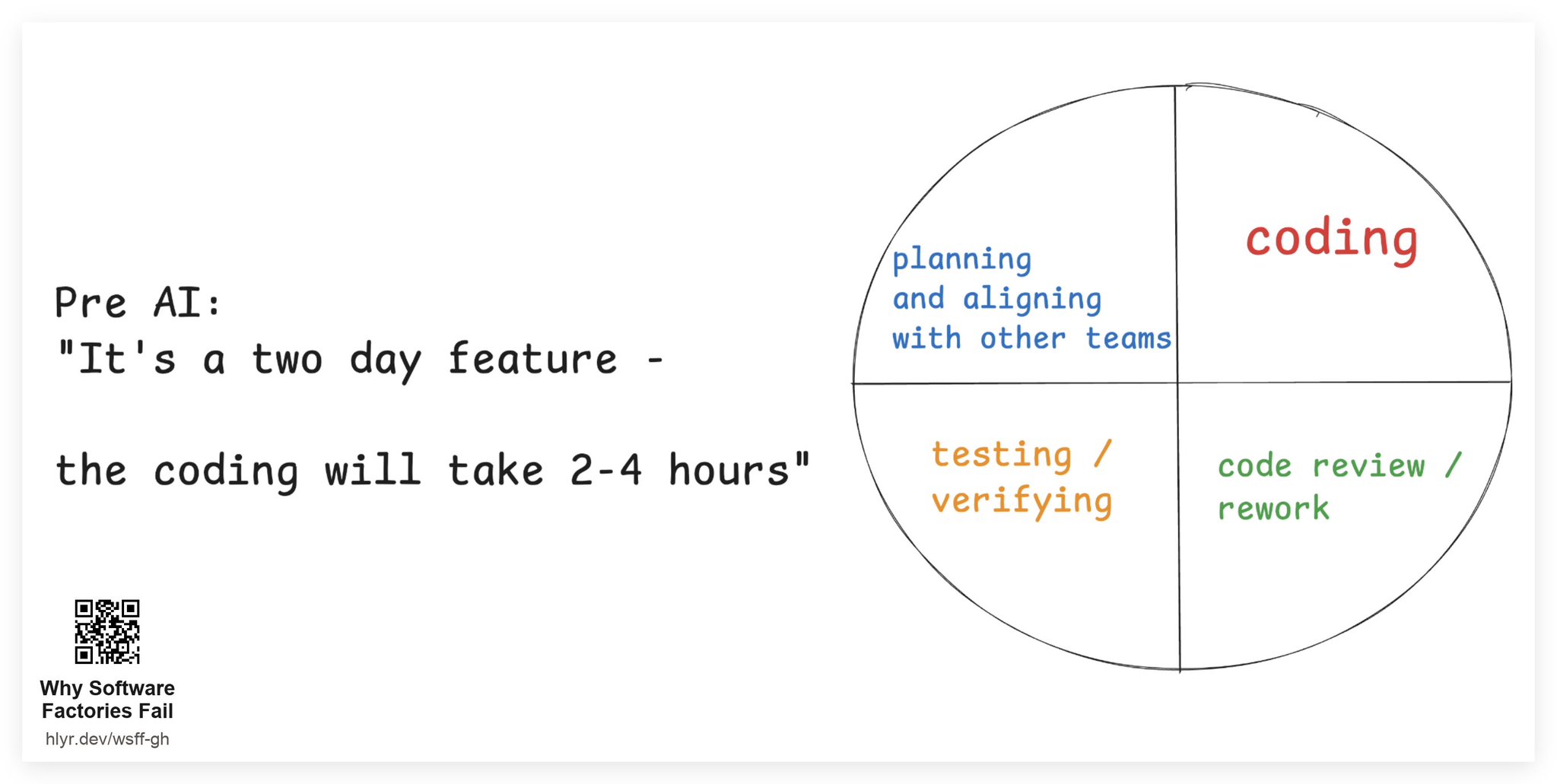
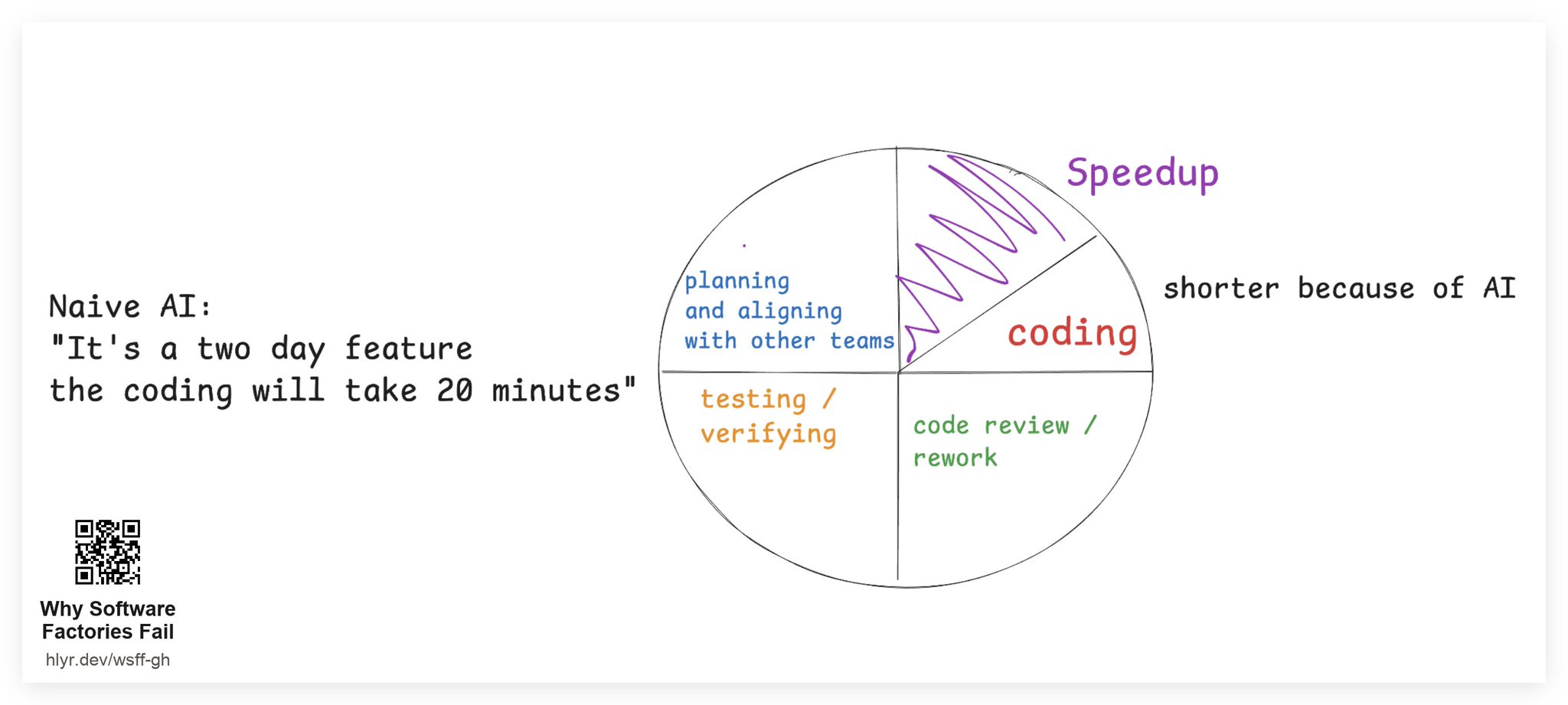
If you're only using AI to write the code, then you're taking the 2-4 hours of coding time down to 10-20 minutes, but you haven't accelerated anything else here.
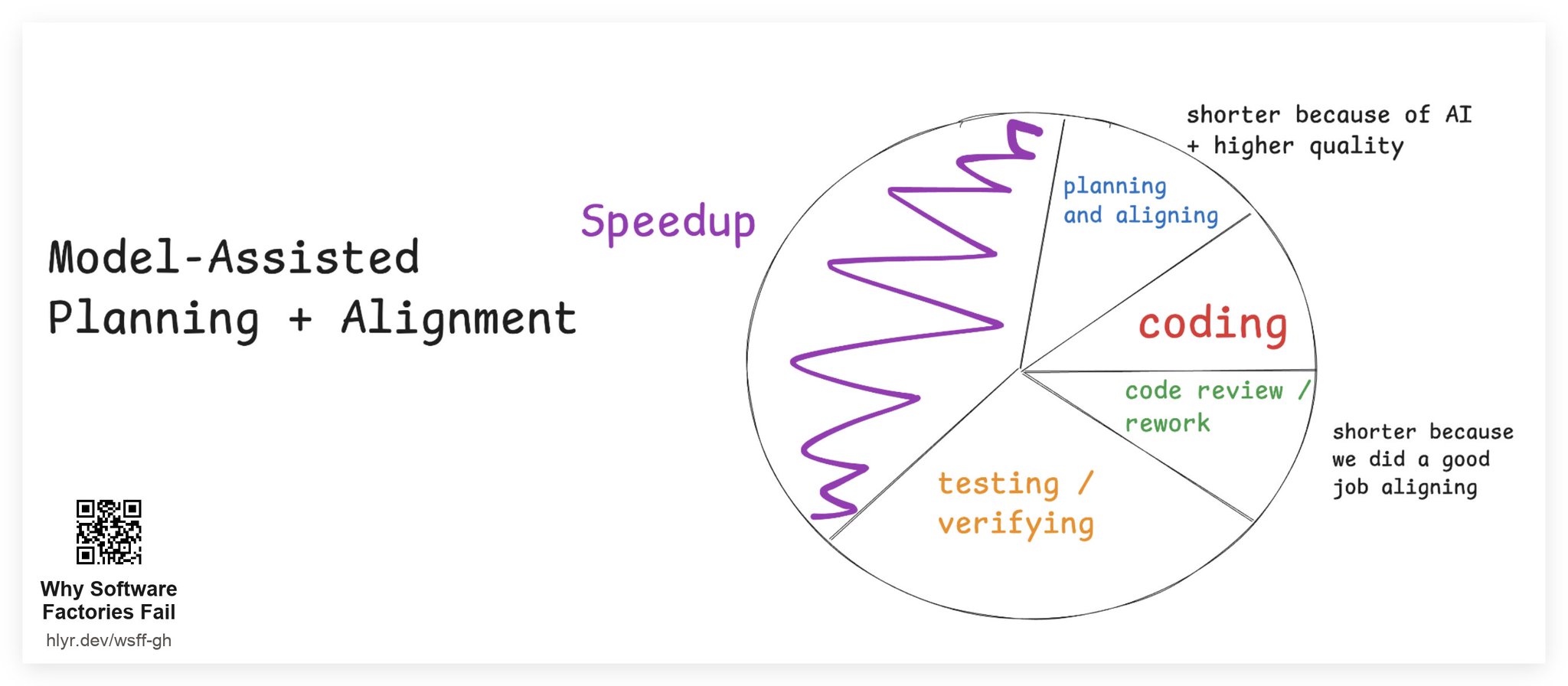
But if you use AI to help you plan and align, then you actually get closer to 2-3x faster.
The 80/20 rule in AI coding leverage
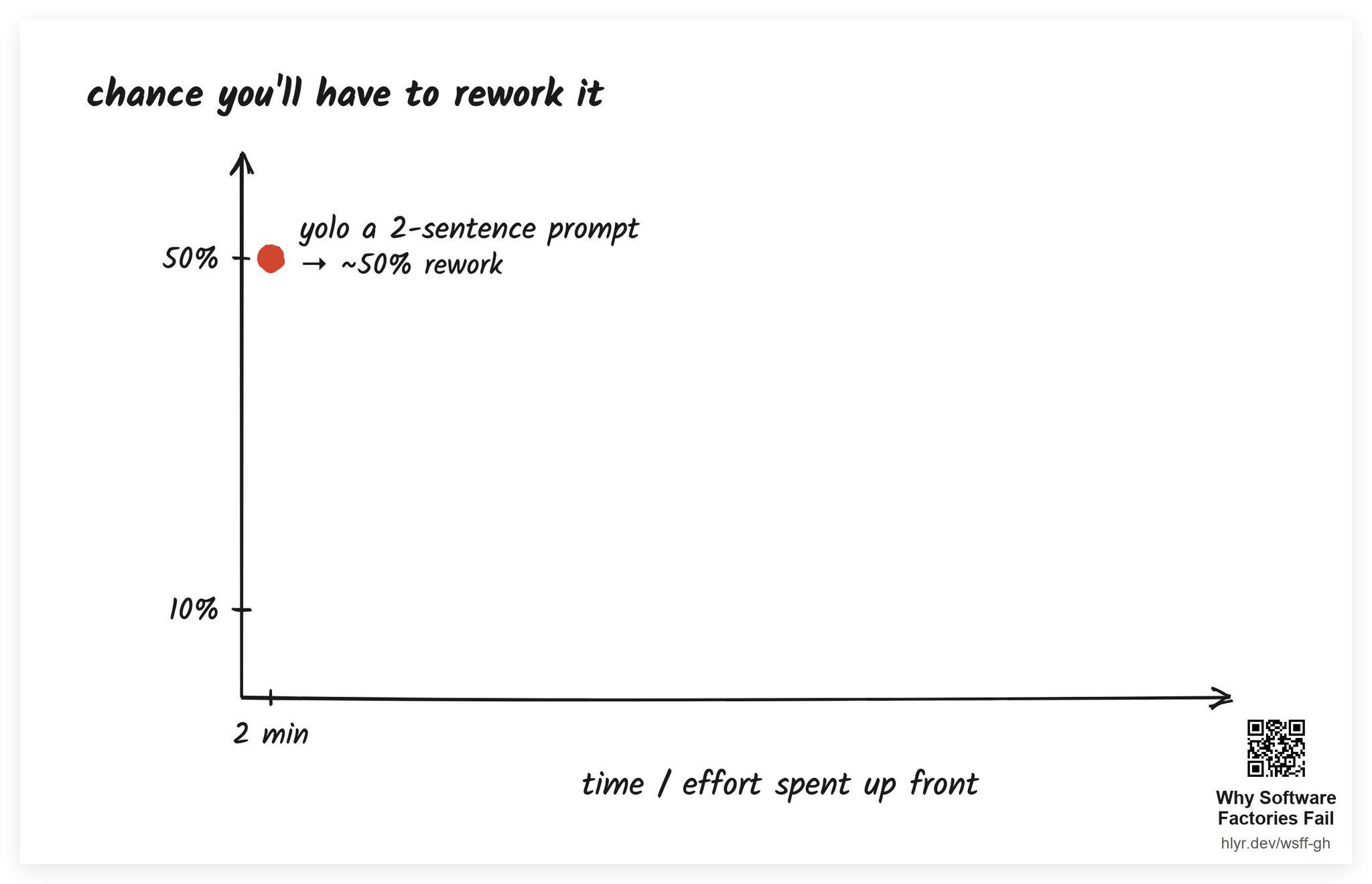
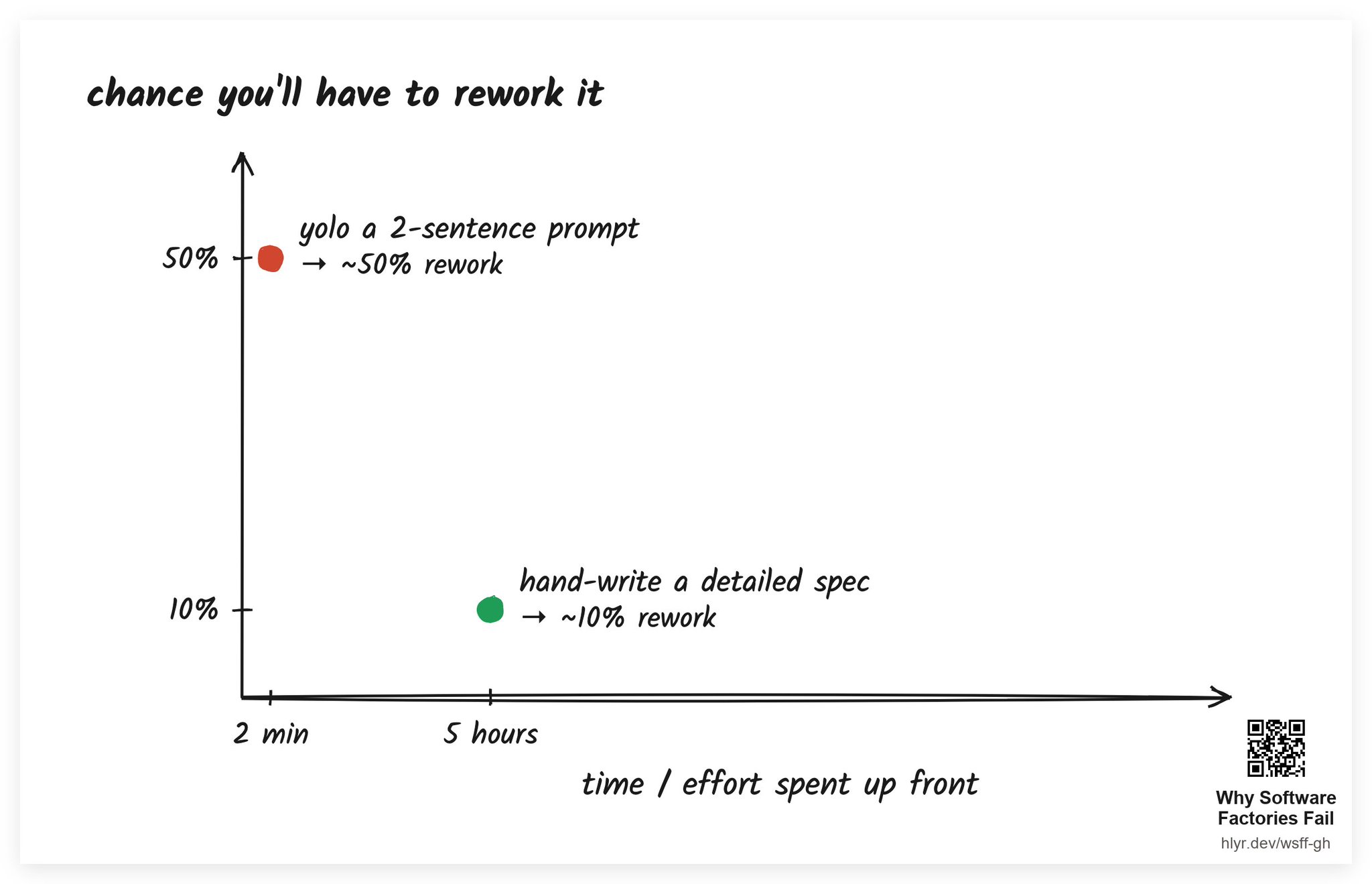
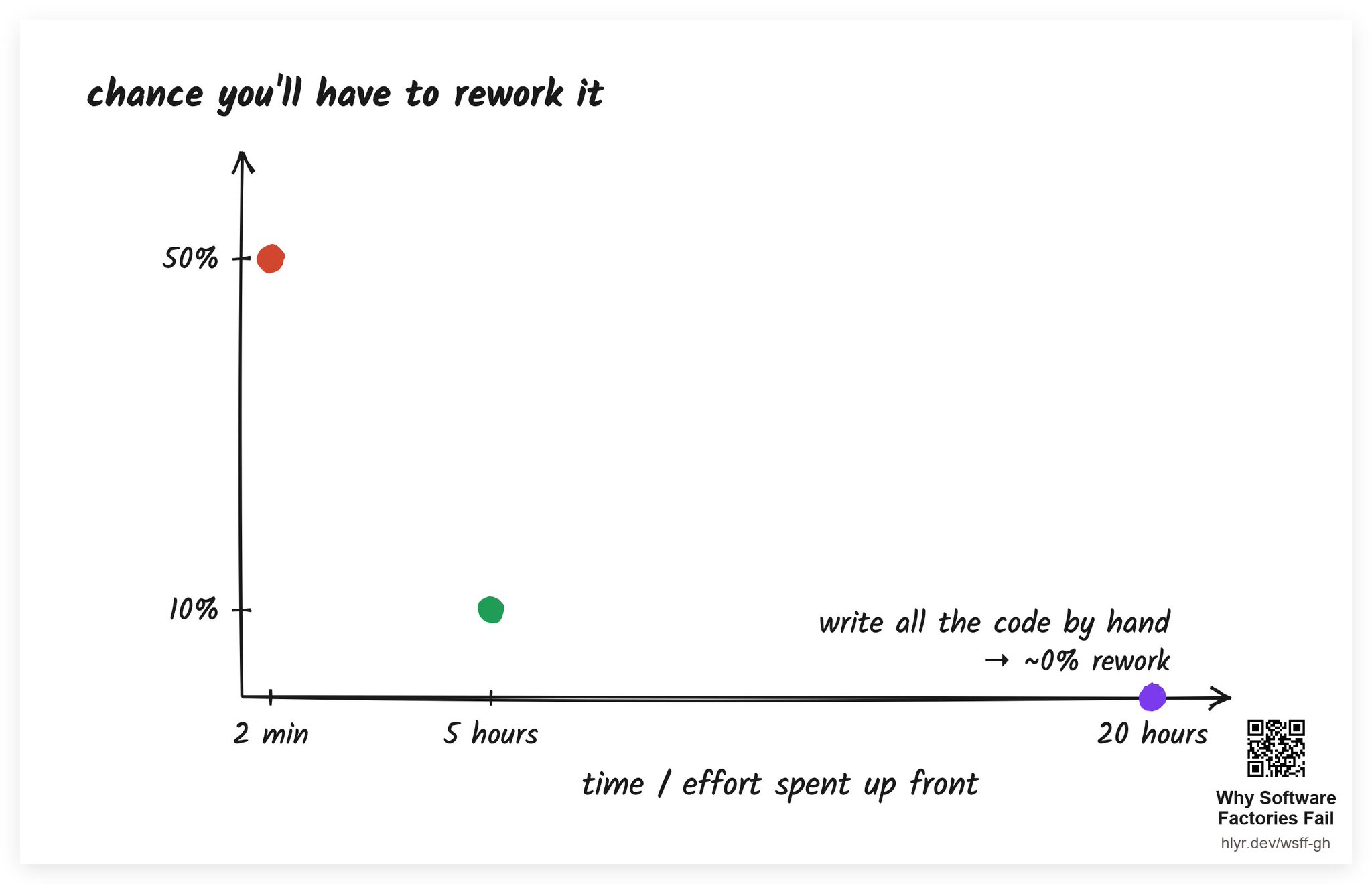
Lets assume if you yolo a two-sentence prompt into your factory, your chance of getting a fully-mergeable result is ~50%, the chance you have to rework it is 50%.
Now lets say you are a principal engineer with 10 years of experience. You have the whole codebase across 100 repos downloaded into your head. So you spend an afternoon writing a perfectly detailed spec by hand. Now your odds are better, but you probably still have about a 10% chance that you'll have to redo \*something* significant.
And at the far end: write every line yourself. Nothing's left for the agent to get wrong, so the rework chance goes to zero.
\
ote\\ For this example I'm gonna blur
"chance you'll have to change something" weighted by "how painful the change will be"
into a single percentage number but obviously they're two separate variables. If the model is 50% likely to get a button style wrong, but the fix is one cheap prompt, then our combined "expected pain" is low.
expected pain = P(you'll have to change it) × how painful the change is
If you draw this out, there's an inverse relationship between effort invested up front and expected pain.
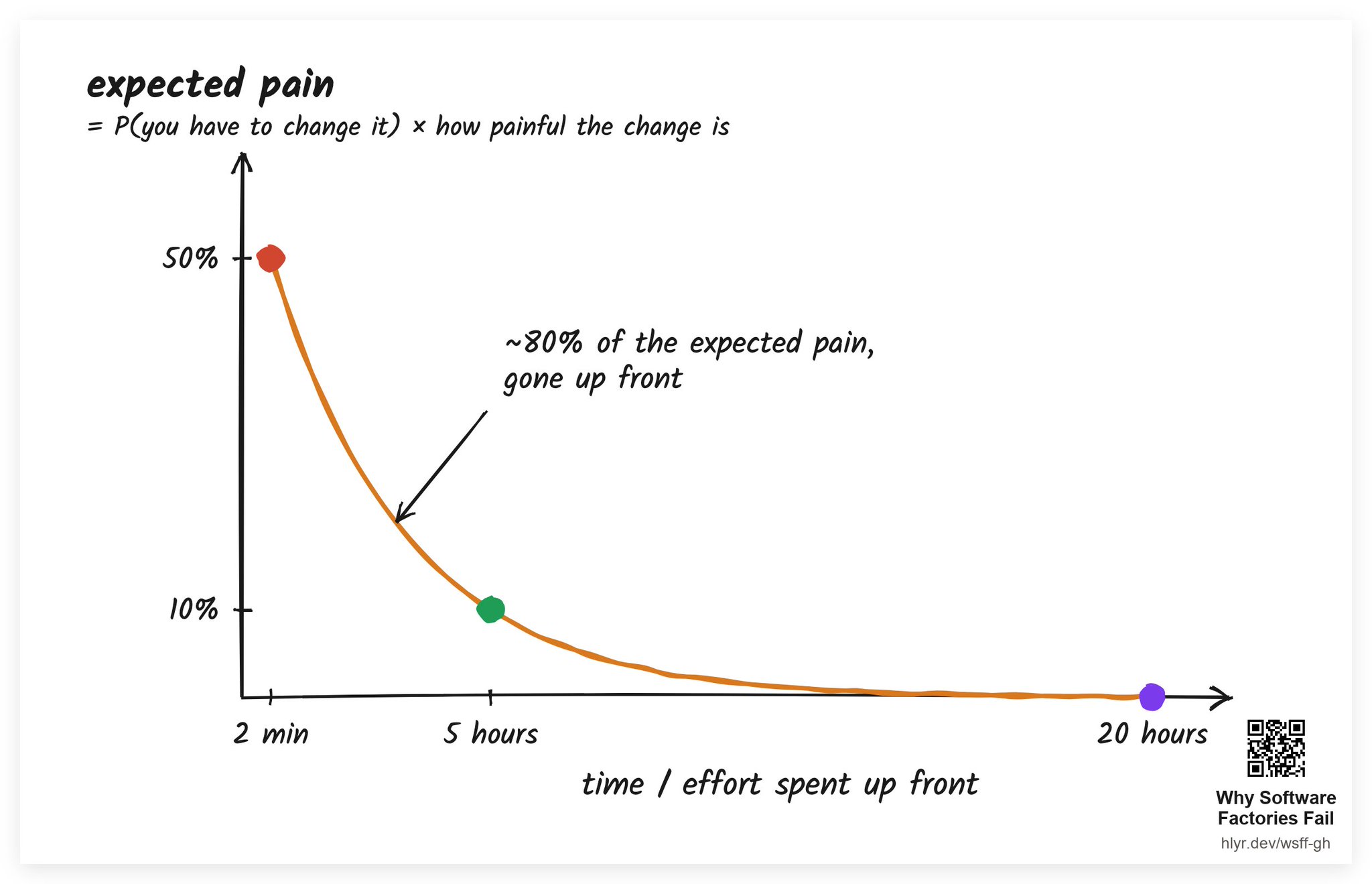
What you don't want to do is spend 6 hours planning a task for which you could have eliminated 80% of the expected pain in the first 10 minutes.
You need to do this without overindexing on questions you won't be able to answer without going down a level. For example, if you've done some work at the "Product" level and have not answered all the open questions yet, its possible you may need to end it where you are and zoom down a level to the technical details to understand what's feasible. There's no perfect process for this.
This is what we mean by leverage - and it requires being pragmatic. If you're doing multiple phases of planning, zooming in from 50kft view all the way to the 10kft view, you want to do a little bit of steering at each phase to ensure you are eliminating as much expected pain as possible.
good luck.