If you want to print money with AI, this is the most important article you'll read all year.
I'm about to reveal the exact framework I'm currently using to scale my own AI company, which I've already used to generate $20 million+ in agency revenue and $6 million+ in product sales.
Everything mentioned in this guide comes not only from my personal experience but also from my inner circle of real AI founders, tech CEOs, and builders in this space.
Whether you're trying to make your first $10k online or aiming for something much bigger, I guarantee you'll find value in this piece, as these are the playbooks some of the biggest names in the game are running right now (Hormozi, Mr. Beast, etc.).
I've broken this guide down into five "levels," but really what I'm trying to convey here is a practical, step-by-step guide and a combination of skills needed to make serious money with AI.
Level One & Level Two: The Prerequisites For Making Money w/ AI
Level Three: Building Compelling Offers
Level Four: Revenue & Scaling
Level Five: Building Distribution (most important part!)
Let's get right into Level One.
Level One: Memory & Context (prerequisite)
The first thing you need, in any business or in your personal life, is a proper memory and filing system.
AI is simply a layer you slap on top of your existing data to become more efficient. Without the initial data layer, nothing else you do with AI matters.
This isn't optional, and you cannot leverage AI if AI doesn't know about you or your business. It's that simple.
My practical advice
Here's what I actually run: a local memory folder that holds everything I want Claude to know about me, and an instructions file that tells Claude exactly when and how to save that memory (you can use Codex, Hermes, any other AI harness too - I just personally like Claude).
In your memory folder, you want to store things like: business strategy, brand identity, monetisation plans, etc.
This way, every time I open a new AI session, whether it's Claude Code or GPT with Codex, it already knows everything about my business.
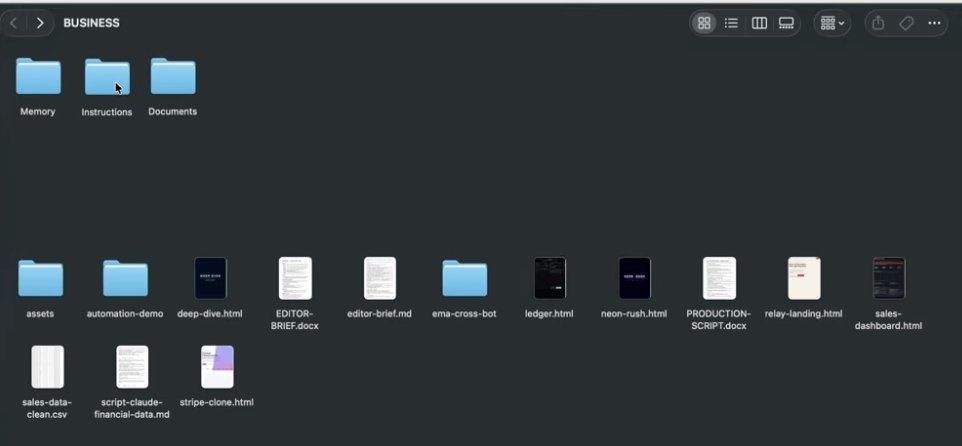
My local desktop memory file setup
Some advice: Get a proper meetings app
I personally use Granola, which runs on my desktop and automatically saves notes from every meeting.
The real unlock here is connecting Granola into Claude Code via their MCP, so it can actually edit your local files directly.
Every time I have a meeting, it updates a dedicated meetings folder in my business brain, which means Claude always has the current context.
You don't need a team to do this
Sometimes I'll literally start a Google Meet session by myself with Granola plugged in and just talk. I'll brain dump for 30 minutes, and now all that data is stored locally.
Why this actually matters: a real example
If you're going to build an online business and leverage AI, you need a centralised hub from which AI can pull all your data.
With my AI brain connected, I often send prompts like:
What's the biggest opportunity in my business that I'm not seeing?
Scaling this for a team
If you're running a bigger team, the same system works through Slack with Claude agents. Every conversation your team has is absorbed and scanned for blockers, pain points, and risks. Your business becomes queryable.
This is what the world's biggest CEOs are already doing.
They have one central hub where they can then ask a chatbot: "What are the biggest blockers on this project right now?" or "Who has the slowest response time in the company?" Mark Zuckerberg is open about doing this.
TLDR: Memory is step one because if you want to make money and build a business with AI, everything downstream depends on a proper memory system.
Set up a folder system, an instructions file, and a habit of constantly feeding in context (meetings, brain dumps, documents).
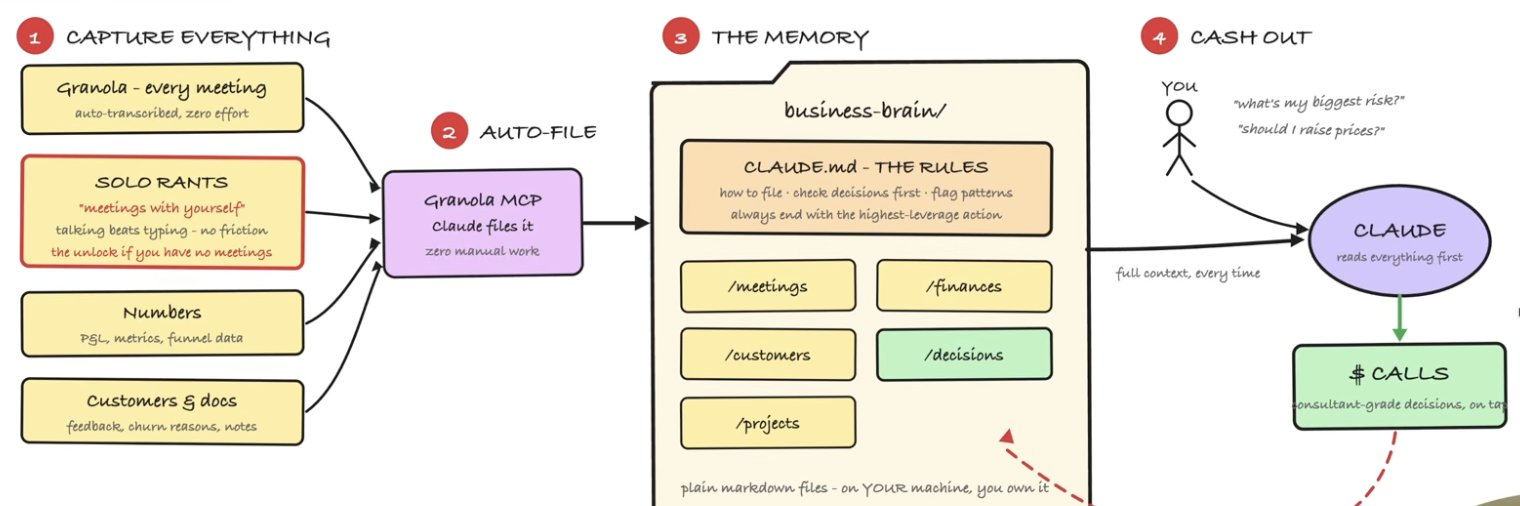
Memory & Context
Level Two: Building Real Automations (prerequisite)
Once you have memory and context sorted, the next shift is in how you think about your own role in building an AI-first business.
You are no longer the person who does things. You are the person who delegates things, and you need to be genuinely ruthless about this, because most people massively underestimate how much of their business or personal life could already be outsourced to AI.
Start with a full audit of your time
The practical first step: write down everything you do in a week.
If you already set up Level One, Claude may already have a head start here since it's been tracking your meetings and behaviors the whole time.
If not, open a new chat and voice-prompt your way through a full brain dump using Whisper Flow.
I did this exercise for my AI media company @aiedge_ and literally found that AI could automate 44/65 of my weekly tasks.
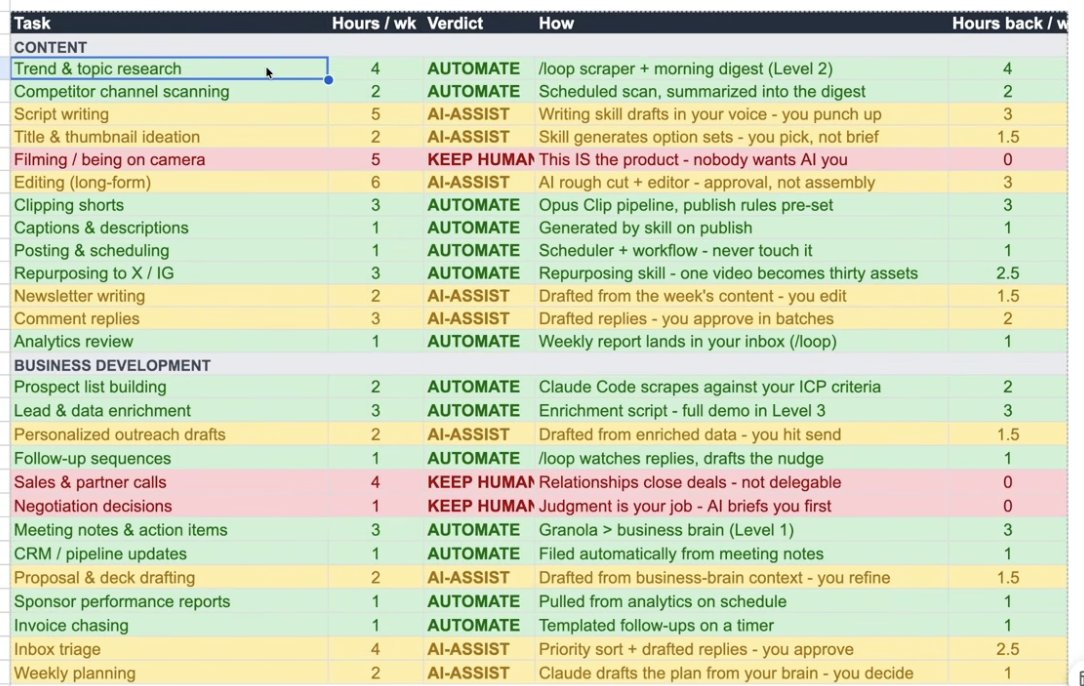
My real daily/weekly task list
Some real examples of how I actually automate each category
- Trended topic research: A /loop running a scraper that delivers a morning digest of everything happening in AI content and the market.
- Competitor channel scanning: A dedicated MCP connected to a data analytics setup that scans competitors 24/7.
- Script writing: A video production skill trained on every script I've ever written. I run /video-production-pipeline, and it drafts full YouTube scripts.
I'm not trying to overwhelm you with this list. The point is simple: most of what you do in your business, your job, or your personal life probably can be automated, and you likely haven't even realised it yet.
The simplest high-leverage habit you can start today
Keep Claude Code open on your desktop all day, and whenever you need something, ask before you do it yourself.
The entire goal here is to build real workflows that you can monetise later down the track.
Level Three: Building Compelling Offers
This is where you can actually start making money, and what you clicked on this article for.
Once you've set up the foundation for real leverage through memory and built real automations, the natural next step is to turn that leverage into something you can actually sell.
Most people, and most businesses, either haven't figured out how to use AI properly or don't have the time to implement it. That gap is the entire opportunity here.
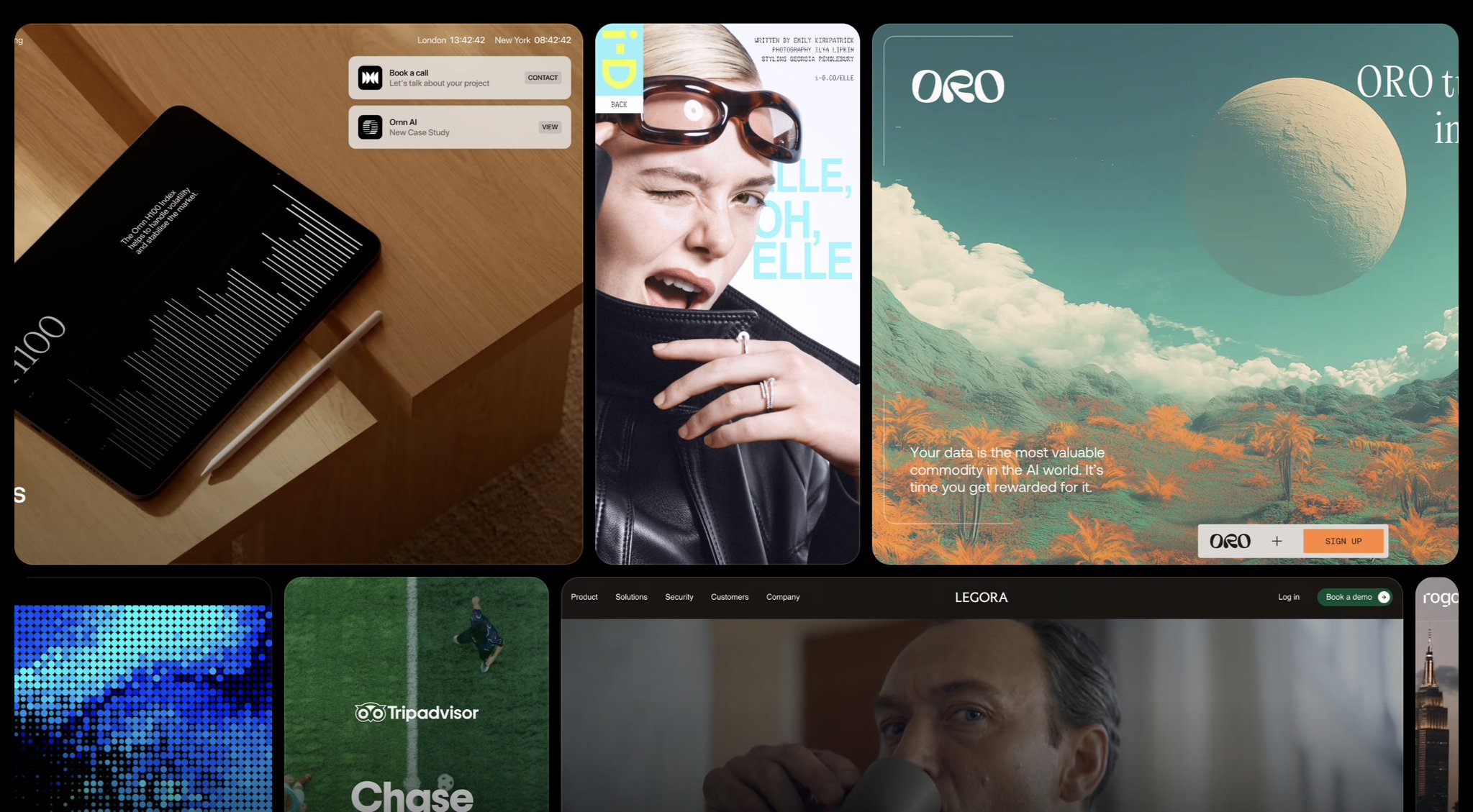
A simple example: building websites
You can go to sites like Framer dot com, which sells website templates, take one of those templates, layer in a bit of client information, and build a complete, personalised website for a business in around 10 minutes.
Target local small businesses, and the competition will literally be zero.
Big picture
Once you've gone through Levels 1 and 2 yourself, building offers becomes simple: master a specific AI-powered setup, sell it to others, and get paid on a per-project or ongoing basis.
You're basically looking for a market gap and using AI to fill it based on your real expertise. Whether that's websites, copywriting, design, etc.
And you could run this as a full agency, as a consulting firm, or as productised services, such as selling optimised websites.
A real example from my own business
I recently built an internal trading backtesting tool (a place to test trading strategies against each other). It started as a cool tool for me and my own investing research, but once I had it working, it became clear it would be useful to others, too. So I'm actually going to turn it into a real digital product.
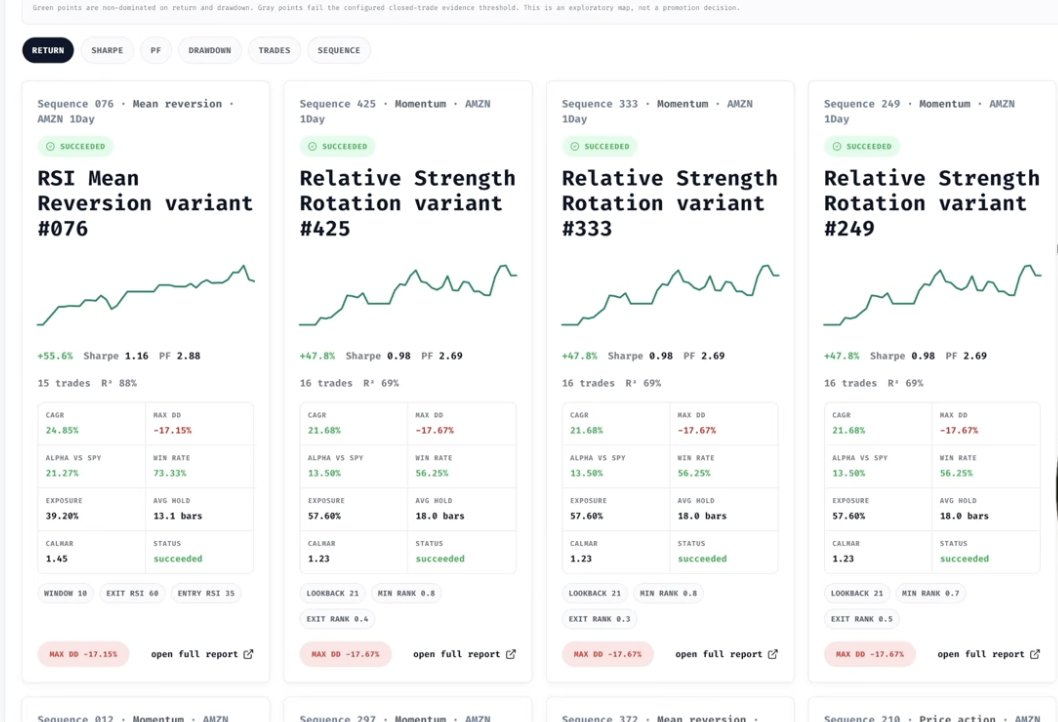
My actual internal trading tool
Building compelling AI offers all comes down to this
Build cool sh*t with AI on your own → Build real expertise → Then, sell that expertise to the market.
This is why Level One and Level Two are so important. You need to actually become good at something before just trying to "make money with AI."
Level Four: Revenue & Scaling
Some advice for scaling and actually making money
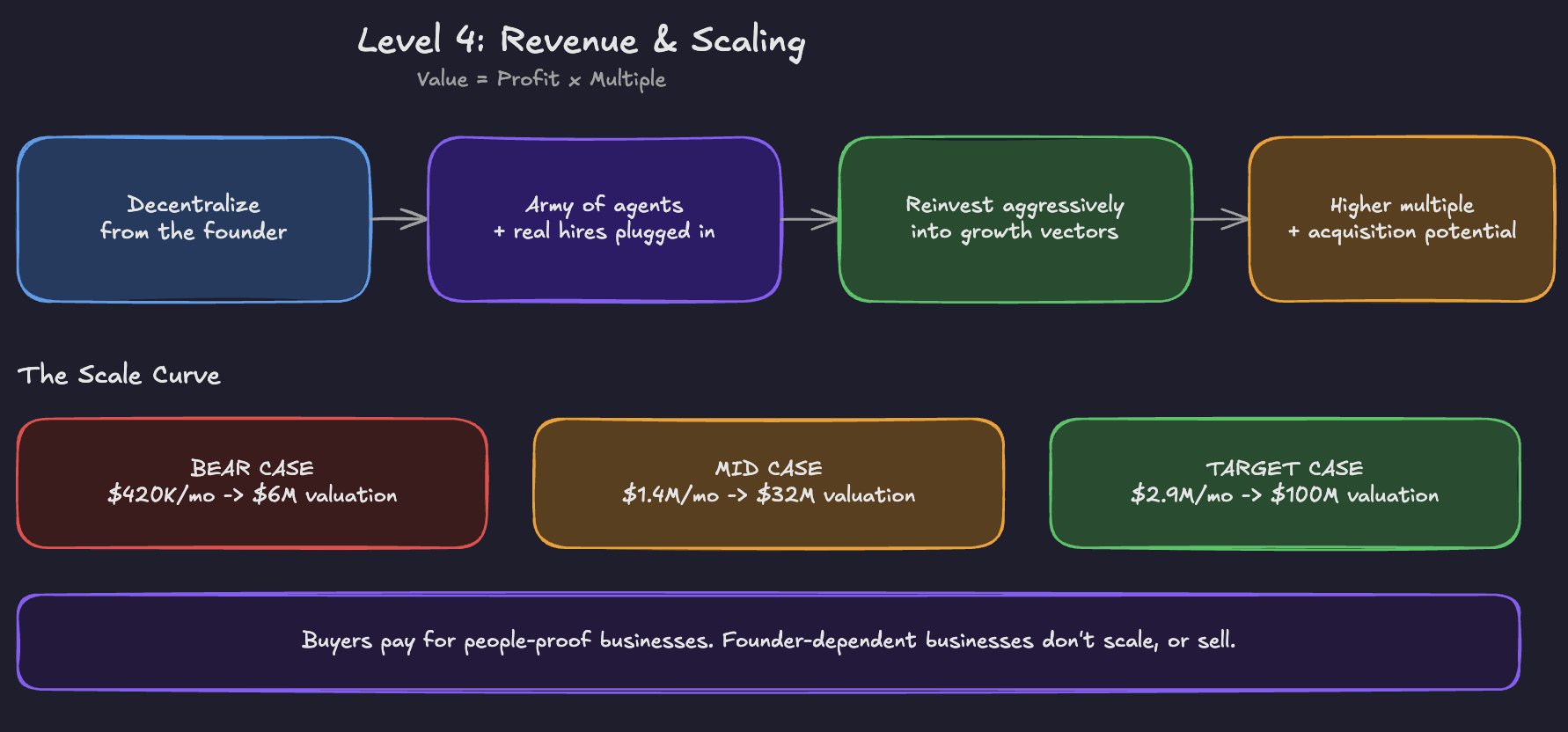
The first requirement: stop being the bottleneck
You cannot be dependent on yourself as the founder if you want a real multiple and to build serious enterprise value.
If a buyer looks at your business and sees that everything runs through you personally, it will turn them off.
This is exactly why, even in my own business, we're actively diversifying and moving away from everything running through me as the founder.
Build an army of agents (and hire real people too)
The fix to the problem above is to build a system where AI agents genuinely perform work on your behalf.
I'm not against hiring real people. Roles like VAs are genuinely great, and poaching top talent is great too. Both ends of that spectrum work. But the people you do bring on need to plug directly into the systems you've built, not operate as isolated employees doing manual work.
Reinvest aggressively into your highest-value growth vectors
This is where most founders sabotage their own scaling. They start making real money, 10K, 20K, 30K a month, and pocket it. They spend on lifestyle instead of reinvesting.
If you can hold off on that for a few months and instead push everything back into ad spend, better talent, etc., you compound dramatically faster.
Revenue & Scaling
Level Five: Building Distribution
Everything up to this point doesn't matter if you can't get customers. You can build the best product ever, the best AI systems ever, but ultimately, it means nothing without this final piece.
I'd argue distribution is the actual moat in the modern AI era.
Social media
Social media is the #1 way to build distribution in 2026 and beyond.
My advice
Learn how to post and build a personal network on 𝕏.
Learn content and long-form videos for YouTube.
Learn short-form/clipping for TikTok and Instagram.
This is the real play.
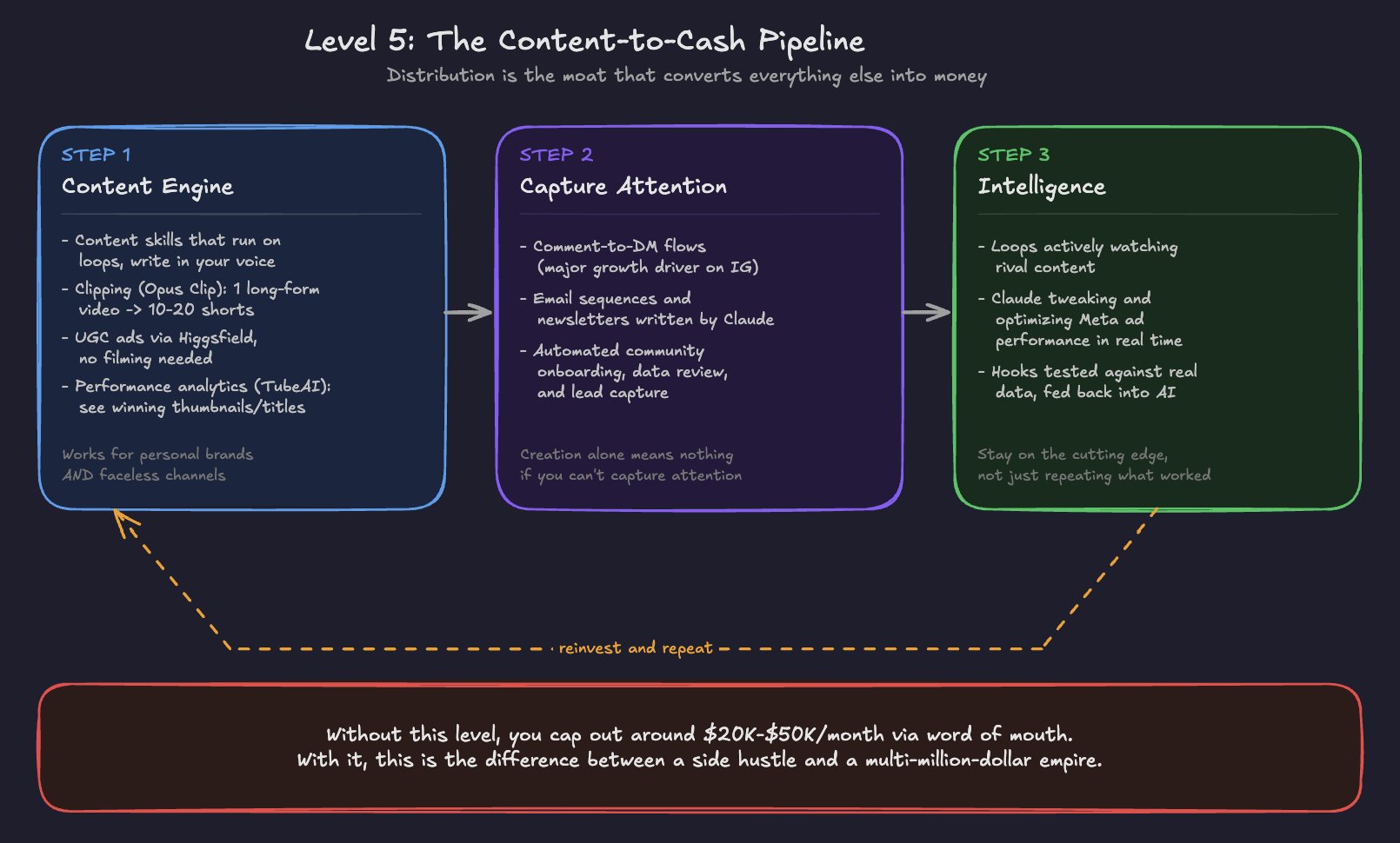
The Distribution Flywheel
Step 1: AI Content Engine
This applies whether you're building a personal brand or running something entirely faceless - you need to leverage AI to produce content:
- Content skills that run on loops or write scripts in your specific voice
- Clipping with tools like Opus Clip
- UGC ads I personally use @higgsfield for this
- Performance analytics tools like TubeAI to see what thumbnails and titles are actually outperforming
Step 2: Building Warm Audiences
Organic content alone doesn't matter if you can't convert the attention it generates.
Some ideas for building warm audiences:
- Comment-to-DM flows are a major driver of growth on Instagram
- Email sequences and newsletters (these feel personal)
- Free communities (WhatsApp, Telegram, etc.)
Whether you're building a personal brand or launching a product, you still need to generate awareness and then capture attention in a concrete way.
Step 3: Cutting Edge
I recommend building AI systems to stay on the cutting edge of content.
Things like:
- Loops actively watching rival content
- Claude tweaking and optimising your Meta ad performance in real time
- Hooks tested against real data, fed back into AI to distill what's actually working
You can master memory, automation, offers, and scaling systems, and none of it converts into real money without distribution.
Your organic reach is the difference between capping out around $20-50K a month through word of mouth, or building a multi-million-dollar empire.
Distribution
Final Thoughts
I hope you found this AI money-making masterclass valuable.
As a token of appreciation for making it this far, I put together a free 14-page PDF covering all the principles discussed here today.
You can plug this straight into Claude to help guide you through making money with AI.

14-page PDF
To unlock this asset, subscribe to my free newsletter, and I'll share it with you directly.
Get started here:
https://www.aiedgehq.co/yt8bwj
For deeper AI insights, follow me over on @aiedge_ - I post articles multiple times a week, breaking down the hottest topics in AI.
Thank you for making it this far.💙
-Miles