Універсальний SEO-письменник
Універсальний SEO-письменник
Попередній перегляд
Опис
Це, можливо, найкращий навик написання SEO-статей. Завдяки цьому навику ви можете бути впевнені, що створені статті відповідають структурі E-E-A-T і не містять вигаданої інформації. Вам потрібно надати інформацію про продукт і статті конкурентів. (Нижче наведено детальний опис, написаний ШІ) Цей універсальний навик масового написання SEO-статей допомагає перетворити бібліотеку статей конкурентів на 10 оригінальних, високоякісних SEO-постів для будь-якого продукту чи послуги: він автоматично сканує та оцінює всі статті у вашому поточному розділі, відбирає найкращі довідкові матеріали, уникає повторення вже опублікованих тем, будує чітку стратегічну матрицю з 10 статей (включаючи ключові слова, наміри, унікальну перспективу та місця для природної згадки продукту), а потім генерує HTML-статті, готові для WordPress, які відповідають принципам Google E-E-A-T і передовим практикам внутрішньої SEO-оптимізації – кожна стаття супроводжується вбудованим звітом про оцінку якості,
Рекомендовано
nene@YouMind
Чому нам подобається ця навичка
Ця навичка аналізує бібліотеку статей конкурентів, інтелектуально генерує високоякісні SEO-статті, що відповідають принципам E-E-A-T, та глибоко інтегрує особливості вашого продукту. Вона автоматично відбирає найкращий контент конкурентів, уникає повторення тем і виводить WordPress-сумісний HTML, що робить її ідеальним вибором для масового створення професійного SEO-контенту.
Інструкції
# Універсальний навик пакетного написання SEO-текстів (англійська версія)
## Огляд навичок
Ця навичка розроблена для створення **високоякісних, оригінальних SEO-статей, що відповідають стандартам EEAT**, для **будь-якого продукту чи послуги**, використовуючи бібліотеку статей конкурента на поточній дошці.
Це може:
* Автоматично вибирати **10 найкращих SEO-статей конкурентів** з поточної дошки як посилання
* Розумно уникайте **перекриття тем** з вашими існуючими статтями
* Глибоко інтегруйте **унікальні функції, дані та позиціонування вашого продукту**
* Дотримуйтесь принципів **Google EEAT** та проходьте перевірки на оригінальність
* Запустіть вбудовану **систему контролю якості**, щоб гарантувати відповідність кожної статті стандартам
* Вивід **HTML-коду, готового для WordPress** (скопіювати та вставити в бекенд WP)
---
# Обов'язкові вхідні дані (надані вами)
## Вхід A: Інформація про продукт (обов'язково)
Надати структурований короткий опис продукту, що включає:
* Назва продукту / назва бренду
* Що це таке (категорія + варіант використання)
* Цільова аудиторія
* Основна ціннісна пропозиція (3–5 пунктів)
* Основні характеристики (5–10 пунктів)
* Модель ціноутворення (діапазонів, планів, рівнів)
* Покриття / доступність (країни, канали, платформи, галузі тощо)
* Докази/дані (метрики, зростання кількості користувачів, економія, продуктивність, NPS, тематичні дослідження, відгуки)
* Конкурентні переваги проти альтернатив
* Обмеження / обмеження / найкращі сценарії (для достовірності)
* Внутрішні сторінки, на які ви хочете посилатися (сторінка з цінами, сторінка товару, дописи в блозі тощо)
> Якщо Навичка не повністю надано, її слід доповнити за допомогою `searchBoards` або `googleSearch`.
## Вхід B: SEO-бібліотека конкурентів (обов'язково)
Ваша поточна дошка оголошень повинна містити статті конкурентів про SEO як матеріали.
---
# ФАЗА 1: Вибір аналітики статей конкурентів
## КРОК 1.1: Перевірте всі статті на дошці
Дії:
1. Використовуйте `listBoard` для отримання всіх матеріалів на поточній дошці
2. Використовуйте оператор `read`, щоб прочитати ключову інформацію з кожної статті (перші 500 рядків)
3. Витяг:
* Тема / ключові слова
* Тип контенту (Посібник / Порівняння / Огляд / Навчальний посібник тощо)
* Кількість слів
* Якість структури (ієрархія H2/H3, щільність даних, використання таблиць)
* Цільова аудиторія
* Унікальний кут
* Мета пошуку (інформаційна / комерційна / транзакційна)
## КРОК 1.2: Оцінка якості статті (0–100)
**Якість контенту (40)**
* Глибина та повнота (15)
* Багатство даних/прикладів (10)
* Структурна чіткість (10)
* Дієвість (5)
**SEO-оптимізація (30)**
* Чітка стратегія ключових слів (10)
* Оптимізація заголовка + структури (10)
* Використання внутрішніх/зовнішніх посилань (5)
* Читабельність/UX (5)
**Унікальність (20)**
* Унікальні висновки, дані, фреймінг (10)
* Можливість переписати контент у формат, що орієнтований на продукт (10)
**Підходить (10)**
* Легкість природної інтеграції цінності продукту (10)
## КРОК 1.3: Виберіть 10 найкращих статей (збалансоване висвітлення)
Правила вибору:
1. Вийти в топ-15 за кількістю балів
2. Зменште кількість до 10, забезпечуючи при цьому:
* Різноманітність тем (максимум 2 на широкий тематичний кластер)
* Охоплення намірів пошуку:
* 3–4 інформаційні
* 4–5 комерційних
* 1–2 транзакційні
* Сильна релевантність основним варіантам використання продукту
* Природні можливості для інтеграції цінності продукту
## КРОК 1.4: Перевірка дублювання тем (уникайте існуючих тем)
Якщо на дошці вже є статті про ваш продукт:
1. Використовуйте `searchBoards` з ключовими словами:
* Назва продукту, торгова марка
* ключове слово(а) категорії
* Основне ключове слово (ключові слова) для випадків використання
2. Витягніть існуючі теми та ключові слова
3. Видаліть теми, що перетинаються, з топ-10
4. Замініть новими темами з пулу кандидатів
**Вихід:**
**Список 10 найкращих статей конкурентів** + **чому їх було обрано**
---
# ФАЗА 2: Глибокий аналіз продукту (загальний шаблон)
## КРОК 2.1: Вилучення основних ресурсів продукту
З інформації про продукт (або через `searchBoards` / `googleSearch`):
**Позиціонування**
* Що являє собою продукт (категорія + функція)
* Основна ціннісна пропозиція
* Цільові користувачі
**Особливості**
* Ключовий набір функцій
* Процес адаптації / налаштування
*Сумісність/вимоги
* Підтримка / Угода про рівень обслуговування
* Унікальні відмінності (функції, яких немає у конкурентів)
**Докази та дані (критично важливі для EEAT)**
* Користувачі / показники зростання
* Показники задоволеності (NPS, рейтинг, відтік клієнтів)
* Показники ефективності (швидкість, час безвідмовної роботи, результати, рентабельність інвестицій)
* Показники економії коштів або часу
* Тематичні дослідження / відгуки (принаймні 2)
**Конкурентний ландшафт**
Порівняйте з:
* Варіант за замовчуванням (нічого не робити/вручну)
* Традиційні рішення в категорії
* Прямі конкуренти
* Інструменти для заміни своїми руками / безкоштовні методи
## КРОК 2.2: Створіть бібліотеку варіантів використання (10+ сценаріїв)
Створіть понад 10 «користувацьких сценаріїв», що стосуються будь-якого продукту.
Приклади універсальних сценаріїв:
1. Онбординг для початківців (користувачі-початківці)
2. Бюджетний користувач
3. Досвідчені користувачі/розширені робочі процеси
4. Команди та співпраця
5. Потреби підприємства у відповідності/безпеці
6. Використання/масштабованість на високих частотах
7. Використання в кількох регіонах/на різних платформах
8. Термінова/надзвичайна потреба
9. Перехід від чинного конкурента
10. Сезонне або кампанійне використання
11. Інтеграція з іншими інструментами
12. Оптимізація продуктивності/зниження витрат
Кожен сценарій повинен включати:
* Больова точка
* Продуктове рішення
* Допоміжні дані (ціноутворення, рентабельність інвестицій, бенчмарк, зекономлений час тощо)
---
# ФАЗА 3: Генерація стратегічної матриці з 10 статей
Використайте вибрані статті конкурентів для створення плану переписування:
відкритий текст
| # | Вихідна тема | Нова тема (точка зору, що відповідає продукту) | Основне ключове слово | Додаткові ключові слова | Мета пошуку | Унікальний кут зору | Точки інтеграції продукту | План EEAT | Кількість слів |
|---|-------------|-----------------------------------|-------------------|----------------------------|--------------|----------------------------|-------------|------------|
| 1 | [тема] | [переписана тема] | [ключове слово] | [5 ключових слів] | ІНФОРМАЦІЯ | [кут зору] | [2-3 сценарії] | [стратегія] | 2000 |
```
Кожна стаття повинна чітко визначати:
1. **Логіка трансформації теми**
Приклад: «Найкращі туристичні додатки» → «Найкращі туристичні додатки для [користувачів певного продукту]»
або «Як зробити X» → «Як зробити X з [продуктом] (з порівнянням альтернатив)»
2. **Унікальний кут для запобігання плагіату**
* Додайте дані ексклюзивно для продукту + приклади
* Переосмисліть контент з точки зору користувача
* Додати відсутні сценарії/больові точки
* Надайте практичні кроки/контрольні списки
* Впровадити власну структуру (наприклад, «3-рівневу модель прийняття рішень»)
3. **Точки інтеграції продукту** (2–3 природні місця розміщення)
* У розділі рішень
* У порівняльній таблиці
* В історії користувача / тематичному дослідженні
* НЕ робіть наполегливих рекламних заяв у вступі та висновку
4. **План EEAT**
* Досвід: реальні випадки, практичні результати
* Експертиза: технічне пояснення, найкращі практики
*Авторитет: цитуйте достовірні джерела
* Довіра: прозорі порівняння + обмеження
---
# ФАЗА 4: Пакетне написання (10 статей)
## Правила боротьби з плагіатом
### 🚫 Заборонено
* Прямий переклад речень
* Виключення унікальних метафор/фраз із контенту конкурентів
* Копіювання порядку абзаців та перетину розділів
* Повторне використання фрази заголовка конкурента
*Копіювання особистих даних конкурентів
### ✅ Обов'язково
* Переосмисліть продукт з точки зору користувача
* Перебудувати структуру та замовити з нуля
* Додати ексклюзивні докази/дані для продукту (мінімум 3)
* Додано 3+ нових сценарії/приклади, яких немає у вихідному коді
* Використовуйте різну логіку та формулювання заголовків
* Надайте покрокові інструкції/контрольні списки
## Універсальний шаблон статті для WordPress HTML
(Збережіть свій оригінальний шаблон, замініть RedEX на [PRODUCT_NAME] та змініть семантику, специфічну для eSIM, на семантику, що враховує продукт.)
* `esim-content` → `product-content`
* «Користувачі eSIM» → «користувачі [продукту]» / «користувачі в цій категорії»
* Стовпець таблиці: RedEX eSIM → `[НАЗВА_ПРОДУКТУ]`
Ви можете безпосередньо використовувати свій оригінальний HTML-шаблон, потрібно лише замінити змінні та узагальнити семантичне значення тексту.
---
# ФАЗА 5: Вбудована система контролю якості (універсальна)
Після кожної статті виконайте:
## ✅ Оригінальність (захист від плагіату)
* H2/H3 повністю переписано
* Перероблено порядок структури
* Додає 3+ нових сценарії
* Жодних 5 послідовних слів не відповідають конкуренту (за винятком загальнодоступних даних)
* Додає ≥3 точки даних, що стосуються виключно продукту
* Додає ≥2 відсутні підтеми (H3), яких немає у конкурента
## ✅ Бал EEAT (≥85/100)
Така ж логіка оцінювання, як і в оригіналі (Досвід/Експертиза/Авторитет/Довіра)
## ✅ Контрольний список технічного SEO
Те саме, що й ваш оригінал (Назва/мета/url/h1/h2/щільність kw/посилання/FAQ/таблиця/читабельність)
## ✅ Перевірка інтеграції продукту
* Згадки продукту ≤3 рази (без урахування поширених запитань)
* Кожна згадка вирішує конкретну проблему
* Включає конкретні докази/дані
* Без нав'язливої реклами у вступі/висновок
*Чесно згадує обмеження
---
# ФАЗА 6: Формат виводу
## Спочатку виведіть матрицю стратегії виводу (для затвердження)
«уцінка»
#Універсальна SEO-стратегія пакетного виробництва
## Вибрані 10 статей конкурентів
| # | Назва джерела | Показник якості | Причина |
|---|--------------|--------------|----------|
| 1 | [Назва] | 92/100 | [Причина] |
...
## Матриця стратегії з 10 статей
[Повна таблиця]
## Стратегія впровадження EEAT
- Досвід роботи: ...
- Експертиза: ...
- Авторитетність: ...
- Довірливість: ...
## Захист оригінальності
1. ...
2. ...
---
**Продовжити писати?** (Введіть «Почати писати» або запропонуйте виправлення)
```
## Після затвердження: Вивести 10 повних HTML-статей WordPress + звіт про контроль якості
(Збережіть вашу існуючу упаковку «Стаття + звіт про контроль якості» в ідентичному вигляді.)
Схожі навички
Переглянути всі Письмо
Вірусні статті для WeChat 2.0
Спрямований на допомогу авторам у ефективному створенні статей для WeChat. Незалежно від того, чи це обмін корисними знаннями, висловлення глибоких поглядів, емоційні історії чи просування продуктів, цей навик надає повну підтримку від ідеї заголовка до написання контенту, допомагаючи вашому тексту бути привабливішим у мобільному читанні. Під час створення він пропонує різні стилі вірусних заголовків, зокрема числові, інтригуючі та контрастні, а також підбирає найкращу структуру відповідно до теми статті. Незалежно від того, чи це логічний підсумок корисних знань, чи емоційна розповідь, він забезпечує чітку структуру, логічну послідовність і точне охоплення цільової аудиторії. Крім того, цей навик містить професійні поради з оптимізації верстки та перевірки якості. Контролюючи довжину абзаців, оптимізуючи ритм речень і покращуючи читабельність ключової інформації, він підвищує загальну якість тексту. Також він допомагає з розміщенням SEO-ключових слів і спрямуванням на конверсію, щоб ваші матеріали були не лише легкими для читання, а й досягали очікуваного поширення та ефекту конверсії.
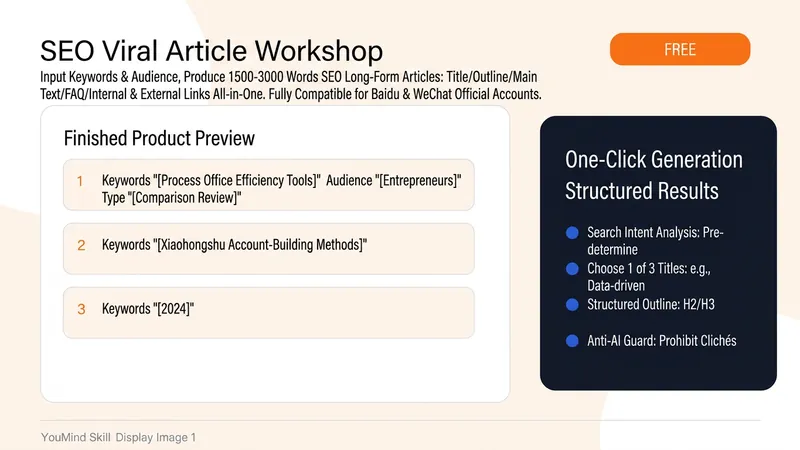
SEO майстерня хітових статей
Провів цілий день на дослідженнях, написав корисну статтю, але читачів лише сотні — причина не в якості, а в тому, що її ніхто не знайшов через пошук. Відтепер вам потрібно лише ввести ключове слово та короткий опис аудиторії, а все інше зробить цей інструмент: 3 варіанти заголовків, автоматичний план, текст із ключовими словами та FAQ — одразу готово до публікації. ✨ Основні можливості 1. Аналіз пошукового наміру: спочатку визначається, що саме шукає користувач, а потім підбирається рішення. 2. 3 варіанти заголовків: на основі даних, болючих точок або уникнення помилок — усі з ключовими словами, до 30 символів. 3. Структурований план: автоматичне форматування H2/H3, 4-6 розділів основного тексту + FAQ + CTA. 4. Захист від «AI-стилю»: заборонено шаблонні вступи, порожні переліки, шаблонні закінчення — обов'язкове використання конкретних цифр і прикладів. 5. Адаптація для Baidu та WeChat: високоінформативний стиль проти зручного для читання — перемикання тону залежно від платформи. 6. Додаткові метадані: Meta Description, рекомендації щодо внутрішніх і зовнішніх посилань — все одразу готово до публікації. 📱 Сценарії використання - SEO-блогери/вебмайстри: масове створення статей, які потрапляють у топ. - Оператори WeChat: написання глибоких статей із пошуковим трафіком. - Незалежні розробники/засновники SaaS: написання туторіалів і порівнянь для SEO-трафіку. - Викладачі платних курсів: статті для залучення клієнтів із урахуванням пошукових позицій. Хороший контент не має залишатися непоміченим — зробіть так, щоб його знайшли через пошукові системи.

Перевірка контенту Google
Перед публікацією допомагає перевірити SEO-статтю: чи справді вона буде корисною читачам, які твердження недостатньо обґрунтовані та що може викликати недовіру. Інструмент зіставляє матеріал із публічними рекомендаціями Google Search Central щодо якості контенту й за ступенем впливу визначає 3–5 змін, які варто внести найперше. Для кожної він указує місце в оригінальному тексті та пропонує конкретний спосіб виправлення. За потреби він також може переписати текст, але не вигадуватиме відсутні в оригіналі досвід і дані. Можна вставити весь текст або просто надіслати посилання. Оновлення v2.0: прибрано фіксовані роки та назви оновлень алгоритмів; коли йдеться про конкретні правила, інструмент перевіряє офіційну документацію Google у момент роботи. Оцінювання більше не ґрунтується на механічних правилах на кшталт кількості слів або згадок ключових слів. Замість великої таблиці за 8 вимірами звіт тепер містить упорядкований за пріоритетом список змін. Під час переписування не вигадуються досвід автора, приклади чи дані.
Інформація
- Версія
- v1
- Останнє оновлення
- Кредити за запуск
- За фактичним використанням
- Моделі
- Автоматично