The new prompting approach that’s quietly replacing traditional chat-based AI — and what it means for how you work.
You’ve probably felt it.
You’re deep into a long conversation with Claude or ChatGPT. You’ve explained your project, shared context, and given detailed instructions. Then suddenly, the AI starts forgetting earlier details or giving generic answers.
You try to remind it. You paste old messages. You start a new chat and lose everything.
This frustration is extremely common.
Most people are still using AI the way it was designed in 2023 — as a single, linear conversation. But a new approach is emerging that changes this completely.
It’s called MCP AI (Multi-Context Prompting).
Instead of one long thread, MCP allows AI to maintain multiple active contexts at once — switching between them intelligently while keeping everything coherent.
In this article, you’ll discover exactly what MCP AI is, why it matters more than most people realize, and the 7 key things you should understand before this approach becomes mainstream.
Why Traditional Prompting Is Breaking Down
For years, the standard way of using AI was simple: open a chat, type a prompt, get an answer, continue the conversation.
This worked well for short tasks.
But as people started using AI for complex, ongoing work — building products, running businesses, managing long projects — the limitations became obvious.
The AI would:
- Forget earlier decisions
- Lose track of different parts of the project
- Give conflicting advice across different threads
- Require constant context refreshing
This isn’t a model problem. It’s an architecture problem.
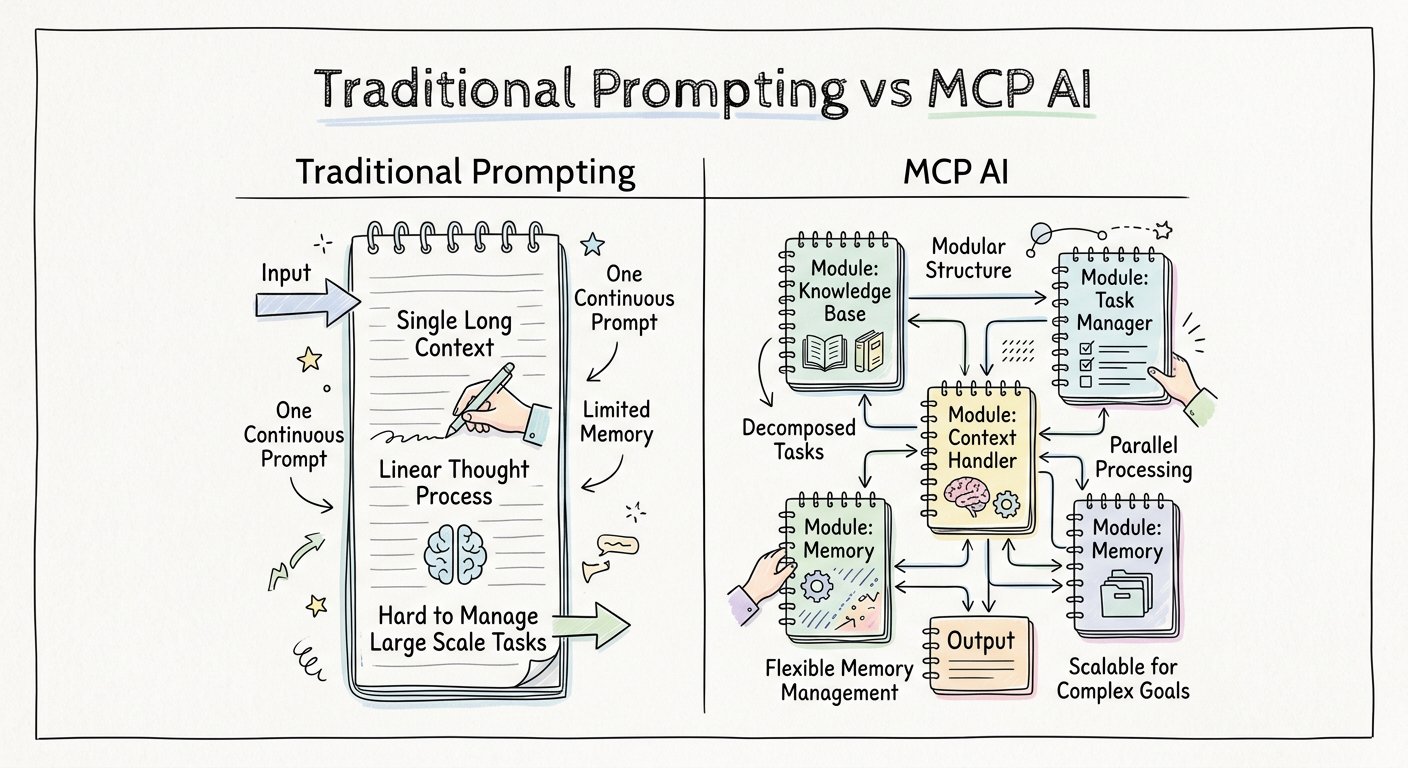
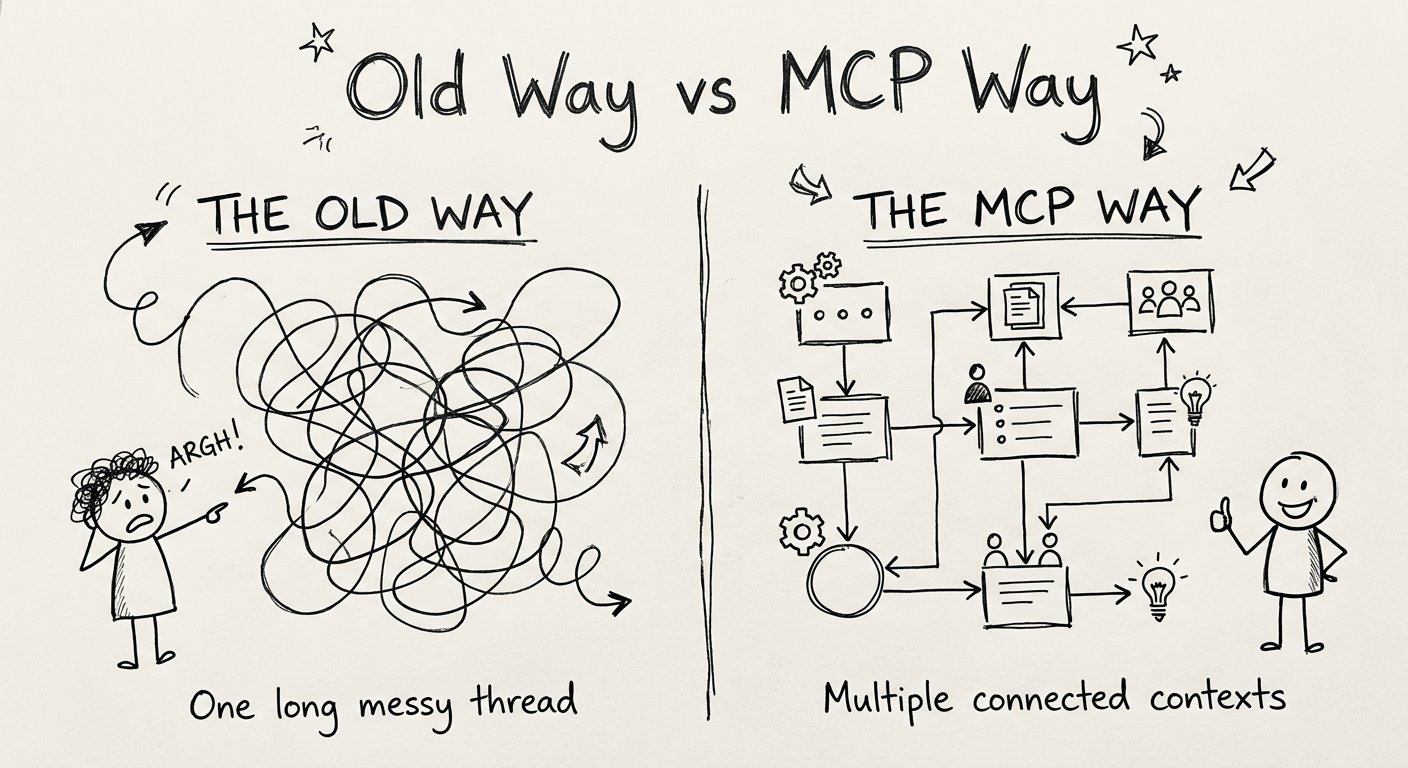
Traditional prompting treats every conversation as one continuous thread. MCP AI treats it as a system of connected contexts.
The difference is significant.
1. MCP AI Isn’t Just “Better Prompting”
Many people assume MCP is just a more advanced prompting technique.
It’s not.
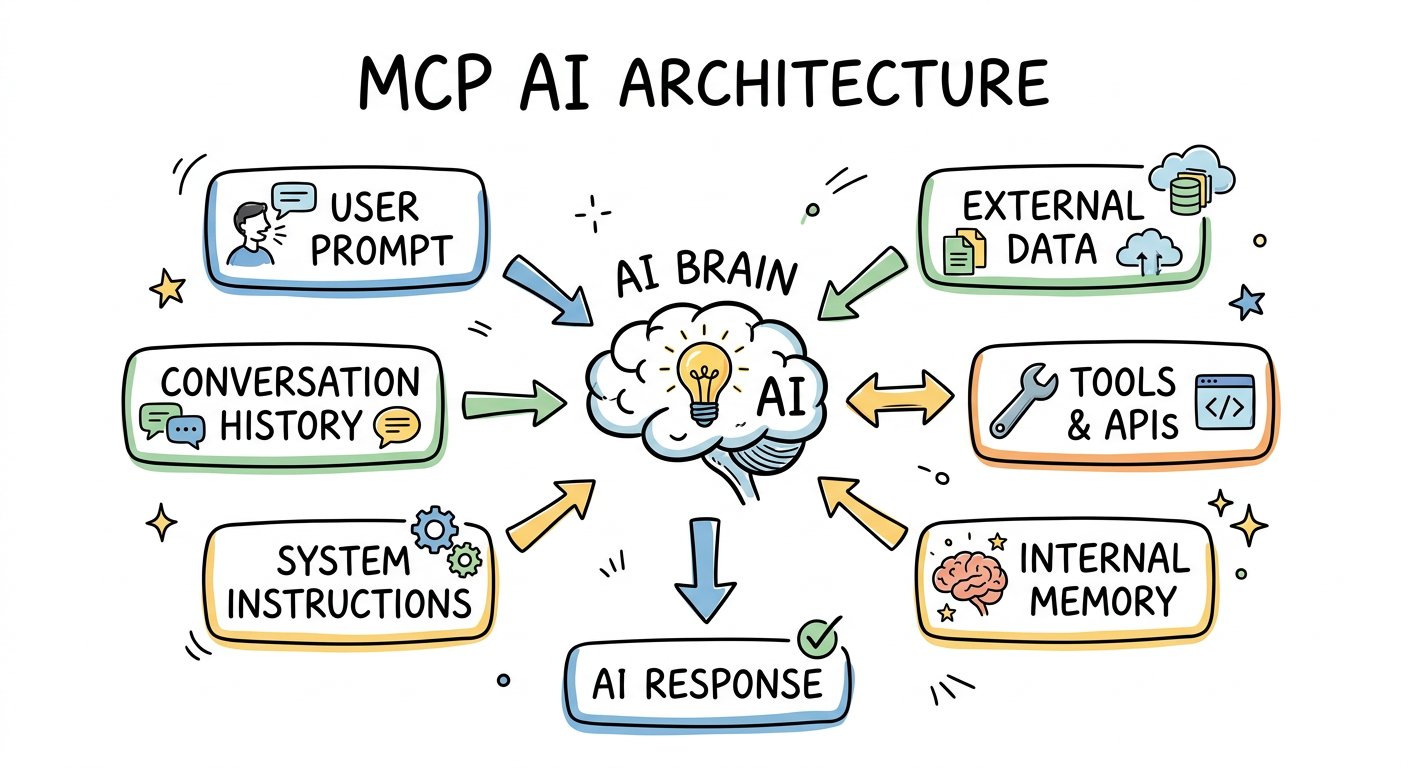
MCP AI is a fundamentally different way of interacting with AI. Instead of one conversation, you work with multiple active contexts that the AI can reference and switch between automatically.
Think of it like this:
- Traditional AI = One notebook where you keep writing
- MCP AI = Multiple notebooks that the AI can open, close, and cross-reference at any time
This small shift creates massive changes in how much work you can actually get done.
2. It Solves the “Context Window” Problem (Mostly)
One of the biggest limitations of current AI is the context window — how much information the model can remember at once.
Even with large context windows (like Claude’s 200K tokens), performance often degrades when you push too much information into one thread.
MCP AI works differently.
Instead of cramming everything into one context, it maintains separate but connected contexts. The AI only loads what it needs at any given moment.
This allows you to work on much larger projects without the quality dropping off.
3. The Biggest Advantage Isn’t Speed — It’s Coherence
Most people expect MCP AI to make them faster.
The real advantage is coherence.
When you’re working on complex projects that span multiple areas (strategy, execution, research, content), traditional AI often starts contradicting itself or losing the thread.
MCP AI maintains consistency across different parts of your work because it can reference multiple contexts simultaneously.
This is especially powerful for:
- Building and maintaining long-term projects
- Managing multiple workstreams at once
- Creating systems that need to stay aligned over time
4. Most People Are Using It Wrong
The biggest mistake people make with MCP AI is treating it like normal prompting with extra steps.
They create multiple contexts but still manage everything manually.
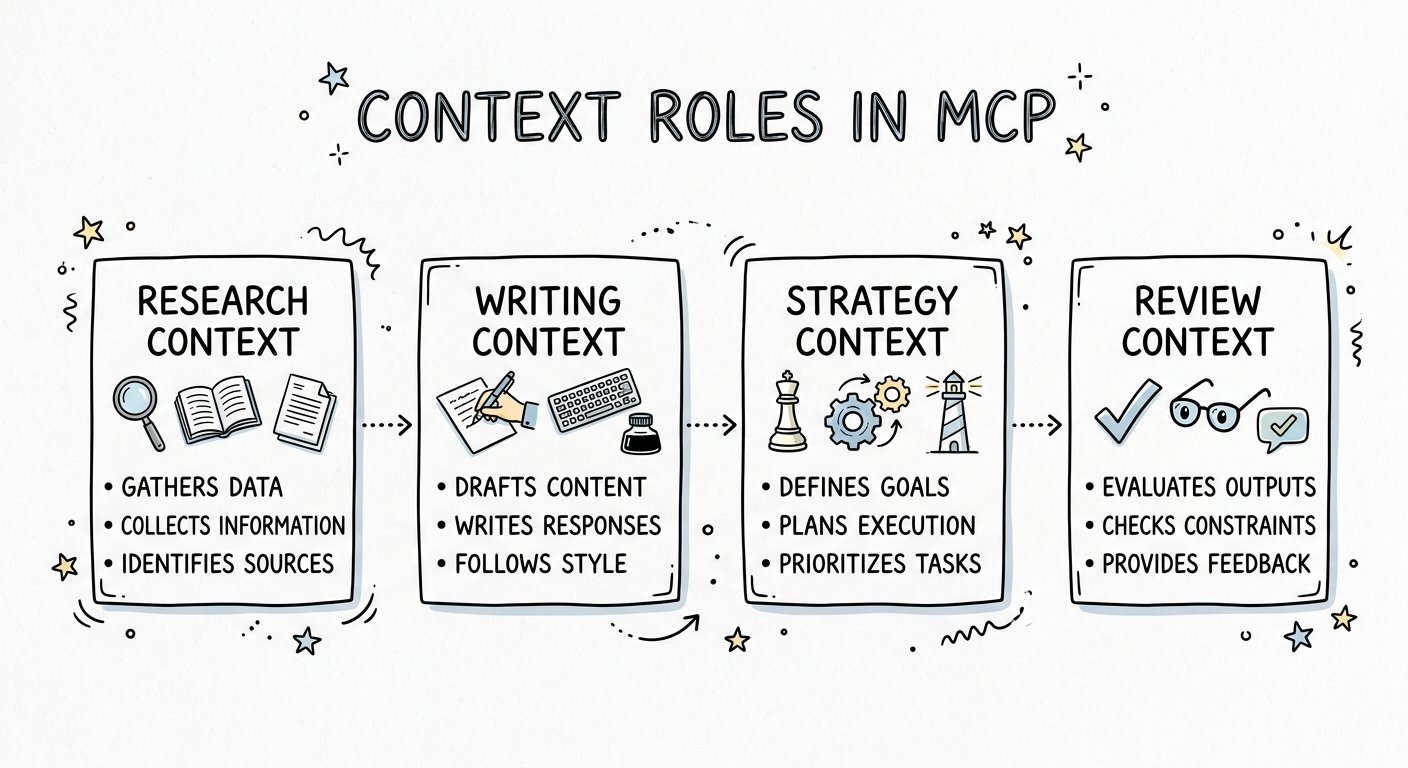
The real power comes when you let the AI orchestrate between contexts.
This means:
- Defining clear roles for each context
- Setting rules for when the AI should switch contexts
- Building feedback loops between different contexts
Without this structure, MCP becomes just another complicated way of prompting.
5. MCP AI Works Best With Systems, Not Single Tasks
MCP shines when you use it as part of a larger system rather than for one-off tasks.
The highest performers right now are using MCP to build:
- Research systems
- Content production pipelines
- Decision-making frameworks
- Project management agents
They’re not just asking better questions. They’re building small ecosystems of contexts that work together.
This is where the real leverage comes from.
6. The Tools Supporting MCP Are Still Early
Right now, native MCP support is limited.
However, several tools are already moving in this direction:
- Claude Projects (with custom instructions and artifacts)
- CrewAI and LangGraph (for multi-agent systems)
- Cursor (with multi-file context)
- Custom setups using LangChain or LlamaIndex
The tooling is improving fast. What feels advanced today will likely become standard within the next 12–18 months.
7. This Changes How You Should Think About AI Work
The biggest shift MCP creates isn’t technical — it’s mental.
Instead of thinking “How do I prompt AI better?”, the new question becomes:
“How do I design contexts that work together?”
This is a much more powerful way of thinking.
It moves you from being a user of AI to becoming an architect of AI systems.
The people who make this mental shift will have a significant advantage over those who continue treating AI as a smarter search engine.
I've curated a collection of AI resources to help you get started.
Inside you'll find:
• 1,000+ AI prompts
• Curated AI tools
• Automation workflows
• Productivity systems
• Real-world use cases and examples
Download here: