Over the past year,
I developed personalized education agents and grew from 0 to 1.2 million.
If you ask me what I did right—the most valuable answer has nothing to do with agents.
Let me leave that sentence hanging there for a moment. I'll start from the beginning.
1. Being at the table is more important than anything.
In 2023, I was already at the table.
When DeepSeek exploded in popularity, the demand for agents really took off. Before, when you told a client "intelligent agent," they'd look at you confused; after that, for professional scenarios, clients were willing to try and willing to pay.
But what I want to say isn't "I caught the trend." It's the opposite—many people only thought about jumping in after seeing DeepSeek get hot; I didn't.
You might think this is off-topic: my first project in 2023 was e-commerce clothing swap, using AI to change the clothes on models for merchants. It wasn't education, and it had nothing to do with the agents I later sold. That project didn't continue—to put it bluntly, I was a novice then, seeing opportunities but lacking the ability to turn a demo into a stable, landed business. I couldn't catch the opportunity, so I let it go.

First project in 2023: AI e-commerce clothing swap. It had nothing to do with the later education agents—but I was already on the field then.
In 2024, I tried other things. I built an AI project research community platform and tinkered with a data flow system—that one never worked out in the end. I still keep the architecture diagram, with the words "Failed to run" written in red in the middle; it's quite eye-catching.
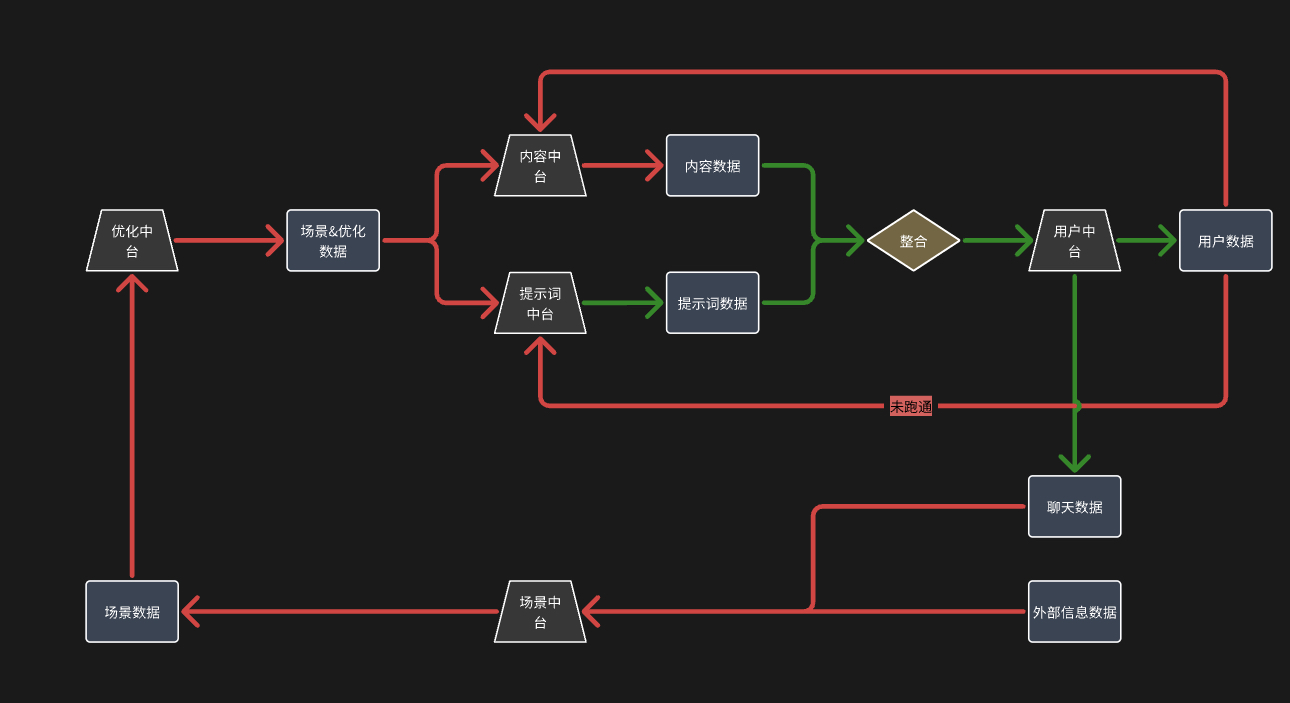
Being on the field doesn't mean you win every hand.
You see, I've been on the field for these two or three years, but to be honest, I never hit the jackpot. It was lukewarm, even a bit quiet. But precisely because I didn't leave, when DeepSeek exploded and the education niche opened up, I was the one already there and ready to pivot, not the one trying to squeeze in at the last minute.
Everyone says trends are everything.
But there's another half-sentence no one mentions:
[If you only think about sitting down the second the cards are dealt, it's already too late.]
Whether you can catch this wave was actually decided in 2023.
2. The first client was found through a single question
My first order wasn't from advertising; it was a referral. A previous potential partner—one I hadn't actually closed a deal with—introduced me. The first thing the other party said was very simple:
"Do you know anyone doing AI education?"
He didn't ask if I did it; he asked if I knew anyone. This means that in his circle, "this guy is doing AI" was already a memorable label—even though I was doing e-commerce and communities at the time, not education.
This order followed a formal process: competitive negotiation. I had to prepare bid response documents and go through a formal defense; it wasn't just a private handshake. It was for an AI classroom application service for a middle school in a southern province. I prepared the response documents page by page to bid.

Staying long enough has this benefit: clients will pop up on their own from places you'd never expect. That partner I didn't close a deal with ended up being the referrer for my first client.
3. I quoted 300,000 for the first time and closed the deal by being "honest"
I quoted about 300,000 for the first order. After quoting, the client didn't react much, neither hot nor cold. I was worried—did I quote too high?
It was the opposite. I found out later that my price was nearly half that of the competitors. I wasn't intentionally lowballing to steal the order; I just honestly quoted a fair price based on my costs and what I thought it was worth.
The negotiation happened three times. During these three times, I didn't put on airs or package myself as some "industry-leading solution expert." I just asked them sentence by sentence: what exactly do you need to solve, where are you stuck, and how do your teachers actually use it daily? To be honest, when I took this order, my product concept wasn't even complete—the solution was gradually pieced together and built during those three negotiations.
It was also these three negotiations that let me stumble upon something I've repeatedly verified since: the schools that pay and the teachers who actually use it care about completely different things. The school, as the decision-maker, cares most about two things—price and data security; but the frontline teachers care about whether it's easy to use and saves trouble. The client and the user are not the same group of people, and they don't want the same things. This misalignment later became one of the root causes for every version of my product.
4. My biggest mistake: I failed three versions before the fourth succeeded
Although the deal was closed, fulfillment was a constant struggle.
To be honest, regarding delivery, I went through four versions, and the first three weren't successful.
The first version was a simple wrapper for DeepSeek, rushed out in two weeks. I just put a skin on the large model and handed it over. On the day of the demo, a teacher asked me on the spot: "What's the difference between this and me just opening DeepSeek myself?" That question stumped me. Yes, there was no difference—it could spout a lot of correct nonsense, but it couldn't handle real teaching actions in the classroom. It failed as soon as they tried it. Failure.
The second version, I made into a Dify-like workflow, grinding for a month, and even had a fight with my partner in the middle. We fought over whether to go in such a heavy, engineered direction. In the end, we both compromised; neither fully convinced the other. The product was made and could produce real results—for example, a complete courseware for "Chinese High School History: The Westernization Movement," with titles, timelines, and knowledge points all there. It looked quite decent.

But that was exactly the problem: it was too engineered, too "standard," and didn't match the actual lesson planning and teaching rhythm of frontline teachers. Teachers want something they can fit into their 45 minutes, not a beautiful generic courseware. Wrong again.
The third version, I made a truly personalized agent, grinding for two months. The direction was right, but the technology wasn't mature, and the fulfillment effect was poor—it worked for demos, but it fell apart during stable delivery. The teacher's experience was still not good.
What finally made me decide to tear it all down and start over wasn't a single failed demo, but a problem review meeting. We laid out all the fragmented complaints, doubts, and requirements from the teachers across those three versions on the table—and suddenly realized that these comprehensive demands were pointing to a completely new product form, different from the logic of my previous three versions. At that moment, I decided: stop patching the old framework and reconstruct the whole thing based on an agent core.
The fourth version, I reconstructed based on an agent core, reusing all the skills and requirements accumulated from the first three versions. In this version, if you tell it "help me generate a digital human video explaining quadratic functions," it automatically writes the script, matches it with a digital human image and voice, and produces the video directly.
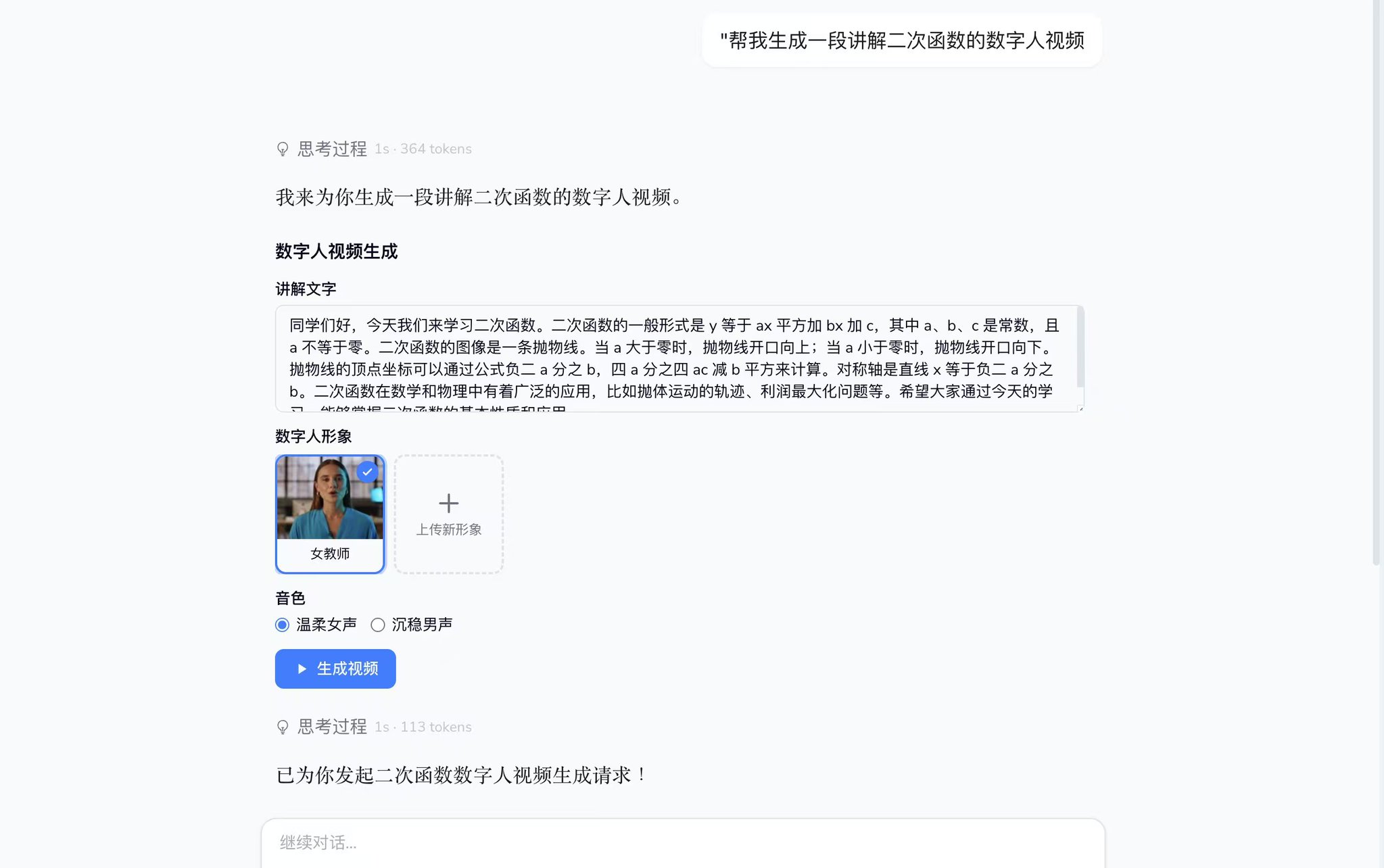
Looking back at this timeline, it's clear: the two weeks of wrapping taught me that "just giving the right answer is useless; it must fit the classroom"; the month of workflow and even that fight built the skill of "how to deconstruct teaching scenarios"; the two months of the third version helped me smooth out the technical pitfalls of personalization. None of the first three failures were in vain—they all sank into the foundation of the fourth version.
The fourth version succeeded.
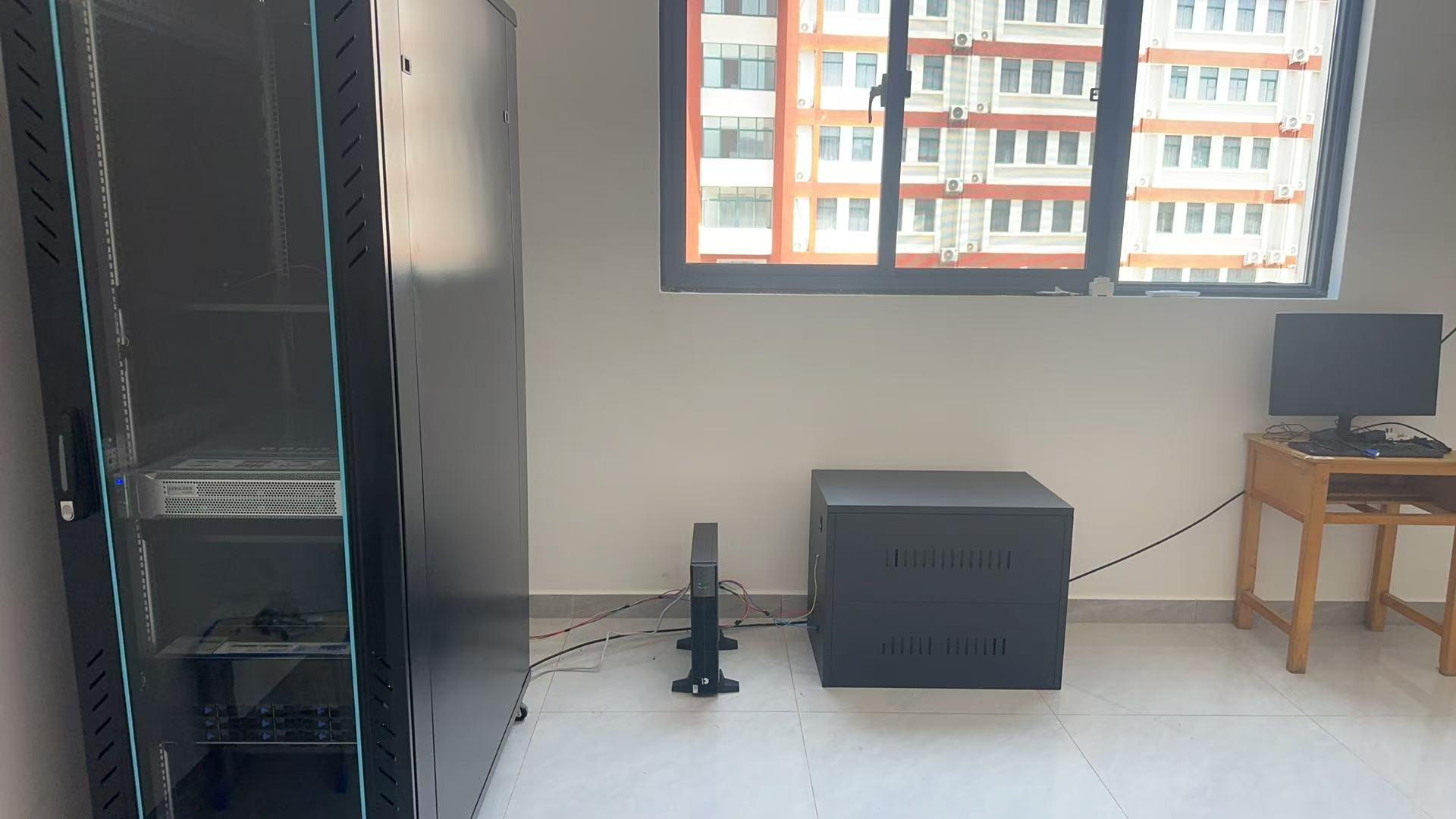
And this delivery includes hardware. It's not just sending you a URL; it's going on-site to install cabinets, servers, and UPS systems in the school's computer room. It's heavy, but because it's heavy, it's hard for competitors to copy.
I want to say two things. First, if you find you're wrong, change quickly; don't stubbornly hold on. I didn't get defensive about any of the wrong versions; if it wasn't right, I tore it down. To the client, it doesn't matter if you make mistakes; what matters is whether you're willing to pivot immediately and not drag them along with your mistakes.
Second, that old cliché about differentiation—it's not something you come up with by sitting behind closed doors; it's iterated version by version at the client's site. My fourth version, which can be delivered stably, can't be copied by competitors because it contains the weight of my four tear-downs and rebuilds.
5. Current sales rely on channels built one meeting at a time
Being able to ship To B orders stably every month doesn't rely on a viral post or an ad campaign; it relies on channels. And those channels were built by me, person by person, meeting by meeting.
Let's be clear about where that 1.2 million came from. It wasn't from one school; it was accumulated from 18 transactions over the year—some large school orders, some medium ones, and some subscription income brought in by channels. The structure is mixed; no single deal was a "legendary win," they were all gnawed off one by one.
After the 300,000 order for the first school was delivered, they actually didn't renew—I'm not hiding that; but other schools followed suit. Having a deliverable case study is itself a stepping stone for the next order; whether they renew is another matter.
I go to exhibitions. For education industry exhibitions, I take my invitation, stand by the booth, and talk to people one by one. It looks clumsy, but in To B, people are built one business card at a time.

There's also an investment institution in Beijing. In the end, they didn't invest in me, but they introduced me to resources three times, and those three times actually converted into part of the actual revenue. To be honest: I still haven't changed my mind about them; I still think they love to overpromise. But that doesn't stop them from bringing me real money—whether someone is reliable and whether they can bring you value are sometimes two different things. I was thinking "this person is just blowing smoke," but I still handled every introduction properly. I didn't get the investment, but the sales channels were gradually opened up by those three introductions.
6. Review: Single advantages are never enough; this one point is key
If you ask me what I did right, the most honest answer is: single advantages are never enough. It wasn't that I had many ideas, or that I was a smooth talker, and certainly not that I was lucky to catch a trend—any one of those alone couldn't support 1.2 million.
Saying 1.2 million is actually an understatement; the corporate account for that year was just over 1.23 million. But what I want you to see isn't this number, but the small text next to it: 18 transactions. It wasn't 1.2 million from a one-off deal; it was accumulated from 18 orders. This shows that this system can continue to ship, it wasn't just a stroke of luck.

What really worked was the set of things together:
Getting to the table early, clients finding me, winning the first bid with a quote, co-creating with clients, changing overnight when wrong, and building channels one meeting at a time. If one link is missing, the whole thing stops turning.
What I want to talk about most is "continuously staying on the field." Getting to the table early isn't hard; what's hard is staying there—staying when the e-commerce project didn't hit, staying when the community and data flow didn't work, staying when I was stood up by referrers or overpromised by investors.
I'm not made of iron. Over these three years, I would intermittently stop to catch my breath; when I was tired or annoyed, I'd rest for a few days. But resting is resting; I didn't leave the table—after resting, I'd come back to fix the fourth version and go to the next exhibition. The reason my four versions could last until the fourth one succeeded, and the reason the first client could come back through someone I didn't close a deal with, is entirely because I didn't truly leave the field midway. Getting to the table depends on being willing to start, rebuilding depends on being thick-skinned, but what truly holds these up until results appear is your willingness to stay on the field—even if you're staying there while taking breaks.
So stop looking for that "one winning move." You need to build a system that can turn itself—this system doesn't require talent; anyone willing to start and willing to stay can build it.
7. In a word: I relied on a system
Now back to the sentence I left hanging at the beginning—the most valuable answer has nothing to do with agents.
The answer is, I didn't win this business because of agents at all. Agents are just the hand I happen to be holding from 2023 until now. What truly let me earn 1.2 million and still be able to ship every month now is the system mentioned above: getting to the table early, being willing to stay, quoting honestly, co-creating with clients, changing immediately when wrong, and building channels one meeting at a time.
This set of things has nothing to do with whether I'm doing agents. If I change the hand—change the category, change the tool, change the trend—as long as the system is there, I can still play.
Trends will change, agents will go out of style, but being willing to start, willing to change, and willing to stay on the field will never go out of style.