Recently, my Douyin account reached 15,000 followers. I want to do a deep review of myself. This article is a personal reflection on knowledge payment business, commerce, monetization, self-media, pricing strategies, growth, intention, philosophy, and IP, all centered around self-media monetization. There was no AI collaboration in this entire piece; it was written entirely from my own thoughts. This content might not help you, but it certainly helps me make money.
This post is not about gaining followers; it is a personal cognitive review of "how to actually do knowledge payment" and "what self-media monetization is really about" during my journey from 0 to 15,000 followers.
Friendly Reminder: The following content contains strong personal opinions and expressions that may conflict with mainstream views. Please watch with caution. You can criticize me; I will reply selectively or simply block you.
Let's go through it one by one.
First, the results:
I reached 15k followers on Douyin. I filmed a total of 100 videos and actually posted 56. The monetization is 8 times what I made on X. It really tested my sales ability—specifically public domain sales. For those looking for a benchmark, I can say it's worth it. The monetization is better than X, it's more meaningful to continue, and I've already met many people trying to benchmark against me.
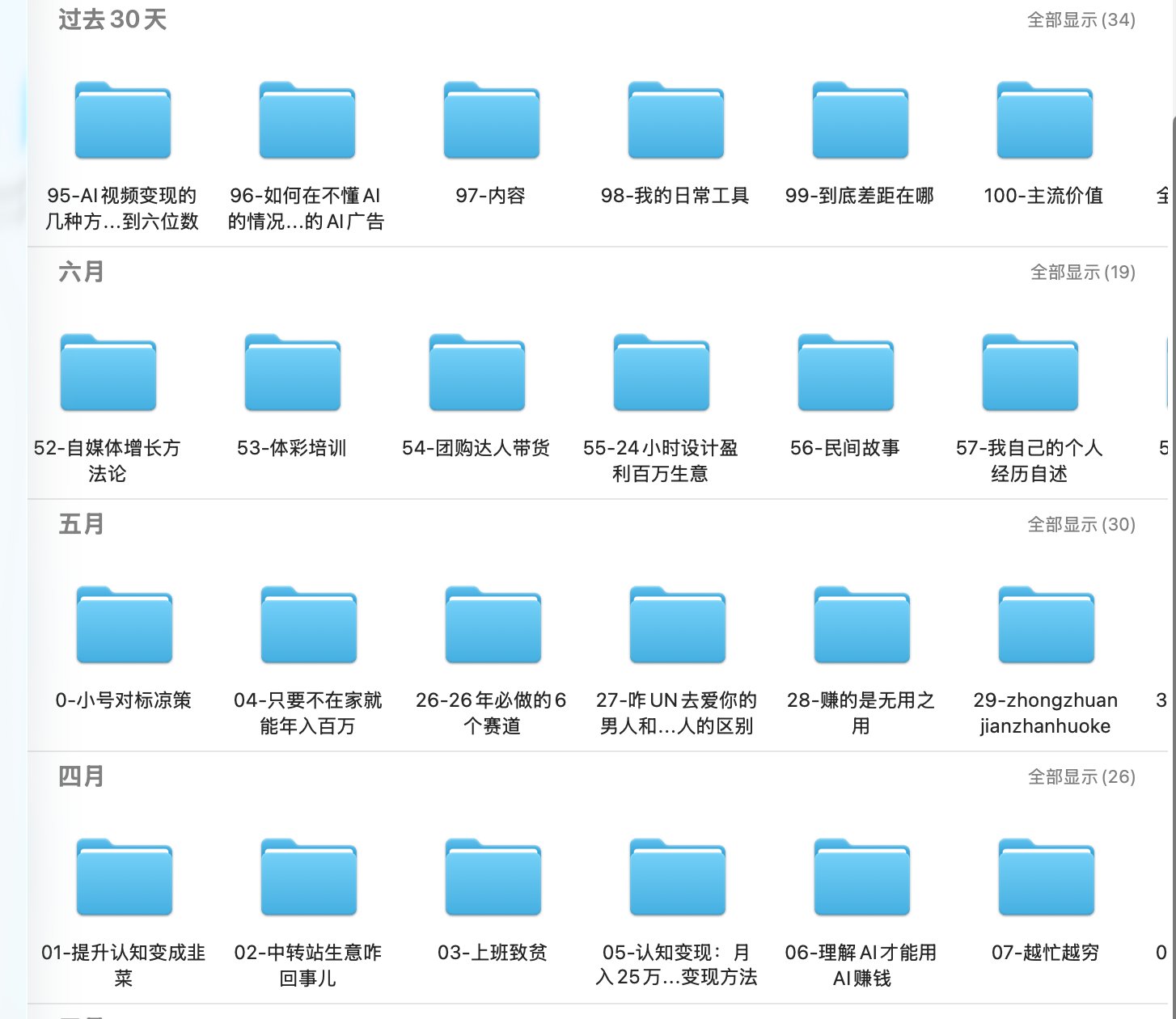
Benchmark Value Explanation: This is the path of "someone who has never done video self-media going from 0 to 1." It is more replicable than text-based monetization on X. Because of this, you can benchmark against me, especially the version of me after July.
That's why I said in a previous post that if you really want to benchmark against a beginner going from 0 to 1, now is the best time to watch me. I also mentioned that my actions would stabilize in early August, making it the easiest path to replicate.
So, if you want to copy my homework, do it now. The content is currently stable; the next step is to adjust the covers, titles, oral broadcast backgrounds, and other "exoskeleton" elements.
II. Self-Media Growth: Five Stages of Identity Evolution
My self-media journey roughly went through:
- Not wanting to benchmark, resulting in a messy, hybrid approach just to start filming.
- Thinking I had a real benchmark.
- Admitting my lack of ability and realizing I still didn't understand the benchmark.
- Changing benchmarks and following them closely; product logic was vague but started monetizing.
- I have no benchmarks, only customers and things I want to research; monetization volume exploded.
These five stages are essentially a migration from an "external reference system" to an "internal judgment system."
Stages 1 to 3 were about looking outward for answers—who is the benchmark, how do they do it, why can't I learn it?
Stage 4 began looking inward—finding a benchmark I could actually follow while forming product logic.
Stage 5 is the disappearance of the benchmark—not that I stopped learning, but I established my own judgment framework. Customer needs and my research interests became my primary focus.
Understanding Start and Growth:
The essence of growth is showing users a state they want to achieve—lifestyle, wealth, soul, etc. In short, you must empathize to bring growth; this is closely related to marketing.
If you want to start self-media, don't listen to anyone who says the first step is finding a benchmark. Finding a benchmark is at most a necessary condition, but not sufficient. Most people truly lack the ability and courage to appear on camera. If you want to achieve commercial monetization, you can actually acquire customers and make money without showing your face—through traffic hijacking, self-heating, redirection, nurturing, matrix accounts, baiting, and virality. Doing just one of these well is enough.
III. Business and Monetization: Four Iterations of Product Strategy
My product strategy went through:
- Free group lead generation
- Selling only my 497 RMB group
- A three-tier product structure: 99-497-980 RMB
- Targeting Douyin with only a 980 RMB AI + Mid-to-long video project coaching for first-stage monetization results.
Looking back at these four iterations, each switch was essentially me becoming clearer about my "delivery boundaries."
Free groups → Discovered free is a liability.
497 single product → Discovered users need different products at different stages.
Three-tier products → Discovered too many categories scattered the delivery focus.
Finally converging to only selling 980 coaching → Because this is what I'm best at, has the heaviest delivery, and gets the best results for users.
Shrinking the product line doesn't mean the business got smaller; it means I became clearer about "which money should be earned."
IV. Thoughts on Knowledge Payment and Self-Media Business
- Never create free communities. Everyone who acts on your lead generation expects value. If you can't deliver at a 98,000 RMB intensity, you are "harvesting leeks" (First, it's hard to deliver well; second, users assume you are always online).
- The essence of a transaction is trust; public domain content is the carrier of trust. The reason you must explain your business clearly and open-source your methods is so people see you are actually solving problems and have your own thoughts—things AI can't write. No one pays for what they don't understand.
- Define product delivery boundaries well. For a while, I sold project materials for 99 RMB, then found people asking about career changes. Since I don't want to be a scammer, I tried my best to tell them my methods, but that's not what that product was supposed to do.
- An account is an asset, but it can also be a liability. Ultimately, it's a consumer good—either valuable or not. I see many people wanting to pivot; in my view, it's better to scrap the account and start fresh. Even with 100k or 1M followers, you should switch if needed, but it requires the courage to start over. I say this to myself as well.
- Sell assets at low prices, sell delivery at high prices, and speak less for free. In conversion, opening your mouth sets the price. If you keep solving problems or answering questions for free (more than two questions), that person will think you are only worth "free." If they have a strong need, they will ask precise questions, not vague ones.
- Although I can produce content with millions of views and have helped others do the same, the commercial value still lies in what I define as Stage 1 monetization—earning traffic shares. But I must admit, my oral broadcast content doesn't reach tens of millions; 800k is a great result. I use AI a lot, but the content I write myself has the best traffic and conversion.
- I think Don's business model is great and worth learning. In actual testing, 99 or 199 RMB is a consumption level where most people have no decision-making pressure. My 980 RMB is also okay and sells well; when public content is good, it sells with zero conversion pressure.
- This is what I want to talk about most: how to do knowledge payment without being a scammer and without getting bad reviews. You must understand what the user is actually buying, then sell it to them and deliver it the way they want. For the 980 RMB product, why have I sold so many without a single bad review? Because no one says the delivery isn't worth it. I know most people buy for psychological comfort, so:
- I provide sufficient information and cognitive gaps.
- My standardized courses are truly step-by-step, even teaching how to download Doubao.
- I remind them periodically to keep working. If after three reminders there is no action, I consider my delivery value fulfilled and terminate the delivery.
- For those willing to work, I provide massive delivery materials, account diagnostics, content diagnostics, and a three-stage monetization path: 1 (traffic share) - 2 (external product commission) - 3 (own product revenue).
- Why do I insist on not letting my clients use Claude Code or Codex? Even when using AI for video acquisition, I restrain from using these. Tools change and models upgrade, but flow-based thinking never goes out of style. In the AI era, the first revolution should be in your way of thinking, not tool migration. I believe Doubao and Jianying will exist for a long time, so I teach those. When you master these two: First, you won't worry about monetization. Second, my clients and I stay on the same wavelength. Of course, I might talk about Codex for the sake of reach, which is why I keep my X and Douyin accounts separate. X needs to stay in touch with cutting-edge AI, while Douyin is for business.
Everyone else teaches "using the strongest tools." I do the opposite not because Codex is bad, but because my clients don't need it right now. They need to "Open Doubao → Copy this → Click this → Post." I help them skip tool anxiety and go straight to the "doing" phase. Once they've made money, they will naturally look for better tools; that's when it's not too late to tell them about Codex.
- AI hasn't invented any new monetization methods. Many ask how I monetize; I can only say my monetization has nothing to do with AI. Brand deals happen because I am a node of traffic and reach. I don't think I'll do self-media for many years; five years will be a threshold because I've found what I truly want to research.
- Persistence is a good quality. Three years to enter an industry, five to understand it. If you give up on a project after three months, you're letting yourself down. I hope everyone starting self-media seriously understands this industry.
- The essence of growth is showing users a state they want to achieve—lifestyle, wealth, soul—you must empathize to grow. This is deeply tied to marketing.
- I encourage everyone to read the book "Out of the Circle" by Ye Minggui.
- Thanks to Don. While writing this, I saw his post being called the "King of Public Domain." It's true. Before I started Douyin, I told him I wanted to benchmark against him, and I successfully became a "platypus" (a bit of everything).
But I don't think I was wrong. I'm not a fan of paid learning; I'm more empirical. That's why this review has strong personal expression. But the more I do domestic self-media, the more I understand Don's views. (Don, I will definitely join your offline class once I've explored what I want to explore).
VI. Intention and Philosophy
Lately, I've been focusing on AI short videos and AI expression monetization. Essentially, I'm not just talking about individual projects.
I am repeatedly proving one thing:
Everyone can earn money through expression.
This money can come from live-streaming sales, courses, coaching, consulting, or a specific business model—even physical businesses.
This intention runs through all my content—not "teaching you how to use AI for short videos," but "making you believe you can make money through expression, with AI as an accelerator." This is why my content has penetration and better conversion lately: the foundation is values, not methodology. This is the essence of influence.
Because self-media changed my life, I believe it can change everyone's life. And I didn't show my face when I started.
So I believe no one needs to show their face to succeed through self-media and the internet. If you have a mouth and can speak, you can use Doubao to achieve the three stages of monetization. I call this "Expression Business."
IP is a pseudo-proposition. Most might think I'm bragging, but I've seen too many people get results with my method. You see them every day on X and Douyin. Please believe that AI only accelerates business; the business itself doesn't change.
I don't think business restructuring will happen in 2026 or even 2027. Not until AGI in 2028.
VII. IP: The Relationship Between Content and Product
**The essence of sales is attraction.
The essence of a transaction is trust.
The foundation of self-media monetization is the same.**
If you don't express, no one knows what you have.
If you don't have a product, content will be scattered.
If you have a product, content must serve the product.
**The essence of short video is not editing.
The essence of short video monetization is not traffic mystery.**
**It is essentially content marketing:
What do you say, who do you attract, what trust do you build, and what product do you lead to?**
These four questions are the core engine of my content system. Every video must answer these at the topic selection stage.
Audiences don't stop for methods; they stop for "this is talking about me." Give them identity first, then methods, because your content must serve the user. Your topics should be drawn from common pain points.
If you really want to build a personal IP, give up AI writing. When you truly understand something, your aura and state create stronger trust through your performance.
The carrier of trust is content, not a face. So I think digital human broadcasts are a good form, but not strictly necessary.
I often tell Xiaowan that I like "Aiya" (one of her IPs). If an IP like Aiya delivers content, it carries more commercial value. The reason I focus on content and expression business is that all audio, video, and text are marketing carriers. As long as you can speak clearly and build trust, it works. Showing your face is entirely personal and depends on what your business is selling.
VIII. Boundary Statement
Boundaries are clear:
If your stuff is fake, expression will only accelerate your failure.
If you lack delivery capability, high-priced products will only increase pressure.
If you don't even know who your users are, even a free community won't save you.
Every point reversed is the prerequisite for what I do:
Real experience, real delivery capability, real understanding of users.
**Be clear about what money you earn and what you don't.
Too many people have approached me for collaborations—selling tokens, shady projects for the elderly, and things you can't imagine. One must have character and a bottom line. I admit making money involves risk, but the ROI must be thought through.**
Finally, thanks to all my friends in the public and private domains who helped me with Douyin:
@ChappelDae55911, private domain genius operator.
@dontbesilent, Don needs no introduction; his public content shows he is worth paying for.
@gkxspace, for the emotional value in Shanghai.
@bbkirstry, top brand marketing operator.
@Tozoo2501, the ceiling of domestic self-media knowledge payment monetization.
@suosimath, Mr. Shuo, who achieved great results in the K12 track driven by vision.
@0xLinehigher, Line is a god in the education track.
@Leobai825, my brother Ce, who gained 7,000 followers with one post.
@Clara_J_0529, a young genius whose content I learn a lot from.
@Bearlagcy, the god who guided my WeChat Official Account.
@uge198568, whose public content has taught me much.