تحليل المنافسين
اختارها
nene@YouMind
لماذا نحب هذه المهارة
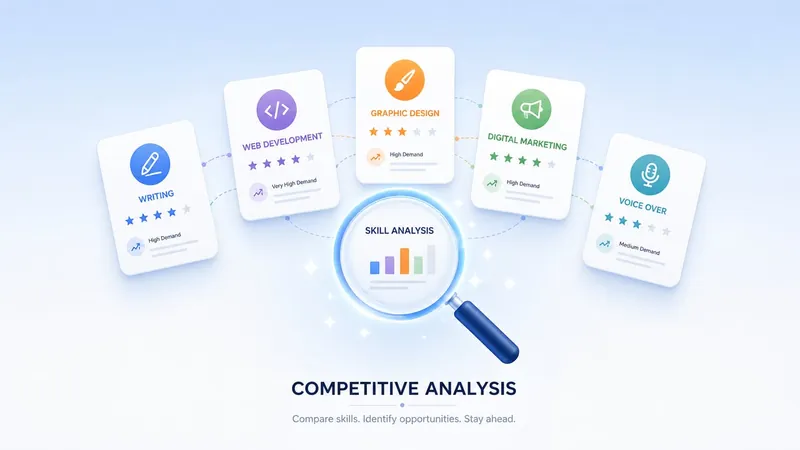
تصوغ هذه المهارة تحليلاً شاملاً للمنافسين، محولة بيانات السوق الخام إلى استراتيجيات قابلة للتنفيذ. تقارن بدقة بين الميزات والتسعير والموقع السوقي، ثم تقدم توصيات مخصصة لمنتجك. احصل على ميزة حاسمة من خلال فهم نقاط ضعف المنافسين وتحديد الفرص الفريدة، مع عرض تقديمي احترافي على غرار ماكينزي.
التعليمات
Core Mission
Create an in-depth competitive intelligence presentation for $material A (your product/company).
Competitors to analyze:
m
a
t
e
r
i
a
l
B
,
materialB,material C, $material D
Objective: Through comparative analysis, develop differentiated pricing, market positioning, and marketing strategies for $material A.
Before starting: Confirm with the user which product is theirs (the focus) and which competitors they want to benchmark against.
Execution Steps
Phase 1: Deep Intelligence Gathering (Research)
Goal: Collect the latest intelligence on
m
a
t
e
r
i
a
l
B
,
materialB,material C,
m
a
t
e
r
i
a
l
D
∗
∗
a
n
d
∗
∗
materialD∗∗and∗∗material A across the web.
Focus Areas:
Core Features: Major updates from the past 3 months
Pricing Strategy: Free/paid tier details, enterprise pricing
User Sentiment: Extract key themes from Google, Reddit, X (Twitter), YouTube reviews (Positive vs Negative signals)
Market Positioning: How each competitor positions themselves (messaging, target audience)
Distribution Channels: Where and how they reach customers
Research Actions:
Use googleSearch to find recent product updates, reviews, and pricing information
Use fetch to read competitor websites, pricing pages, and feature documentation
Extract user sentiment from community discussions and review platforms
Phase 2: Structured Data Extraction (Extraction)
Based on collected intelligence, organize the following key data points:
Feature Differentiation:
Features competitors have that $material A lacks
Features $material A has that competitors lack
Overlapping features with quality/implementation differences
Value Propositions:
Each competitor's core selling point (USP)
$material A's unique value proposition
SWOT Analysis for $material A:
Strengths: What you do better than competitors
Weaknesses: Where competitors have the advantage
Opportunities: Market gaps or competitor vulnerabilities to exploit
Threats: Competitive moves or market trends that pose risks
4P Marketing Mix Comparison:
Product: Feature set, quality, innovation
Price: Pricing tiers, value perception, positioning
Place: Distribution channels, market reach
Promotion: Marketing tactics, messaging, brand presence
Tool: Use write tool to create a structured analysis document with all extracted data.
hase 3: Strategy Generation (Strategy)
Based on data analysis, output specific actionable recommendations for $material A:
Pricing Recommendations:
How to leverage price anchoring to compete effectively
Example: Establish a high-value mid-tier to undercut premium competitors while maintaining quality perception
Identify pricing gaps or opportunities in the market
Promotion Strategy:
Aggressive marketing messaging targeting competitor weaknesses
Example: If $material B is expensive → "Enterprise power at startup prices"
Example: If $material C has limited features → "All-in-one solution, no integrations needed"
Channel strategy: Where to reach customers competitors are missing
Content Moat Strategy:
Core Narrative: Distill $material A's unique brand story or design philosophy (beyond feature lists)
What belief or vision drives your product?
What problem do you solve that others ignore?
User Education: Design a "How-to" or "Best Practices" content series showcasing scenarios only $material A can solve
Tutorial content that demonstrates unique capabilities
Use case libraries that build expertise around your product
Trust Assets: Plan case studies or user testimonials proving irreplaceable value
Customer success stories with measurable outcomes
Industry validation or expert endorsements
Tool: Use write tool to create the strategy document.
Before generate slides, ask user whether they want to create slides or not. If yes, continue. If no, the task completes here.
Phase 4: Visual Output (McKinsey-Style Presentation)
Design a 25-35 slide professional presentation deck in the style of top-tier strategy consulting firms (McKinsey/BCG), emphasizing high information density with minimalist tech aesthetics.
Visual Requirements:
Design Aesthetic:
Tech-minimalist but information-heavy
Clean, sharp, and authoritative
Every inch of space serves clear, incisive business analysis
Typography:
Headlines: Serif fonts (Times New Roman, Playfair Display, or Libre Baskerville) for premium financial report feel
Data & Body Text: Clean sans-serif (Open Sans, Lato) for chart labels and data numbers
Clear hierarchy and readability
Color Palette:
Background: Clean white (#FFFFFF) or soft light grey (#F5F5F5)
Text: Sharp black (#1a1a1a) for maximum readability
Data Accents: Deep Royal Blue (#003AE7) for primary data highlights
Supporting Colors: Distinct shades of grey for data hierarchy
Chart Fills: Blue gradients for area charts, solid blue for emphasis
Layout Principles:
High Information Density: Sophisticated multi-column layouts mimicking actual business analysis decks
Structured Frameworks: Strategic diagrams, 2x2 matrices, comparison tables with thin clean lines
Rich Data Visualization: Complex, precise charts (stacked bar charts, waterfall charts, line graphs with annotations)
Generous Margins: 60-80px edge spacing for breathing room
No Empty Slides: Every slide packed with actionable insights, not decorative filler
Slide Structure (Suggested):
Cover Slide: Title + Subtitle + Date
Executive Summary: Key findings at a glance (1-2 slides)
Market Landscape: Competitor positioning map
Feature Comparison Matrix: Detailed feature-by-feature breakdown (2-3 slides)
Pricing Analysis: Tier comparison with value assessment
User Sentiment Analysis: Aggregated review data with sentiment scores
SWOT Analysis: Visual SWOT for $material A
4P Marketing Mix: Side-by-side comparison across all competitors
Gap Analysis: Market opportunities and white space
Strategic Recommendations: Pricing, positioning, and promotion strategies (3-5 slides)
Content Moat Strategy: Narrative, education, and trust-building plan (2-3 slides)
Action Roadmap: Prioritized initiatives with timeline
Appendix: Supporting data and methodology (optional)
Tool: Use slidesGenerate tool with McKinsey style guide:
Plain Text
styleGuide: "Design Aesthetic: Modern corporate presentation style with clean, breathable layouts inspired by professional business intelligence reports. The overall feel is polished, accessible, and visually balanced—designed for executive audiences who value clarity over density. Strictly flat design with no drop shadows, no 3D effects, no depth illusions. Maintain a calm, professional business atmosphere.
Background Color: Soft light grey #F5F5F5 or white #FFFFFF for main content areas, creating a clean canvas that enhances readability and provides generous breathing room.
Primary Font: Playfair Display or Libre Baskerville for main headlines and slide titles only, rendered in medium to bold weight to convey authority while maintaining elegance. Serif fonts are used exclusively for titles.
Secondary Font: Open Sans or Lato for all body text, chart labels, data annotations, subtitles, and supporting content. Clean, highly readable sans-serif that works well at various sizes. All non-title text must use sans-serif fonts.
Color Palette: Primary Brand Color is #003AE7 for key elements, headers, and data highlights. Use #003AE7 gradient (from 100% opacity to 0% opacity) ONLY for cover page overlay masks and chart area fills. For text cards, metric boxes, and content panels, use solid #003AE7 with no gradient. Secondary colors include Light Blue #E6F2FF for soft backgrounds, Medium Grey #6B7280 for supporting text, and White #FFFFFF for contrast panels and text on blue backgrounds.
Visual Elements: Generous edge margins (minimum 60-80px on all sides). Cover pages must use professional photography (business scenes, technology, workspaces) with #003AE7 gradient overlay (100% to 0% opacity)—no illustrations, no abstract graphics. Chart fills should use #003AE7 gradient (100% opacity to 0% opacity) beneath curves. All text cards, statistic boxes, and content panels must use solid #003AE7 fill with white sans-serif text—no gradients on these elements. Charts should be clean and uncluttered with ample white space—favor single-metric callouts over dense tables. Strictly flat design with no drop shadows or 3D effects. Line charts with smooth curves and minimal grid lines. Simple flat icons in white or blue. Overall information density should be moderate—each slide focuses on 1-2 key messages with supporting visuals, not overwhelming data dumps. Maintain a calm, restrained business aesthetic throughout."
الوصف
تعمق في تحليل المنافسين، وحدد عوامل التميز الأساسية، وصياغ استراتيجيات سوقية دقيقة - كل ذلك في عرض تقديمي على غرار ماكينزي يحول البيانات التنافسية المعقدة إلى رؤى قابلة للتنفيذ.
مهارات ذات صلة
عرض الكلمدرب القراءة بأربعة أسئلة
يدخل المستخدم اسم الكتاب (مع إمكانية تحديد المهنة أو المنصب أو الدور)، واستنادًا إلى إطار «أسئلة القارئ الممتاز الأربعة» من كتاب «كيف تقرأ كتابًا» ، يتم دمج المعرفة الحالية والبحث عبر الإنترنت والمواد المرفوعة من المستخدم بمرونة، لإخراج مستند قراءة منظم يحتوي على نبذة عن المؤلف، وتحليل الأسئلة الأربعة، و10 اقتباسات مأثورة، وتوصيات بثلاثة كتب ذات صلة.
تعلّمOffer Toolkit
نظام توظيف مبني على خبرة 10 سنوات من شركات التكنولوجيا الكبرى في وادي السيليكون، يغلف رؤى التوظيف الحقيقية ومنهجيات البحث عن عمل في ذكاء اصطناعي. أداة العروض | مساعد التوظيف بالذكاء الاصطناعي من «اكتشاف الوظيفة المثالية» إلى «الحصول على العرض»، تقسم عملية التوظيف إلى ثلاث وحدات ذكية: ① مفكك شفرة الوصف الوظيفي (JD Decoder) تحليل عميق لوصف الوظيفة، وإنشاء تقرير استراتيجية العرض الحصري: - هل يستحق التقديم؟ - تقييم مدى التطابق مع الوظيفة - المهارات الأساسية والفجوات - توقعات أسئلة المقابلة عالية الاحتمال ② منشئ السيرة الذاتية (Resume Builder) يحول تجاربك من «وصف وظيفي» إلى «قصة تأثير معترف بها من قبل جهات التوظيف»: - هيكلة الخبرات الشخصية تلقائياً - تحسين عرض المشاريع وقياس النتائج - إنشاء سيرة ذاتية عالية الجودة متوافقة مع أنظمة تتبع المتقدمين (ATS) - دعم أكثر من 11 قالباً احترافياً جاهزاً للطباعة ③ مكتبة قصص المقابلات السلوكية (Behavioral Story Library) استكشاف تجاربك الحقيقية لبناء أصول قصصية قابلة لإعادة الاستخدام للمقابلات: - استخلاص المشاريع الرئيسية والتجارب النموذجية - تحويلها تلقائياً إلى إطار STAR - إنشاء بنك قصص المقابلات السلوكية الشخصية - التعامل بكفاءة مع أسئلة "حدثني عن وقت..." سواء كنت تتساءل «هل يجب أن أتقدم لهذه الوظيفة؟»، أو ترغب في «تحسين سيرتك الذاتية»، أو تحتاج «تحليل وصف وظيفي»، أو تستعد لمقابلة سلوكية، ستقوم أداة العروض تلقائياً بتحديد احتياجاتك وتوجيهك إلى الوحدة الأنسب. الكلمات المفتاحية: توظيف | عرض | وظيفة | بحث عن عمل | وصف وظيفي | سيرة ذاتية | CV | مقابلة سلوكية | STAR | حدثني عن وقت | تحضير المقابلة ------------------------------------- job-description-skill: ألصق وصف وظيفي وسيرتك الذاتية لتحصل على تقرير HTML يخبرك: هل يجب التقدم لهذه الوظيفة؟ مدى تطابقك معها؟ أين الفجوات؟ ما هي أسئلة المقابلة المتوقعة؟ راتب مناسب؟ وما يجب فعله في الأسابيع الستة القادمة. resume-skill: يساعدك في تحسين سيرتك الذاتية الحالية، أو استيرادها من LinkedIn، أو إنشاء واحدة من الصفر من خلال المحادثة. يوفر 11 قالباً جاهزاً للطباعة (كلاسيك ATS، ليدجر، تك كومباكت، مودرن سايدبار، بيلار، إيليجانت سيريف، أتيليه، تايم لاين، سويس، إكسيكيوتيف، كولور بلوك). في كل مرة تحصل على ملفين: واحد جاهز للطباعة بصيغة PDF، والآخر يمكنك تعديله مباشرة في المتصفح. bq-skill: لا يقدم إجابات جاهزة، بل يساعدك على استخراج تجاربك الحقيقية وترتيبها في مكتبة قصص قابلة لإعادة الاستخدام. يسألك خطوة بخطوة عن تجاربك، ويساعدك على تنظيمها باستخدام STAR/CAR، ويضع علامات مثل "اتخاذ قرار" أو "تحدي صعب"، ويحفظ نسخة بالعربية وأخرى بالإنجليزية، لاستخدام نفس القصة في أسئلة مقابلات سلوكية مختلفة. كما يمكنه تحليل وصف وظيفي لتوقع 20 سؤالاً من هذه الشركة والتحضير لها. ثلاث قواعد مشتركة: 1. لا اختلاق. جميع الخبرات والمهام والأرقام مأخوذة من ما ذكره المستخدم بالفعل. يمكن تحسين الصياغة الضعيفة، ولكن لا يتم اختلاق شركات أو مسميات أو نتائج أو أرقام. يجب التحقق من الأرقام مع المستخدم. 2. سؤال واحد في كل مرة. استخراج القصص وبناء السيرة والتحضير للأسئلة السلوكية هو حوار، وليس استبياناً. 3. الهيكلة أولاً ثم الإخراج. يتم أولاً تحويل البيانات إلى نموذج بيانات قياسي، وبعد التأكد من صحتها يتم تقديم HTML أو إجابة.
تعلّمكتاب تريل Pro – محرك ألعاب الطاولة
كل كتاب هو لعبة طاولة غير مفتوحة. هل تساءلت يومًا، وأنت تحب ألعاب الطاولة، ماذا لو استطعت تحويل كتابك المفضل إلى لعبة طاولة تلعبها مع أصدقائك؟ هذا ما يفعله لك كتاب تريل Pro. أدخل أي كتاب → تحليل تلقائي للحمض النووي للكتاب → مطابقة مع 7 أنواع من ألعاب الطاولة → تضمين 13 نمطًا من أنماط المرح Octalysis → إخراج حزمة منتج كاملة للعبة الطاولة دفعة واحدة. 🎲 ليست قوالب جاهزة. كل لعبة طاولة تنمو طبيعيًا من هيكل السرد والصراع الأساسي ونظام الشخصيات في الكتاب – وليس مجرد استبدال عنوان الكتاب في قالب ثابت. 🧬 13 نمطًا من أنماط المرح اللعبي. مستخلصة من تحليل Octalysis الثماني، وتصميم تجربة نينتندو، وكتاب 'اجتياز! فن تصميم اللعبة' وغيرها من 9 كلاسيكيات. دفع الحظ، بناء المحرك، الهوية المخفية، المزايدة، القدرات غير المتماثلة... كل كتاب يطابق تلقائيًا 3-4 أنماط، لضمان 'لعبتها وتريد لعبها مرة ثانية'. 📦 حزمة منتج كاملة للعبة الطاولة. كتاب القواعد + لوحة اللعبة + نظام البطاقات (مع ظهر موحد) + بطاقات الشخصيات + قائمة القطع + دليل التجميع + خطة اللعب عبر الإنترنت بدون طباعة. 7 أنواع متاحة: مغامرة واستكشاف / صراع الأقاليم / بناء البطاقات / تعاون وتحدي / استقصاء وتحقيق / إدارة الموارد / مفاوضات اجتماعية. 🖼️ بعد الانتهاء، يتم إنشاء ملصق تقديمي تلقائيًا. بشكل افتراضي، رسم معلوماتي عمودي ثلاثي الأجزاء (أعلى: مقدمة + لوحة / وسط: نظام الشخصيات / أسفل: ملخص البطاقات)، جميع المواد من لعبة الطاولة الفعلية المنتجة. يدعم تخصيص الأحجام ونقاط العرض، بمجرد الانتهاء يمكن نشره في المجموعة. 🎯 منظمي نوادي القراءة يحولون الكتب إلى أنشطة، المعلمون يجعلون الصفوف ممتعة، الحفلات تحتاج ألعاب طاولة أصلية، المبدعون يقدمون للمعجبين هدايا لا تُنسخ. 🏷️ 9999 نقطة · محرك إبداع. الوحيد في قمة هرم المنتجات كموقع محرك، ليس أداة استخدام، بل محرك إنشاء ألعاب الطاولة الرائجة.
تحليل المنافسين
اختارها
nene@YouMind
لماذا نحب هذه المهارة
تصوغ هذه المهارة تحليلاً شاملاً للمنافسين، محولة بيانات السوق الخام إلى استراتيجيات قابلة للتنفيذ. تقارن بدقة بين الميزات والتسعير والموقع السوقي، ثم تقدم توصيات مخصصة لمنتجك. احصل على ميزة حاسمة من خلال فهم نقاط ضعف المنافسين وتحديد الفرص الفريدة، مع عرض تقديمي احترافي على غرار ماكينزي.
التعليمات
Core Mission
Create an in-depth competitive intelligence presentation for $material A (your product/company).
Competitors to analyze:
m
a
t
e
r
i
a
l
B
,
materialB,material C, $material D
Objective: Through comparative analysis, develop differentiated pricing, market positioning, and marketing strategies for $material A.
Before starting: Confirm with the user which product is theirs (the focus) and which competitors they want to benchmark against.
Execution Steps
Phase 1: Deep Intelligence Gathering (Research)
Goal: Collect the latest intelligence on
m
a
t
e
r
i
a
l
B
,
materialB,material C,
m
a
t
e
r
i
a
l
D
∗
∗
a
n
d
∗
∗
materialD∗∗and∗∗material A across the web.
Focus Areas:
Core Features: Major updates from the past 3 months
Pricing Strategy: Free/paid tier details, enterprise pricing
User Sentiment: Extract key themes from Google, Reddit, X (Twitter), YouTube reviews (Positive vs Negative signals)
Market Positioning: How each competitor positions themselves (messaging, target audience)
Distribution Channels: Where and how they reach customers
Research Actions:
Use googleSearch to find recent product updates, reviews, and pricing information
Use fetch to read competitor websites, pricing pages, and feature documentation
Extract user sentiment from community discussions and review platforms
Phase 2: Structured Data Extraction (Extraction)
Based on collected intelligence, organize the following key data points:
Feature Differentiation:
Features competitors have that $material A lacks
Features $material A has that competitors lack
Overlapping features with quality/implementation differences
Value Propositions:
Each competitor's core selling point (USP)
$material A's unique value proposition
SWOT Analysis for $material A:
Strengths: What you do better than competitors
Weaknesses: Where competitors have the advantage
Opportunities: Market gaps or competitor vulnerabilities to exploit
Threats: Competitive moves or market trends that pose risks
4P Marketing Mix Comparison:
Product: Feature set, quality, innovation
Price: Pricing tiers, value perception, positioning
Place: Distribution channels, market reach
Promotion: Marketing tactics, messaging, brand presence
Tool: Use write tool to create a structured analysis document with all extracted data.
hase 3: Strategy Generation (Strategy)
Based on data analysis, output specific actionable recommendations for $material A:
Pricing Recommendations:
How to leverage price anchoring to compete effectively
Example: Establish a high-value mid-tier to undercut premium competitors while maintaining quality perception
Identify pricing gaps or opportunities in the market
Promotion Strategy:
Aggressive marketing messaging targeting competitor weaknesses
Example: If $material B is expensive → "Enterprise power at startup prices"
Example: If $material C has limited features → "All-in-one solution, no integrations needed"
Channel strategy: Where to reach customers competitors are missing
Content Moat Strategy:
Core Narrative: Distill $material A's unique brand story or design philosophy (beyond feature lists)
What belief or vision drives your product?
What problem do you solve that others ignore?
User Education: Design a "How-to" or "Best Practices" content series showcasing scenarios only $material A can solve
Tutorial content that demonstrates unique capabilities
Use case libraries that build expertise around your product
Trust Assets: Plan case studies or user testimonials proving irreplaceable value
Customer success stories with measurable outcomes
Industry validation or expert endorsements
Tool: Use write tool to create the strategy document.
Before generate slides, ask user whether they want to create slides or not. If yes, continue. If no, the task completes here.
Phase 4: Visual Output (McKinsey-Style Presentation)
Design a 25-35 slide professional presentation deck in the style of top-tier strategy consulting firms (McKinsey/BCG), emphasizing high information density with minimalist tech aesthetics.
Visual Requirements:
Design Aesthetic:
Tech-minimalist but information-heavy
Clean, sharp, and authoritative
Every inch of space serves clear, incisive business analysis
Typography:
Headlines: Serif fonts (Times New Roman, Playfair Display, or Libre Baskerville) for premium financial report feel
Data & Body Text: Clean sans-serif (Open Sans, Lato) for chart labels and data numbers
Clear hierarchy and readability
Color Palette:
Background: Clean white (#FFFFFF) or soft light grey (#F5F5F5)
Text: Sharp black (#1a1a1a) for maximum readability
Data Accents: Deep Royal Blue (#003AE7) for primary data highlights
Supporting Colors: Distinct shades of grey for data hierarchy
Chart Fills: Blue gradients for area charts, solid blue for emphasis
Layout Principles:
High Information Density: Sophisticated multi-column layouts mimicking actual business analysis decks
Structured Frameworks: Strategic diagrams, 2x2 matrices, comparison tables with thin clean lines
Rich Data Visualization: Complex, precise charts (stacked bar charts, waterfall charts, line graphs with annotations)
Generous Margins: 60-80px edge spacing for breathing room
No Empty Slides: Every slide packed with actionable insights, not decorative filler
Slide Structure (Suggested):
Cover Slide: Title + Subtitle + Date
Executive Summary: Key findings at a glance (1-2 slides)
Market Landscape: Competitor positioning map
Feature Comparison Matrix: Detailed feature-by-feature breakdown (2-3 slides)
Pricing Analysis: Tier comparison with value assessment
User Sentiment Analysis: Aggregated review data with sentiment scores
SWOT Analysis: Visual SWOT for $material A
4P Marketing Mix: Side-by-side comparison across all competitors
Gap Analysis: Market opportunities and white space
Strategic Recommendations: Pricing, positioning, and promotion strategies (3-5 slides)
Content Moat Strategy: Narrative, education, and trust-building plan (2-3 slides)
Action Roadmap: Prioritized initiatives with timeline
Appendix: Supporting data and methodology (optional)
Tool: Use slidesGenerate tool with McKinsey style guide:
Plain Text
styleGuide: "Design Aesthetic: Modern corporate presentation style with clean, breathable layouts inspired by professional business intelligence reports. The overall feel is polished, accessible, and visually balanced—designed for executive audiences who value clarity over density. Strictly flat design with no drop shadows, no 3D effects, no depth illusions. Maintain a calm, professional business atmosphere.
Background Color: Soft light grey #F5F5F5 or white #FFFFFF for main content areas, creating a clean canvas that enhances readability and provides generous breathing room.
Primary Font: Playfair Display or Libre Baskerville for main headlines and slide titles only, rendered in medium to bold weight to convey authority while maintaining elegance. Serif fonts are used exclusively for titles.
Secondary Font: Open Sans or Lato for all body text, chart labels, data annotations, subtitles, and supporting content. Clean, highly readable sans-serif that works well at various sizes. All non-title text must use sans-serif fonts.
Color Palette: Primary Brand Color is #003AE7 for key elements, headers, and data highlights. Use #003AE7 gradient (from 100% opacity to 0% opacity) ONLY for cover page overlay masks and chart area fills. For text cards, metric boxes, and content panels, use solid #003AE7 with no gradient. Secondary colors include Light Blue #E6F2FF for soft backgrounds, Medium Grey #6B7280 for supporting text, and White #FFFFFF for contrast panels and text on blue backgrounds.
Visual Elements: Generous edge margins (minimum 60-80px on all sides). Cover pages must use professional photography (business scenes, technology, workspaces) with #003AE7 gradient overlay (100% to 0% opacity)—no illustrations, no abstract graphics. Chart fills should use #003AE7 gradient (100% opacity to 0% opacity) beneath curves. All text cards, statistic boxes, and content panels must use solid #003AE7 fill with white sans-serif text—no gradients on these elements. Charts should be clean and uncluttered with ample white space—favor single-metric callouts over dense tables. Strictly flat design with no drop shadows or 3D effects. Line charts with smooth curves and minimal grid lines. Simple flat icons in white or blue. Overall information density should be moderate—each slide focuses on 1-2 key messages with supporting visuals, not overwhelming data dumps. Maintain a calm, restrained business aesthetic throughout."
الوصف
تعمق في تحليل المنافسين، وحدد عوامل التميز الأساسية، وصياغ استراتيجيات سوقية دقيقة - كل ذلك في عرض تقديمي على غرار ماكينزي يحول البيانات التنافسية المعقدة إلى رؤى قابلة للتنفيذ.
مهارات ذات صلة
عرض الكلمدرب القراءة بأربعة أسئلة
يدخل المستخدم اسم الكتاب (مع إمكانية تحديد المهنة أو المنصب أو الدور)، واستنادًا إلى إطار «أسئلة القارئ الممتاز الأربعة» من كتاب «كيف تقرأ كتابًا» ، يتم دمج المعرفة الحالية والبحث عبر الإنترنت والمواد المرفوعة من المستخدم بمرونة، لإخراج مستند قراءة منظم يحتوي على نبذة عن المؤلف، وتحليل الأسئلة الأربعة، و10 اقتباسات مأثورة، وتوصيات بثلاثة كتب ذات صلة.
تعلّمOffer Toolkit
نظام توظيف مبني على خبرة 10 سنوات من شركات التكنولوجيا الكبرى في وادي السيليكون، يغلف رؤى التوظيف الحقيقية ومنهجيات البحث عن عمل في ذكاء اصطناعي. أداة العروض | مساعد التوظيف بالذكاء الاصطناعي من «اكتشاف الوظيفة المثالية» إلى «الحصول على العرض»، تقسم عملية التوظيف إلى ثلاث وحدات ذكية: ① مفكك شفرة الوصف الوظيفي (JD Decoder) تحليل عميق لوصف الوظيفة، وإنشاء تقرير استراتيجية العرض الحصري: - هل يستحق التقديم؟ - تقييم مدى التطابق مع الوظيفة - المهارات الأساسية والفجوات - توقعات أسئلة المقابلة عالية الاحتمال ② منشئ السيرة الذاتية (Resume Builder) يحول تجاربك من «وصف وظيفي» إلى «قصة تأثير معترف بها من قبل جهات التوظيف»: - هيكلة الخبرات الشخصية تلقائياً - تحسين عرض المشاريع وقياس النتائج - إنشاء سيرة ذاتية عالية الجودة متوافقة مع أنظمة تتبع المتقدمين (ATS) - دعم أكثر من 11 قالباً احترافياً جاهزاً للطباعة ③ مكتبة قصص المقابلات السلوكية (Behavioral Story Library) استكشاف تجاربك الحقيقية لبناء أصول قصصية قابلة لإعادة الاستخدام للمقابلات: - استخلاص المشاريع الرئيسية والتجارب النموذجية - تحويلها تلقائياً إلى إطار STAR - إنشاء بنك قصص المقابلات السلوكية الشخصية - التعامل بكفاءة مع أسئلة "حدثني عن وقت..." سواء كنت تتساءل «هل يجب أن أتقدم لهذه الوظيفة؟»، أو ترغب في «تحسين سيرتك الذاتية»، أو تحتاج «تحليل وصف وظيفي»، أو تستعد لمقابلة سلوكية، ستقوم أداة العروض تلقائياً بتحديد احتياجاتك وتوجيهك إلى الوحدة الأنسب. الكلمات المفتاحية: توظيف | عرض | وظيفة | بحث عن عمل | وصف وظيفي | سيرة ذاتية | CV | مقابلة سلوكية | STAR | حدثني عن وقت | تحضير المقابلة ------------------------------------- job-description-skill: ألصق وصف وظيفي وسيرتك الذاتية لتحصل على تقرير HTML يخبرك: هل يجب التقدم لهذه الوظيفة؟ مدى تطابقك معها؟ أين الفجوات؟ ما هي أسئلة المقابلة المتوقعة؟ راتب مناسب؟ وما يجب فعله في الأسابيع الستة القادمة. resume-skill: يساعدك في تحسين سيرتك الذاتية الحالية، أو استيرادها من LinkedIn، أو إنشاء واحدة من الصفر من خلال المحادثة. يوفر 11 قالباً جاهزاً للطباعة (كلاسيك ATS، ليدجر، تك كومباكت، مودرن سايدبار، بيلار، إيليجانت سيريف، أتيليه، تايم لاين، سويس، إكسيكيوتيف، كولور بلوك). في كل مرة تحصل على ملفين: واحد جاهز للطباعة بصيغة PDF، والآخر يمكنك تعديله مباشرة في المتصفح. bq-skill: لا يقدم إجابات جاهزة، بل يساعدك على استخراج تجاربك الحقيقية وترتيبها في مكتبة قصص قابلة لإعادة الاستخدام. يسألك خطوة بخطوة عن تجاربك، ويساعدك على تنظيمها باستخدام STAR/CAR، ويضع علامات مثل "اتخاذ قرار" أو "تحدي صعب"، ويحفظ نسخة بالعربية وأخرى بالإنجليزية، لاستخدام نفس القصة في أسئلة مقابلات سلوكية مختلفة. كما يمكنه تحليل وصف وظيفي لتوقع 20 سؤالاً من هذه الشركة والتحضير لها. ثلاث قواعد مشتركة: 1. لا اختلاق. جميع الخبرات والمهام والأرقام مأخوذة من ما ذكره المستخدم بالفعل. يمكن تحسين الصياغة الضعيفة، ولكن لا يتم اختلاق شركات أو مسميات أو نتائج أو أرقام. يجب التحقق من الأرقام مع المستخدم. 2. سؤال واحد في كل مرة. استخراج القصص وبناء السيرة والتحضير للأسئلة السلوكية هو حوار، وليس استبياناً. 3. الهيكلة أولاً ثم الإخراج. يتم أولاً تحويل البيانات إلى نموذج بيانات قياسي، وبعد التأكد من صحتها يتم تقديم HTML أو إجابة.
تعلّمكتاب تريل Pro – محرك ألعاب الطاولة
كل كتاب هو لعبة طاولة غير مفتوحة. هل تساءلت يومًا، وأنت تحب ألعاب الطاولة، ماذا لو استطعت تحويل كتابك المفضل إلى لعبة طاولة تلعبها مع أصدقائك؟ هذا ما يفعله لك كتاب تريل Pro. أدخل أي كتاب → تحليل تلقائي للحمض النووي للكتاب → مطابقة مع 7 أنواع من ألعاب الطاولة → تضمين 13 نمطًا من أنماط المرح Octalysis → إخراج حزمة منتج كاملة للعبة الطاولة دفعة واحدة. 🎲 ليست قوالب جاهزة. كل لعبة طاولة تنمو طبيعيًا من هيكل السرد والصراع الأساسي ونظام الشخصيات في الكتاب – وليس مجرد استبدال عنوان الكتاب في قالب ثابت. 🧬 13 نمطًا من أنماط المرح اللعبي. مستخلصة من تحليل Octalysis الثماني، وتصميم تجربة نينتندو، وكتاب 'اجتياز! فن تصميم اللعبة' وغيرها من 9 كلاسيكيات. دفع الحظ، بناء المحرك، الهوية المخفية، المزايدة، القدرات غير المتماثلة... كل كتاب يطابق تلقائيًا 3-4 أنماط، لضمان 'لعبتها وتريد لعبها مرة ثانية'. 📦 حزمة منتج كاملة للعبة الطاولة. كتاب القواعد + لوحة اللعبة + نظام البطاقات (مع ظهر موحد) + بطاقات الشخصيات + قائمة القطع + دليل التجميع + خطة اللعب عبر الإنترنت بدون طباعة. 7 أنواع متاحة: مغامرة واستكشاف / صراع الأقاليم / بناء البطاقات / تعاون وتحدي / استقصاء وتحقيق / إدارة الموارد / مفاوضات اجتماعية. 🖼️ بعد الانتهاء، يتم إنشاء ملصق تقديمي تلقائيًا. بشكل افتراضي، رسم معلوماتي عمودي ثلاثي الأجزاء (أعلى: مقدمة + لوحة / وسط: نظام الشخصيات / أسفل: ملخص البطاقات)، جميع المواد من لعبة الطاولة الفعلية المنتجة. يدعم تخصيص الأحجام ونقاط العرض، بمجرد الانتهاء يمكن نشره في المجموعة. 🎯 منظمي نوادي القراءة يحولون الكتب إلى أنشطة، المعلمون يجعلون الصفوف ممتعة، الحفلات تحتاج ألعاب طاولة أصلية، المبدعون يقدمون للمعجبين هدايا لا تُنسخ. 🏷️ 9999 نقطة · محرك إبداع. الوحيد في قمة هرم المنتجات كموقع محرك، ليس أداة استخدام، بل محرك إنشاء ألعاب الطاولة الرائجة.
اعثر على مهارتك المفضلة التالية
استكشف مزيدًا من مهارات الذكاء الاصطناعي المنتقاة للبحث والإبداع والعمل اليومي.