Foreign Press Intensive Reading
Foreign Press Intensive Reading
Showcase
Description
Generates intensive reading materials from foreign press articles. Input any article and receive English learning resources with Chinese-English parallel text.
Why we love this skill
It intelligently breaks down foreign publication content, providing article summaries, high-level IELTS vocabulary, and precise bilingual translations. It is a powerful assistant for English learners to efficiently study foreign publications.
Instructions
Part One: Article Summary
Type: Text Paragraph
Length: 150-200 words
Content requirements:
Summarize the article's core viewpoints and main arguments.
Extract key information and conclusions
Concise language and clear logic
Suitable for quickly understanding the main idea of an article
Part Two: Vocabulary and Phrases for IELTS and Above Levels
Type: Structured List
Selection criteria: IELTS score of 6.5 or above, with only advanced IELTS vocabulary, assuming the reader has a relatively high level of English proficiency.
Quantity: Approximately 10 words/phrases
Formatting requirements:
Words/phrases: Chinese definitions
Usage instructions: Part of speech, register, and specific usage in the text.
Key points:
academic vocabulary
Advanced expressions
Authentic pairings
technical terms
Fixed phrases
Part Three: English-Chinese Bilingual Translation
Type: Paragraph-by-paragraph translation
Formatting requirements:
First, present the original English text.
The corresponding Chinese translation will then be displayed.
Use separator lines to separate different paragraphs.
Translation standards:
Accuracy: Faithful to the original meaning
Fluency: Conforms to Chinese expression habits
Professionalism: Maintain an academic/journalistic writing style
Readability: Easy to understand and learn
Related Skills
View all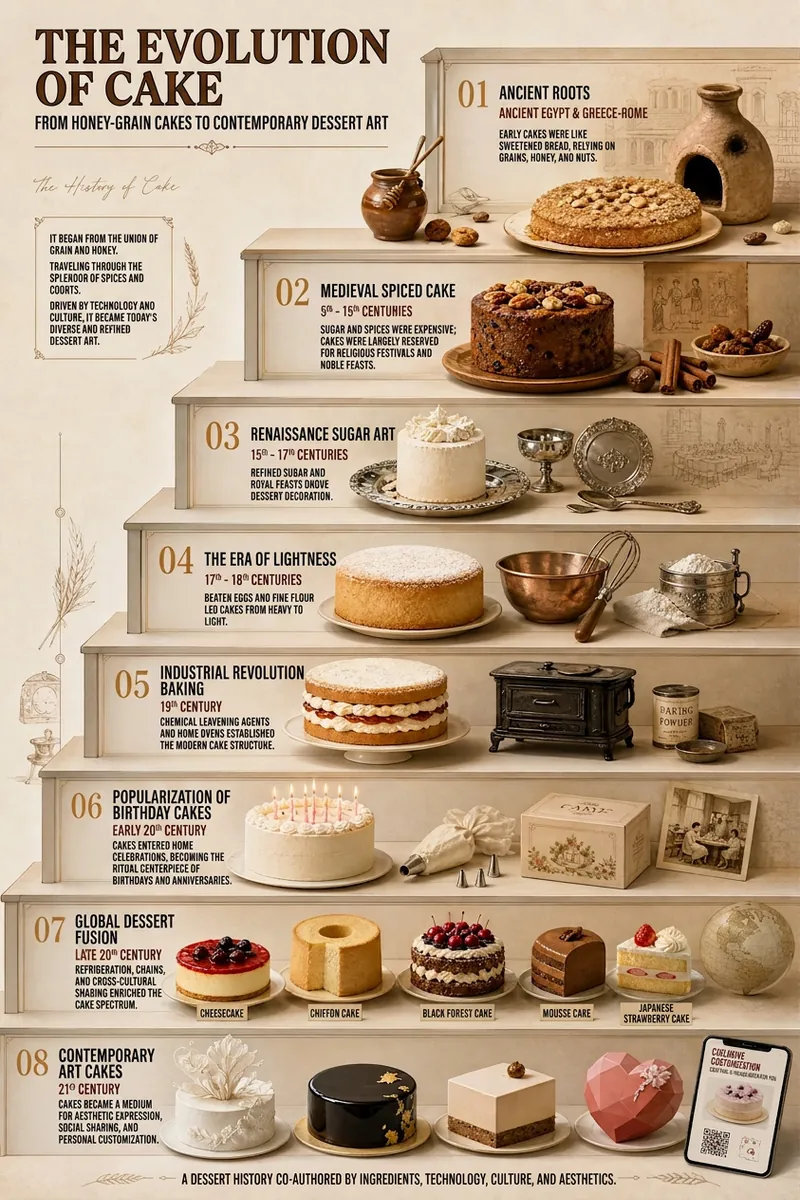 Research
Student Supplement Generator
This skill is designed to transform complex knowledge into engaging popular science reading for young people. It is especially suitable for educators, parents, or science content creators who need to prepare interdisciplinary learning materials for middle school students. It can turn boring information into vivid and interesting stories, sparking children's curiosity and interest in learning. Simply provide the source material, and the skill will deeply understand its core topic, conduct moderate exploratory research, and supplement background knowledge, scientific principles, personal stories, or historical context. It will create content in a conversational style that appeals to young readers, ensuring that it aligns with textbook exam points while remaining fun—for example, incorporating interactive elements like 'Did you know?' to make the learning process full of discovery and enjoyment. This skill not only generates illustrated popular science articles but also automatically produces a high-quality process evolution infographic at the end of the article. This infographic is well-designed, presenting the development or evolution of knowledge in a clear and intuitive visual way, helping young readers better understand and remember complex concepts. The final output is a complete set of supplementary materials ready for teaching or reading. Generated examples: - A Letter Across the Sea of Life and Death: The Story of Nanyang and Qiaopi: https://youmind.club/d/5yj8jGgved1IAj - A Mountain Hiding Half of Modern Chinese History: The Past and Present of Mogan Mountain: https://youmind.club/d/fAcJkSBO1mbE76 - What Makes a Vessel Noble? I Have China: 'China' in a 3,000-Year-Old Bronze Vessel: https://youmind.club/d/Tk9OzPF6IdcHHa - A Scholar's Museum Dream: The Birth of China's First Public Museum: https://youmind.club/d/EB1gk1nN84eU1z

Multi-Source English Assistant
Multi-Source English Learning Assistant -- Automatically breaks down real English content from The Economist, BBC, China Daily, NPR, and more into systematic learning packs. Covers all levels from A1 to C2, automatically adapting to 6 key skills: vocabulary, grammar, listening, speaking, writing, and reading. Supports URL auto-capture, exam-oriented modes (IELTS, TOEFL, CET-4/6, Postgraduate Entrance), three difficulty levels for example sentences, Anki card export, and a 7-day review plan. Outputs beautifully formatted HTML learning materials.
Voice Script to Study Notes
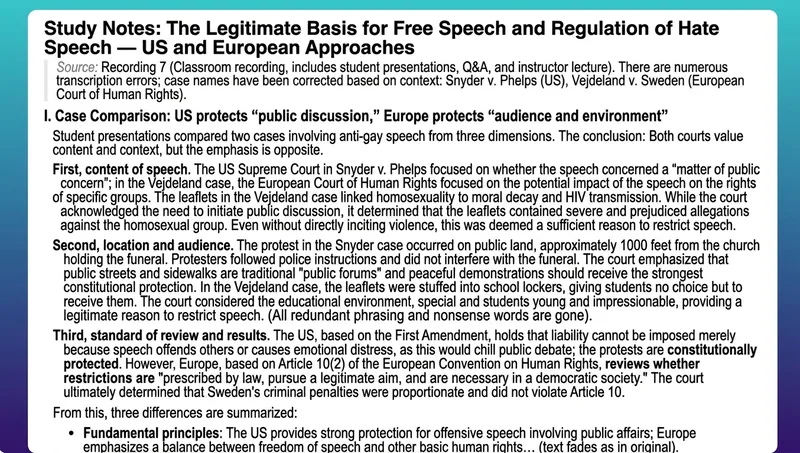
This skill efficiently transforms learning materials you provide—such as videos, articles, conversation transcripts, or personal notes—into clear, concise study notes. It is especially suited to students, researchers, and professionals who need to extract core knowledge from large amounts of information and organize it systematically.
Information
- Version
- v5
- Last updated
- Runtime credits
- Usage-based
- Models
- Auto