Shoppers want useful recommendations, not a shadow profile built for advertisers.
How surveillance advertising bent personalisation
Surveillance advertising grew from a particular bargain: collect signals from people’s browsing, apps, location and behaviour, then use those signals to target messages. The recommendation is not the centre of the system. The auction is.
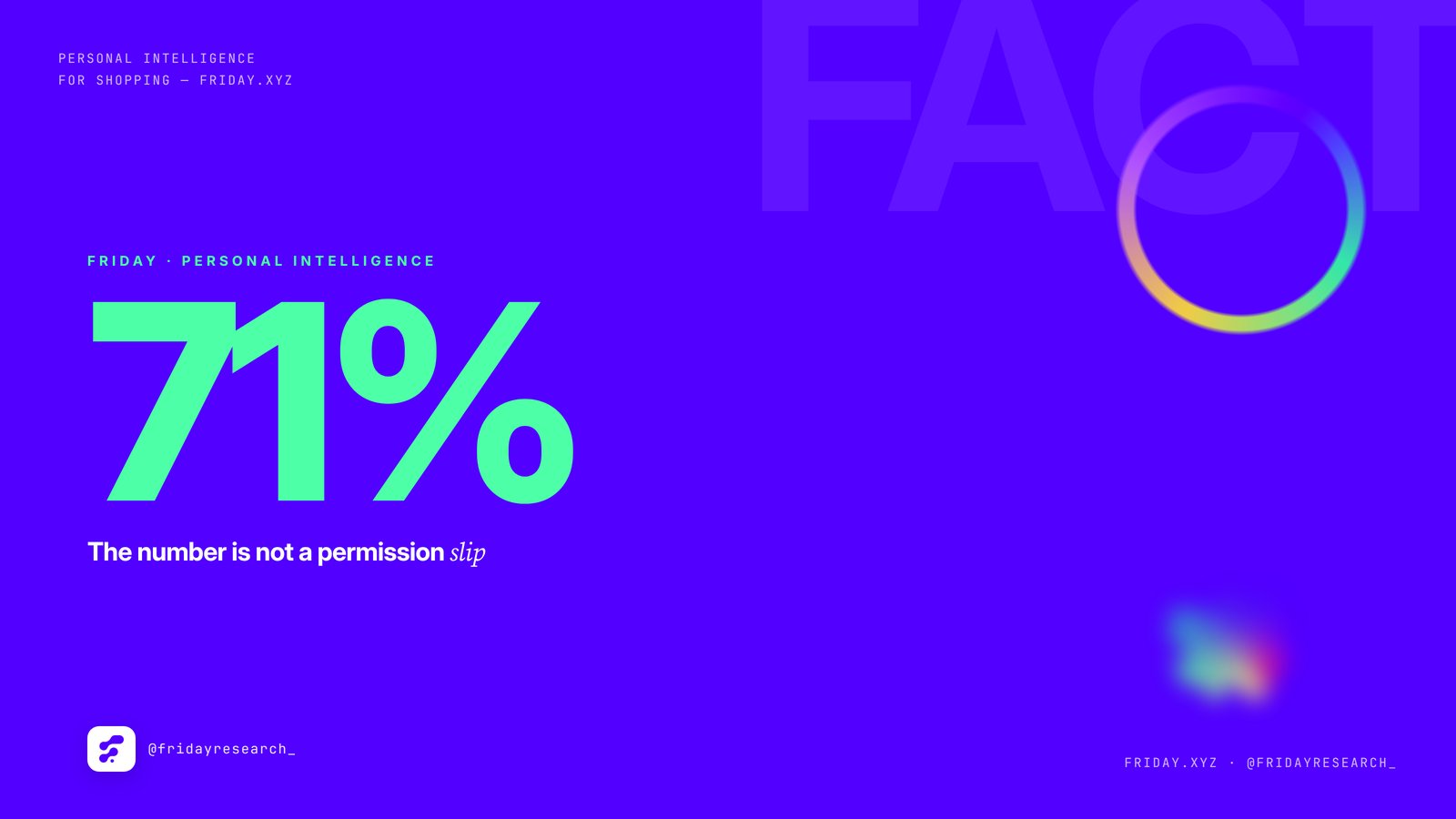
The number is not a permission slip
**
That matters because the shopper’s need can become secondary. A product may appear not because it is the best match, but because it sits inside a targeting system designed to serve campaign goals. The language sounds helpful. The machinery answers elsewhere.
This is the quiet problem with much of modern personalisation. It can look like taste, while being built from tracking. It can feel convenient, while still asking the shopper to accept an invisible trail as the cost of relevance.
**
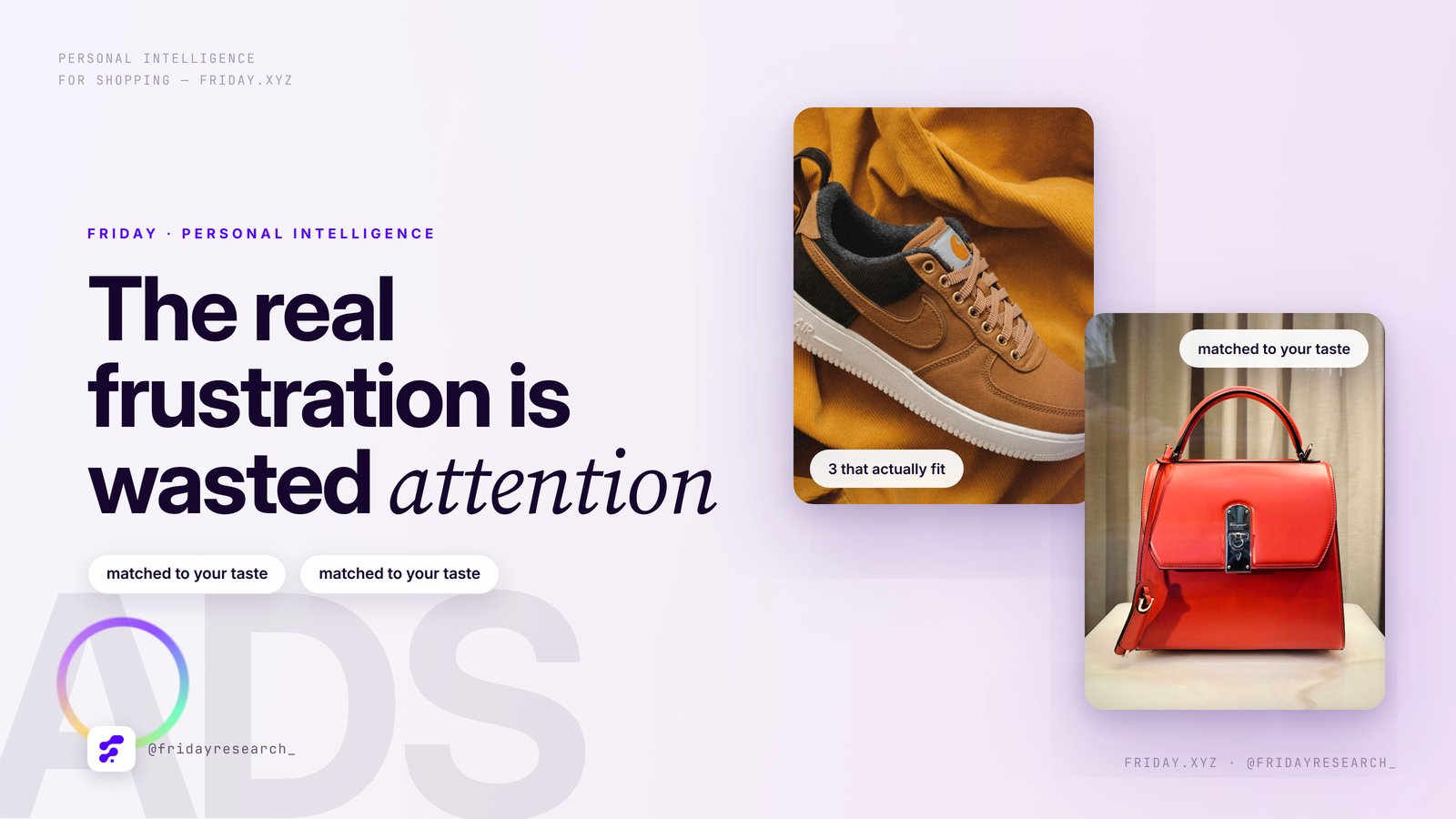
The real frustration is wasted attention
The McKinsey number is useful because it names a real irritation. Bad personalisation is not neutral. It costs time. It fills feeds, inboxes and search results with things that almost fit, once fit, or were only clicked because the options were poor.
For shoppers, the frustration is not abstract. It is the same wrong size resurfacing. The same brand after it has been dismissed. The same product category following someone long after the need has passed.
The point is not that people reject help. They reject noise dressed up as help. A good recommendation should reduce the work, not add another layer of persuasion.
Privacy is not the enemy of taste
There is a lazy assumption in adtech that better recommendations require broader surveillance. The more data gathered, the story goes, the more relevant the experience becomes.
But taste is often smaller, sharper and more personal than that. It lives in fit, fabric, budget, colour, cut, routine, repeat dislikes, and the tiny preferences a shopper may not want broadcast across an advertising ecosystem.
The Electronic Frontier Foundation has warned that targeted advertising systems can expose sensitive location data beyond the original advertising context. That is the deeper issue: once personal data is collected into a system built to move, trade and activate it, the shopper has less control over where it travels next.
**
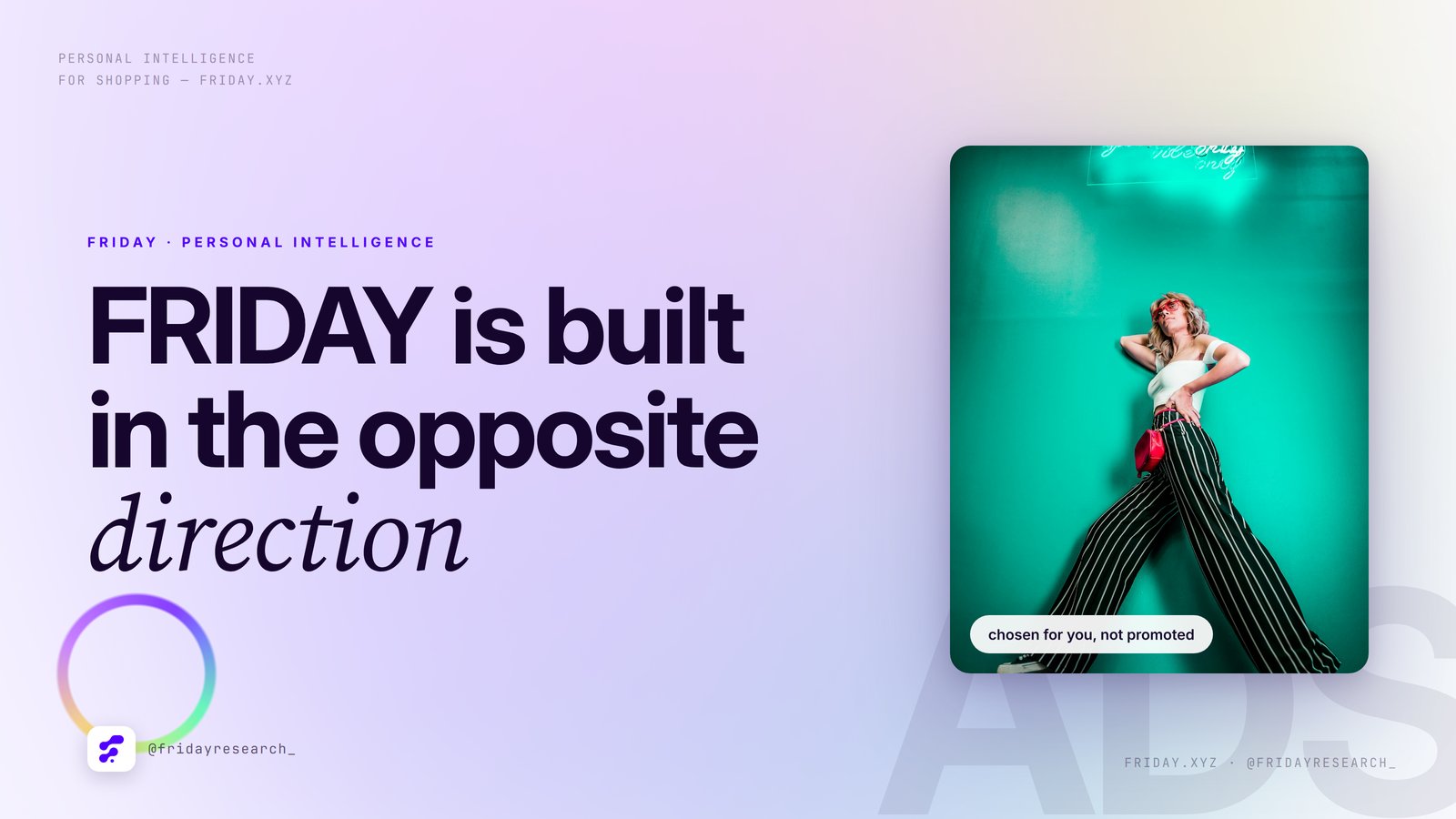
FRIDAY is built in the opposite direction
FRIDAY starts from a different premise: a recommendation should answer to the person receiving it, not to whoever paid the most.
So FRIDAY learns taste on the device, keeps it encrypted, and uses that understanding to narrow thousands of options into the few that actually fit. The work is not to chase a shopper around. The work is to make choice lighter.
FRIDAY recommends only. It hands over a shortlist. Checkout stays on the retailer’s own site. No placing orders, no reordering, no spending on anyone’s behalf. The decision remains with the shopper, where it belongs.
The future should feel quieter
The next version of shopping does not need to be louder, more targeted, or more invasive. It needs to be more accountable to the person trying to buy well.
The McKinsey number tells us shoppers expect relevance. The surveillance advertising era turned that expectation into a data extraction machine. Those are not the same thing.
The better path is calmer: understand taste without exposing it, recommend without pressure, and leave control intact. Personal shopping should feel like being understood, not monitored.
Meet FRIDAY
Ready to see it? Meet FRIDAY → heyfriday.app/start
More on how it thinks — www.friday.xyz
What is FRIDAY
FRIDAY is a personal AI shopping agent that learns your taste and works for you, not advertisers.
It learns your taste on your own device, keeps it encrypted, and narrows thousands of options down to the few that genuinely fit your taste, size and budget. It recommends only — no promoted products, no paid placements, and there never will be.
It lives on the open web, ad-free, in open early access. Come see what it feels like when shopping answers to you — heyfriday.app.