Studying for qualifications, side hustle work, morning exercise. The efforts that should lead to income often fall apart before they take shape.
On the other hand, staying up late and scrolling through your smartphone continues perfectly today.
Why does only the latter persist?
Any effort, if stopped before results appear, will not lead to income.
The difference lies not in the content of the effort, but in "whether you could keep going."
Yet, most people treat consistency as a matter of willpower. But researchers don't think it's just about willpower in the first place.
There was a study like this...
【The Study Where Watches Chimed Every Hour】
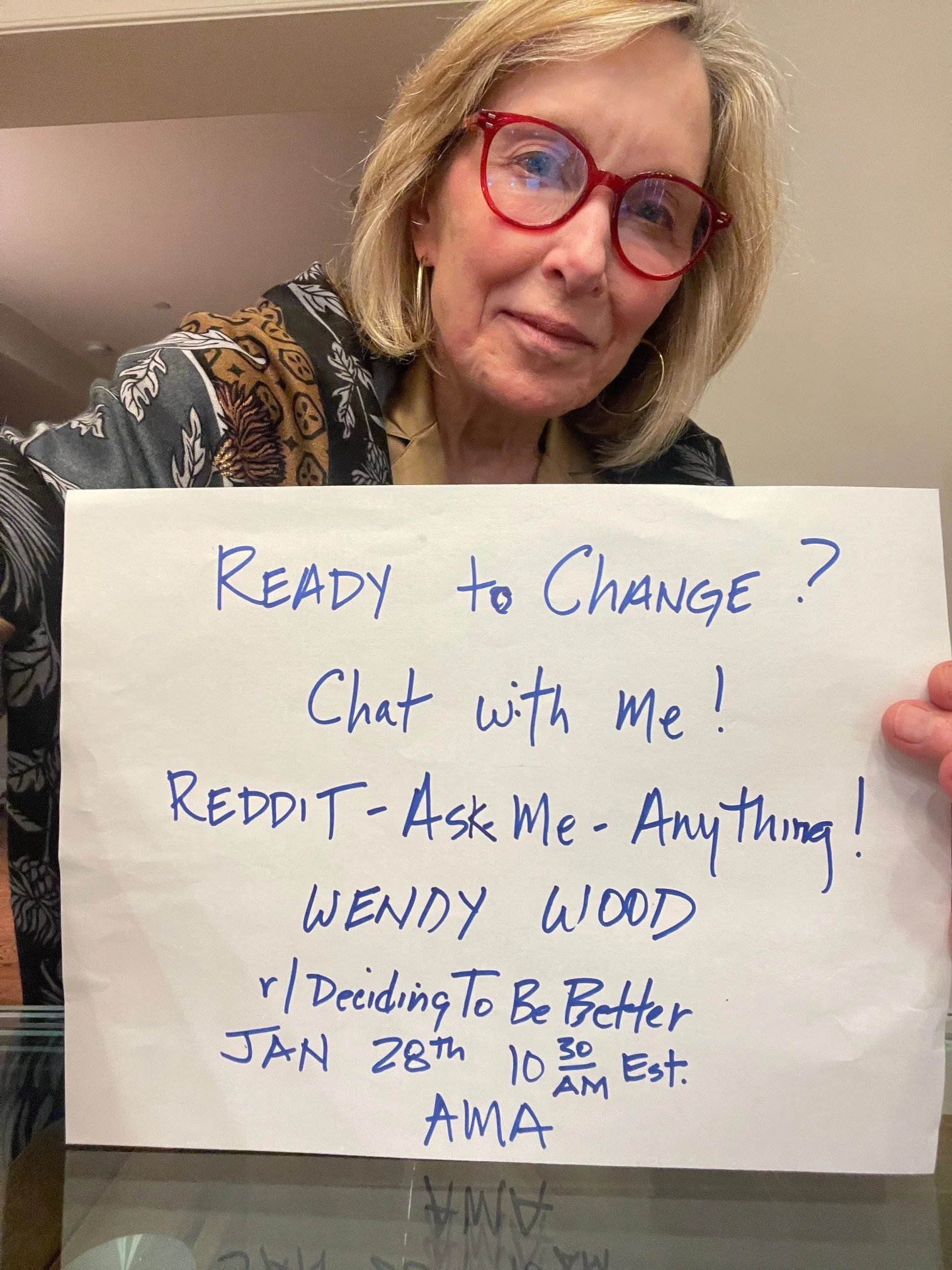
Psychologist Wendy Wood from the University of Southern California has been studying habits for about 30 years.
The foundation of that research was a 2002 survey.
The method was simple.
They gave college students watches that chimed every hour while they were awake. When it chimed, they had to record "what they were doing" and "what they were thinking" at that moment.
70 people did this for one day, and another 209 people did it for two consecutive days.
When the records were sorted, the answer emerged.
43% of actions were repeated almost every day in the same location. (In the other survey, it was 35%)
Morning coffee. The commute route. The sequence of coming home, sitting on the sofa, and opening a smartphone.
Moreover, while performing these actions, there was a high percentage of people thinking about things unrelated to the action.
40% of the day is replayed with almost no thought.
In other words, much of what continues now isn't maintained by willpower. It's structured to continue without using willpower.
【Moving House Erases Habits】
Wood and her colleagues have follow-up research.
When tracking students who transferred schools, strong habits like exercise or watching TV collapsed after their environment changed.
It wasn't that their willpower became weaker.
It was because the cues that triggered the habits—the usual place, the usual time, the usual things in sight—disappeared due to the move.
It's the same logic as the feeling of your morning routine going haywire at a hotel while traveling.
Putting it into familiar examples, it looks like this:
**・You stay up late because your phone is by your pillow ・You eat snacks because they are on the desk ・You stop by the convenience store because it's on your way home**
It's not that willpower is weak. Things are just arranged so that you move that way.
In other words, if you rearrange things, your behavior changes. From here on, it's about "design" that can be naturally derived from this research.
【Tip 1 | Place New Habits Immediately After Old Ones】
Recall the content of that 43%. Morning coffee, brushing teeth, commuting. All are actions that start automatically in the same situation almost every day.
These are also alarm clocks that ring every day.
Don't place things you want to start newly in isolation. Attach them immediately after an action that is already automatic.
・While waiting for the coffee to brew, memorize 3 English words
・After brushing your teeth, do 5 squats on the spot
・After taking off your shoes upon returning home, read one page of a book on your desk
"Doing it when I have time" is a design where the cue never rings.
Decide down to the form of "When I do XX, I will do YY."
Just by doing that, existing habits will become the starters for new ones.
【Tip 2 | Eliminate Willpower Moments Through Object Placement】
Put things you want to continue in places where they catch your eye. Put things you want to quit in places that require effort to reach.
・Place the book you want to read on top of your face-down smartphone
・Put snacks in the back of the cupboard and washed fruit in the front
・Move apps you open impulsively into a folder on the second page of your home screen
What I want you to notice is that none of these involve "endurance."
Changing the position of objects eliminates the moment of endurance itself.
Endurance is needed many times a day. Rearranging only needs to be done once.
【Tip 3 | Repeat at the Same Time and Same Place】
Actually, the definition of that 43% itself is the secret.
"Almost every day, always in the same place."
Actions become automatic when the situation is the same every time.
Today in the morning, tomorrow at night. Today in the living room, tomorrow at a cafe. Every time you change the situation, the brain has to rethink "when and where to do it." That keeps it as a job for willpower forever.
Fix the time and place. Instead, make the content small.
【66 Days and the One Day You Skipped】
So, how many days does it take to become automatic?

There is a study by University College London (UCL) where 96 people chose one new habit and recorded it for 12 weeks. The number of days until the action became automated ranged from 18 to 254 days, with a median of 66 days.
The famous story that "it becomes a habit in 21 days" does not match these results.
However, I believe the real takeaway from this research isn't the number of days.
Even if one day was missed, the progress of habituation hardly changed.
The cause of failing to habituate isn't skipping one day. it's deciding that "skipping one day = failure" and quitting everything. In the data, a one-day hole does not constitute failure.
There is an experiment that confirmed this on a massive scale.
A research team at the University of Pennsylvania teamed up with 30 researchers from 15 universities to simultaneously test 53 types of habituation programs on over 60,000 gym members. This is the largest experiment in this field, published in the journal Nature.
Among the 53 proposals, the most effective was not a lavish reward or a gimmick to encourage strong determination.
Adding points equivalent to 9 cents when someone who skipped returned for their next scheduled session.
That was number one.
A design that rewards returning after skipping, rather than one that punishes skipping, won.
Both the 60,000-person experiment and the 96-person tracking point to the same thing.
It's not the one day you skipped that breaks the habit.
It's not returning after skipping.
People who can continue don't "not skip."
They are geniuses at skipping—more accurately, they have created a structure from the start where they can naturally return even if they skip.
【By the way, complex things do not become entirely automatic】
In the 2002 survey, actions that are difficult to turn into habits even if repeated were also visible. Studying, complex conversations, creation. Things that require thinking demand a certain level of attention every time they are repeated.
What I want you to notice is that much of the effort that leads to income and results lies on this side.
Staying up late continues automatically, but studying for a qualification doesn't.
This isn't a personality problem. It's a brain specification problem where complex actions are difficult to fully automate.
There is also support for this from neuroscience. When an MIT research team recorded brain signals from rats learning a maze, the neural activity that was active throughout the journey when they were just learning became quiet once it became a habit, reacting strongly only at the "start" and "end" cues.
The brain stores habits as a single block of action with a start button.
Therefore, you only need to automate the "starting action."
The habit's job is to get you to sit at the desk and open the notebook; from there on, you think properly every time. Automation is the ignition, not the flight.
People who tried to make studying itself a habit and failed simply aimed for a target that was too large.
People who can continue their efforts don't have strong willpower.
They create a form from the start where willpower has no role to play.
It's not a matter of the number of resolutions, but a matter of placement.
Whether you continue is determined by design, not personality.
References
・Wood, Quinn & Kashy (2002) Habits in everyday life https://dornsife.usc.edu/wendy-wood/wp-content/uploads/sites/183/2023/10/Wood.Quinn_.Kashy_.2002_Habits_in_everyday_life.pdf
・Wood, Tam & Guerrero Witt (2005) https://dornsife.usc.edu/wendy-wood/wp-content/uploads/sites/183/2023/10/Wood.Tam_.GuerreroWitt.2005_Changing_circumstances_disrupting_habits.pdf
・Lally et al. (2010) How are habits formed https://onlinelibrary.wiley.com/doi/10.1002/ejsp.674
・Milkman et al. (2021) Megastudies improve the impact of applied behavioural science, Nature https://www.nature.com/articles/s41586-021-04128-4
・Jog et al. (1999) Building neural representations of habits, Science https://www.science.org/doi/10.1126/science.286.5445.1745