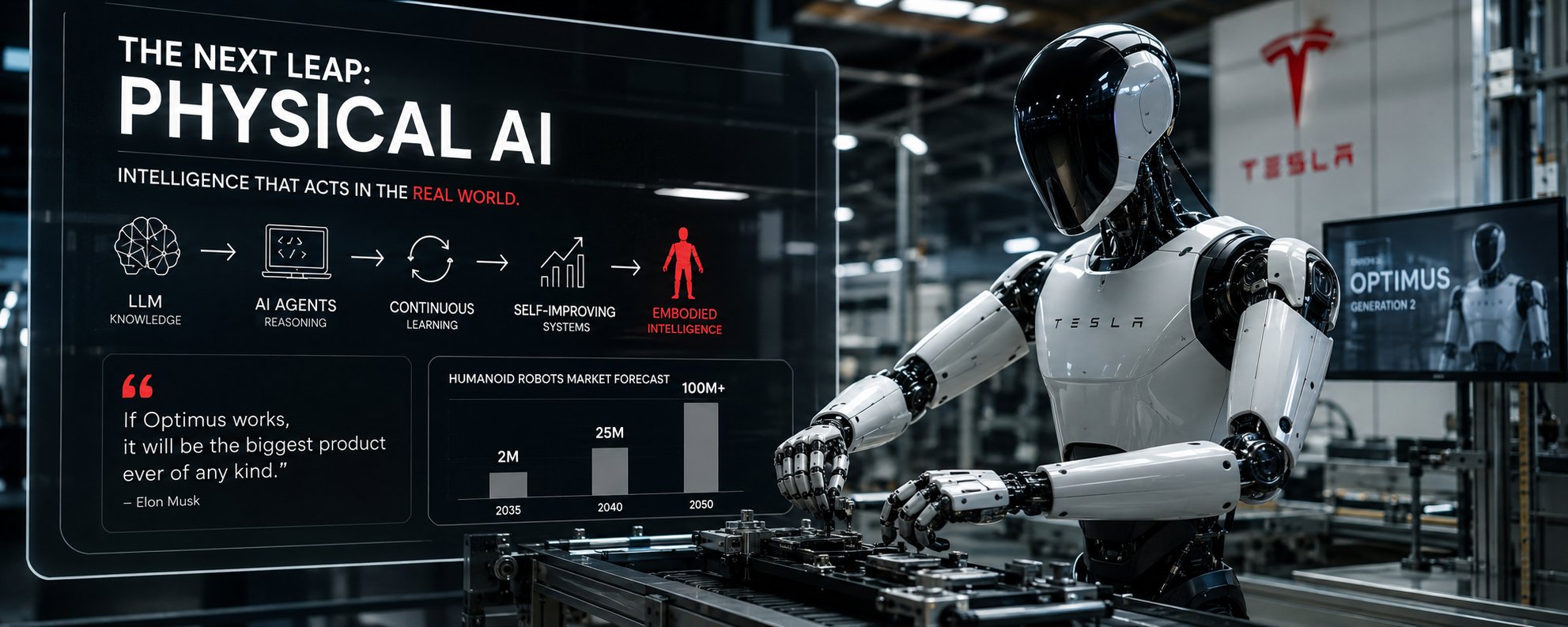
Net worth: approximately $700 billion.
At an exchange rate of 160 yen to the dollar, that exceeds 100 trillion yen.
The man who sells electric cars, launches rockets, distributes communication worldwide via satellites, and even built his own AI company.
That man is Elon Musk.
In February 2026, SpaceX absorbed xAI (the company making Grok). The valuation immediately after the integration was $1.25 trillion. Rockets, satellites, generative AI, and X have become one single company.
He is someone on the "making" side of AI, not just the "using" side.
Hearing this, many people think:
"Well, he probably just uses the world's best AI without limits."
I thought so too.
But something caught my eye.
There are five steps called "The Algorithm" that Musk has repeatedly emphasized within his companies for nearly 20 years. Whether it's a factory or a rocket, he insists they must be done in this specific order.
The 5th step—the very last one—is "Automate."
I'll say it again. It's last.
Furthermore, he reflected on a time he didn't follow that order:
The biggest mistake at the factory was trying to automate every process from the start.
In 2018, right after going through hell with the mass production of the Model 3, he posted:
Excessive automation at Tesla was a mistake. To be precise, my mistake. Humans are underrated.
The man betting the most on AI in the world is saying, "Don't do automation first."
To be honest, the entire answer to modern AI utilization is contained right here.
This is long, so I recommend saving it if you want to look back later.
First, one quick announcement
Tomorrow, July 31st (Friday) at 6:00 PM, I will be selling a skill to automatically generate slides on Brain.

This is my first time on Brain.
Personally, I no longer make a single slide by hand for seminar materials, course content, or sales pages. Just by giving it a theme, everything from the structure to the visuals comes out.
Thanks to creating a massive amount of bonuses at high speed using this skill, my OpenChat list is about to reach 2,000 people.
The uses are endless, so if you want to be able to create large volumes of slides in a short time, please follow and wait.
The price is set at a bargain—about the cost of one lunch in the countryside.
That's all for the announcement. Let's get into the main content.
Musk's "Algorithm" was exactly how to use AI
First, let's list the five steps:
- Question the requirements (Is that condition even really necessary?)
- Delete (Try deleting parts or processes entirely first)
- Simplify (Refine only what remains)
- Accelerate (Shorten the cycle time)
- Automate
Musk repeatedly says to follow this order. The reason is clear:
The most common mistake smart engineers make is optimizing something that shouldn't exist.
Optimizing something that shouldn't exist.
If you replace this with AI talk, it fits perfectly.
Many people's AI utilization starts suddenly from step ⑤.
They throw their current tasks directly into AI. They tweak prompts to increase accuracy. They turn it into a template to make it repeatable.
It certainly gets faster. However, that might just be continuing to run unnecessary tasks at high speed.
This isn't a matter of ability. It's a matter of order.
The reason you aren't getting results with AI isn't because the AI is weak. It's because you are automating tasks that should have been deleted.
The following 7 methods are all about the contents of this philosophy.
Method ① Before having it answer a question, ask "Is this question even necessary?"
The first one is the most understated. And it's the most effective.
Do you jump straight into the main topic with AI? "Write this proposal," "Summarize this document." It's common, right?
Musk describes the first step of the algorithm like this:
Make the requirements smarter. No matter how smart the person who issued the requirement is, there's always something dumb about it.
He continues:
Requirements from smart people are the most dangerous because you accept them without questioning.
He is so thorough that he forbids saying things like "This requirement came from Legal" or "It's an instruction from the Safety department" within the company.
He insists that individual names must be attached to requirements. This is because requirements hidden behind department names survive without anyone taking responsibility for them.
You can use this directly with AI.
I'm going to write the task I'm about to do below. First, list all the "assumptions" of this task, including those I'm making unconsciously. Next, for each one, ask "Is this really necessary? Who decided this?" You don't need to give answers yet. Just list the assumptions I should question, in the order I should question them. (Insert task here)
The person who makes it immediately versus the person who breaks down the assumptions first—the output will be different.
Method ② Before delegating, consider if it can be "deleted"
The second step is more radical.
In Musk's words:
If you don't end up having to put back at least 10% of what you deleted, you haven't cut enough.
The design is to delete with the premise of putting 10% back. In other words, it's only the right amount if you've gone too far.
The phrase that symbolizes his design philosophy is this:
The best part is no part.
In a rocket, if you remove one part, the probability of that part breaking becomes zero. Inventory, inspection, and assembly processes all vanish entirely.
Work is the same.
That weekly report you make. Maybe no one is opening it. The confirmation emails you send every time. Maybe only 30% of them are truly necessary.
Before throwing that to AI, have it think once if it can be cut.
Below, I will list all the tasks I do every week. From these, list 5 things that "might not cause trouble for anyone even if I stop doing them," in order of likelihood. For each, write: ① Why it might be unnecessary, ② Who would be troubled if I stopped, and ③ What one thing I could leave behind instead to make it work. I don't need efficiency ideas. Just give me deletion ideas. (Insert weekly tasks here)
The person who increases tasks for AI versus the person who reduces the tasks themselves. The time left in your hands a year from now will be completely different.
Method ③ Stop writing rules and show "examples"
There is a very clear real-world example of this from Musk's companies.
Tesla's Full Self-Driving (FSD) operated for a long time based on rules written by humans. "If you see this line, do this," "If this sign appears, stop like this." Those rules amounted to over 300,000 lines of code.
In 2024, Tesla deleted them.
In their place, they put a single neural net (the core of the AI) trained on massive amounts of human driving footage. When you input video, the steering, acceleration, and braking operations come out. They stopped writing rules and switched to a method of showing examples.
This is exactly the same as our prompt discussions.
Many people try to increase accuracy by making instructions to AI longer. "Be more specific," "Avoid technical terms," "Use polite language." The more conditions you add, the more complex the instructions become, and omissions occur.
However, providing 3 good examples is faster than listing 20 conditions.
I will paste 3 "examples" of what I want you to create below. First, verbalize the rules common to these three in 10 points using your own words. After I confirm those 10 points, create something new following the same rules. *Do not start creating yet. Just verbalize the rules first. (Paste 3 real examples you think are good)
People who keep adding conditions will always struggle with instruction text. You should be different. Spend your time collecting examples instead.
Method ④ Run 10 rough iterations rather than 1 perfect one
The fourth step of the algorithm is "Accelerate."
SpaceX's method is the answer itself.
They don't launch after perfecting the design. They build, launch, explode, fix, and launch again. Many people have seen footage of Starship test vehicles failing spectacularly multiple times.
From the perspective of the normal aerospace industry, it's insane. But as a result, SpaceX lowered rocket launch costs by nearly an order of magnitude.
Instead of tolerating failure, they shortened the time it takes for one cycle. That's all.
AI usage shows a difference in the same way.
Many people value a single output too much. They think of a perfect prompt, manually fix the resulting text, and that's it. Because they end at one cycle, the "volume" that is AI's specialty isn't used at all.
やることは単純です。1案ではなく、まとめて出させる。
Give me 10 different directions for [Topic] all at once; they can be rough. I'm not looking for perfection. Keep each proposal to 3 lines. Once finished, sort those 10 in order of "likely reader response" and explain the difference between 1st and 10th place in 3 lines.
People who try to hit the mark in one go have fewer at-bats. People who generate 10 ideas have a next step even if they miss.
Method ⑤ Do automation last
This is the backbone of this article.
As written at the beginning, in Musk's algorithm, automation is 5th. It's the very last.
And he is the very person who broke that order.
Between 2017 and 2018, Tesla was completely stuck in the mass production of the Model 3. The cause was too many robots and conveyors crammed into the factory. Musk himself said at the time:
We built that crazy complex network of conveyors. It didn't work, so we removed it entirely.
And then, that post:
Excessive automation at Tesla was a mistake. To be precise, my mistake. Humans are underrated.
What he learned by stopping the factory was "Don't do automation first."
Why is it last? The reason is simple.
Automation always incurs costs. Time to build the system, time to fix it when it breaks, and the feeling of "I have to keep using it because I made it."
Therefore, unless you delete what can be deleted and simplify, you end up fixing unnecessary tasks at a high cost.
To be honest, I failed here once too. I built a complex system without considering the frequency of use and spent hours on something that only runs once a month. It worked, but it wasn't worth it.
So, I make sure to run this once before automating.
I am about to automate the task below. Before that, please judge each of the following in order. Do not write the automation method until the judgment is finished. ① Can this task be stopped entirely? ② If it can't be stopped, can it be reduced by half? ③ If it can't be reduced, can it be made into a simpler procedure? ④ After simplifying, how many times a month does it occur? Is it worth automating considering the frequency? Finally, conclude with "Should automate / Should not automate" with reasons. (Insert task to automate)
If it comes back as "Should not," that's a huge success. Your time has increased by the amount you didn't spend building it.
Method ⑥ Don't use the most expensive AI for every task
This is a story from July 2026—this month.
On July 10th, Musk told Tesla employees in an internal memo, "Please switch to Grok as much as possible." Four days earlier, a $200 per employee weekly usage limit was set for tools from Anthropic, OpenAI, and Google.
What's interesting is the content of that memo. According to reports, while Musk admitted that "Anthropic's Fable is clearly superior to Grok 4.5," he wrote this:
Most tasks do not require Fable-level performance.
I'll be honest here. There is a blatant conflict of interest in this judgment. xAI, which makes Grok, is now under the SpaceX umbrella, and Musk himself stands to profit. In fact, it's reported that many Tesla engineers prefer using Claude for daily development.
Even so, the judgment axis of "choosing by task weight, not by performance" itself is effective for individuals.
I personally pay for and use ChatGPT, Claude, and Gemini every day, but I don't use the top-tier models for every task. Fixing typos, converting formats, short summaries. Deploying a top-tier model for these is like flying a helicopter to go to a convenience store.
Try sorting your own tasks.
Below, I will list all the tasks I have AI do every day. Categorize these into: ① Top-tier model required (judgment, design, strategy), ② Mid-tier is sufficient (text generation, summary, formatting), ③ Doesn't need to be AI at all (search, copy-paste, replacement). Give a one-line reason for each. Finally, show what percentage of the total tasks fall into category ①. (Insert daily tasks)
Usually, ① is fewer than you think. Once you realize that, the cost-effectiveness of AI changes.
Method ⑦ Ask for the "bottom price" instead of the "market rate"
The last one is the most famous of the seven, and the least used.
When Musk decided to build rockets, a single rocket was said to cost $65 million. It was completely out of reach.
So he stopped thinking about the price in terms of the "market rate."
Physics teaches you to think from first principles rather than by analogy. What is a rocket made of? Aerospace-grade aluminum alloys, plus some titanium, copper, and carbon fiber. Then I asked, what is the value of those materials on the commodity market? It turned out that the materials cost of a rocket was around 2% of the typical price.
2%.
The remaining 98% was something other than materials. So Musk turned to the side of making it himself.
This is the very attitude to have when asking AI.
Many people ask AI for the "market rate." "Tell me how to do [X]." What comes back is the average answer everyone else is doing. If you execute an average answer, you get average results.
Instead, have it decompose.
I won't ask for the common way to do [X]. First, decompose the elements that make this up until they can't be divided any further. Next, for each element, separate them into "absolutely necessary" and "done just out of habit." Finally, propose what it would look like if reassembled using only the "absolutely necessary" elements. Do not use generalities or industry common sense as a basis.
People who ask for precedents get results according to precedents. Only those who decompose find a different path.
To those who thought, "That's because Musk has money"
Reading this far, some of you must have felt, "This is a story for someone with 100,000 chips."
I understand the feeling. But look back at these 7 methods.
Question requirements. Delete. Show examples. Run iterations. Automation last. Don't buy excessive performance. Decompose.
Did even one of these require money?
Not one. All of them can be done starting today with AI that costs a few thousand yen a month.
Rather, it's the opposite. Companies with financial power tend to choose "adding" over "deleting." They increase people, tools, and processes. Musk himself did that and stopped his factory.
Individuals are faster at deleting.
You don't need boss approval or inter-departmental coordination. The moment you decide, that task is gone.
This is a battle on a completely different field than financial power.
Summary
As long as you use AI as a "tool to speed up current tasks," you aren't even drawing out half of its power.
- ① Before hitting the main topic, have it question the assumptions.
- ② Before delegating, consider if that task can be deleted.
- ③ Stop adding conditions and give 3 examples.
- ④ Instead of 1 perfect proposal, have it generate 10 rough ones.
- ⑤ Do automation last, after deleting and simplifying.
- ⑥ Don't use top-tier models for all tasks. Choose by task weight.
- ⑦ Don't ask for the "market rate"; decompose into elements.
There are so many people for whom the order is reversed.
I call this the "compound interest of deletion." If you delete one thing, the confirmation, correction, and reporting attached to that task all vanish together. Moreover, a deleted task never comes back. Unlike efficiency, it builds up.
If you finish reading and just say "Huh," tomorrow you'll just use AI to slightly speed up your current tasks as usual. Most people do that.
But you should be different.
Just one thing today. Before you ask AI for something next, try asking just once: "What happens if I stop this task altogether?"