@t_xu, @andyfang and I started @DoorDash 13 years ago delivering restaurant food from Tony's Honda Accord. Today, we're officially certified as an air carrier. I can assure you that was not in the original @ycombinator business plan.
DoorDash just became the eighth drone operator in the country to earn @USDOT @FAANews Part 135 certification, giving us clearance to fly deliveries using our own drones.
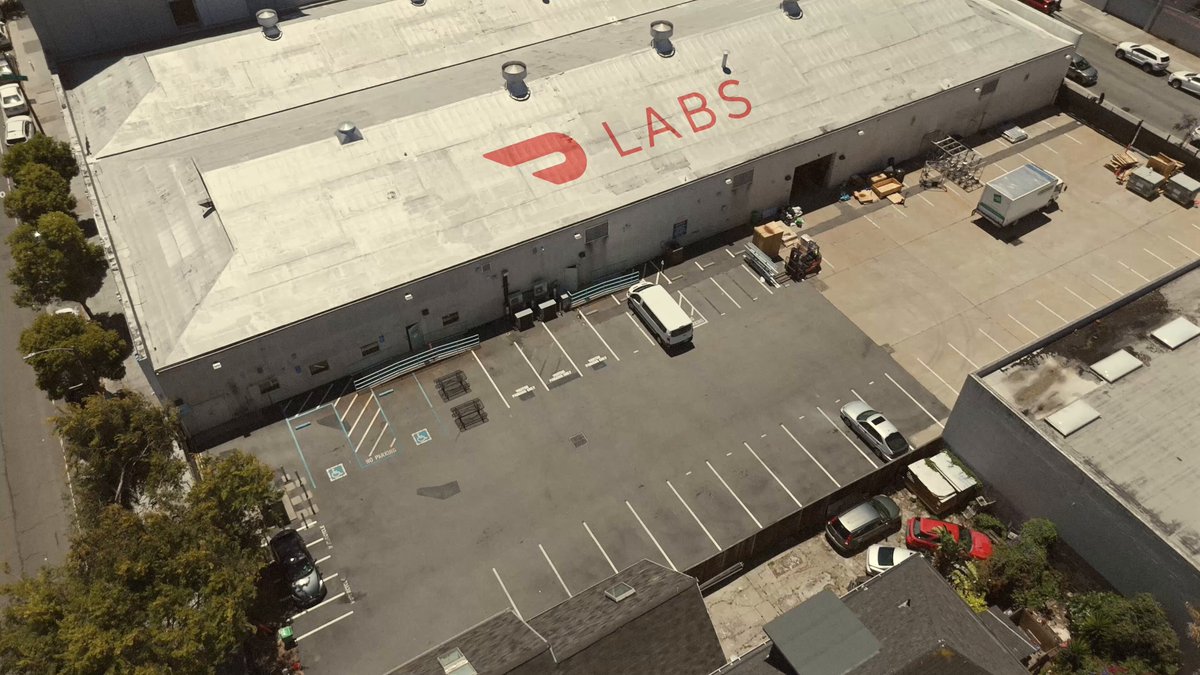
We didn't start with the question, “What's the coolest autonomous tech we could make?” We started from first principles: What's the actual customer problem that needs to be solved?
That's exactly why DoorDash Labs attracts the builders it does. People come here because they want to solve real problems and see their work show up in the real world within days, not stuck in R&D hell watching a demo that never leaves the lab. It's a startup spirit applied to hard tech: ship early, learn fast, then continue to iterate with safety and speed once it’s actually out there. That culture doesn't happen by accident. You have to build it on purpose, the same way you build the product, and that’s been our philosophy at DoorDash Labs since we started.
The next frontier of delivery
Drones can go faster and travel farther, unlocking new demand that previously wasn't possible. In our drone partner pilots, some businesses saw order volume climb approximately 30% in the weeks following launch. That's the actual mission: helping local businesses reach more customers faster.
We've been in the drone delivery space for four years through our partners. DoorDash Air is us putting our weight behind the next frontier of delivery: building the drone, earning the certification, and committing to solving the parts of local commerce that only work when the modality, the merchant handoff and the marketplace are orchestrated all on one network.
Building the drone is only part of the challenge. Building the marketplace and the merchant infrastructure on the ground that enable autonomy to operate seamlessly within a delivery network, and at scale, is even harder. A drone is worthless if it doesn't connect a customer who needs something with a local merchant selling it. With billions of orders and millions of customers, we know exactly how demand moves in every market we serve. That’s why we’re just as focused on the ground infrastructure — the merchant handoff and loading systems that get an order into a drone — as we are on the aircraft itself.
One network, every mode of delivery
As drone delivery scales, the orchestration problem kicks in, since every mode has its own constraints. For every order, we need to determine which delivery mode should handle it, in real time, with conditions changing by the minute. We’ve already built the layer to handle the coordination challenge, we call it the Autonomous Delivery Platform. It currently runs Dot, along with Dashers, our third-party partners that plug into our network, and soon our first-party drone program.
This is the operating system for how things move through the physical world, and we’re making it real and scalable for local businesses. We handle everything end-to-end — order processing, dispatch, the loading infrastructure that gets an order into a drone — so it plugs into how a merchant already runs their business.
For us it’s not just about building the drone, it’s just as much about building the operational layer — the routing, the safety systems, the merchant handoff on the ground that makes everything fly smoothly.
The impact is real for merchants. With DoorDash, a local convenience store or neighborhood restaurant gets access to that same kind of reach without having to build any of it. That’s the part I care about the most. It’s the same bet we made when we first started delivering orders ourselves, which is that we could help merchants compete on infrastructure only giants could otherwise afford.
Building autonomy in the physical world
The challenges here span the full stack: hardware, embedded systems, routing algorithms, real-time orchestration across modalities, marketplace economics. Most autonomy companies work on one layer. At DoorDash, you're working on all of them simultaneously; nobody else is running all these systems on one network. A cutting-edge innovation, or a small, practical fix for one use case, becomes a foundational system implemented across our marketplace almost instantaneously once you build it right.
DoorDash is where the most interesting problems in autonomy are being solved today. There's no sandbox here. You're deploying against real demand from day one. We'll have more to share later this year on the aircraft itself and how it fits into our broader delivery network, but if you want to work on autonomous systems at real commercial scale, we’re hiring.